
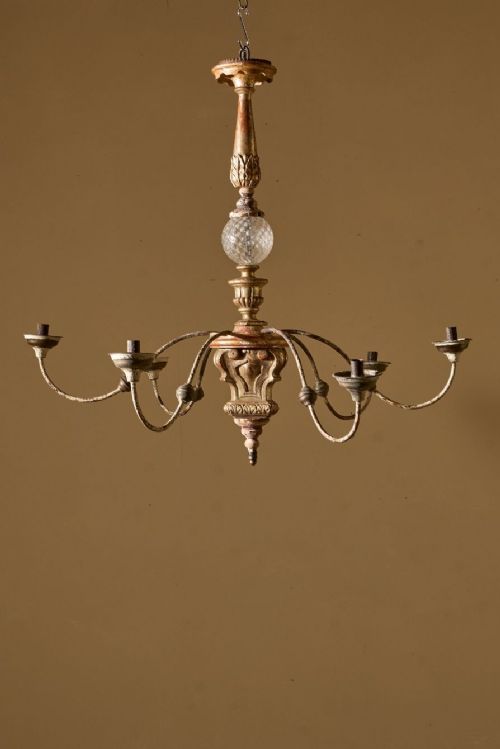
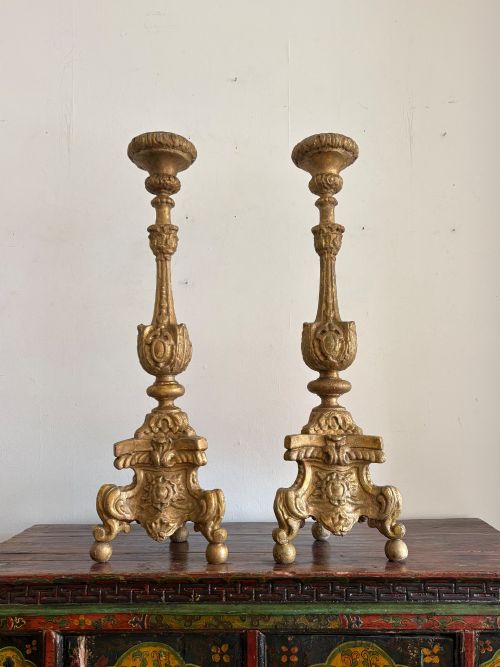


Baroque Giltwood Pricket
A baroque giltwood pricket brings dramatic carved presence and centuries of candle-holding tradition to a room.
Baroque Giltwood Pricket
When you search for baroque giltwood pricket, you encounter heavy altar-type candle-holders, table lamps, wall sconces and chandeliers rooted in seventeenth, eighteenth and nineteenth-century Italian and English design. These objects combine substantial wooden structure with decorative gilded surfaces designed to support large candles.
The versions most commonly met on this page span the seventeenth through the nineteenth centuries, often manifesting as Italian altar candlesticks or carved lamp conversions. They utilise forms originating from regional baroque and rococo traditions, carrying the distinct visual weight of ecclesiastical and domestic interiors.
How they were made
Maker construction relies heavily on carved wood, gesso and wrought iron, building robust wooden foundations that receive meticulous surface treatment. Carvers shape the timber into elaborate scrolls and structural elements before applying preparatory layers.
Gold leaf and applied gesso provide the characteristic brilliant finish over the carved wooden base. Artisans apply these delicate metallic sheets by hand to achieve the luminous gilt surfaces that define the style.
Some pieces started life holding holy candles and now quietly illuminate a modern hallway.
What varies in quality
Depth and precision of the underlying wood carving separate standard items from superior examples. Master carvers achieve fluid movement and crisp detail in foliage and scrolls that lesser hands leave soft and indistinct.
Integrity of the original gilding and gesso layers dictates the visual success of the piece over time. Finer specimens display harmonious ageing of the gold leaf over the carved substrate rather than unsympathetic modern intervention.
The Baroque Giltwood Pricket Glossary
- Pricket
- A sharp metal spike on a candlestick designed to hold a large candle secure by impaling the base. This format is traditionally associated with altar candlesticks and heavy ecclesiastical lighting.
- Giltwood
- Timber that has been decorated with gold leaf applied over a prepared gesso ground. This technique creates a rich metallic sheen that catches candlelight effectively.
- Gesso
- A plaster mixture applied to carved wood to provide a smooth surface for gilding. It allows carvers to achieve sharp definition before applying gold leaf.
- Baroque
- An ornate artistic style originating in the seventeenth century characterised by drama, exuberant detail and grand proportions. In these pieces, it manifests through bold scrolling and rich ornamentation.
Baroque Giltwood Pricket: Frequently Asked Questions
What is a pricket candlestick?
A pricket candlestick uses an upright metal spike instead of a socket to hold the candle. This spike pierces the base of a large wax candle to keep it upright during use.
Such designs were standard for heavy altar lights in churches and large households where substantial illumination was required.
How old are these candlesticks?
The pieces span multiple periods from the seventeenth century through the nineteenth century, with significant representation from the eighteenth century. Each era brings distinct shifts in regional carving styles and decorative treatments.
Construction details, wood types, and gilding methods help identify the specific period of origin for individual items.
Can these be used as lamps?
Many historical pricket sticks and candle holders have been adapted into standard lamps and table lamps over time. These conversions allow them to function safely with modern electrical wiring while retaining their antique carved appearance.
Original altar candlesticks and oil lamp stands frequently underwent these modifications during the nineteenth and twentieth centuries.
Where were these pieces made?
Origins lean heavily toward Italy, encompassing Florentine and broader Italian baroque traditions alongside English examples. Regional workshops produced these items for both ecclesiastical settings and grand domestic interiors.
Local timber availability and prevailing baroque or rococo aesthetics heavily influenced the output of these specific workshops.