



18th Century Italian Candlestick
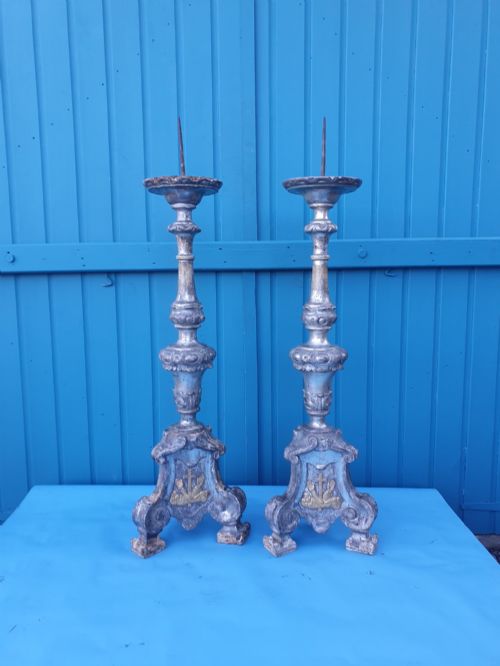
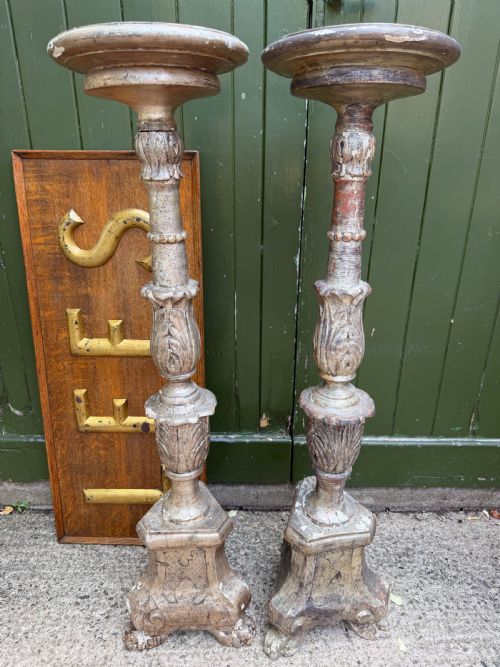
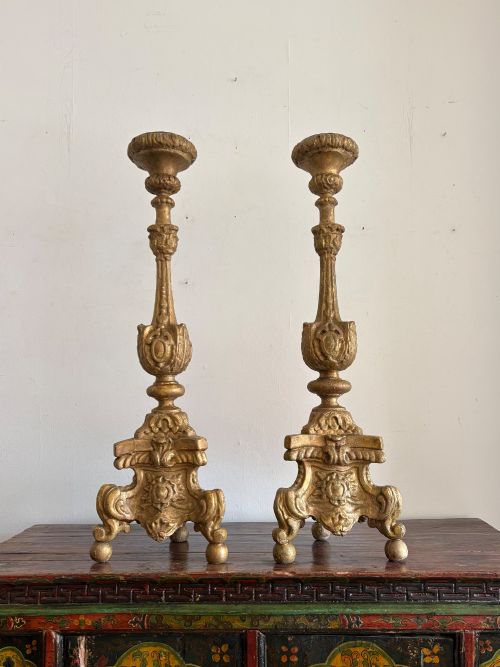
An 18th century italian candlestick brings theatrical candle-lit warmth to a room through carved timber, gold leaf and silvered mecca finishes.
18th Century Italian Candlestick
Most items reflect the flamboyant ornamentation of the Baroque and Rococo periods, transitioning into later neoclassical designs. You find both pairs of substantial proportions and single converted candle-lamps spanning the eighteenth century and subsequent revival periods.
How they were made
Maker-artisans carved solid wood bases from timber before applying layers of gesso to create smooth surfaces for gilding or silvering. Artisans then used gold leaf, silver leaf or translucent mecca varnish over silvered grounds to achieve deep metallic lustre.
Foundries also cast metal versions in gilt bronze or ormolu, while other surviving examples feature painted polychrome surfaces over carved wooden structures.
18th Century Italian Candlestick Retail Price Guide 2026
Typical asking prices for 18th century italian candlestick among the pieces listed under this phrase on Sellingantiques today, from the lower quarter to the upper quarter. They describe what is for sale here now, not the wider market.
Several heavy church candlesticks spent centuries holding wax for midnight masses before retiring to illuminate quiet living rooms as converted lamps.
What varies in quality
The sculptural depth of the carved foliage, scrolls and architectural details dictates the visual distinction of each piece. Crisp chisel work in the underlying wood separates master carvers from routine workshop production.
The preservation of the original gilded, silvered or mecca surface finishes determines the authenticity and visual impact of the object over centuries of use.
The 18th Century Italian Candlestick Glossary
- Giltwood
- Wood that has been coated with fine gold leaf or gold powder over a prepared gesso ground. This technique creates a rich decorative surface typical of church furnishings.
- Pricket
- A sharp metal spike set on the drip pan of a candlestick to secure a candle in place. These spikes are commonly found on altar-type candle-holders.
- Mecca
- A warm translucent varnish applied over silver leaf to imitate the appearance of gold leaf. It gives Italian wooden candle-stands their distinct aged metallic tone.
- Torchere
- A tall decorative stand designed to support a light fixture or candle. They often feature impressive proportions and elaborate carved wooden decoration.
- Gesso
- A plaster-like mixture applied to wooden bases to provide a smooth surface for gilding and carving. It allows artisans to shape crisp ornamental details.
18th Century Italian Candlestick: Frequently Asked Questions
How were these candlesticks used?
These pieces served primarily in Italian churches as altar candlesticks, torcheres and pricket sticks to illuminate sacred spaces during ceremonies. Many examples stood on altars or floor spaces to support tall wax candles.
Over time, numerous church candlesticks transitioned into domestic environments where owners adapted them into table lamps while retaining their original carved wooden bases.
How do I live with one?
Place a tall torchere or altar candlestick in a hallway, corner or on a sturdy side table to showcase its sculptural carved wooden silhouette. Ensure the piece sits on a level surface away from direct moisture.
Pair these metallic gilt and silvered finishes against neutral walls to highlight the rich texture of the original gesso and gold leaf.
How do I tell periods apart?
Baroque and Rococo pieces display exuberant asymmetrical scrolls, curving acanthus leaves and dynamic movement across the carved wooden body. Neoclassical examples introduce straighter architectural lines, urn motifs and restrained symmetry.
Revival pieces from later centuries often mimic these earlier forms, so examine the wear on the underlying gesso and wood to gauge age.