



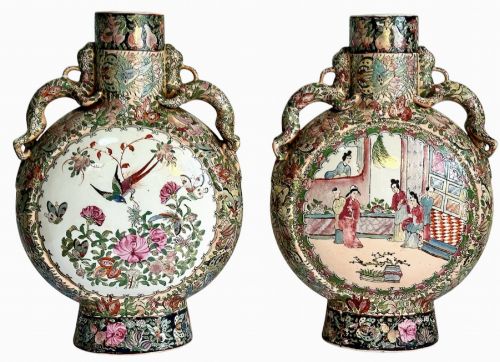
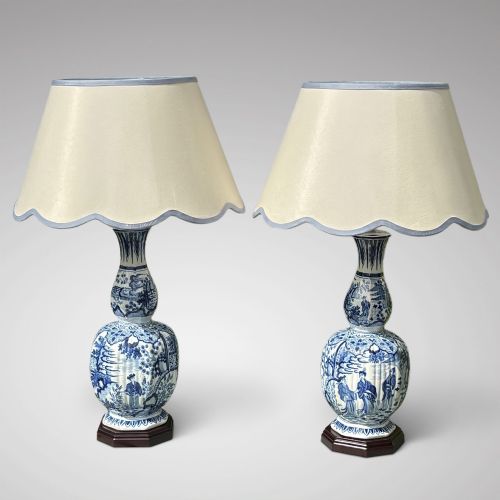


Antique Chinoiserie Pottery Pair
These antique chinoiserie pottery pair selections bring together centuries of global ceramic design, offering matching decorative impact for any room.
Antique Chinoiserie Pottery Pair
An antique chinoiserie pottery pair brings together matched sets of vessels decorated with European interpretations of East Asian motifs. Buyers searching this phrase encounter items spanning the eighteenth, nineteenth, and early twentieth centuries.
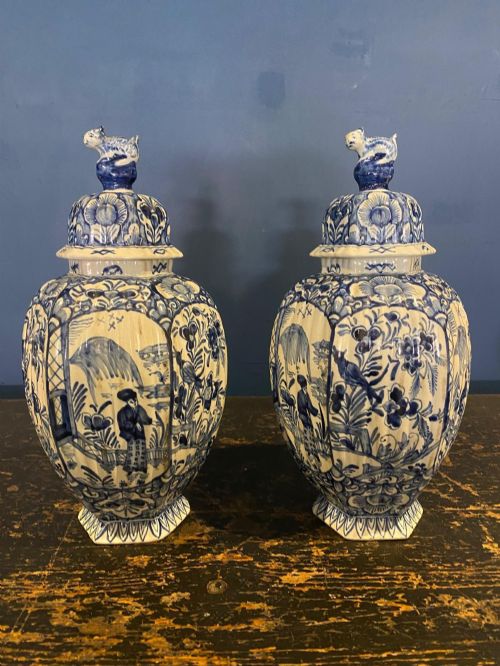
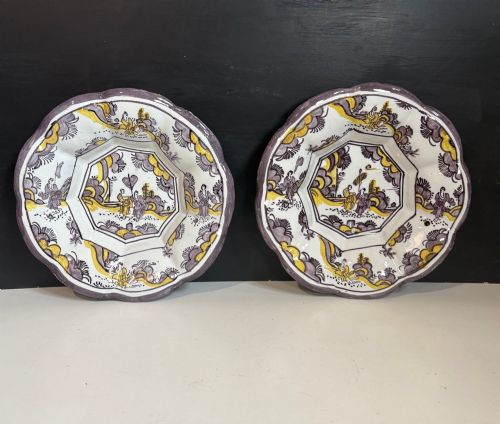
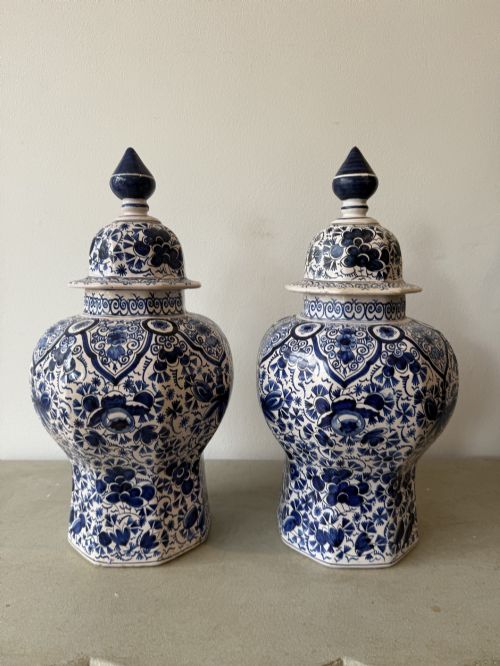
The selections on this page most frequently include blue and white delft plates, lidded vases, and converted table lamps. These dual items served both functional and ornamental roles in period interiors.
Originating from English, Dutch, and Chinese workshops, these items incorporate styles ranging from Dutch Delftware and Georgian to Regency and Victorian interpretations. Each matching set demonstrates the enduring European fascination with Eastern aesthetic traditions.
Materials and production
Potters utilised earthenware, porcelain, and tin glaze to create these decorative objects. Cobalt pigment and enamel colours were applied to the ceramic surfaces before firing to achieve the characteristic blue and white or polychrome patterns.
Makers shaped these items into vases, chargers, dishes, and moon flasks using traditional wheel-throwing and moulding techniques. Some later pieces incorporate fabric shades and gilt bases when adapted into table lamps.
Antique Chinoiserie Pottery Pair Retail Price Guide 2026
Typical asking prices for chinoiserie pottery pair among the pieces listed under this phrase on Sellingantiques today, from the lower quarter to the upper quarter. They describe what is for sale here now, not the wider market.
Several pairs successfully cross boundaries, doubling as practical table lamps while preserving their centuries-old hand-painted porcelain heritage.
Assessing the work
The sophistication of the hand-painted decoration separates standard domestic wares from exceptional examples. Finer pieces display crisp cobalt brushwork and well-defined enamel details that remain clear across both matching items.
Structural integrity and the preservation of the original glaze surface dictate the standing of a set. Matching pairs that retain their uniform coloration and display minimal wear on the ceramic body command greater interest.
Carlton Ware·Mason’s Ironstone
The Antique Chinoiserie Pottery Pair Glossary
- Chinoiserie
- European artistic style reflecting Chinese motifs. This aesthetic influenced furniture, ceramics, and textiles throughout the eighteenth and nineteenth centuries.
- Tin Glaze
- Opaque white pottery coating containing tin oxide. This surface provided a smooth ground for painted decoration in delftware and faience production.
- Ironstone
- Durable semi-vitreous pottery patented in the nineteenth century. This dense material resisted chipping and served as a sturdy alternative to porcelain.
- Famille Rose
- Chinese ceramic palette characterised by opaque pink enamel colours. This decorative scheme developed during the Qing dynasty and influenced Western wares.
Antique Chinoiserie Pottery Pair: Frequently Asked Questions
How were antique chinoiserie pairs used originally?
These matched sets functioned primarily as mantel ornaments, garniture sets on furniture, or serving vessels in wealthy households. Displaying objects in symmetrical pairs reflected prevailing interior design standards of the eighteenth and nineteenth centuries.
Over time, many of these vessels were later adapted into table lamps while retaining their original ceramic bodies and painted decoration.
How do I care for antique pottery lamps?
Dust ceramic surfaces gently with a dry, soft cloth to protect the glaze and painted details from abrasion. Avoid using chemical cleaners or immersing antique pottery in water, particularly pieces with tin glaze or enamel work.
When lamps include fabric shades, remove them periodically for separate cleaning according to the textile material. Ensure electrical components are checked by a qualified professional when dealing with older lamp conversions.
How can I distinguish eighteenth-century delftware?
Eighteenth-century delft plates and vases typically feature a porous earthenware body covered in a tin-glazed surface that may show minor crazing or marginal rim chips. The cobalt blue pigment often sinks slightly into the white glaze during the firing process.
Examining the foot rim usually reveals the unglazed fabric beneath, providing clues about the workshop origin and manufacturing period.
What defines Regency chinoiserie ceramics?
Regency period ceramics often combine bold ironstone bodies with vibrant transfer-printed or hand-painted Eastern-inspired scenes. These pieces reflect a distinct British interpretation of Chinese design elements popular during the early nineteenth century.
The forms tend to be heavier and more robust than earlier delftware, designed to withstand daily domestic use.