



Antique Chinoiserie Pair Vases
These antique chinoiserie pair vases bring decorative balance and vibrant narrative motifs from diverse global traditions into interior schemes.
Antique Chinoiserie Pair Vases
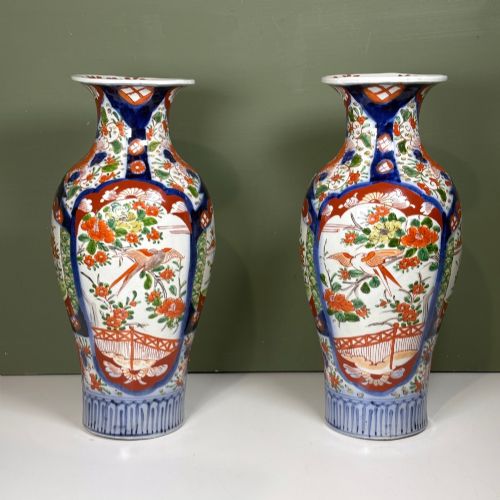
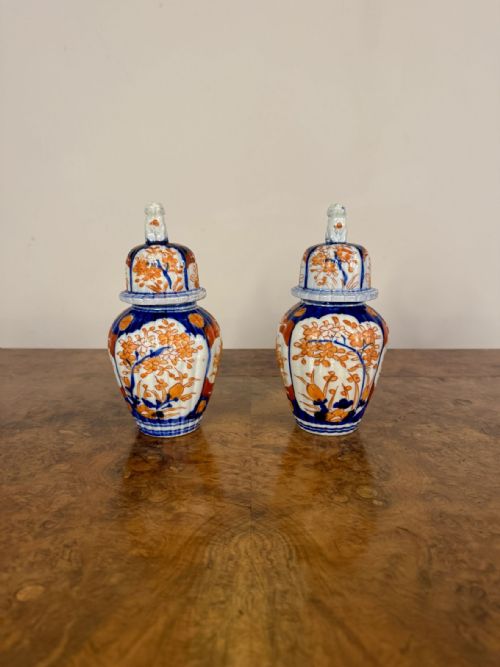
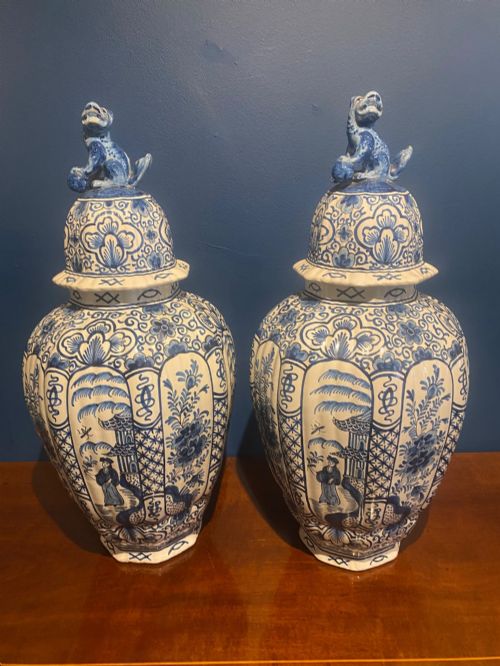
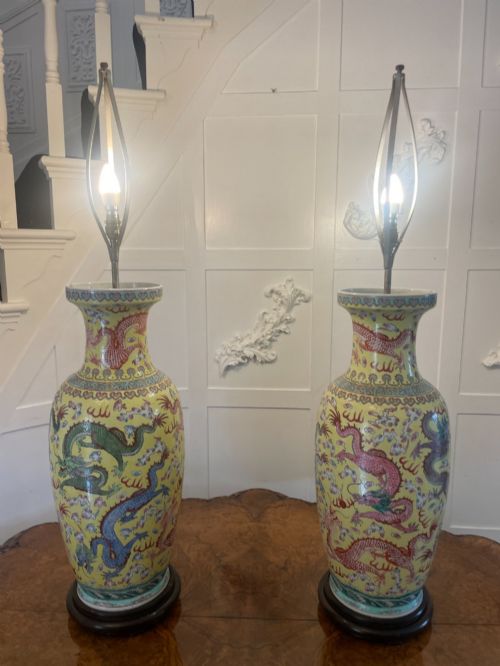
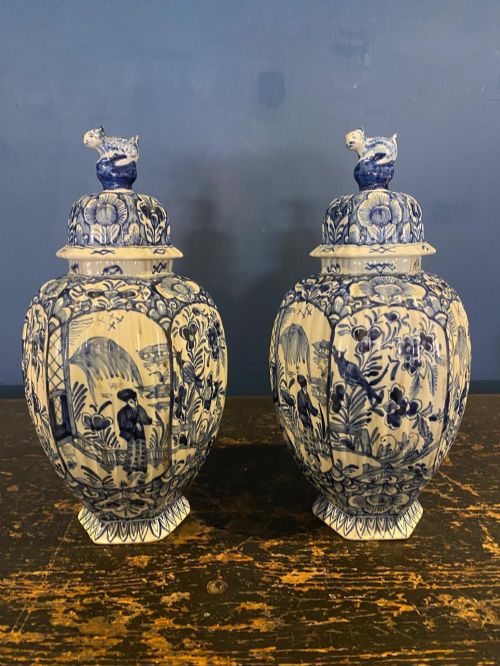
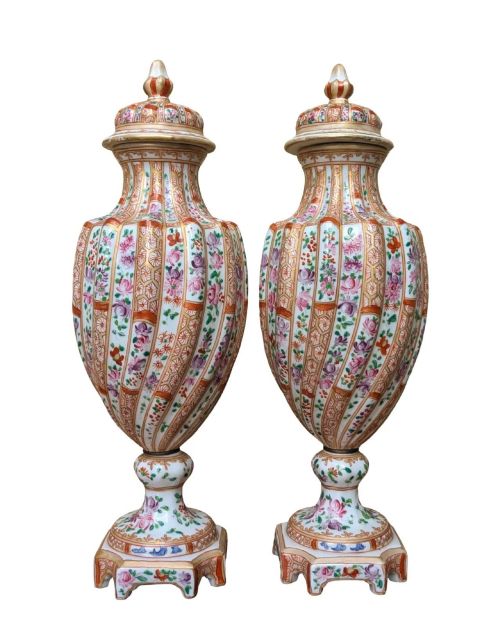
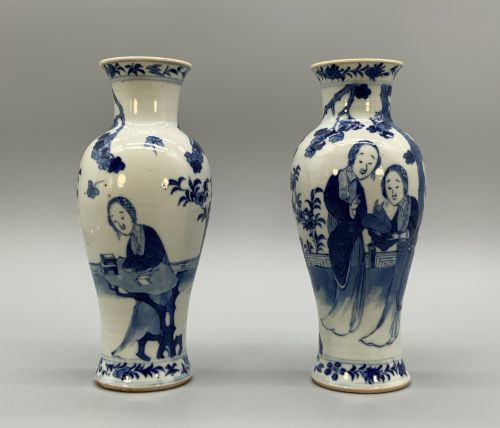
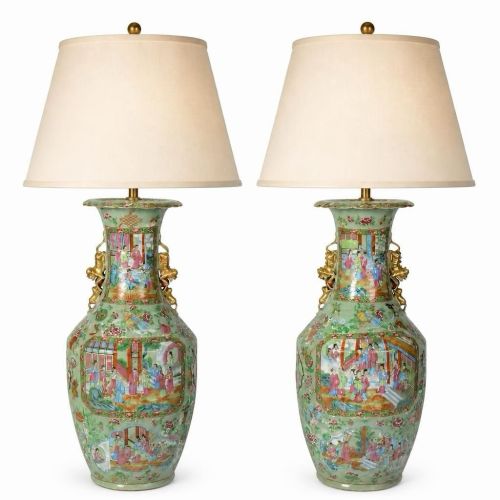
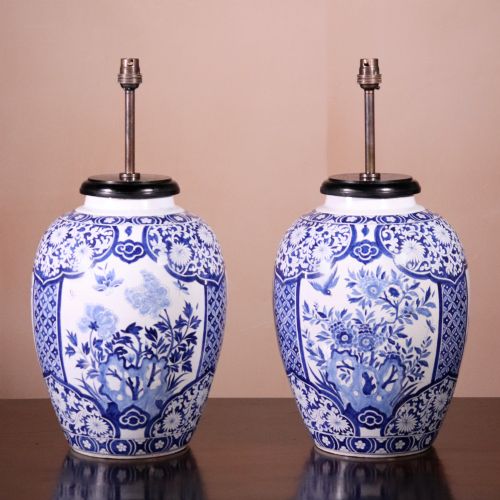
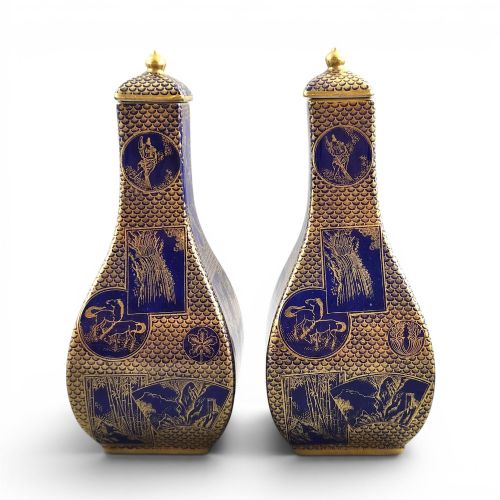
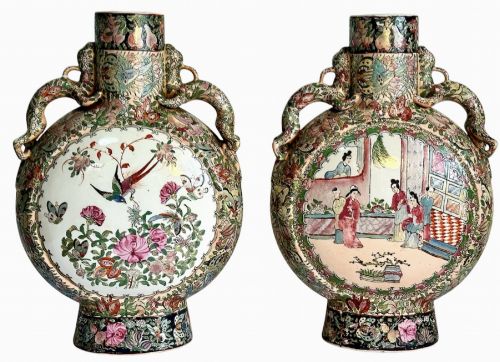
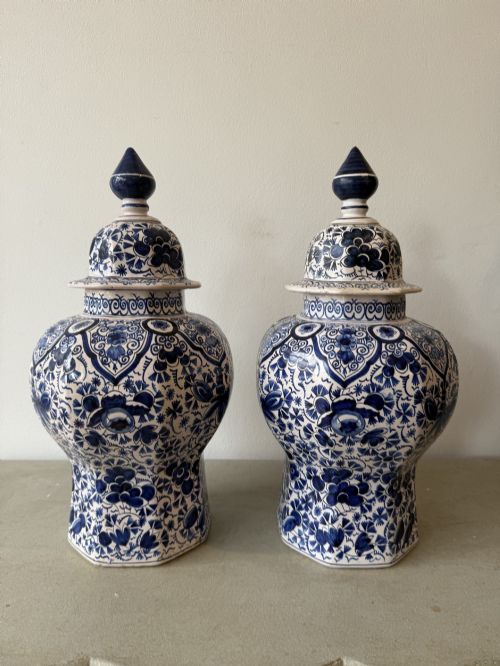
When searching for antique chinoiserie pair vases, collectors encounter matching dual vessels spanning porcelain, ironstone, and earthenware forms. These objects include lidded ginger jars, beaker vases, and moon flasks created for both display and utilitarian lighting.
The selection on this page relies heavily on nineteenth-century Chinese export wares alongside European interpretations from English and Dutch makers. Many examples integrate historical mounts of ormolu or brass, reflecting shifting interior fashions across centuries.
How They Were Made
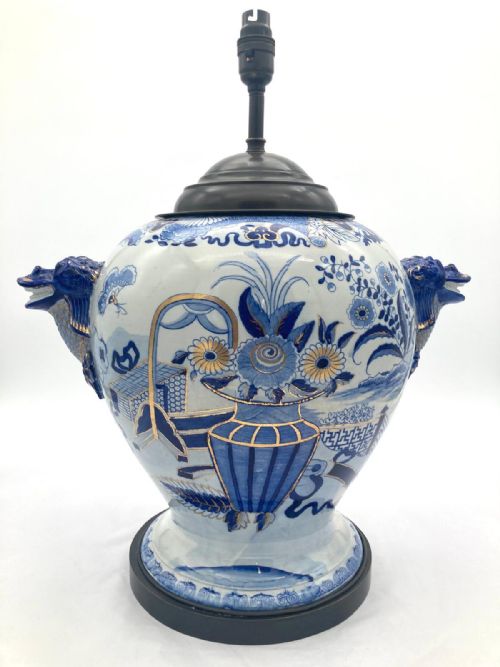
Potters shaped these vessels using traditional ceramic techniques, applying cobalt blue underglazes or polychrome enamels such as famille rose and famille verte. Artisans also utilised cloisonné wirework on metal foundations and transfer-printing methods on ironstone.
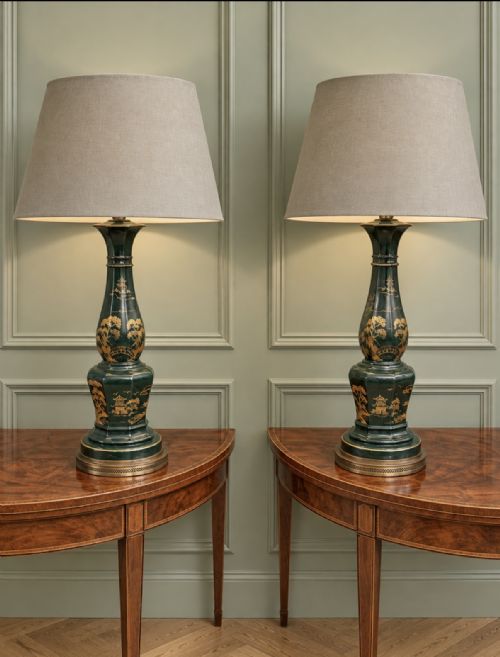
Mounting added structural complexity, with workshops combining porcelain bodies with cast ormolu fittings and converted lamp hardware. Lacquer finishes and decalcomania also appear on specific decorative urns and temple vases.
Antique Chinoiserie Pair Vases Retail Price Guide 2026
Typical asking prices for chinoiserie pair vases among the pieces listed under this phrase on Sellingantiques today, from the lower quarter to the upper quarter. They describe what is for sale here now, not the wider market.
Some towering temple vases reach heights of eighty-six inches, requiring ceilings as grand as their floral designs.
What Varies in Quality
Quality rests upon the crispness of hand-painted detail and the vibrancy of the glaze pigments employed across the matched pair. Superior examples maintain balanced proportions and harmonious symmetry between both items in the set.
The sophistication of metal mounts and the preservation of original enamel surfaces further elevate individual pieces. Conversion work for electrical wiring also impacts the integrity of the original ceramic bodies.
Mason s·Hicks and Meigh·Carlton Ware
The Antique Chinoiserie Pair Vases Glossary
- Chinoiserie
- European artistic interpretations of Chinese and East Asian decorative styles, popular across various historic periods. This aesthetic heavily influences the painted scenes and ornamental motifs found on these vessels.
- Famille Rose
- A major palette of Chinese ceramic glazes introduced in the eighteenth century, distinguished by opaque pink or rose enamel. The term groups porcelain items decorated predominantly with this soft chromatic range.
- Cloisonne
- An ancient metalworking technique employing wire partitions soldered to a base, filled with enamel pastes and fired. This method creates vibrant patterned surfaces frequently seen on nineteenth-century altar and decorative vessels.
- Ironstone
- A heavy, durable type of earthenware patented in the nineteenth century as a resilient alternative to porcelain. English factories frequently utilised this material for robust decorative vases and jugs.
- Ormolu
- Finely ground high-carat gold-cast bronze used for decorative mounts on furniture and ceramics. These gilded metal fixtures provide structural support and ornamental enrichment to imported porcelain bodies.
Antique Chinoiserie Pair Vases: Frequently Asked Questions
What periods do these vases date from?
The listings span multiple centuries, ranging from eighteenth-century examples to twentieth-century productions. Many items originate in the nineteenth century during peak periods of European interest in Asian aesthetics.
European factories also produced revival pieces throughout the Victorian and Edwardian eras. Each era introduced distinct palette choices and mounting styles that help identify the date of manufacture.
Were these vases always used as lamps?
Many of these vessels were originally manufactured as display pieces, lidded jars, or ginger pots without electrical fittings. Conversion into table lamps frequently occurred later in their lifespan to suit modern domestic requirements.
Some specialist pieces were adapted during the nineteenth century or later using ormolu and brass hardware. This alteration reflects the enduring decorative utility collectors found in matching pairs.
How do you style a pair of vases?
Matched pairs provide natural symmetry when placed on mantelpieces, sideboards, or dedicated pedestals within a room. Their balanced visual weight helps anchor architectural focal points or frame larger furniture arrangements.
When wired as lamps, they function effectively on side tables while providing ambient illumination. Their intricate painted surfaces coordinate well with both traditional and eclectic modern interiors.
How are different decorative styles distinguished?
Stylistic classification depends on the origin of the motifs, the glazing palette, and the manufacturing technique. Blue and white delftware differs markedly from Chinese export porcelain or Japanese Imari wares.
Examining the base material, such as ironstone versus soft-paste porcelain, also clarifies regional production methods. Signature colour groupings like famille verte provide clear indicators of specific artistic traditions.