
Decorative Mantel Vases
Decorative mantel vases bring symmetry and colour to a room, offering sculptural presence on a shelf or fireplace.
Decorative Mantel Vases
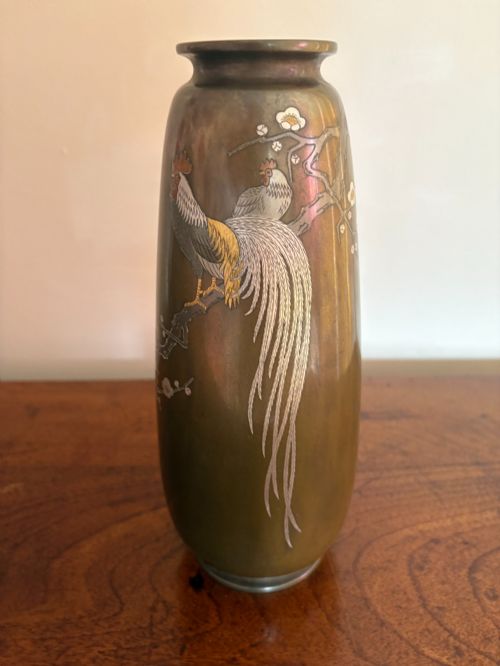
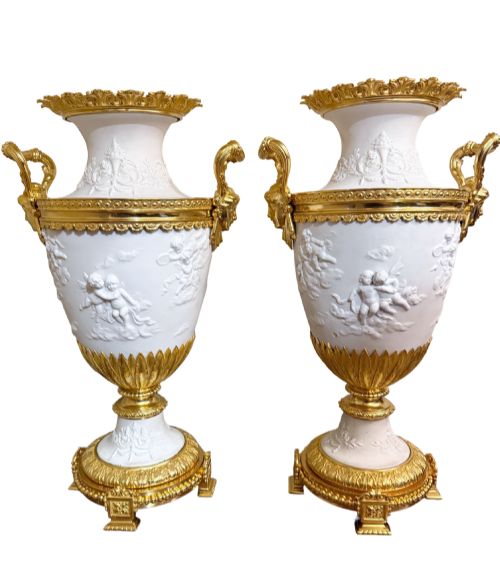
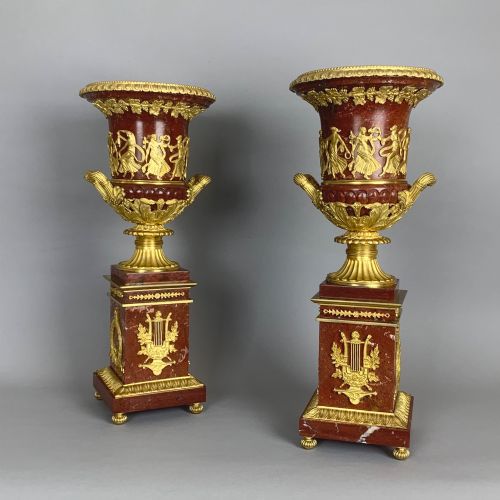
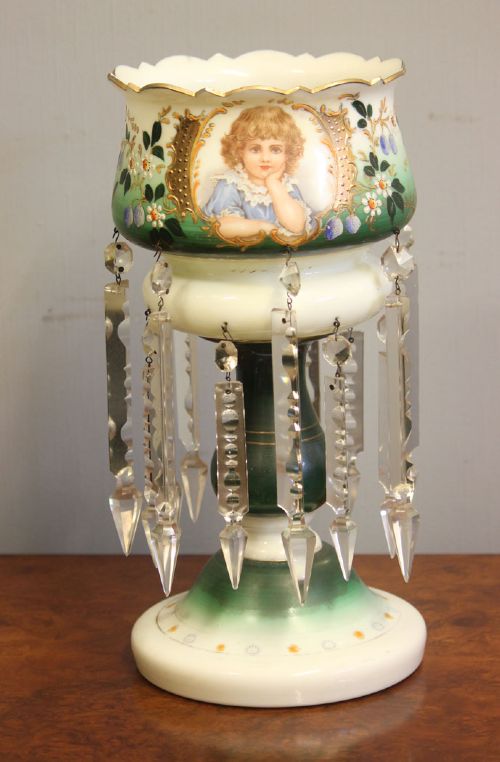
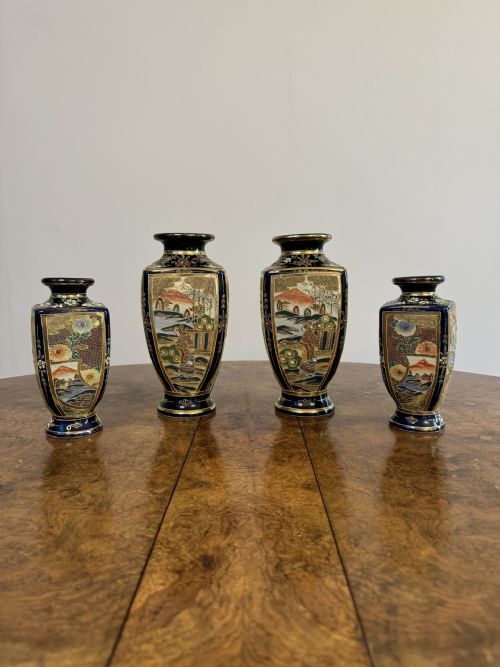
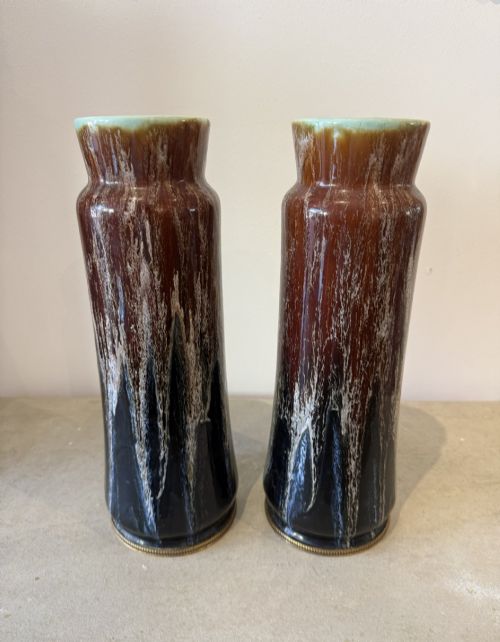
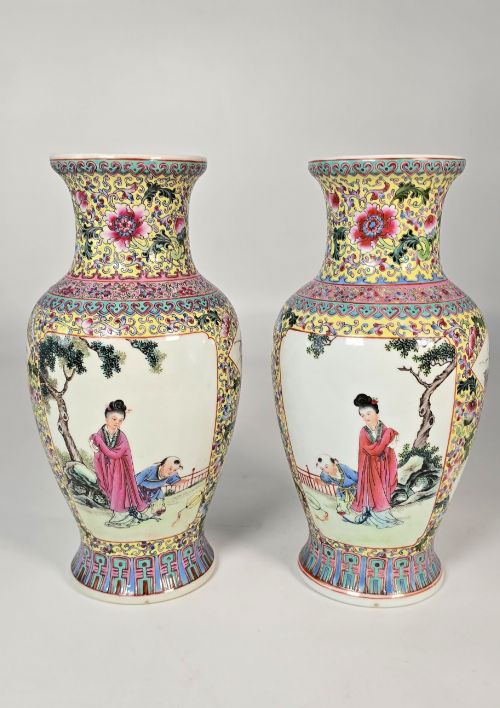
When searching for decorative mantel vases, buyers encounter sculptural vessels designed specifically for display on a mantelpiece, sideboard or console. These pieces frequently appear in matched pairs or larger garniture sets intended to balance the architecture of a room. The selections span the nineteenth and early twentieth centuries, encompassing European porcelain and bronze alongside Japanese Satsuma and Kutani wares.
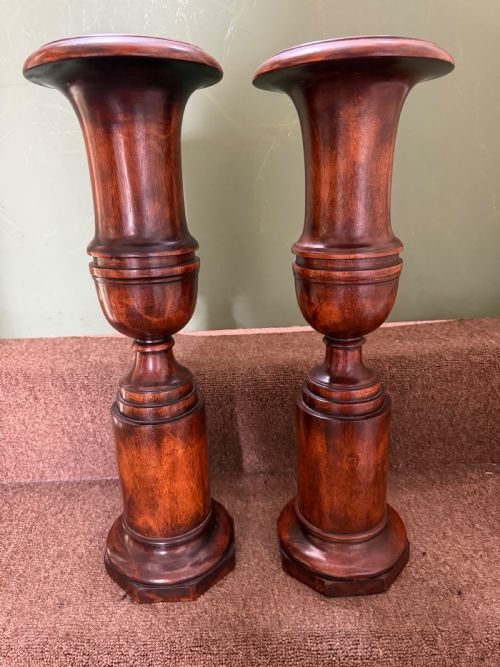
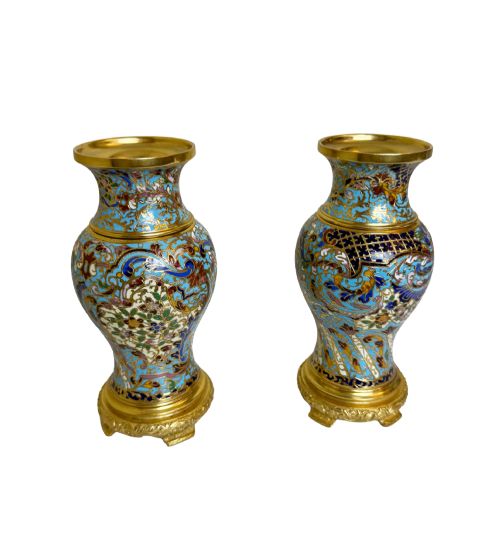
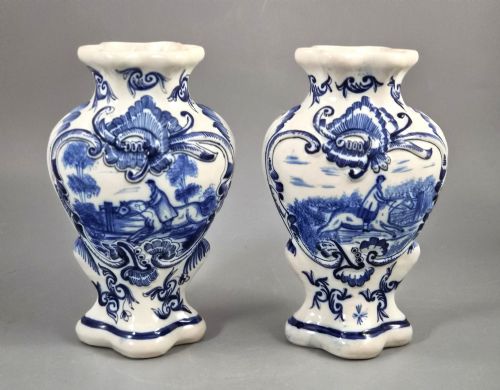
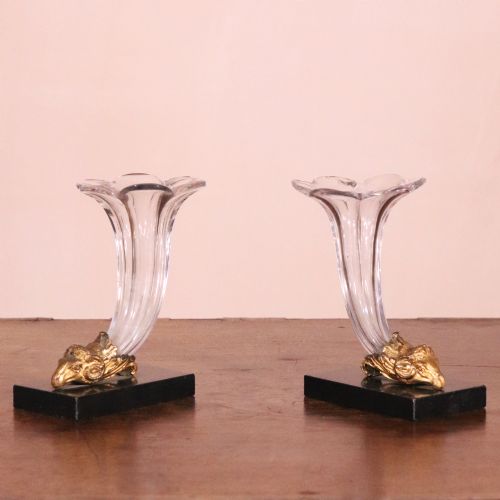
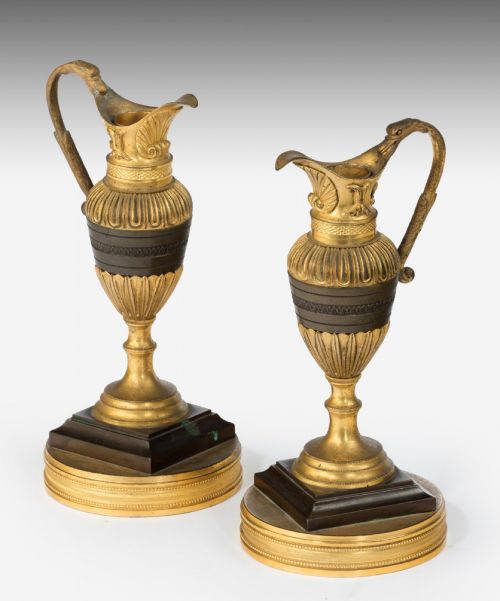
The forms vary widely from classical campana urns and ewers to turned walnut vessels and cornucopia shapes. French Empire, Neoclassical and Victorian aesthetics dominate the offerings, often pairing ceramic bodies with gilt bronze mounts. Buyers will also find earthenware, cloisonné and spelter creations that reflect the eclectic tastes of the period.
Originating from British, French, Italian and Asian workshops, these decorative objects served primarily as ornaments rather than functional flower holders. Many retain their original garniture companions, providing a complete decorative statement for period interiors.
How They Were Made
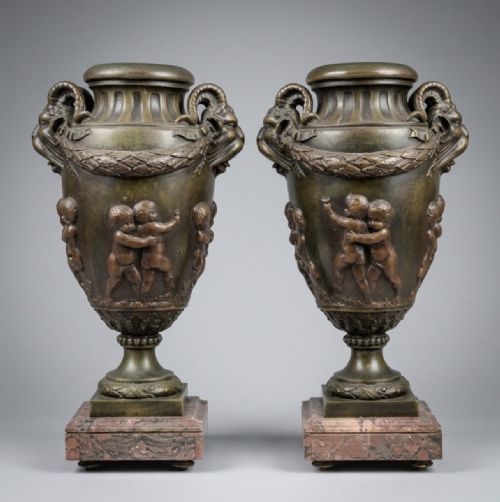
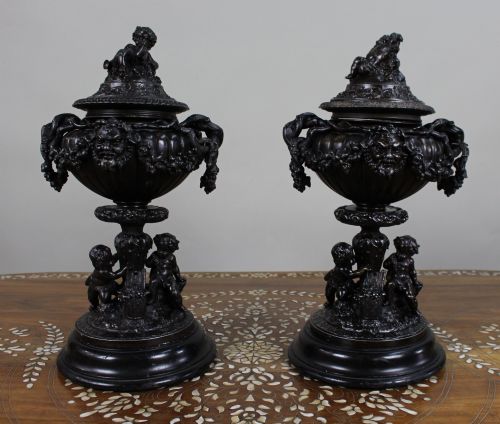
The makers utilised a combination of cast metal and fired ceramic, frequently uniting porcelain or earthenware bodies with fire-gilt or ormolu mounts. Bronze and spelter were cast and chased to create crisp architectural details, masks and handles, then finished with patination or gilding.
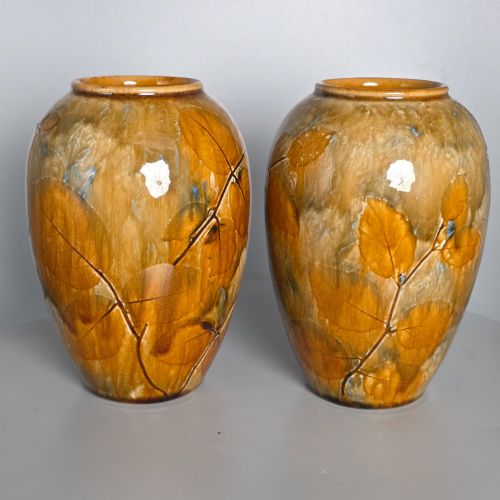
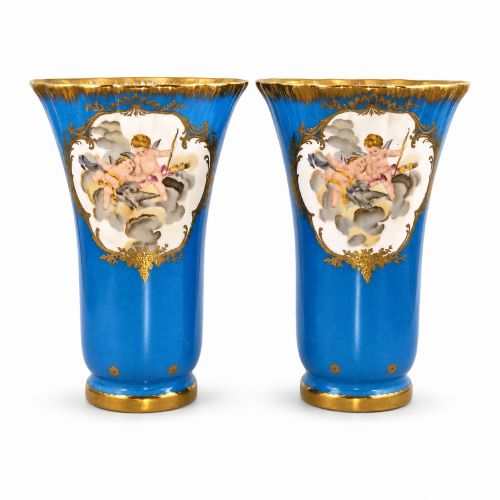
Ceramic bodies relied on traditional throwing and moulding techniques before receiving hand-painted enamels, glazes or transfer printing. Japanese pieces incorporated intricate moriage work and fine gold detailing over earthenware, while European porcelain workshops applied cobalt grounds and polychrome pastoral scenes.
Neoclassical, Art Nouveau, and Victorian styles appear across the selection of European and Asian decorative objects.
What Varies in Quality
The distinction between tiers rests upon the crispness of the casting in metal mounts and the hand-painting fidelity on ceramic surfaces. Finer bronzes exhibit sharp chasing where details remain distinct, whereas lesser spelter castings often show softened edges beneath their metallic paint.
Porcelain quality is evident in the delicacy of the potting, the depth of the glaze and the precision of the gilding. Complete garniture sets that retain all matching elements command greater appreciation than assembled groups or single survivors.
Royal Doulton·Fourmaintraux Courquin·Boch Freres·Samson Paris·Royal Worcester·Chelsea Porcelain·Robert T Lallement
The Decorative Mantel Vases Glossary
- Garniture
- A matched set of three or more decorative vases or urns designed to be displayed together on a mantelpiece. These sets typically feature a taller central vessel flanked by smaller matching counterparts.
- Ormolu
- Finely ground high-carat gold applied to a bronze base using a mercury amalgamation process. This technique creates a durable, rich golden finish characteristic of French decorative objects.
- Spelter
- An alloy of zinc and lead used as a less costly alternative to bronze in nineteenth-century metalwork. It accepts bronzed or painted finishes readily to simulate heavier metals.
- Campana
- A vase shape resembling an inverted bell, popular in classical antiquity and revived during the Neoclassical period. These vessels usually feature flared rims and pedestal feet.
- Cloisonné
- An enamelwork technique where metal wire is soldered to a metal body to create compartments filled with coloured paste before firing. This method produces intricate geometric and floral patterns.
Decorative Mantel Vases: Frequently Asked Questions
What is a mantel garniture?
A mantel garniture consists of a matched set of vases or urns, usually three or five pieces, designed to sit symmetrically across a fireplace.
These sets create a balanced visual focal point on a mantelpiece and often coordinate with matching clocks or candlesticks.
How do I style antique vases?
Place pairs symmetrically on either side of a mirror, clock or painting to draw the eye toward the centre of the mantel.
Keep the surrounding space uncluttered to allow the detailed bronze mounts or hand-painted porcelain to stand out clearly.
What distinguishes spelter from bronze?
Spelter is a softer zinc alloy that feels lighter and shows less dense metallic resonance than bronze when tapped. It was widely used for nineteenth-century decorative figures and urns.
Bronze offers greater durability and accepts finer chasing and deeper patination during the casting process.
Are these vases meant for water?
Most antique decorative vases were produced solely as ornamental objects rather than functional vessels for fresh flowers. Using them for water can damage porous ceramic bodies, historical glazes or interior liners.