






19th Century Lacquered Vases
These 19th century lacquered vases bring rich surface depth and global craftsmanship into a room, spanning from Chinese cinnabar to Kashmiri and Japanese works.
19th Century Lacquered Vases
The forms range from classic flared porcelain vases to carved cinnabar vessels and papier-mâché urns. Originating from distinct decorative traditions, these objects utilise organic tree sap, paint, and gold leaf on wood, porcelain, metal, or papier-mâché bases. Buyers most frequently meet pieces from the Qing Dynasty and Meiji Period alongside British and continental European interpretations.
How they were made
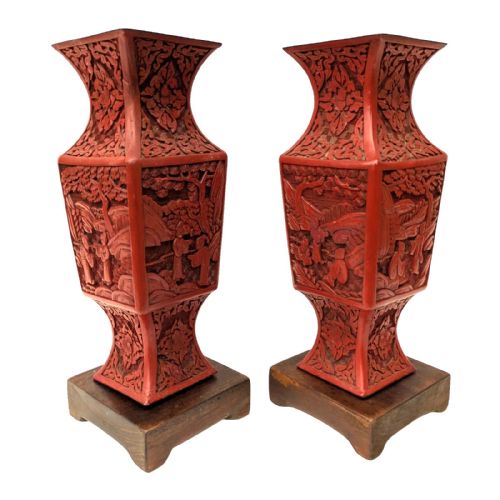
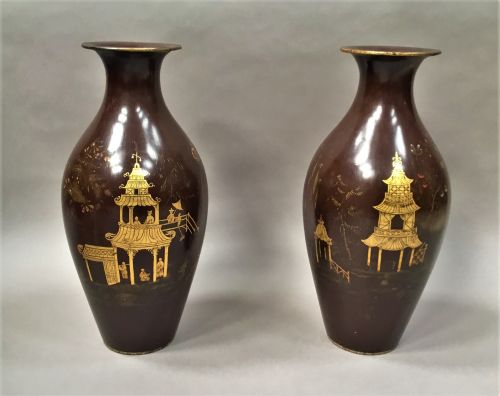
Maker workshops built these vessels using a variety of foundational materials, applying lacquer, paint, or gold leaf over wood, porcelain, brass, pewter, and papier-mâché. Chinese pieces utilise carved red cinnabar lacquer built up in multiple layers over a core. Japanese examples combine a porcelain body with lacquer applied over black paint.
Kashmiri and European items rely on hand-painted surfaces and japanning techniques applied to wood or papier-mâché. Artisans shaped these materials into decorative vessels and urns, often incorporating neoclassical designs or traditional Asian motifs.
19th Century Lacquered Vases Retail Price Guide 2026
Typical asking prices for 19th century lacquered vases among the pieces listed under this phrase on Sellingantiques today, from the lower quarter to the upper quarter. They describe what is for sale here now, not the wider market.
The materials recorded in these listings include lacquer, wood, porcelain, cinnabar, brass, papier-mâché, paint, and gold leaf.
What varies in quality
Quality in these vessels rests upon the depth of the carved or painted surface and the precision of the underlying material. Carved cinnabar examples demonstrate merit through the crispness and depth of the relief work cut into the layered lacquer. Japanese and Kashmiri pieces show distinction in the control of the over-paint, lacquer application, and decorative detailing.
The integrity of the core material - whether porcelain, wood, or papier-mâché - shapes the durability and refinement of the vessel. Maker attribution, such as legible stamps on papier-mâché pieces, further distinguishes individual works within the range.
Jennens & Bettridge
The 19th Century Lacquered Vases Glossary
- Cinnabar lacquer
- A material made from the sap of the lacquer tree mixed with mercuric sulphide to produce a red colour, carved deeply when dry. This technique requires numerous coats applied over a substrate.
- Japanning
- A European imitation of East Asian lacquerwork developed during the seventeenth and eighteenth centuries, using heat-dried varnishes on materials like papier-mâché or metal. It frequently appears on neoclassical urns.
- Papier-mâché
- A composite material made from paper pulp or layers of paper bound with glue, moulded and dried to form rigid objects. Jennens and Bettridge utilised this base for lacquered vases.
- Meiji Period
- The era in Japanese history spanning from 1868 to 1912, known for porcelain and lacquer production aimed at both domestic and international markets. Pieces from this time often feature koi and painted details.
- Qing Dynasty
- The final imperial dynasty of China, ruling from 1644 to 1912, noted for intricate carved cinnabar lacquer vessels. Works from this period demonstrate traditional carving methods.
19th Century Lacquered Vases: Frequently Asked Questions
What materials make up these vases?
The listings show items constructed from wood, porcelain, brass, pewter, and papier-mâché as core substrates.
Surfaces are finished with lacquer, red cinnabar, paint, and gold leaf depending on the regional origin.
Where were these vessels produced?
Geographic origins span across China, Japan, Kashmir, and Europe, including Dutch and British workshops.
Each region applied distinct decorative vocabularies, from Qing Dynasty carving to Victorian Chinoiserie.
How do I care for a lacquered vase?
Keep these vessels away from direct sunlight and extreme humidity fluctuations to protect the organic lacquer and paint layers.
Dust gently with a dry, soft cloth rather than utilising liquid cleaners or polishes.
How can I tell the period?
Dating relies on stylistic markers such as Meiji Period porcelain traits, Qing Dynasty carving styles, and nineteenth-century European neoclassical shapes.
Maker stamps, such as those found on papier-mâché pieces, provide specific attribution.