



Antique Chinoiserie Clock
An antique chinoiserie clock brings oriental lacquer and gilt decoration to traditional longcase and mantel timepieces.
Antique Chinoiserie Clock
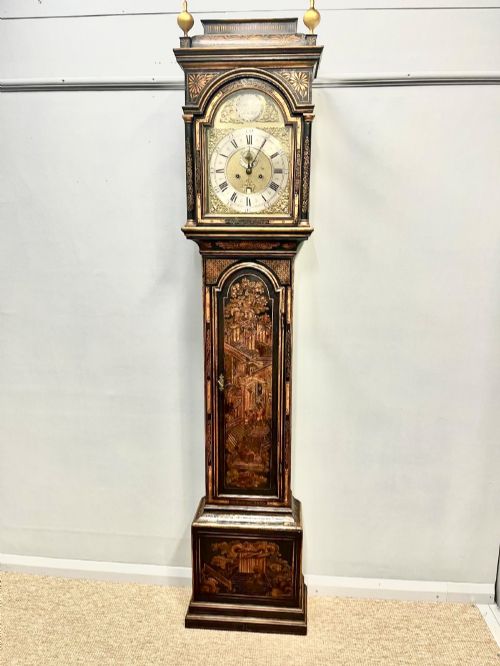
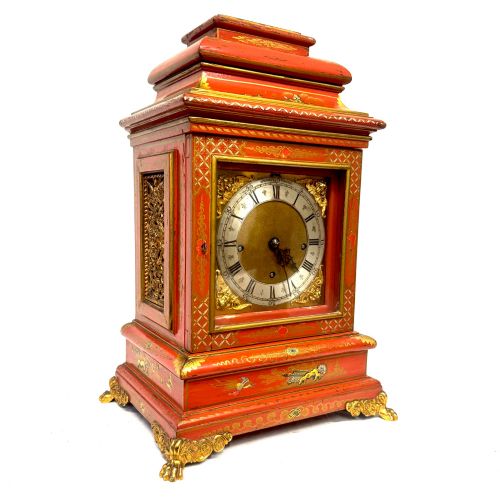
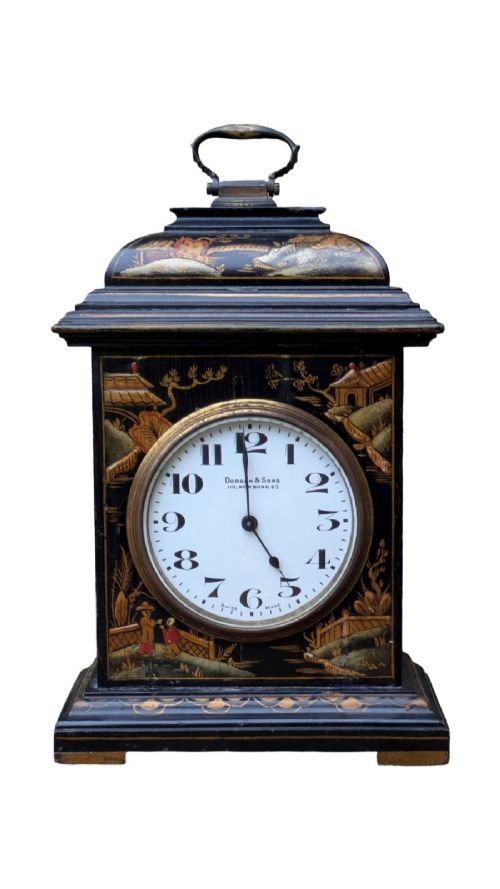
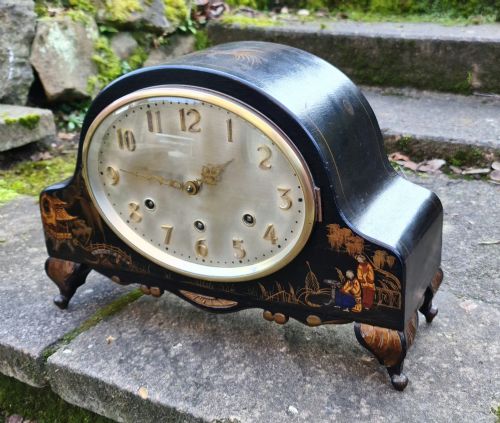
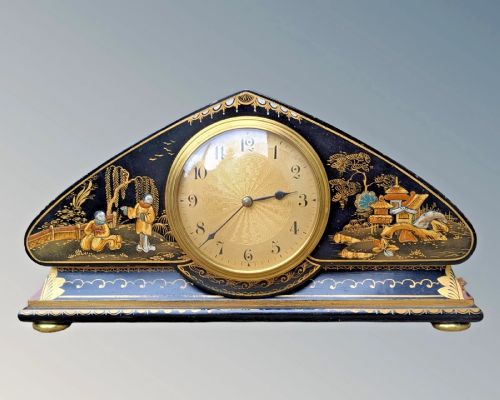
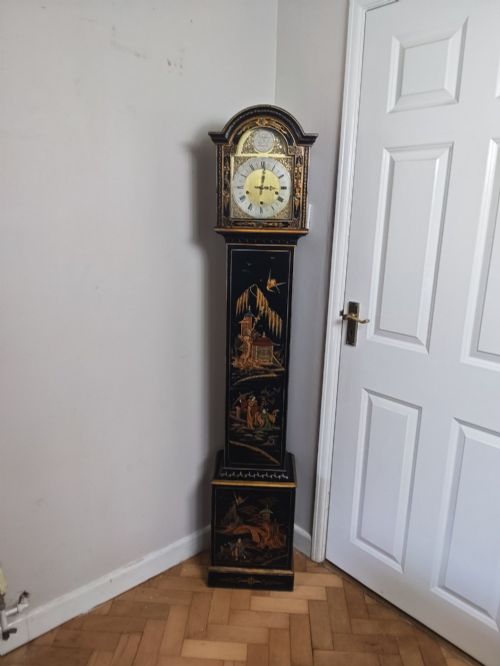
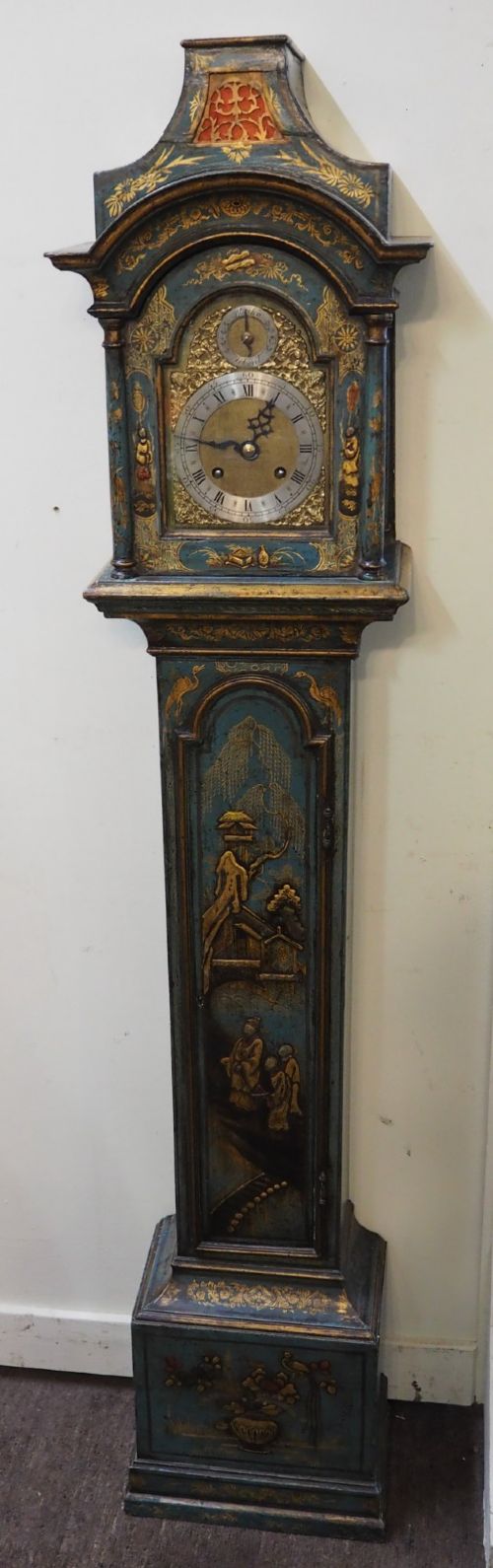
An antique chinoiserie clock encompasses tall longcase clocks, smaller grandmother clocks, bracket clocks and mantel clocks decorated with painted oriental motifs. These pieces span from the 18th century through the Georgian era to later revivals in the 1920s and 1930s.
Longcase clocks dominate the earlier periods, often finished in green, red or dark lacquer with brass movements by notable makers. Smaller mantel and desk examples appear frequently from the 20th-century revival periods in cream, blue or green finishes.
Materials and construction
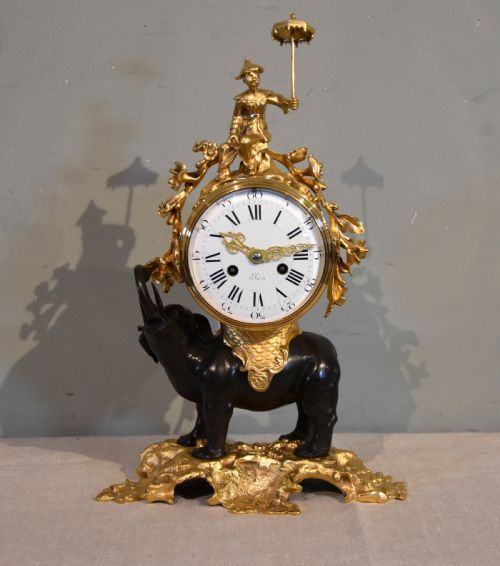
Cases are constructed from wood finished with layers of lacquer, frequently japanned in colours such as green, red, blue or cream and highlighted with gilt decoration. Brass movements drive the timekeeping, while certain bracket and mantel formats incorporate bronze, ormolu, enamel or glass panels.
Traditional craftsmanship relies on hand-painted oriental scenes applied to the wooden carcase, housing mechanical movements ranging from eight-day strikes to musical and automaton complications.
Antique Chinoiserie Clock Retail Price Guide 2026
Typical asking prices for chinoiserie clock among the pieces listed under this phrase on Sellingantiques today, from the lower quarter to the upper quarter. They describe what is for sale here now, not the wider market.
Select 18th-century longcase clocks incorporate moving automaton figures like rocking Father Time to animate the dial.
Standard and execution
Quality rests in the depth and preservation of the lacquer work, the crispness of the gilt ornamentation, and the original integrity of the wooden case. Finer examples retain their deep colour saturation and detailed hand-painted scenes without excessive restoration.
The mechanical movement inside dictates value as much as the exterior case. Signed brass movements by established makers command greater regard than anonymous or later replacement mechanisms.
John Fielder of Alton·William Kipling London·Wise of Reading·Gardner of London·James Smith London·Chater & Son London
The Antique Chinoiserie Clock Glossary
- Chinoiserie
- European interpretation of Chinese and East Asian artistic traditions, expressed through painted lacquer and gilt decoration on furniture and clocks. This style flourished in various waves from the 18th century into the 20th century.
- Japanning
- A form of European finishing that mimics traditional Asian lacquerware by applying multiple layers of varnish and heat-cured resin. Artisans then decorate the surface with raised gilt figures and landscapes.
- Longcase clock
- A tall freestanding weight-driven timepiece featuring a pendulum enclosed within a wooden trunk, commonly known as a grandfather clock. Shorter variants are often termed grandmother clocks.
- Bracket clock
- A portable mechanical clock originally designed to sit on a wall bracket or desk, frequently featuring a striking mechanism and a carrying handle. Many 18th-century examples housed brass dial plates and intricate striking trains.
- Ormolu
- Gilded bronze used for decorative mounts and figural details on clocks. The technique involves applying a mercury and gold amalgam to a bronze base before firing.
Antique Chinoiserie Clock: Frequently Asked Questions
How do I date an antique chinoiserie clock?
Dating relies on examining the construction of the wooden case, the style of the brass dial, and the signature of the maker engraved on the movement. Earlier 18th-century pieces display different dial proportions and cabinetry compared to 1920s and 1930s revival models.
Paint pigments and lacquer degradation also offer clues to age. Professional horologists can inspect the movement components to confirm whether the mechanism matches the period of the outer case.
What is the difference between a grandfather and a grandmother clock?
Grandfather clocks are standard full-sized longcase clocks standing over six feet tall, designed to house heavy weights and long pendulums. Grandmother clocks are noticeably smaller scaled longcase clocks produced in the 20th century or earlier.
Despite their reduced height, grandmother clocks often feature chiming movements. They suit smaller rooms where a traditional tall longcase clock would overwhelm the floor space.
How do I care for a lacquered clock case?
Lacquered surfaces require stable indoor environments away from direct sunlight and extreme temperature fluctuations. Dust the exterior gently with a dry, soft microfibre cloth without applying modern liquid furniture polishes.
Protecting the delicate gilt decoration prevents premature fading or flaking. Professional clock restorers should handle any structural repairs to the lacquer or wood carcase.
Where should I place a longcase clock?
Longcase clocks need a solid, level floor and must be secured to a wall using internal brackets to prevent tipping. Placing them away from exterior doors prevents vibrations that can disrupt the pendulum's rhythm.
Adequate clearance is essential for the weights and pendulum to move freely inside the trunk. Proper placement ensures the mechanical movement keeps accurate time.