
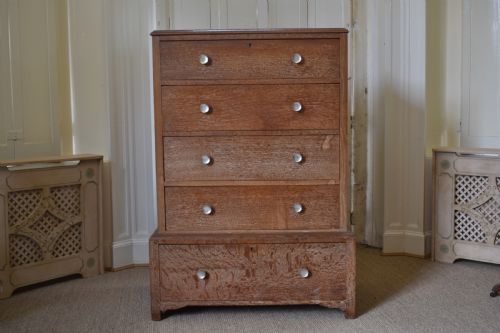
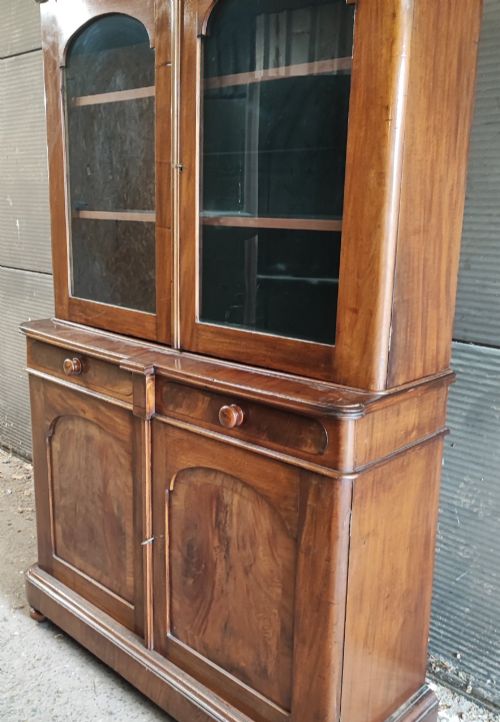
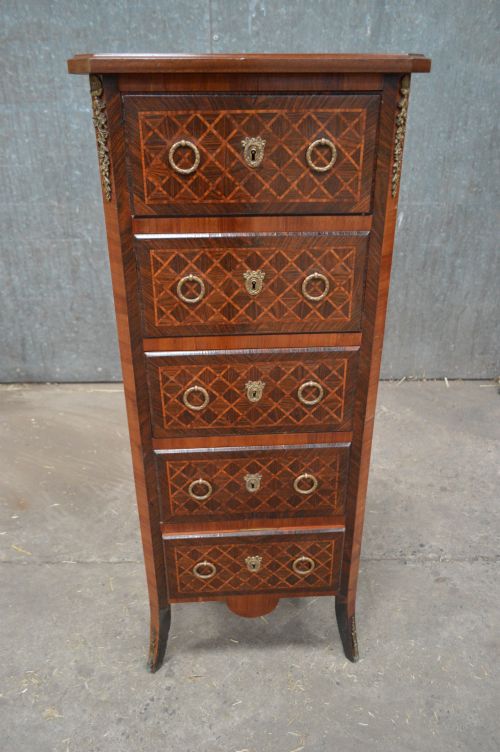
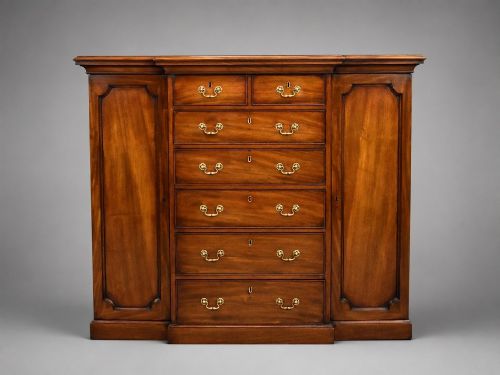
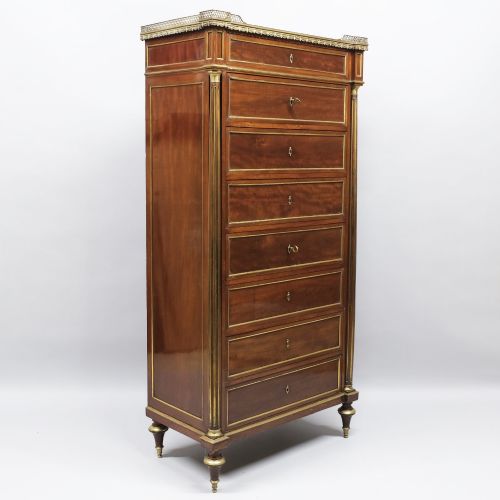


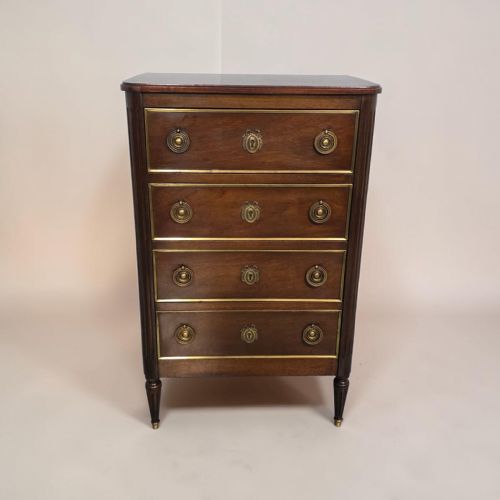
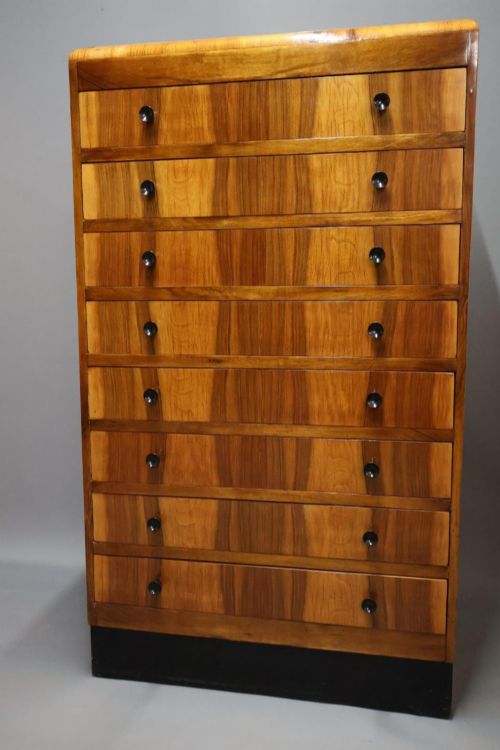


Antique Chiffonier with Drawers
These antique chiffonier with drawers pieces are low sideboards combining enclosed cupboards, display tiers, and practical storage, prized for compact living spaces.
Antique Chiffonier with Drawers
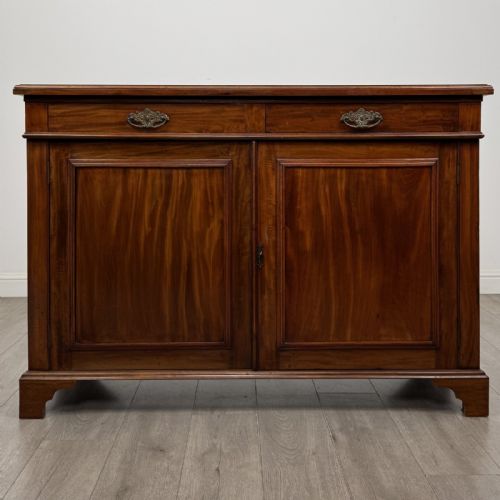
When you search for an antique chiffonier with drawers, you encounter low multipurpose sideboards that developed from late Georgian dining room furniture into essential Victorian pieces. The form typically combines a lower two-door cupboard with upper shelves or a tiered back, accompanied by useful drawer space.
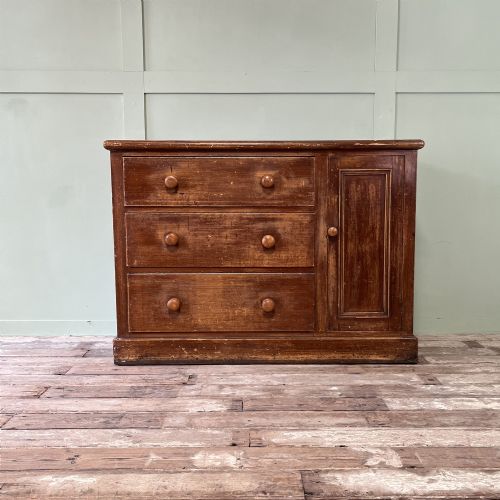
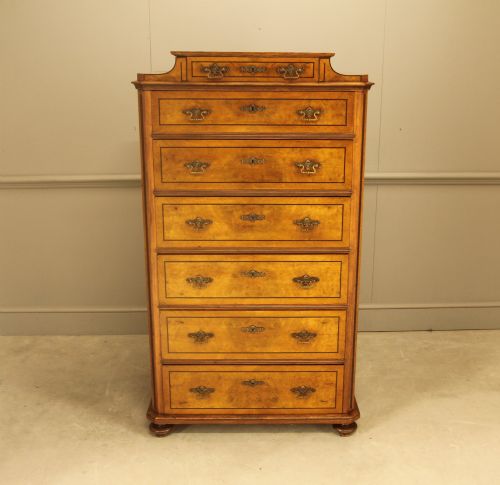
The versions you are most likely to meet on this page span the Georgian, Regency, and Victorian periods, alongside Edwardian examples and 19th-century interpretations in mahogany, pine, and satinwood. Some examples incorporate an open shelved top or a dedicated writing drawer, reflecting varied domestic uses from the dining room to the parlour.
How they were made
Cabinet makers constructed these pieces primarily using solid timbers and wood veneers such as mahogany, satinwood, cedar, and pine. Structural framing relied on traditional joinery methods to house drawers and support tiered shelving backs securely.
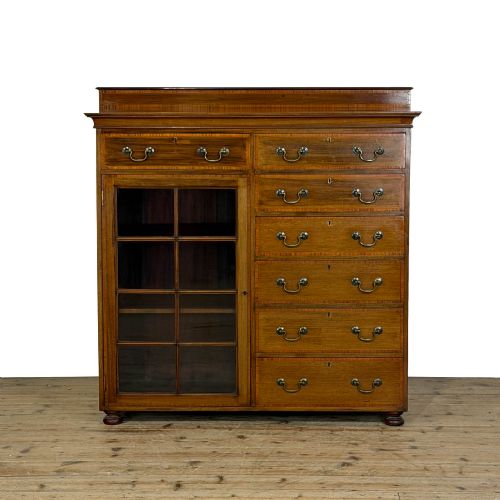
Decoration often included brass inlays, fine painted details, and glass panels, depending on the stylistic requirements of the Regency or Georgian periods. Secondary timbers like pine appeared in carcases and drawer linings, ensuring robust everyday utility.
Current listings feature pieces spanning the Georgian, Regency, Victorian, and Edwardian periods in mahogany, satinwood, pine, cedar, and brass.
What varies in quality
The distinction between standard examples and superior pieces rests on the choice of cabinet timber, the crispness of brass inlay, and the finesse of painted decoration. Finer pieces display carefully selected mahogany or satinwood veneers matched across the front elevation.
Construction details such as drawer linings, the integration of multi-tier shelf backs, and the subtlety of mouldings separate workshop standards. Higher-quality items maintain balanced proportions between the lower cupboard base and upper display shelving.
The Antique Chiffonier with Drawers Glossary
- Chiffonier
- A low sideboard or cabinet featuring a combination of cupboards and drawers, often surmounted by a shelf back. This form evolved during the early 19th century to serve as convenient storage in smaller reception rooms.
- Satinwood
- A pale, dense timber prized for its lustrous grain, frequently employed as a veneer for decorativebanding or fine painted surfaces. It is characteristic of high-status George III and Victorian cabinetry.
- Regency
- A stylistic period spanning the early 19th century, known for classical restraint, architectural lines, and brass inlay details. Furniture from this era often exhibits clean geometry and dark exotic woods.
- Georgian
- The era covering the reigns of the four King Georges, encompassing distinct stylistic shifts from rococo curves to neoclassical symmetry. Pieces from this time demonstrate refined proportions and traditional cabinet-making techniques.
Antique Chiffonier with Drawers: Frequently Asked Questions
Where were chiffoniers used in the home?
These cabinets served primarily in dining rooms and parlours to store tableware, linens, and writing materials while displaying decorative objects on their upper tiers.
Their compact footprint allowed them to fit into spaces where larger sideboards proved impractical.
How do I distinguish Regency from Victorian examples?
Regency pieces often display classical brass inlay, restrained geometric lines, and lighter proportions typical of the early 19th century.
Victorian versions tend to be heavier in scale, utilising rich mahogany and elaborate mouldings suited to later 19th-century interiors.
What is the purpose of the shelf back?
The upper tiers provided a designated space for displaying porcelain, glassware, or decorative plates within the main living areas.
Some configurations also incorporated writing drawers beneath these shelves to accommodate correspondence.
Are these pieces suitable for modern rooms?
Their low profile and combined drawer and cupboard storage make them highly practical as media consoles or side storage units.
They fit easily beneath wall-mounted art or windows while offering concealed interior space.