


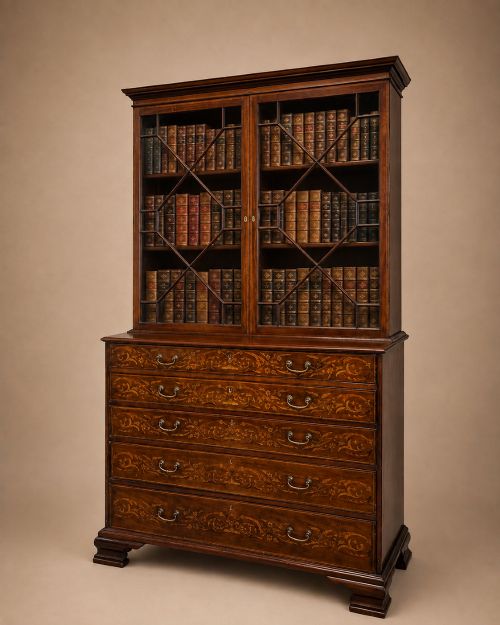
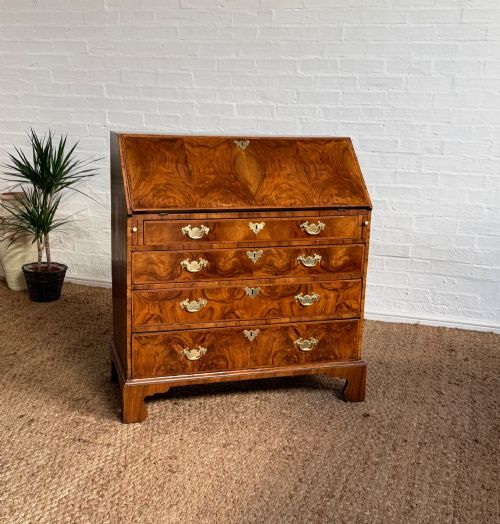
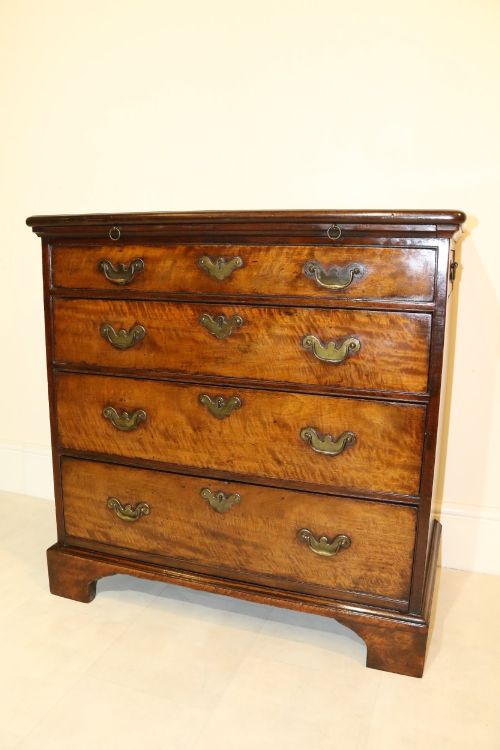
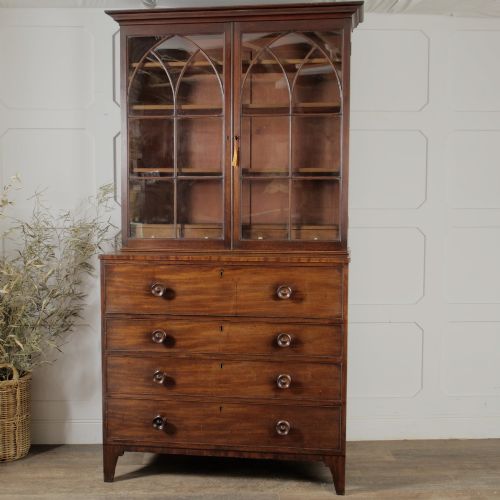
Antique Chest of Drawers Desk
When you search for an antique chest of drawers desk, you are looking at dual-purpose furniture designed for storage and writing.
Antique Chest of Drawers Desk
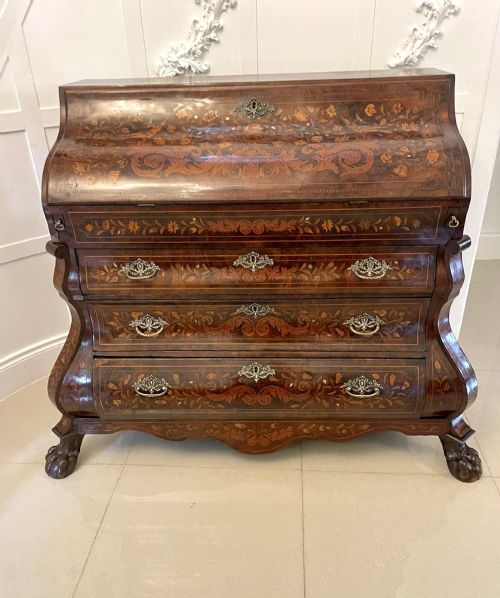
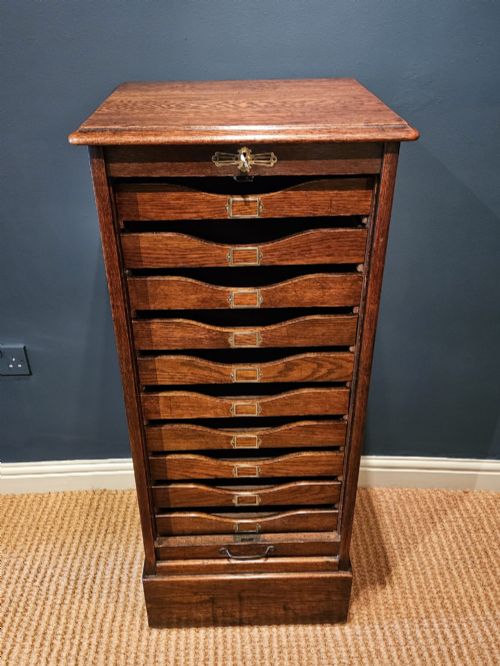
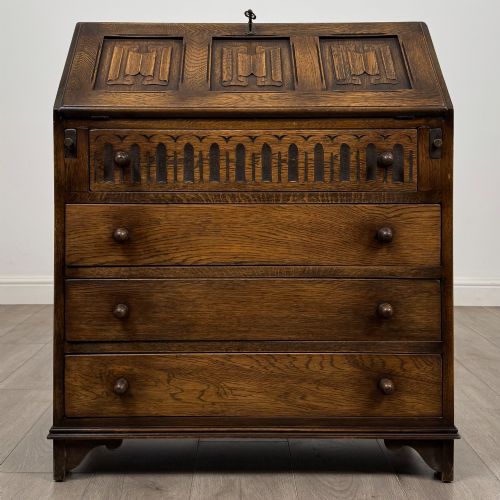
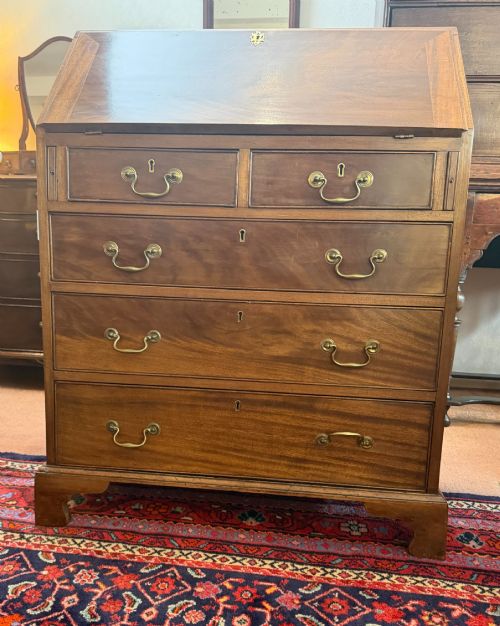
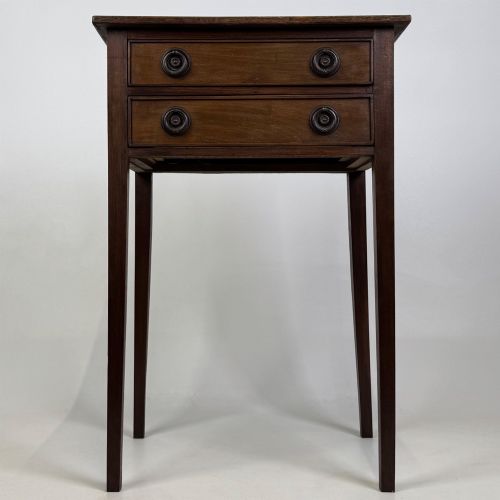
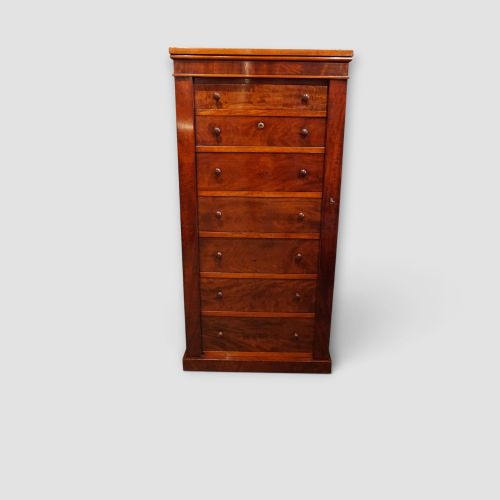
An antique chest of drawers desk combines compartmentalised storage with a dedicated writing surface, taking forms such as bureaux, secretaire chests, and kneehole desks. These pieces span periods from the 18th century through the Georgian, Victorian, and Edwardian eras, reflecting changing domestic requirements.
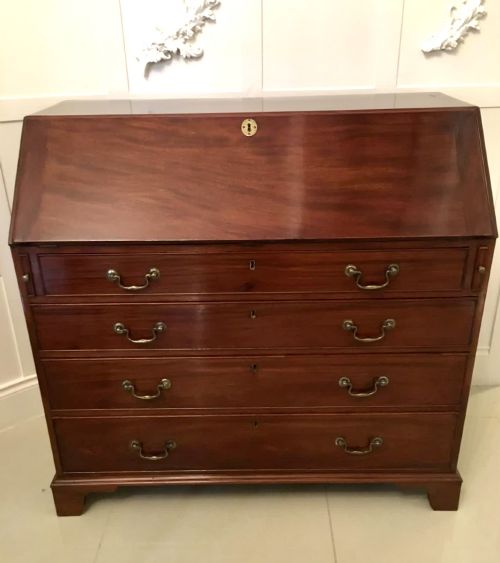
The most common formats you will meet on this page are the fall-front bureau and the secretaire chest, where an upper drawer pulls down to reveal fitted stationery pigeonholes and small drawers. Materials range from native oak and mahogany to exotic walnut veneers, often accompanied by brass hardware.
Originating to serve domestic accounts and correspondence, these hybrid pieces offer functional workspace alongside traditional drawer storage. They bridge the gap between a tallboy or standard chest and a library table.
How they were made
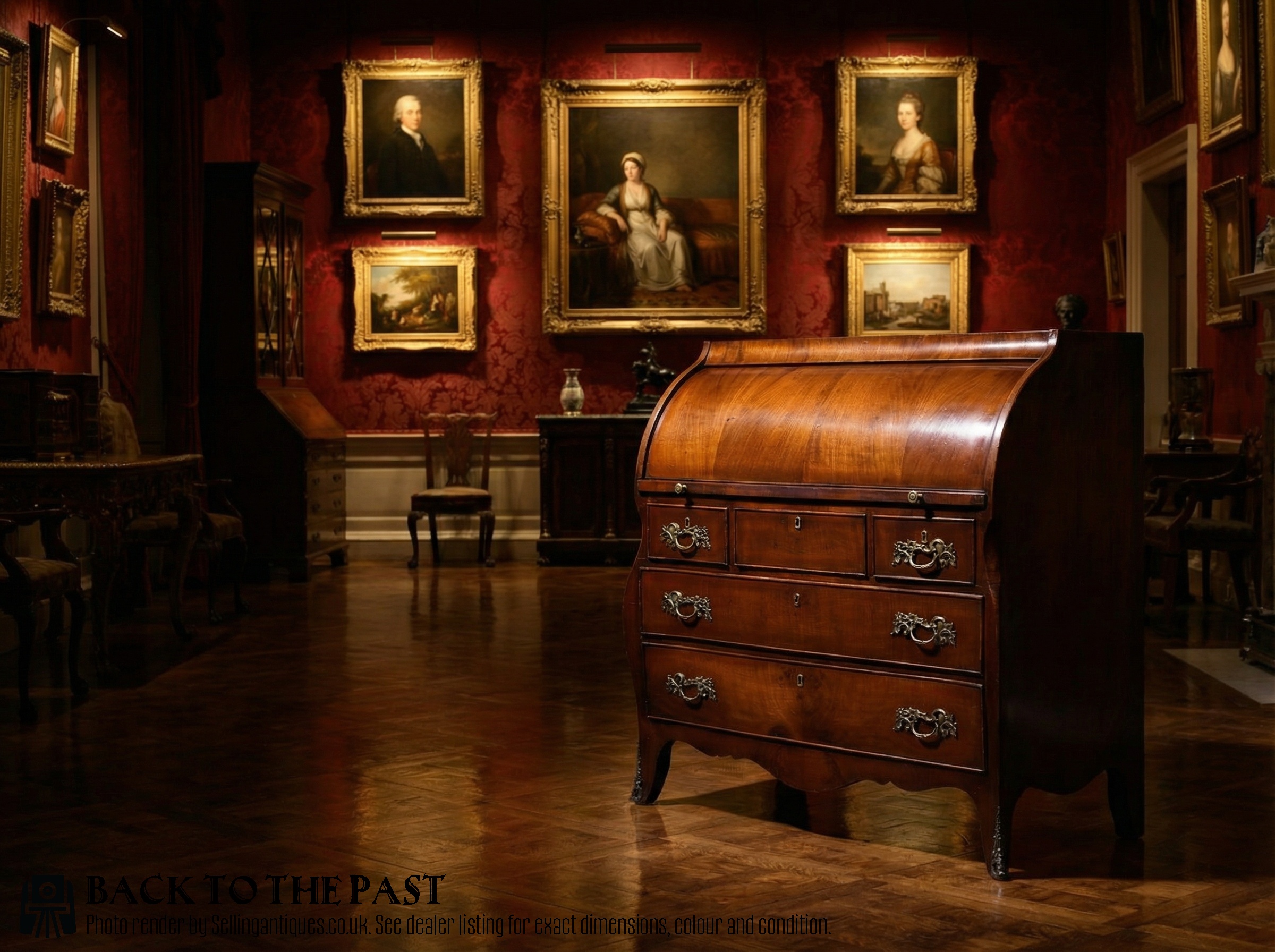
Cabinetmakers constructed the carcass of an antique chest of drawers desk using solid timber frames for stability, applying figured veneers such as burr walnut, flame mahogany, and rosewood to the primary facade surfaces. Secondary woods like oak and pine were utilised for drawer linings and internal dividers.
Writing surfaces were frequently inset with panels of tooled leather or fabric to provide a smooth tactile area for quill and ink work. Drawer construction relied on hand-cut dovetails, while specialised fall-fronts and secretaire drawers incorporated internal pigeonholes, secret compartments, and hinged support lopers.
Listings feature walnut, mahogany, oak, and camphor wood across Georgian, Victorian, and Edwardian periods.
What varies in quality
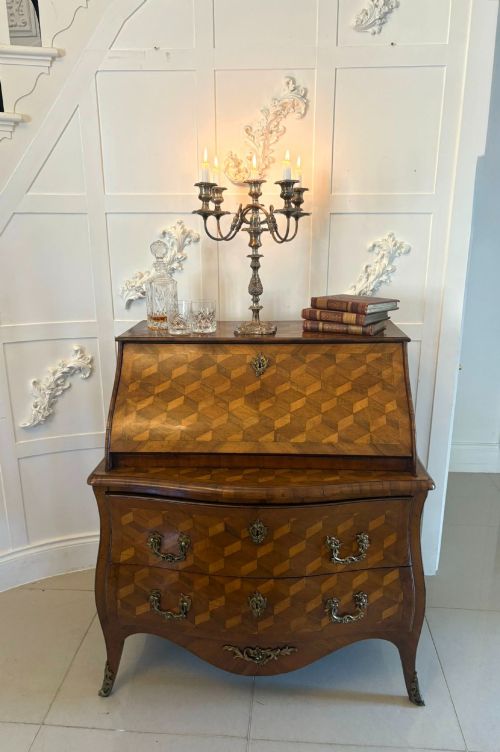
The standard of an antique chest of drawers desk is determined by the selection of timber veneers and the precision of the cabinetwork. High-tier examples display continuous grain matching across drawer fronts and intricate marquetry or parquetry inlay.
Internal complexity dictates value, with superior pieces featuring finely constructed secret compartments, satinwood drawer dividers, and original brasses. The crispness of hand-cut dovetails and the integrity of the secondary wood linings separate workshop masterworks from later vernacular production.
Gillows of Lancaster·Maison Krieger
The Antique Chest of Drawers Desk Glossary
- Bureau
- A desk featuring a sloping hinged flap that opens to reveal a fitted interior of small drawers and pigeonholes.
- Secretaire
- A cabinet or chest of drawers containing a disguised writing drawer with a drop-down front.
- Loper
- A pull-out wooden support bracket fitted beneath a fall-front desk flap to bear the weight during writing.
- Marquetry
- Decorative veneer work formed of patterned pieces of wood, shell, or ivory fitted into a wood background.
- Baton
- A narrow strip of wood used to secure panels or act as a stop within cabinet construction.
Antique Chest of Drawers Desk: Frequently Asked Questions
What is a secretaire chest?
A secretaire chest appears from the outside to be a standard set of drawers, but the upper drawer conceals a drop-front writing desk.
Inside, you will find compartments for letters and stationery behind small locking doors.
How do I date an antique bureau?
Dating relies on examining the construction methods, such as hand-cut dovetails, timber choices like oak or mahogany, and overall stylistic period markers.
Secondary wood linings and brass hardware styles also provide key clues to the decade of manufacture.
Where should I place a desk chest?
These pieces suit home studies, living rooms, or bedrooms where floor space is at a premium and dual storage is useful.
Ensure adequate clearance in front of the piece for the fall-front flap or pull-out writing drawer.
What is a kneehole desk?
A kneehole desk is a compact form featuring a central recess for the sitter's legs, flanked by pedestals of smaller drawers.
Originating in the 18th century, these often combine dressing and writing functions.