

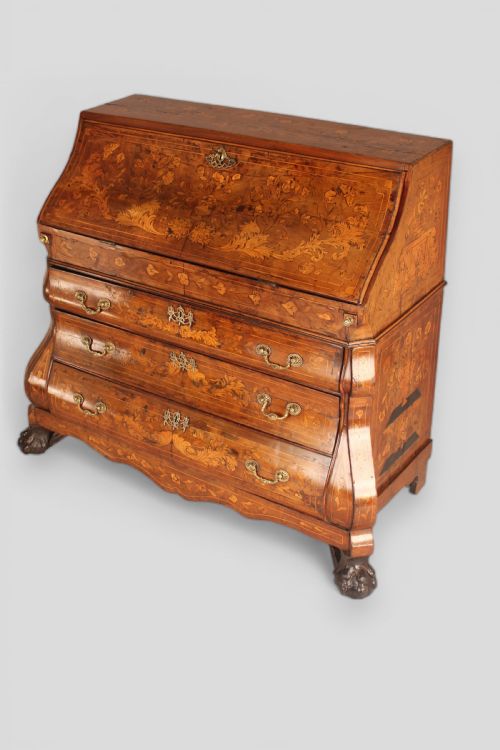


Continental Walnut Writing Bureau
These continental walnut writing bureau pieces combine fine cabinet-making with practical storage, offering fitted writing spaces that anchor a room.
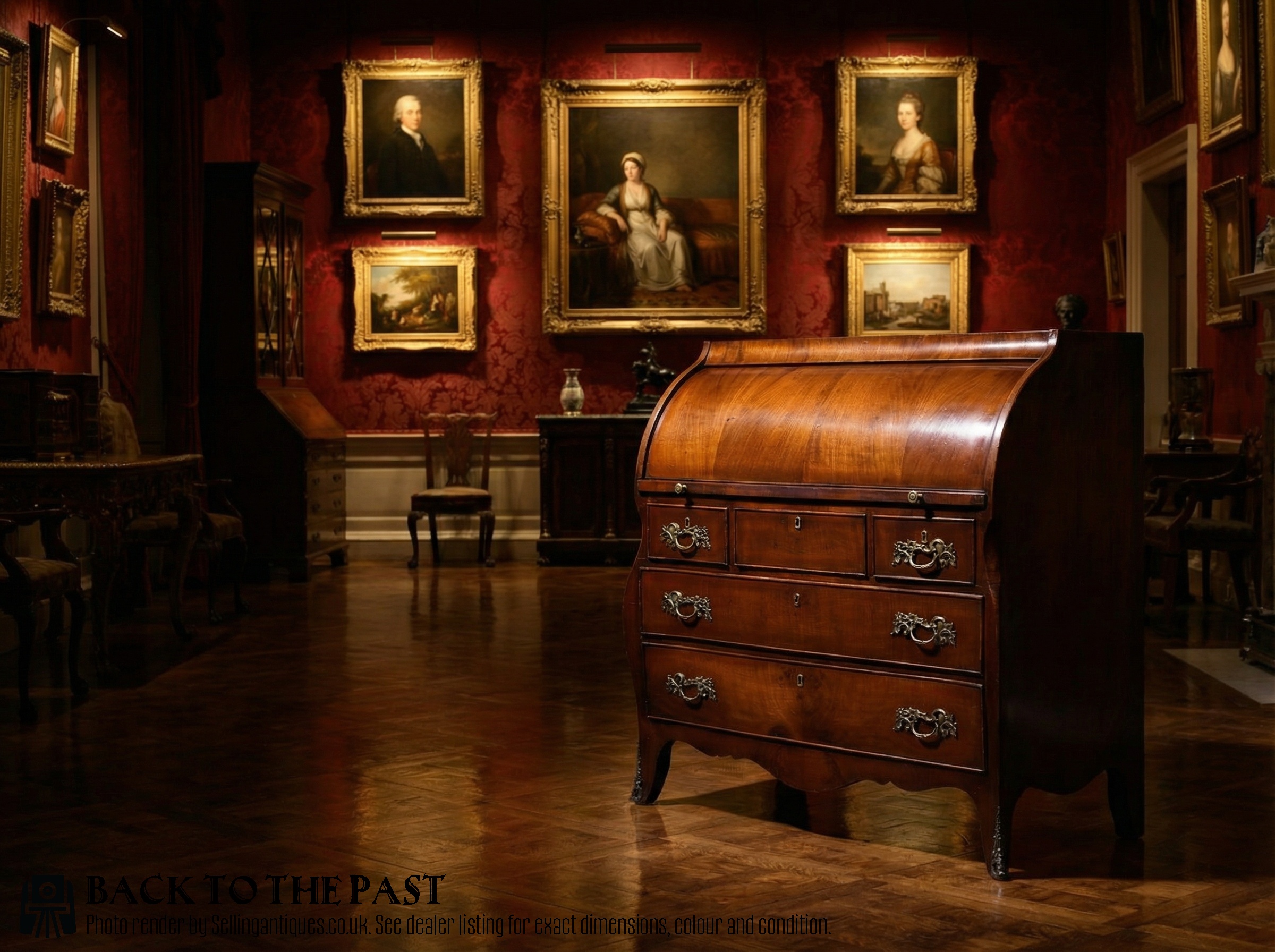
Continental Walnut Writing Bureau
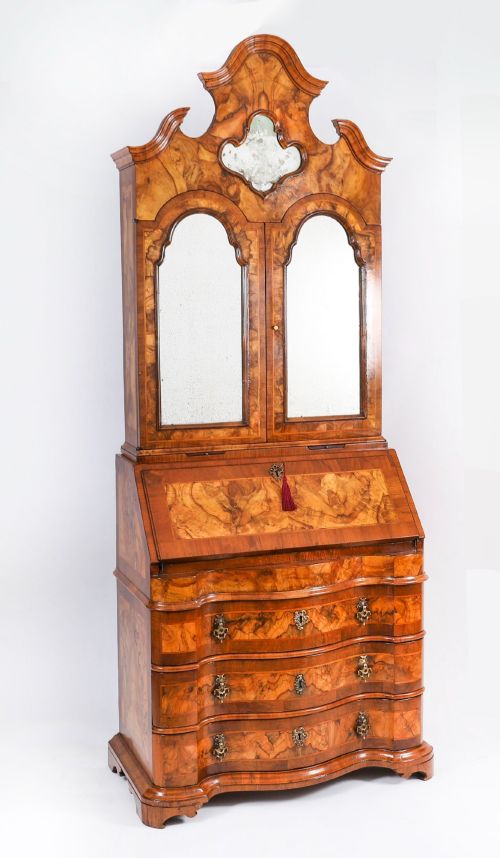
When you search for a continental walnut writing bureau, you encounter sophisticated writing furniture originating from European workshops. These pieces span the eighteenth and nineteenth centuries, taking the form of bureau bookcases, bureau cabinets, and fall-front desks.
The selections available here showcase regional European styles including Dutch Baroque, South German Baroque, Biedermeier, and neoclassical designs. You will frequently find complex bureau bookcases alongside simpler desks, all constructed from rich timber.
How they were made
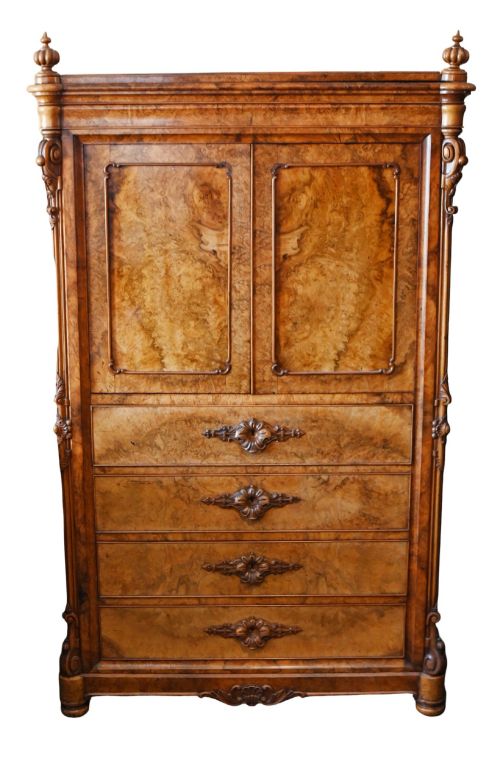
Cabinet-makers constructed these items using solid walnut and walnut veneer, often selecting burr walnut veneer for dramatic surface figuring. Workshops enhanced the timber using fruitwood inlay, wood inlay, and rosewood details.
Hardware additions typically involved cast brass handles and escutcheons to secure drawers and fall-front writing surfaces. Advanced forms utilised complex bombe shaping and block fronts to create pronounced architectural volume.
Listings feature walnut, burr walnut veneer, and rosewood, enriched with fruitwood inlay across eighteenth and nineteenth-century forms.
What varies in quality
The standard of a continental walnut writing bureau rests on the precision of its marquetry and veneer matching. Superior examples display seamless grain continuity across drawers and fall-fronts, whilst lesser pieces show disjointed patterns.
Structural complexity also defines the tier of craftsmanship, ranging from straightforward nineteenth-century desks to monumental eighteenth-century bureau bookcases with elaborate cabinet work on stand.
The Continental Walnut Writing Bureau Glossary
- Burr walnut veneer
- A thin slice of wood taken from the knotty growth of a walnut tree, prized for its swirling, highly decorative grain patterns. Makers applied this to primary surfaces for visual impact.
- Marquetry
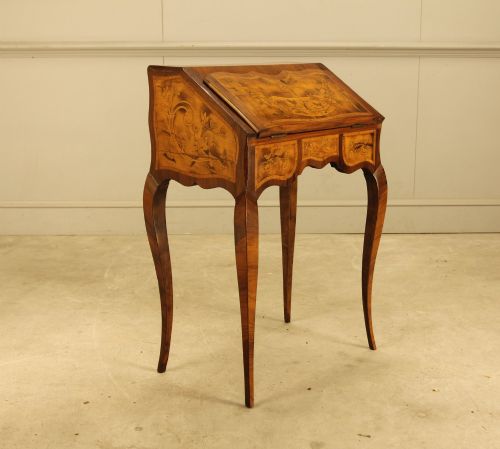
- The art of applying pieces of veneer to a structure to form decorative patterns and pictures. Dutch examples frequently employ this technique with various woods.
- Bombe front
- A chest or bureau front that swells outwards in a convex curve. This undulating form requires advanced woodworking skill to execute properly.
- Secretaire a abattant
- A tall writing cabinet featuring a drop-front writing flap that conceals inner compartments. This form is common in Biedermeier and continental designs.
- Bureau bookcase
- A two-part furniture form combining a slant-front desk base with an upper glazed or panelled shelving cabinet. They provide both workspace and display storage.
Continental Walnut Writing Bureau: Frequently Asked Questions
What is a continental walnut writing bureau?
A continental walnut writing bureau is a European desk featuring a sloping or drop-front writing surface that opens to reveal inner compartments and drawers. These pieces often incorporate tall upper bookcases or cabinets.
Originating from regions such as Germany and the Netherlands, these items date from the eighteenth and nineteenth centuries. They serve as both functional writing furniture and statement decorative objects.
How do I identify a Biedermeier bureau?
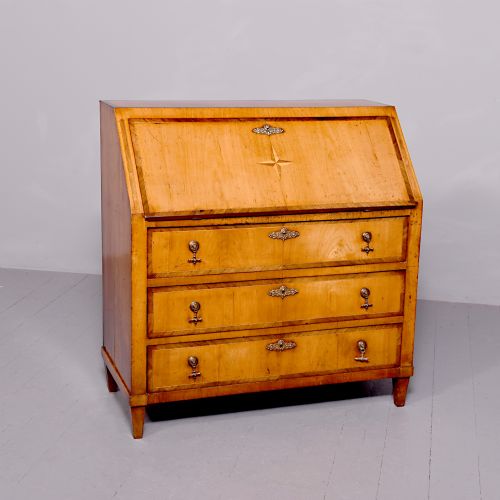
Biedermeier bureaux typically date from the nineteenth century and feature clean, restrained lines with a focus on the natural beauty of the wood grain rather than heavy ornamentation. They often utilise a drop-front secretaire format.
These pieces reflect a shift towards comfortable, domestic interior design in central Europe. The aesthetic prioritises architectural simplicity over the exuberant curves of earlier Baroque models.
What makes Dutch marquetry different?
Dutch marquetry involves intricate floral and pictorial inlay work applied across the entire exterior of the bureau. Craftsmen used various contrasting woods to create detailed botanical motifs.
This decorative style is particularly prominent on eighteenth and nineteenth-century Dutch pieces. The dense inlay covers drawer fronts, sides, and fall-fronts completely.
How were bureau bookcases used?
Bureau bookcases combined a lower writing desk with an upper shelving section enclosed by doors. The desk portion provided a private space for correspondence and document storage.
The upper cabinet allowed owners to display books or valuable objects securely. Together, the two sections created a substantial storage unit for a study or principal room.