
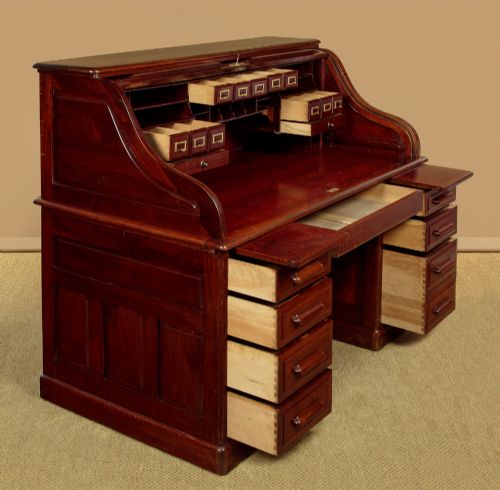
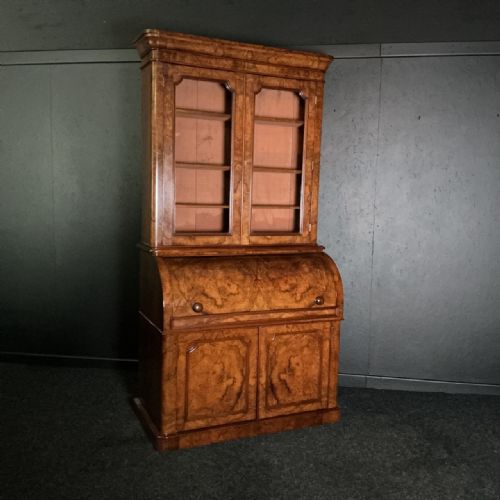


Walnut Cylinder Writing Desk
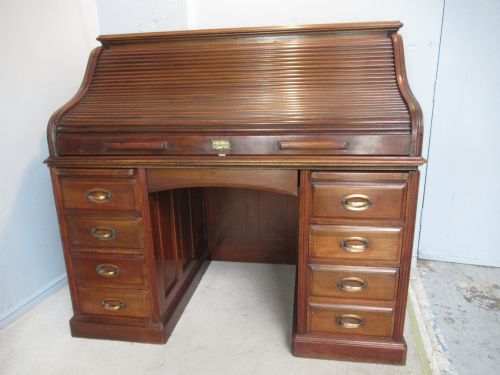
These walnut cylinder writing desks conceal papers beneath curved wooden shutters, offering both a neat workspace and rich figured grain.
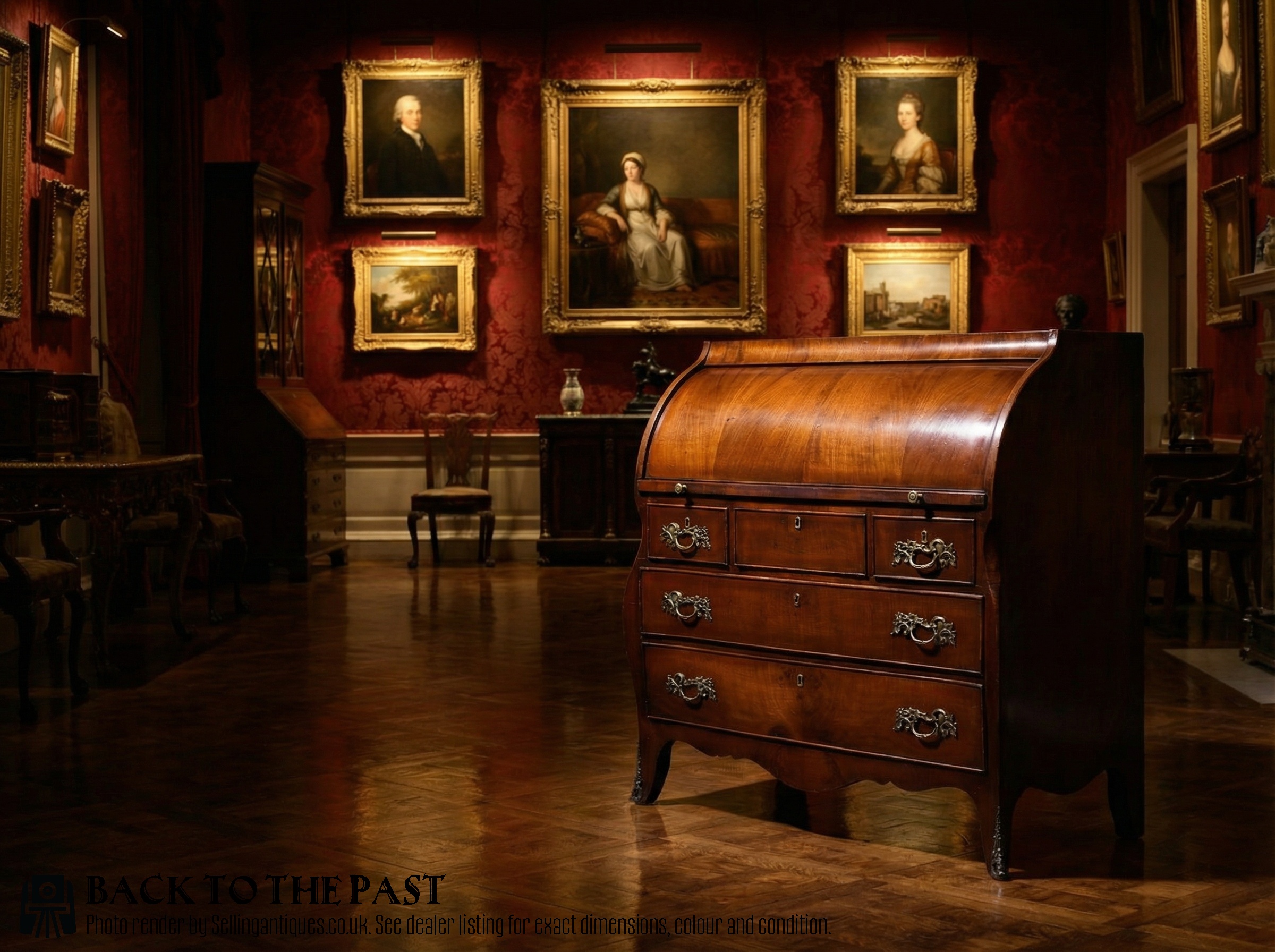
Walnut Cylinder Writing Desk
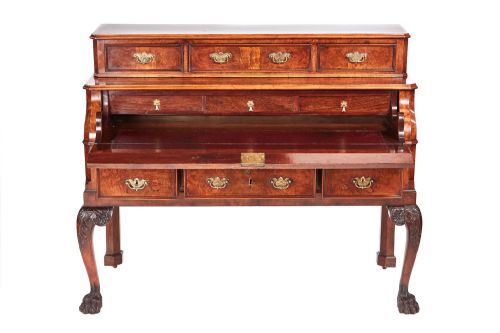
A walnut cylinder writing desk organises letters and ledgers behind a rotating curved shutter that pulls down to reveal fitted drawers and a sliding writing surface. You will encounter pieces spanning the eighteenth century through the Edwardian period, with Victorian and Dutch iterations appearing frequently.
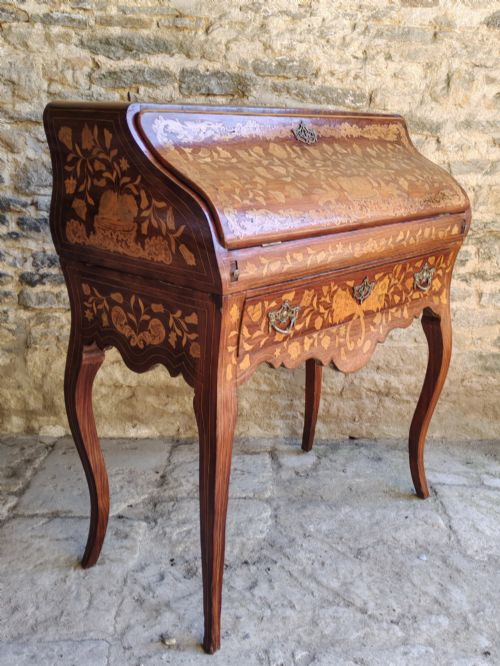
The regional styles vary widely across the selection, ranging from heavily figured Dutch marquetry bureaux with bombe fronts to clean Edwardian roll-top designs and refined French bureau bookcases. Many combine the enclosed cylinder mechanism with upper glazed bookcase sections or delicate kneehole compartments.
Makers from Britain, America, and continental Europe approached the form with local timber preferences, pairing rich walnut surfaces with secondary woods like oak and fruitwood inlay. The resulting furniture balances heavy architectural presence with ingenious internal storage compartments.
Quality and Craftsmanship
The precision of the curved cylinder mechanism dictates the mechanical success of the piece, running smoothly within its side tracks to operate in tandem with the rising writing slide. Superior examples feature closely matched burr walnut veneers that wrap seamlessly across the curving shutter.
Intricacy of the surface decoration separates standard production from masterwork execution, particularly in the multi-timber floral marquetry found on Dutch and continental pieces. Hand-carved details, robust internal drawer dovetailing, and original brass hardware further elevate the standing of an individual desk.
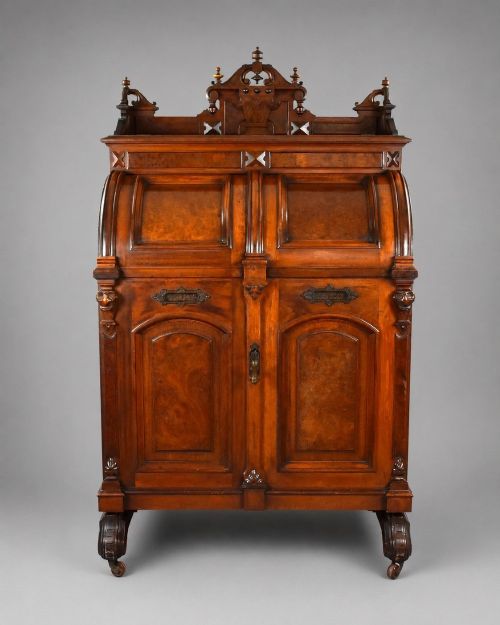
One exceptional Victorian iteration incorporates a piano-top cylinder music cabinet directly into the writing desk.
Boston Chair Company·Wiggers
The Walnut Cylinder Writing Desk Glossary
- Cylinder
- A rotating quarter-circle wooden shutter that conceals the writing surface and interior pigeonholes when closed. Pulling the shutter down typically pushes the internal writing slide forward into a usable position.
- Marquetry
- Decorative veneer work arranged in pictorial patterns using various coloured woods, fruitwoods, and other natural materials. It appears extensively on Dutch and continental European desks.
- Burr Walnut
- Timber taken from the abnormal growth of a walnut tree, yielding swirling, highly figured grain patterns prized for decorative veneer panels. Cabinet makers reserve this material for primary exterior surfaces.
- Bureau Bookcase
- A tall combination piece uniting a lower writing desk with an upper enclosed set of shelves or glass-fronted cabinet doors. These pieces often feature fitted desk interiors behind a cylinder or sloping flap.
- Bombe
- A swelling, outward-curving contour characteristic of continental furniture forms, particularly seen on the lower drawer sections of Dutch desks. This profile requires skilled shaping of solid timbers and thick veneers.
Walnut Cylinder Writing Desk: Frequently Asked Questions
How does a cylinder desk work?
The curved wooden shutter rolls backward into the body of the desk along concealed side tracks, often linked mechanically to a writing surface that slides forward simultaneously.
This system allows a writer to secure confidential papers instantly by pulling the single shutter down, locking the entire writing compartment without clearing the papers away.
What is the difference between a roll top and a cylinder desk?
A cylinder desk uses a solid, curved wooden shutter made of matched segments or bent wood that operates in a smooth, continuous quarter-circle arc.
A roll top desk typically relies on a tambour shutter constructed from many narrow vertical wooden slats glued to a fabric backing, allowing it to flex around tighter curves.
Where were these desks made?
Production spanned Britain, America, and continental Europe, with distinct regional traits identifying their origin.
Dutch workshops favoured floral marquetry and bombe silhouettes, while English and American makers often concentrated on figured burr walnut veneers and clean architectural proportions.
How should I care for walnut veneer?
Walnut furniture benefits from stable indoor humidity and protection from direct sunlight, which can bleach the warm tones of the timber over time.
Regular dusting with a dry cloth and occasional application of traditional beeswax preserves the natural lustre of the polish without building up excessive residue.