

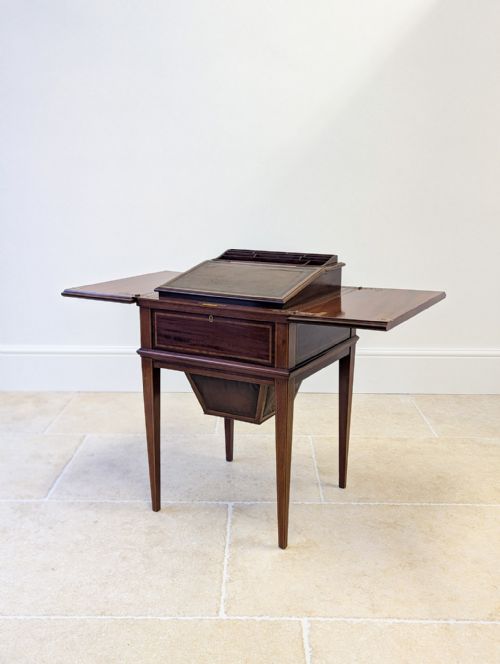
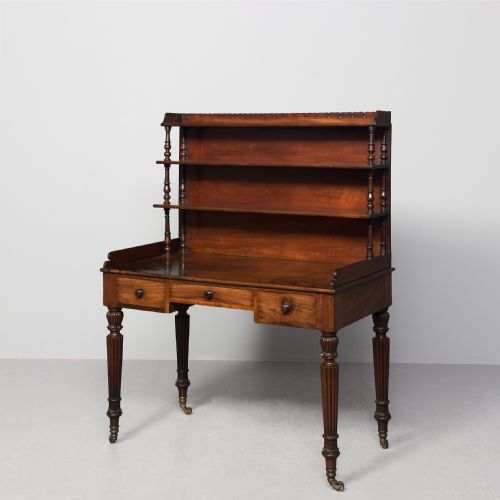
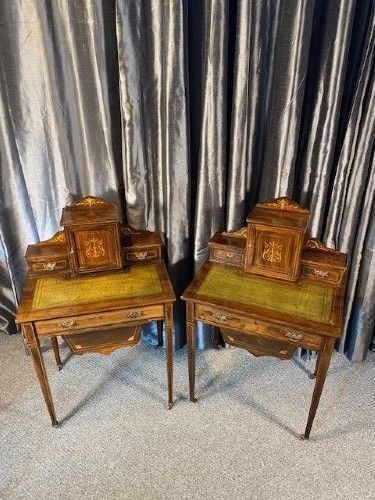
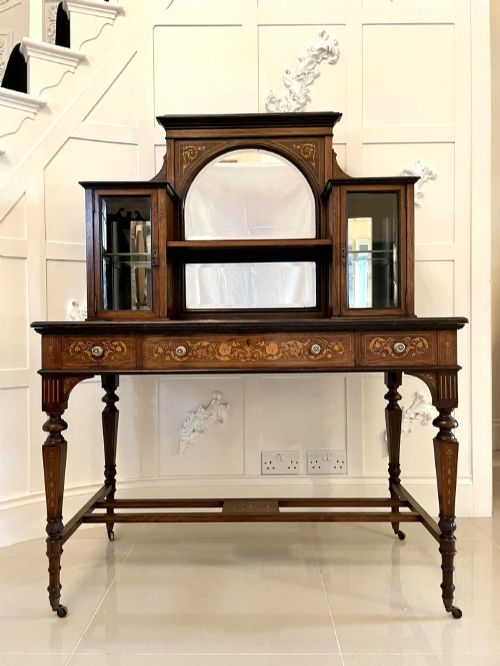
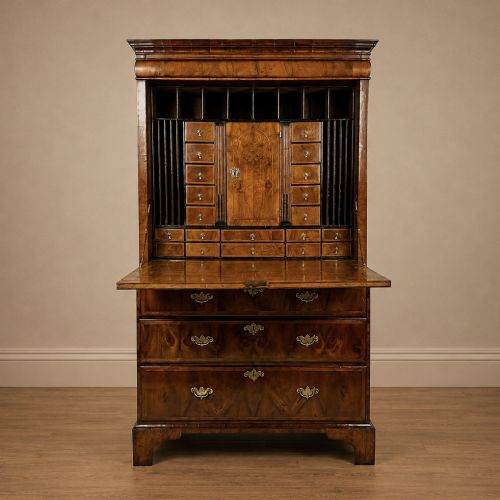
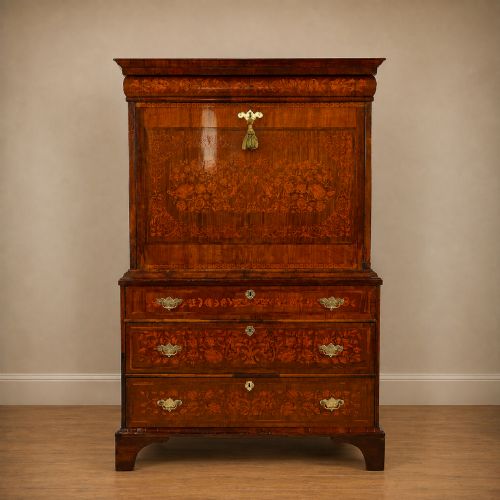
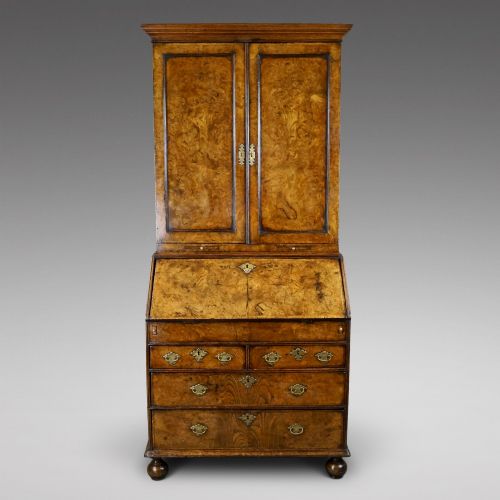
Escritoire Writing Desk
An escritoire writing desk offers a drop-front or cabinet writing surface that conceals fitted drawers, combining private correspondence space with stately domestic storage.
Escritoire Writing Desk
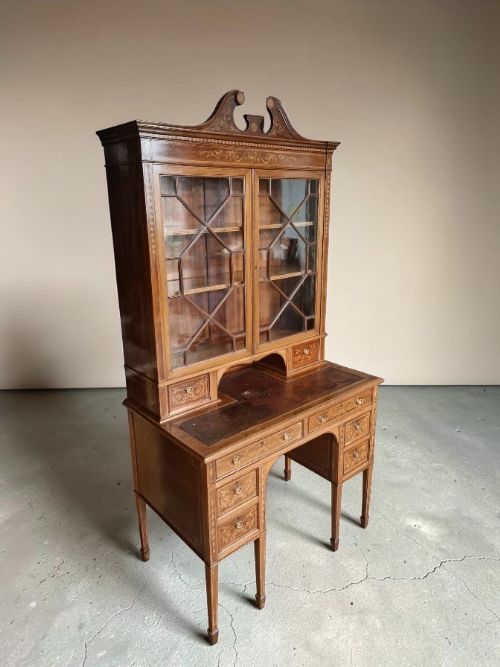
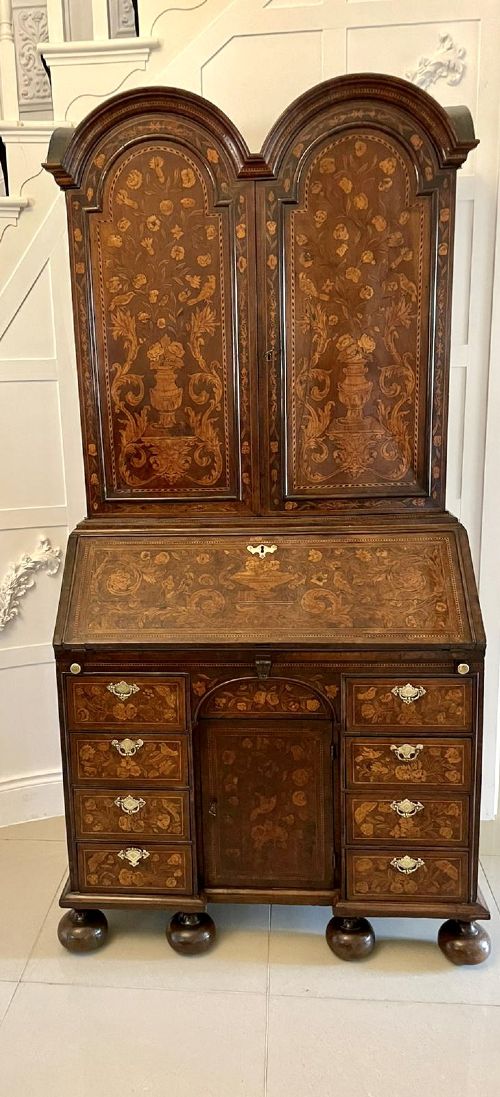
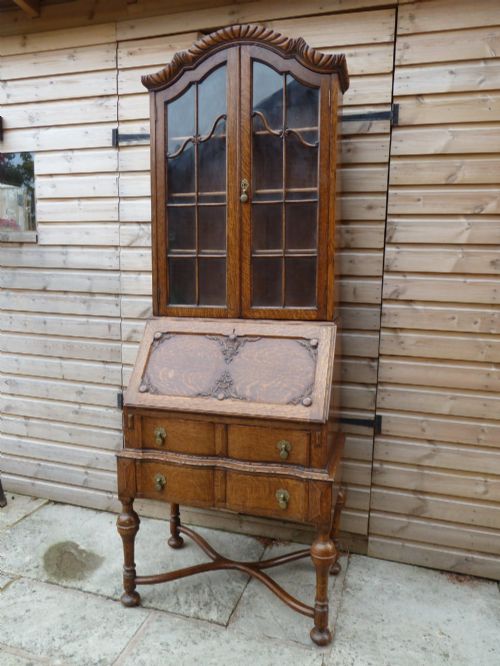
An escritoire writing desk encompasses traditional drop-front cabinets, tall bureau bookcases, and refined ladies' writing tables designed for private correspondence and manuscript storage. Surviving examples range from early walnut seventeenth-century cabinet forms to nineteenth-century French marquetry pieces and Edwardian satinwood variants.
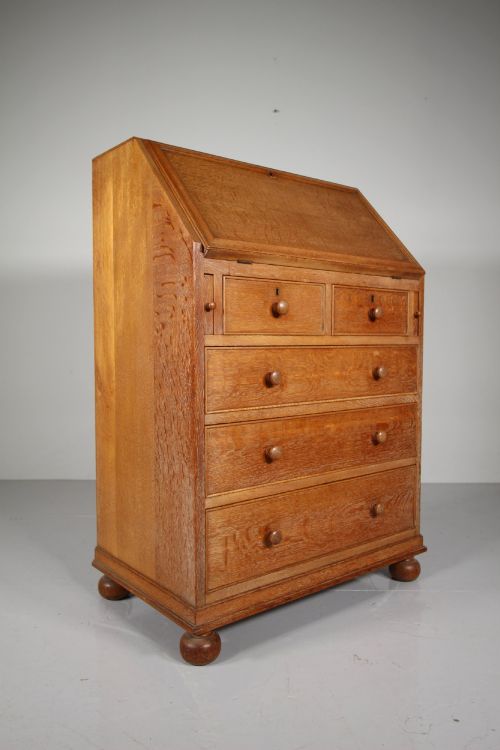
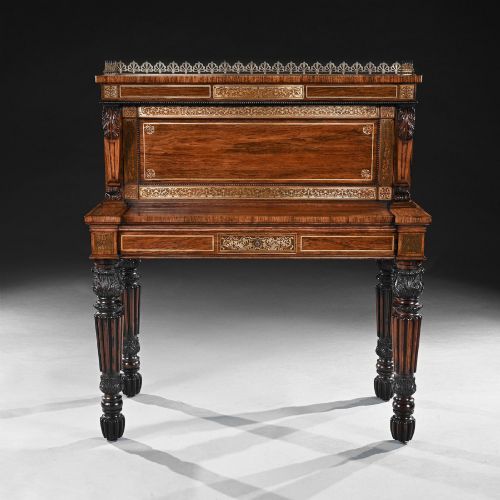
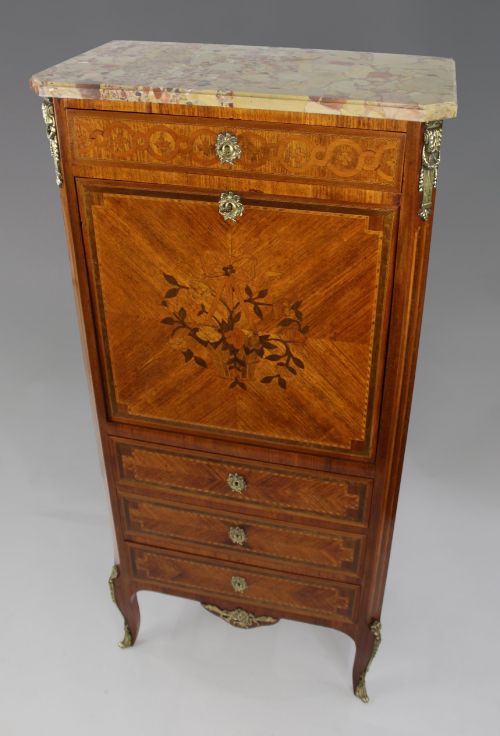
The version most commonly met on this page is the nineteenth-century walnut or mahogany escritoire, alongside French bureau cabinets and compact bonheur du jour writing desks. These pieces present fitted internal compartments behind a fall-front or cylinder lid, often raised on sturdy legs or fitted above drawer chests.
Originating across English, French, and Dutch workshops, these desks reflect diverse stylistic revivals spanning William and Mary, Queen Anne, Georgian, Regency, and Louis XV periods. Buyers encounter both monumental bureau bookcases with upper shelving and smaller portable or freestanding writing tables.
How they were made
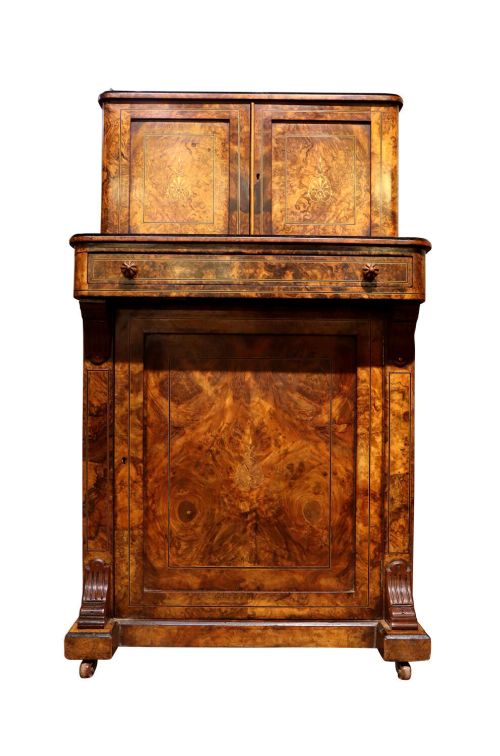
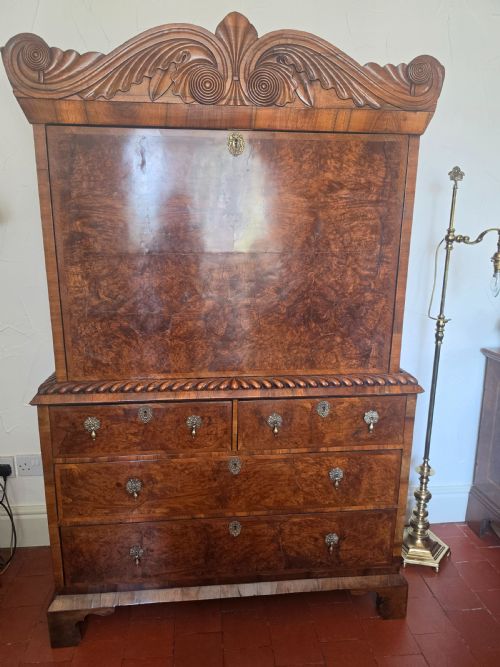
Cabinetmakers utilised dense hardwoods including mahogany, walnut, rosewood, and kingwood, frequently applying intricate burr walnut, satinwood, or oyster veneer patterns to primary surfaces. Marquetry inlay, brass stringing, and hand-painted motifs adorn many panels, while structural elements incorporate secondary timbers.
Advanced joinery secures fall-front writing flaps and cylinder desks, balancing internal pigeonholes and secret drawers within the main case. Exterior details often integrate ormolu mounts, marble tops, and brass inlay work reflecting period cabinetmaking standards.
Some nineteenth-century models hide secret compartments behind miniature drawers, rewarding inquisitive writers with forgotten hiding spots.
What varies in quality
The standard of timber selection and veneer matching defines the visual hierarchy, from plain fruitwood to figured mahogany and symmetrical burr walnut. Finer examples display meticulous marquetry and continuous grain patterns across folding writing surfaces and drawer fronts.
Gillows Oxford Street Workshop·James Mein of Kelso
The Escritoire Writing Desk Glossary
- Escritoire
- A writing cabinet featuring a fall-front writing flap that conceals small drawers and pigeonholes. It often stands on a chest of drawers or supportive legs.
- Marquetry
- The art of applying decorative veneer pieces in wood, brass, or shell to form geometric or floral patterns. Master craftsmen arranged these veneers to create pictorial scenes on cabinet doors and desk lids.
- Ormolu
- Gilt bronze mounts applied to furniture edges, feet, and corners for decorative accent. This technique gained prominence on French revival pieces.
- Bonheur du jour
- A light ladies' writing desk featuring a small tiered superstructure with shelves or miniature drawers above the main writing surface. Originating in France, these desks became popular during the eighteenth and nineteenth centuries.
- Secretaire à abattant
- A tall upright cabinet with a vertical drop-front panel that opens to reveal a writing desk interior. These pieces frequently incorporate marble tops and lower cabinet doors.
Escritoire Writing Desk: Frequently Asked Questions
What is an escritoire?
An escritoire is a dedicated writing cabinet featuring a hinged drop-front lid that opens to form a writing surface. Inside, makers arranged small drawers and pigeonholes for letters and documents.
Historically used for private correspondence, these pieces evolved from seventeenth-century cabinet forms into diverse nineteenth-century revival styles.
How do I date an escritoire?
Dating relies on identifying primary woods, hardware styles, and structural joinery typical of specific periods. Seventeenth and early eighteenth-century pieces often display walnut veneers and oyster patterns, while later Victorian and Edwardian examples show varied revival influences.
Secondary wood analysis and construction methods inside the hidden drawers provide additional chronological markers for the desk.
Where should I place an escritoire?
These compact cabinets suit studies, drawing rooms, or bedrooms where floor space is limited yet storage is required. Their vertical proportions allow them to fit against walls while offering concealed desktop space.
Direct sunlight and extreme temperature shifts should be avoided to protect antique wood veneers and delicate brass inlays.
How do I maintain the wood?
Maintaining antique timber requires consistent indoor humidity and occasional application of appropriate furniture wax. Harsh chemical cleaners and excessive moisture can damage historic polished surfaces and delicate marquetry.
Regular dusting with a soft, dry cloth preserves the natural lustre of mahogany, walnut, and rosewood finishes.