

French Walnut Bureau
A French walnut bureau brings warmth and refined utility to a room through centuries-old craftsmanship and rich timber grain.
French Walnut Bureau
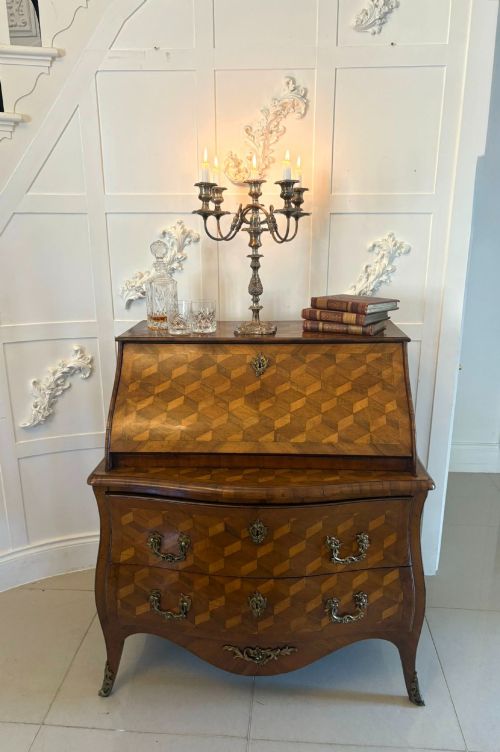
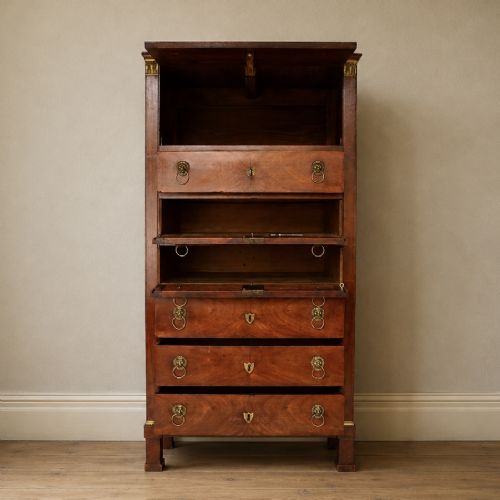
A French walnut bureau is a dedicated writing cabinet or desk designed for correspondence and storage, frequently featuring a sloping fall-front or a flat writing surface with internal compartments. These pieces encompass various forms including the bureau plat, the dainty bureau de dame, and the taller secrétaire abattant, each serving domestic writing needs.
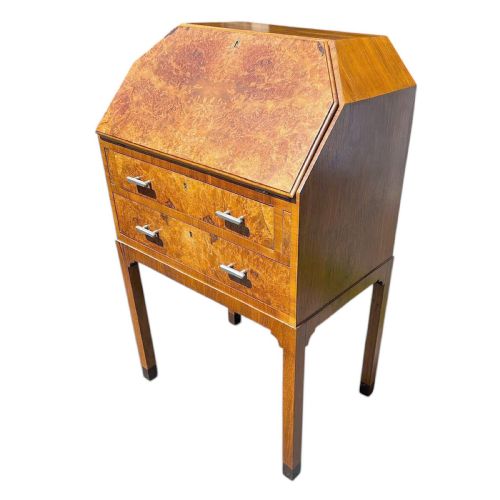
The items found within this selection stretch from eighteenth-century bombe shapes to nineteenth-century revival styles and later Art Deco interpretations. Buyers encounter compact ladies' desks alongside substantial freestanding tables, reflecting the shifting demands placed on domestic furniture over generations.
Originating largely from continental workshops and nineteenth-century English adaptations, these desks often incorporate revival influences such as Louis XV and French Rococo motifs. Walnut remains the unifying thread across these eras, providing a dependable canvas for decorative parquetry and marquetry.
Materials and Construction
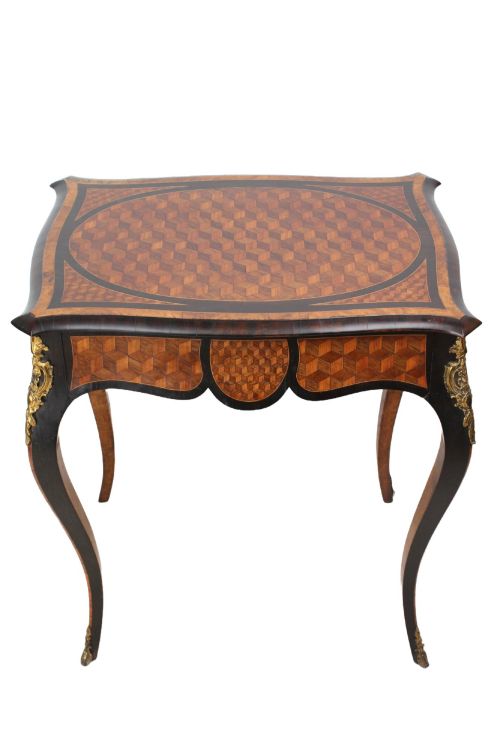
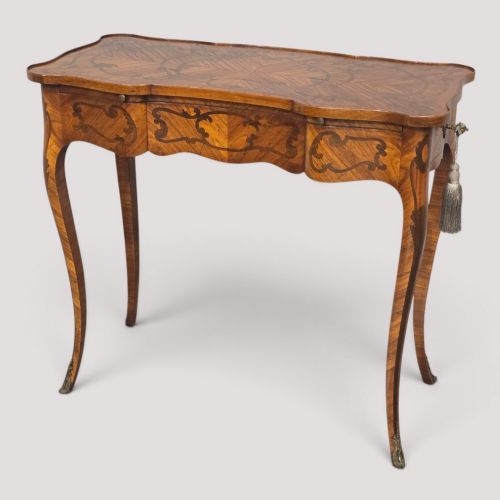
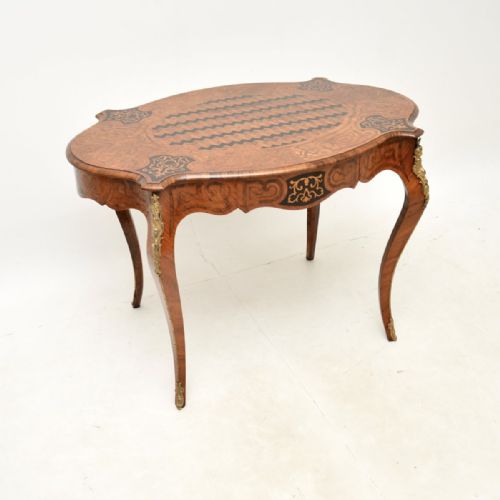
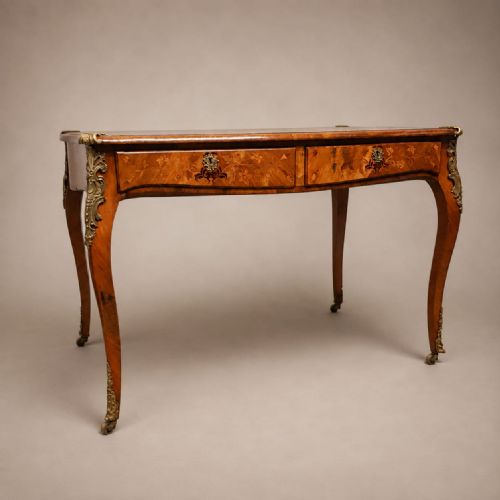
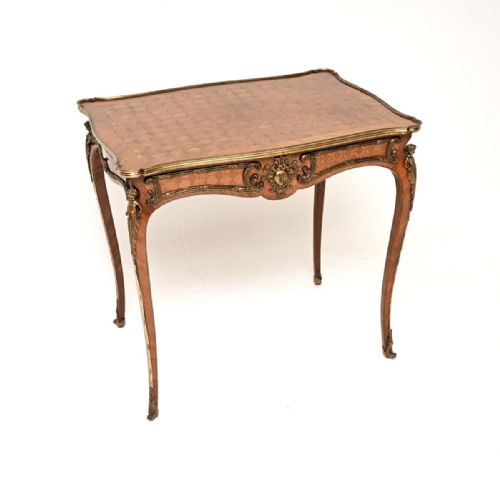
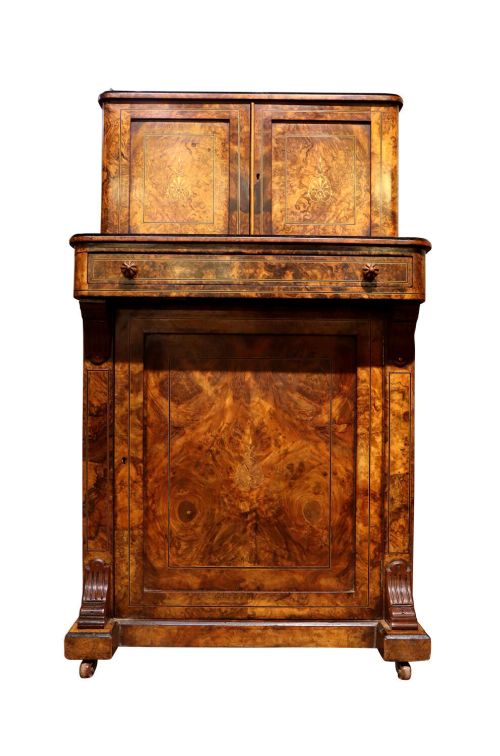
Makers relied on solid walnut and figured veneers like burr walnut, cut specifically to display swirling grain patterns across the primary surfaces. These timbers were frequently paired with contrasting woods such as kingwood and tulipwood to form intricate geometric parquetry or floral marquetry designs.
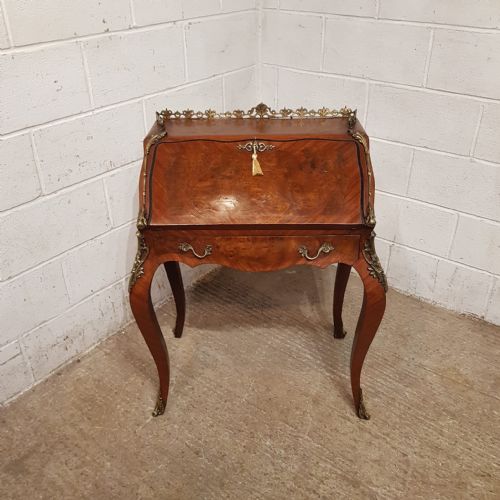
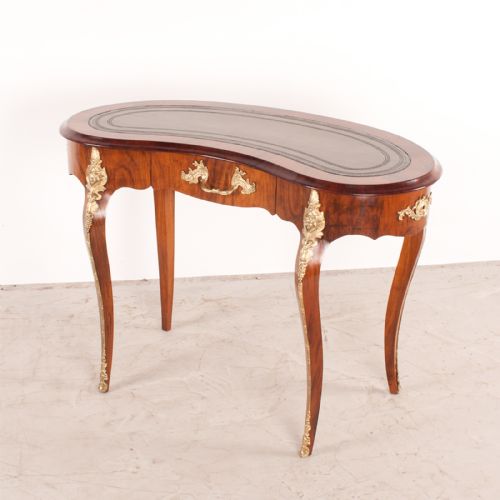
Metal ornamentation played an essential structural and decorative role, with gilt bronze and ormolu mounts fitted to corners, legs, and key escutcheons. Fine writing surfaces were often inset with tooled leather panels, while internal drawers utilised traditional dovetailed joinery and original metalwork.
Marble tops appeared on specific cabinet forms like the secrétaire abattant, providing a durable and cool surface above the wooden carcase. Structural integrity depended on careful timber seasoning and precise cabinet-making techniques to accommodate the natural movement of large walnut panels.
Listings feature walnut, burr walnut, and kingwood timbers combined with ormolu and leather across Victorian, Art Deco, and 18th Century periods.
Assessing Quality
The standard of a French walnut bureau rests upon the depth and selection of the timber veneer, where richly figured burr walnut or meticulously matched parquetry denotes superior workshop output. Ambitious cabinet-making is further demonstrated by complex serpentine or bombe contours rather than flat planes.
Refinement in decorative mounts sets finer pieces apart, visible in the weight and hand-chasing of ormolu elements compared to simpler cast metal. The precision of inlaid floral marquetry and the retention of original interior fittings, hardware, and leather writing surfaces also indicate higher original manufacture.
JAS Shoolbred·Étienne Kohlmann
The French Walnut Bureau Glossary
- Bureau plat
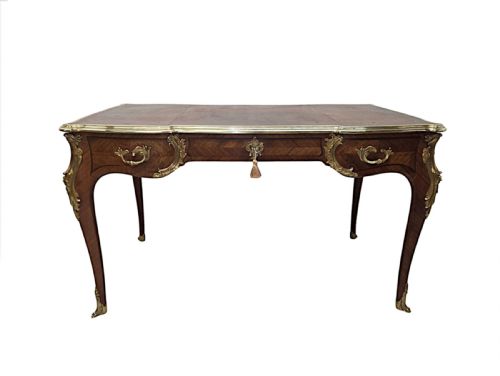
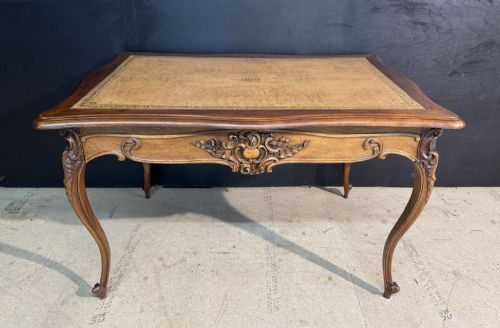
- A freestanding writing table, typically with a rectangular top and drawers beneath the apron, designed to sit away from walls. This form gained popularity in eighteenth-century France.
- Bureau de dame
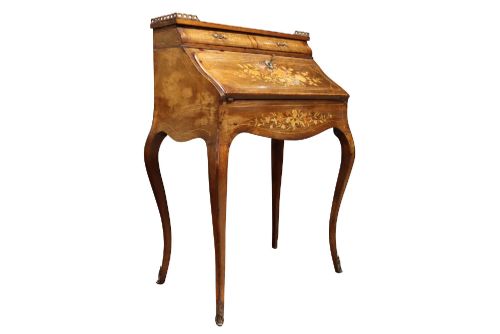
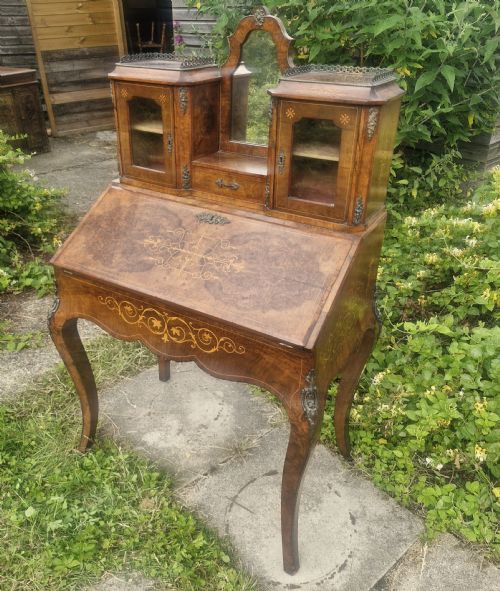
- A lady's writing desk, usually of diminutive scale, featuring a sloping lid or a fitted superstructure for correspondence. These pieces often incorporate delicate marquetry and gilt bronze mounts.
- Parquetry
- Geometric wood-mosaic work used to create repeating patterns on furniture surfaces. Craftsmen employed contrasting timbers such as walnut and kingwood to achieve these effects.
- Ormolu
- Gilt bronze ornamentation applied to the mounts, handles, and feet of fine furniture. The technique involves coating cast bronze with a finely ground gold-mercury amalgam and heating it.
French Walnut Bureau: Frequently Asked Questions
What is a bureau plat?
A bureau plat is a flat-topped writing table designed to stand in the centre of a room rather than against a wall. These desks usually feature multiple drawers integrated into the apron beneath the writing surface.
Historically utilised in libraries and studies, they provide a generous workspace finished with leather and decorated with parquetry or ormolu mounts.
How do I identify a bureau de dame?
A bureau de dame is recognised by its compact scale and delicate proportions, tailored originally for ladies' correspondence. They often include tiered superstructures, small internal drawers, and slender cabriole legs.
These pieces frequently showcase fine burr walnut veneers and marquetry inlay, making them suitable for domestic reception rooms.
What is parquetry?
Parquetry is a woodworking technique where small, precision-cut blocks of timber are arranged to form geometric patterns. Common motifs include cubes, chequers, and herringbones.
In antique furniture, contrasting woods like walnut and lighter fruitwoods are juxtaposed to create striking optical effects across desk tops and drawer fronts.
Where were these desks placed?
These desks were traditionally positioned within private studies, drawing rooms, or boudoirs, serving as both practical writing furniture and decorative statements. Freestanding tables allowed users to sit away from walls.
Today, their varied scales enable them to function effectively as home office desks or console tables in residential interiors.