
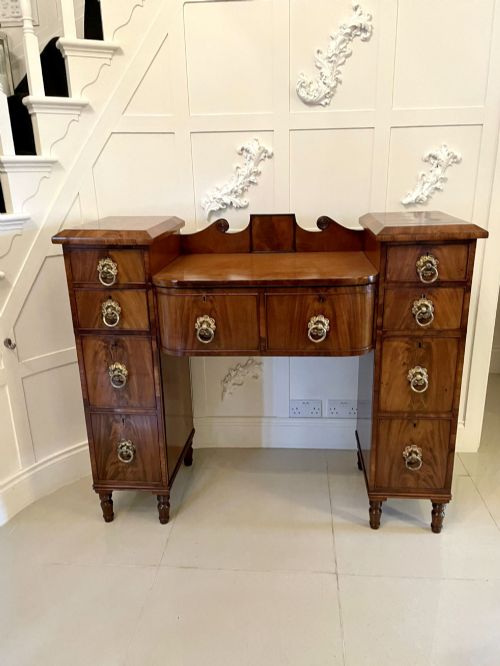

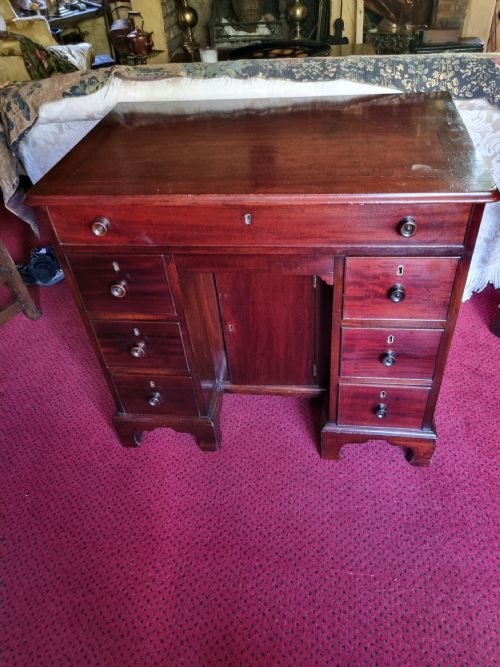


Rich Brown Writing Bureau
A rich brown writing bureau brings warmth to a study, offering fitted drawers and a sloping fall front that conceals a private workspace.
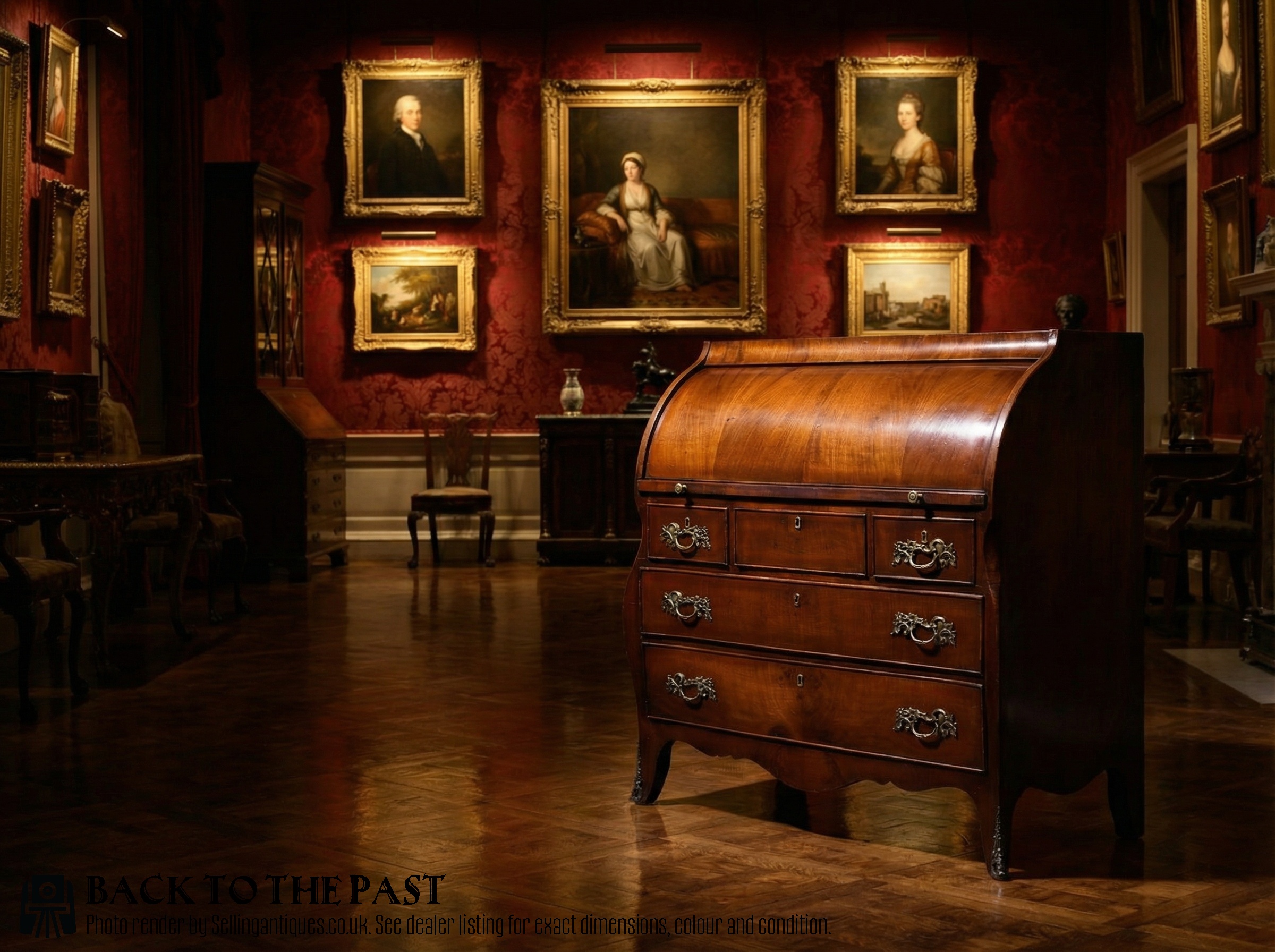
Rich Brown Writing Bureau
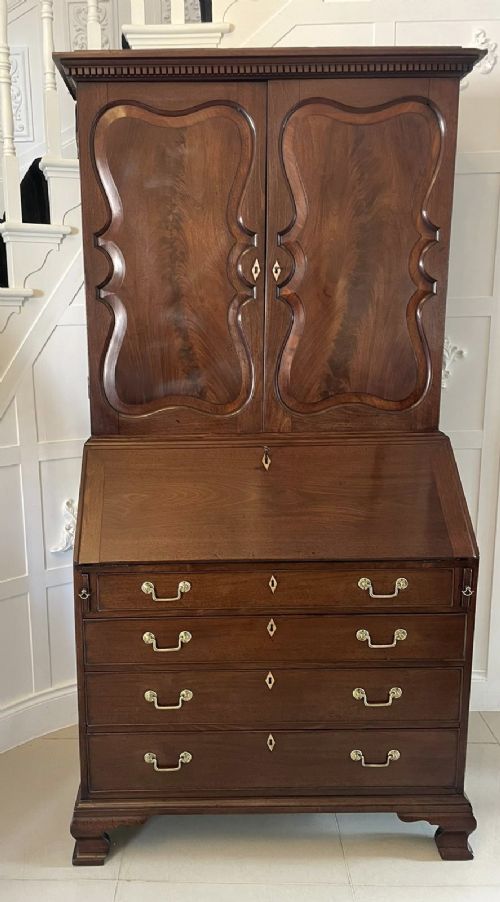
When searching for a rich brown writing bureau, you encounter a range of forms spanning the eighteenth and nineteenth centuries, including slant-front desks, bureau bookcases, and tall secretaire abattants. These pieces combine practical storage with a fold-down writing flap that reveals pigeonholes and small drawers for correspondence.
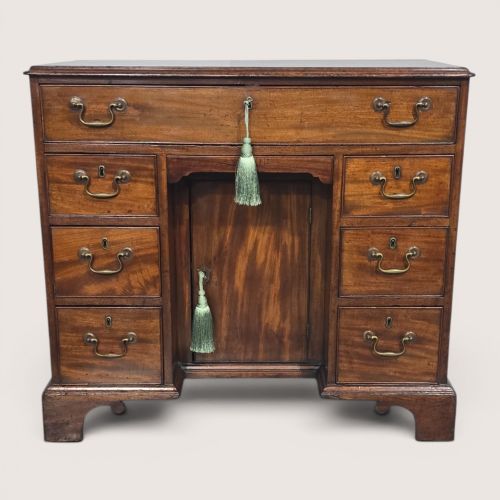
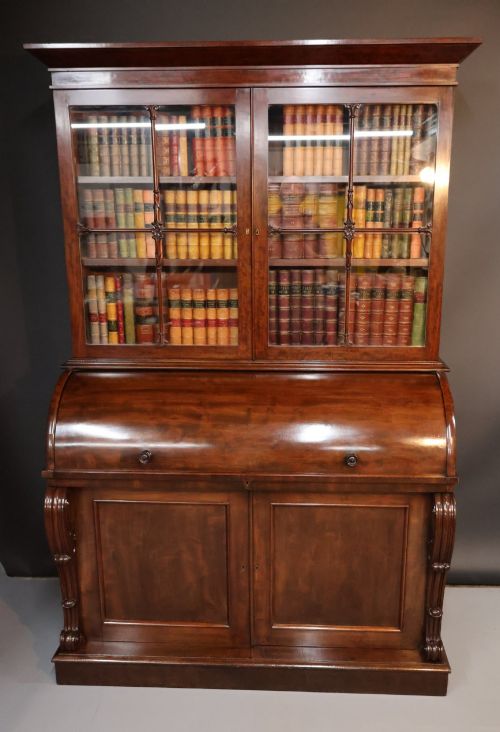
The materials are predominantly rich hardwoods such as mahogany and walnut, often finished with fruitwood inlay or polished to deep, dark tones. Examples stretch from compact Georgian kneehole desks to large Victorian and Edwardian bureau bookcases featuring glazed upper shelving.
Originating largely from British and continental workshops, these items reflect changing domestic needs, moving from grand architectural pieces in the seventeen-fifties to more compact domestic desks by nineteen-hundred.
Materials and construction methods
Cabinetmakers constructed these desks using solid timbers and decorative veneers such as mahogany, walnut, and amboyna veneer over secondary woods. Surfaces frequently display delicate fruitwood inlay or marquetry detailing.
Hardware consists of cast brass handles and escutcheons, while interior compartments often utilise secondary softwoods for drawer linings. Joinery relies on traditional dovetail techniques for the drawers and pegged mortise and tenon joints for the main carcase.
The listings encompass items spanning the eighteenth century, the Victorian era, and the Edwardian period, executed in mahogany, walnut, and amboyna veneer.
Markers of distinction
Quality rests in the choice of timber figure, such as highly grained figured mahogany or burr walnut, which provides depth to the rich brown finish. The crispness of fruitwood inlay and the subtlety of proportion separate standard utility pieces from exhibition grade examples.
Interior architecture dictates value, with fitted compartments featuring secret drawers, carved concave doors, and polished pigeonholes demonstrating superior craftsmanship. Original brasses and unblemished secondary wood inside the drawers further elevate a piece.
Maple of London
The Rich Brown Writing Bureau Glossary
- Secretaire abattant
- A tall vertical cabinet with a drop-front writing surface that conceals an internal arrangement of small drawers and pigeonholes.
- Bureau bookcase
- A two-part piece comprising a slant-front writing desk below and a glazed or panelled bookcase above.
- Kneehole desk
- A compact writing table featuring a central recess for the user's legs, flanked by pedestals of small drawers.
- Escritoire
- A tall writing cabinet or desk, often synonymous with a secretaire, originating in the seventeenth and eighteenth centuries.
- Fruitwood inlay
- Decorative patterns set into the primary timber using lighter woods like pear or boxwood to create contrasting borders.
Rich Brown Writing Bureau: Frequently Asked Questions
What is a bureau bookcase?
A bureau bookcase combines a lower writing desk with a drop-front flap and an upper cabinet enclosed by glass or wooden doors.
This form served as both a working station and a library for books and papers in Georgian and Victorian homes.
How do I date an antique bureau?
Dating relies on observing timber choices, construction methods like hand-cut dovetails, and stylistic markers such as bracket feet or cornice details.
Evidence shows pieces spanning the eighteenth century through to the Edwardian period, each carrying distinct design proportions.
Where were these writing desks used?
These desks were placed in libraries, drawing rooms, and private studies as functional furniture for managing correspondence and household accounts.
Their enclosed compartments allowed owners to secure private papers away from public view.
What woods dominate these pieces?
Mahogany and walnut form the primary structure for the vast majority of these desks, providing the characteristic rich brown colour.
Secondary additions include amboyna veneer, satinwood, and fruitwood inlay for decorative contrast.