





Brown Wood Drop Front Desk
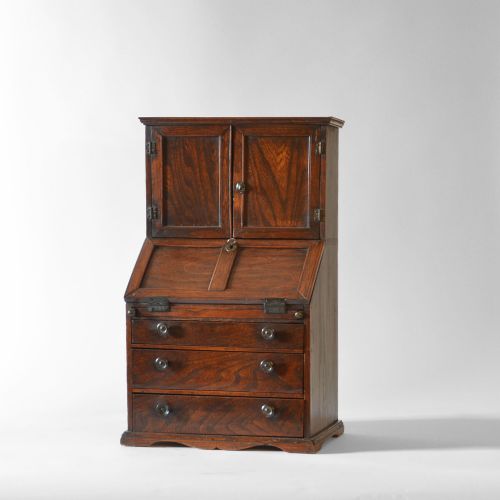
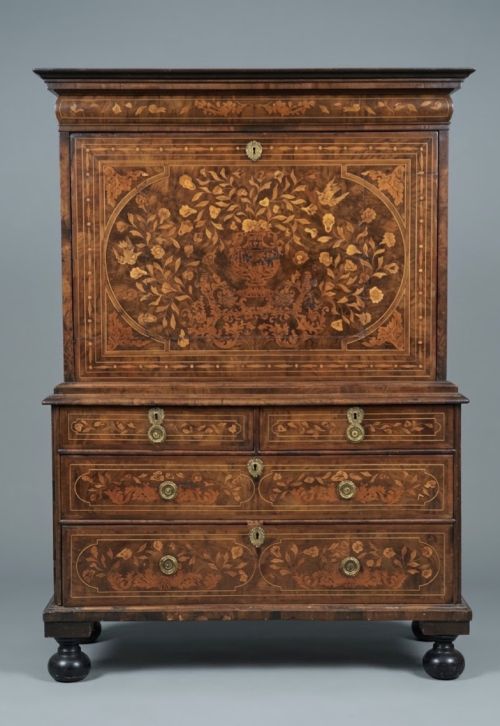
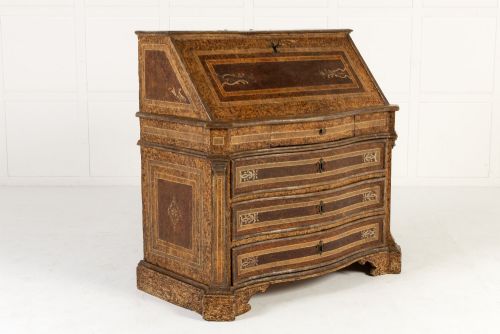
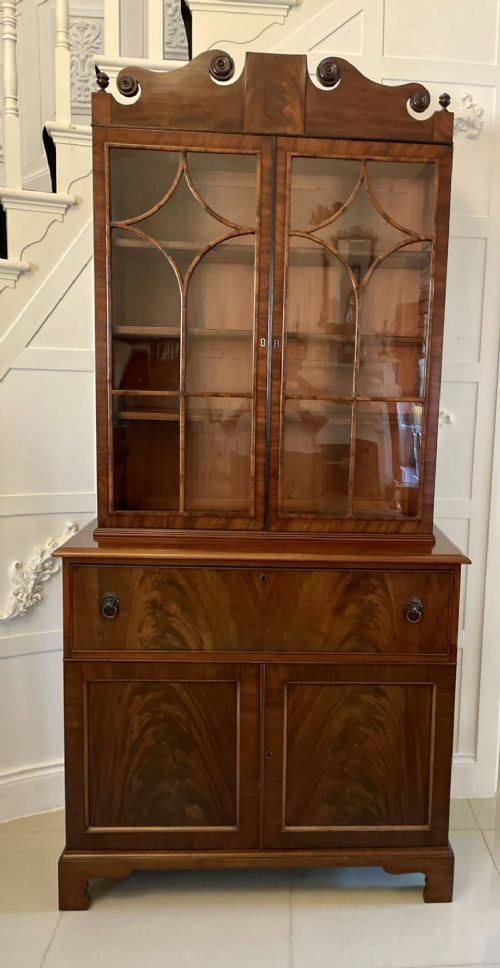
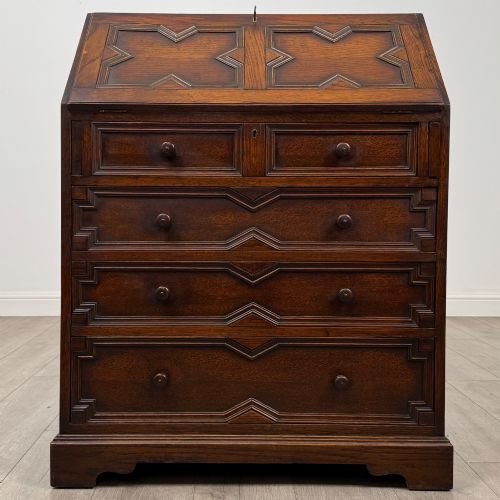
A brown wood drop front desk offers concealed writing surfaces and drawers, combining practical workspace with polished cabinetry.
Brown Wood Drop Front Desk
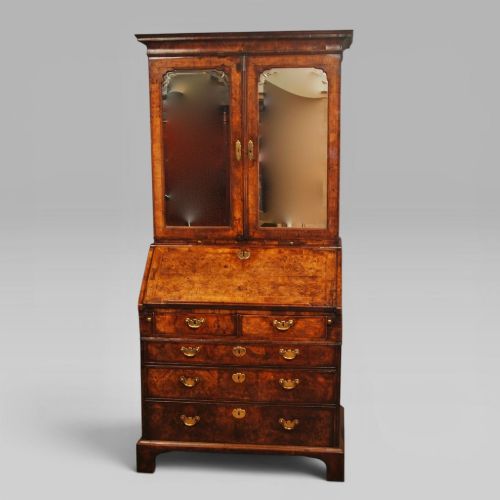
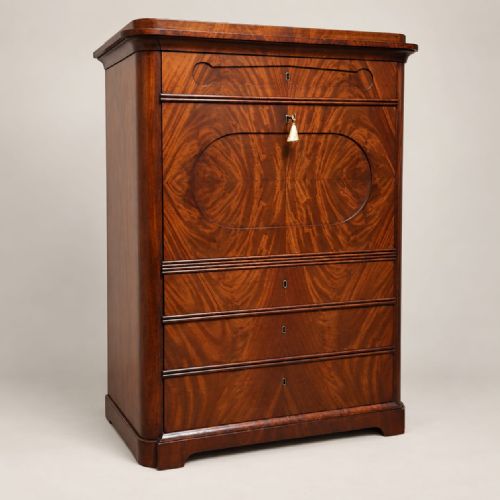
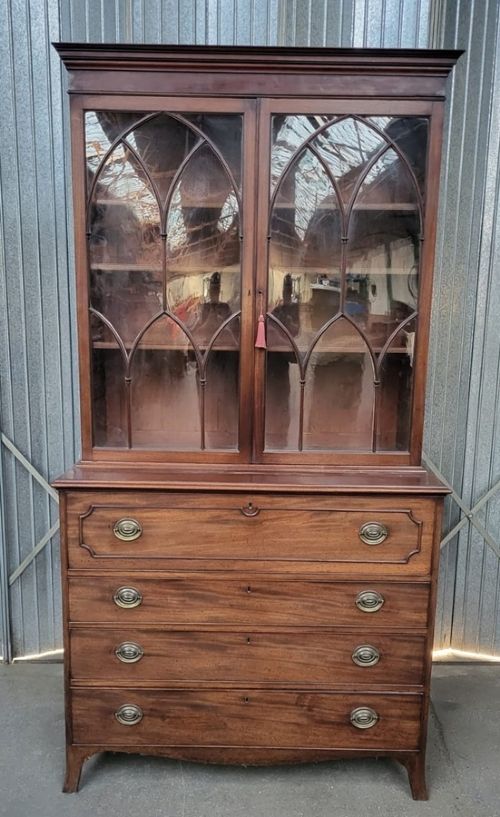
Buyers examining a brown wood drop front desk encounter forms such as bureaux, secretaire bookcases, and escritoires spanning the Georgian, Victorian, and Edwardian eras. The most frequent iteration on this page is the mahogany bureau or secretaire bookcase, often featuring fitted internal compartments behind the hinged writing flap.
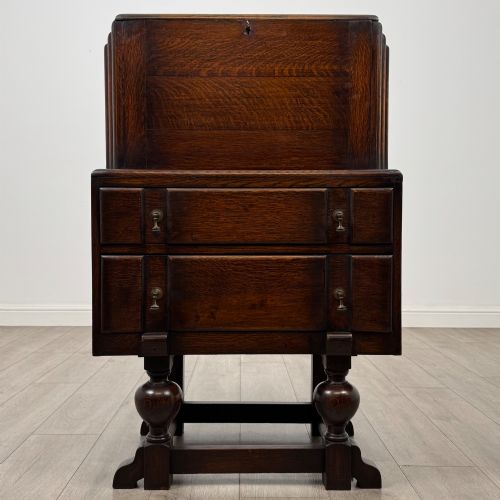
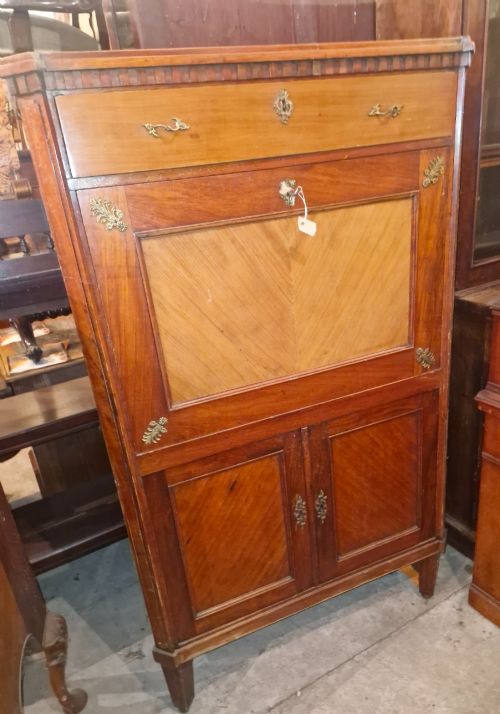
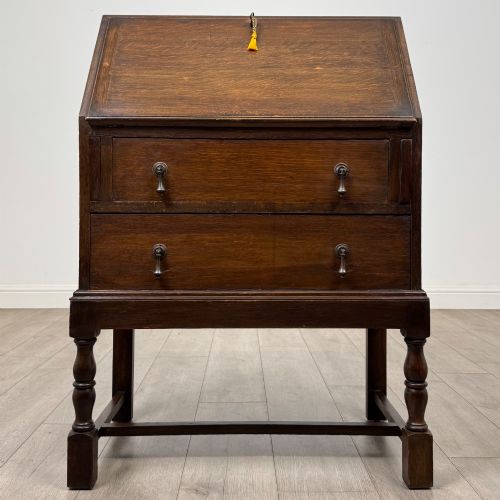
The selection extends from early eighteenth century walnut pieces to later nineteenth century continental secretaire abattants and twentieth century oak variations. These items served primarily for correspondence and household administration, utilising folding or falling fronts to conceal compartments and pigeonholes.
Origin and construction style vary widely among the examples, encompassing English Georgian proportions, French designs, and regional revivalist pieces. Makers utilised distinct regional joinery and timber selections to satisfy domestic and professional requirements for secure storage and writing space.
Materials and construction methods
Cabinetmakers constructed these desks predominantly using solid timbers and veneers of mahogany, walnut, and oak. Secondary woods like oak appeared in drawer linings, whilst decorative highlights frequently employed satinwood inlay and boxwood stringing.
Glass panels featured in the upper sections of bookcase variants, while brass handles, escutcheons, and hinges provided functional and decorative hardware. Structural integrity relied on traditional dovetail joinery for drawers and sturdy hinged mechanisms to support the downward-folding writing surfaces.
Brown Wood Drop Front Desk Retail Price Guide 2026
Typical asking prices for brown wood drop front desk among the pieces listed under this phrase on Sellingantiques today, from the lower quarter to the upper quarter. They describe what is for sale here now, not the wider market.
Several desks conceal secret compartments behind miniature internal drawers, ready to hide love letters or lost postage stamps.
Distinctions in craftsmanship
Quality diverges notably in the selection and figure of timber veneers, where highly figured mahogany or burr walnut command attention through rich grain patterns. The finesse of internal fitments - such as secret compartments, finely turned small drawers, and harmonious pigeonhole arrangements - separates standard utility items from superior cabinetwork.
The precision of dovetailing, the integration of original brass hardware, and the subtlety of satinwood inlay or boxwood stringing reflect the maker's skill. Faded patination achieved through age and handling further distinguishes pieces that retain an unblemished historical surface from those heavily altered.
Gregory & Co. of London
The Brown Wood Drop Front Desk Glossary
- Bureau
- A desk featuring a sloping drop front that opens to reveal a writing surface and internal compartments. It typically sits atop a chest of drawers.
- Secretaire Abattant
- A tall cabinet with a vertical front that folds down to create a horizontal desk surface. This form frequently conceals numerous small drawers and pigeonholes within.
- Escritoire
- A small writing cabinet or desk, often fitted with drawers and a drop front or slant lid. The term applies broadly to refined writing furniture from various European traditions.
- Satinwood Inlay
- Decorative woodwork ornamentation utilising contrasting light satinwood inserted into recesses. This technique creates geometric or floral borders on mahogany and walnut surfaces.
- Pigeonhole
- A small, open compartment within a desk interior designed for sorting letters and documents. These partitions form a central feature of the fitted writing space.
Brown Wood Drop Front Desk: Frequently Asked Questions
How were these desks used originally?
Owners utilised these desks for private correspondence, record-keeping, and the storage of important household documents. The drop front served as a stable writing ledge when lowered.
Internal pigeonholes and small drawers kept stationery and ink supplies organised, while lockable panels secured sensitive papers from casual view.
Where should I place a bureau desk?
These compact writing cabinets suit studies, living rooms, and bedrooms alike, functioning as both workspace and display furniture. Bookcase variants require adequate wall clearance for upper shelving.
Positioning the desk away from direct sunlight preserves polished wood finishes and prevents timber warping over time.
How do I identify Georgian pieces?
Georgian examples typically display restrained classical proportions, premium mahogany or walnut timbers, and hand-cut dovetail joinery. Details such as bracket feet and original brasses help confirm the era.
Interior compartments often feature curved prospect doors and secret release mechanisms characteristic of eighteenth-century craftsmanship.