

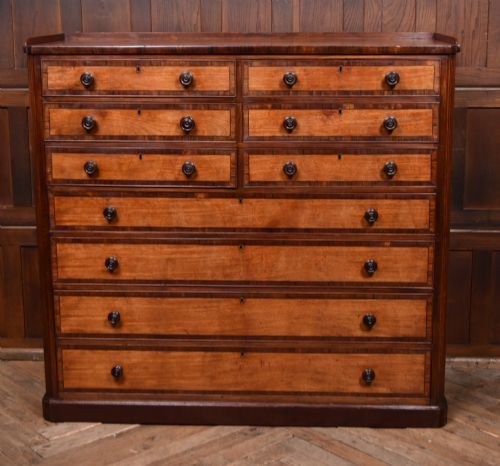
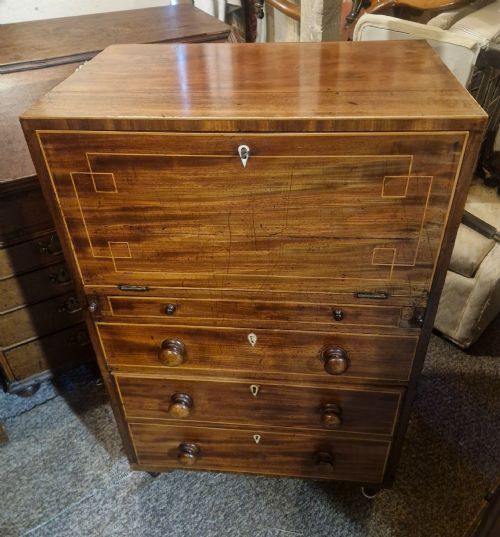
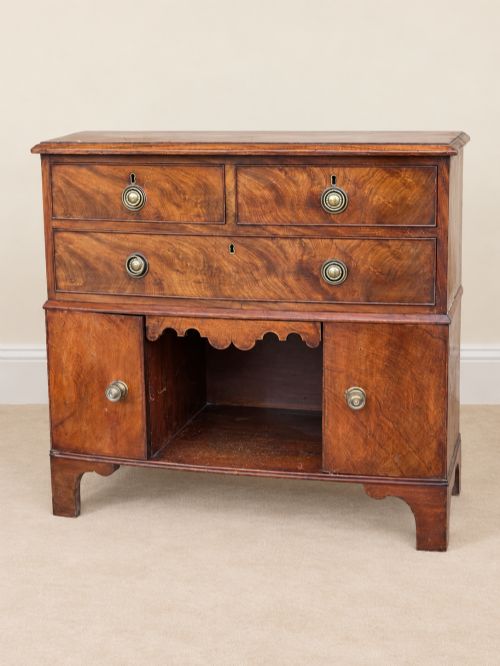
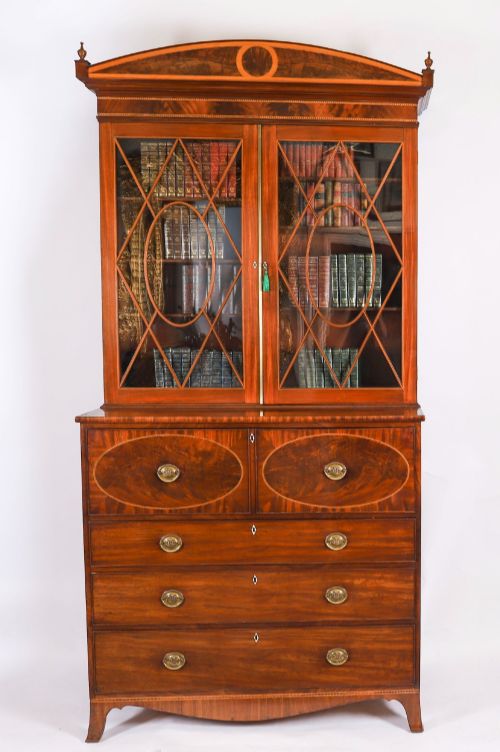
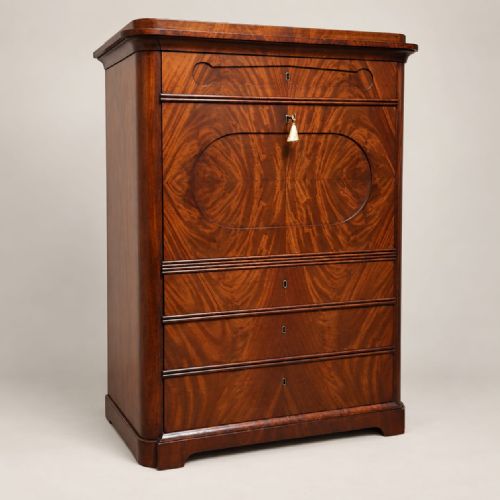
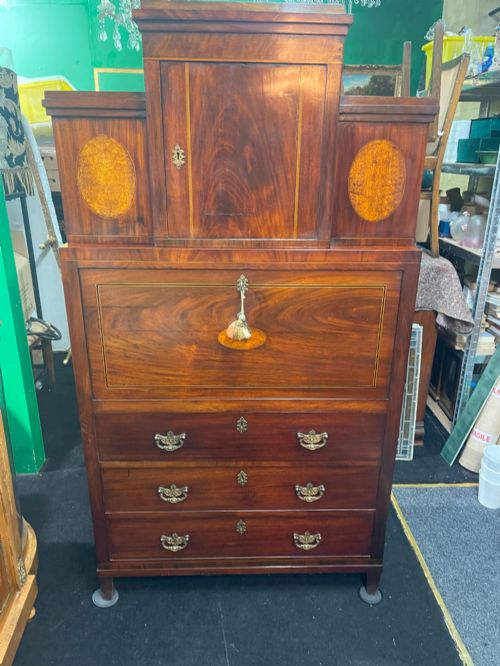
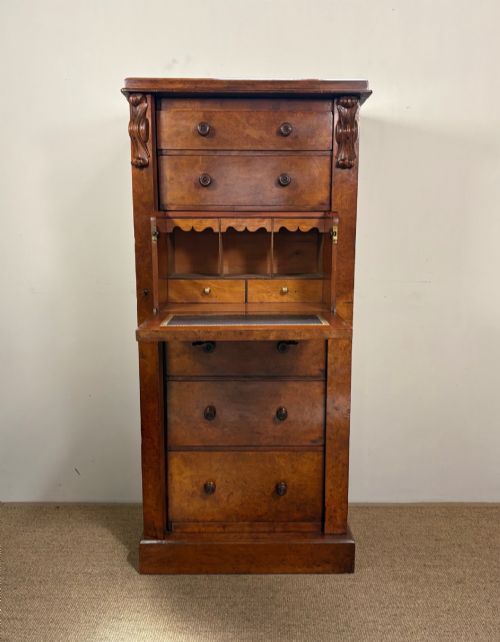


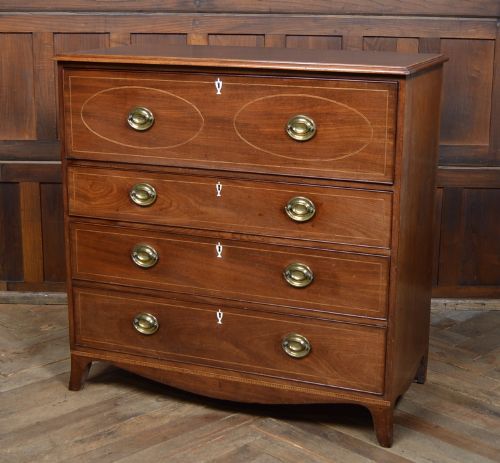
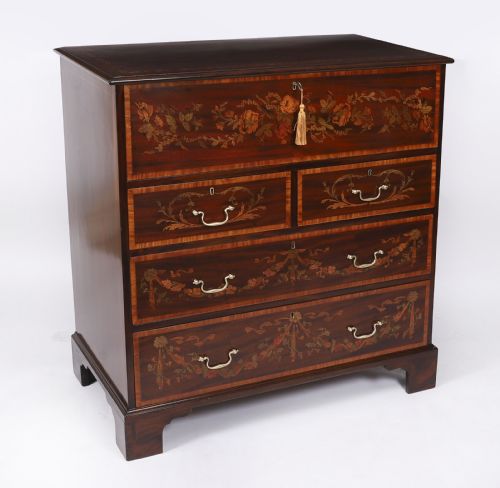
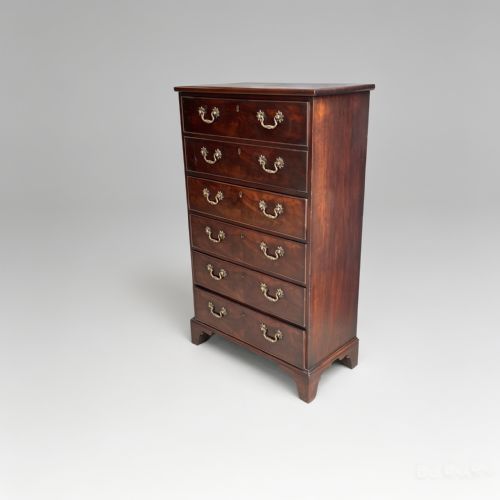
Antique Mahogany Tallboy Desk
An antique mahogany tallboy desk combines towering vertical storage with a fitted writing drawer, offering a practical workspace built to last.
Antique Mahogany Tallboy Desk
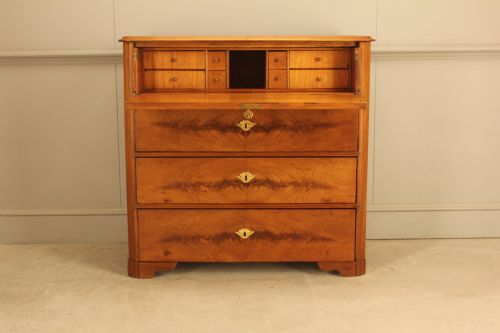
When you search for an antique mahogany tallboy desk, you encounter pieces that combine upright chests of drawers or chests on chest with integrated writing compartments. These forms bridge the gap between large storage cabinets and functional writing furniture.
The pieces on this page span several eras, originating predominantly from the Georgian, Regency, and Victorian periods. You will find tallboys, secretaire chests, and chests on chest that incorporate drop-down writing flaps or pull-out drawers fitted with writing surfaces.
Makers from the 18th century onward constructed these items to serve domestic administrative needs while maximising floor space. The tall format allows for substantial drawer capacity beneath or above the dedicated writing section.
What varies in quality
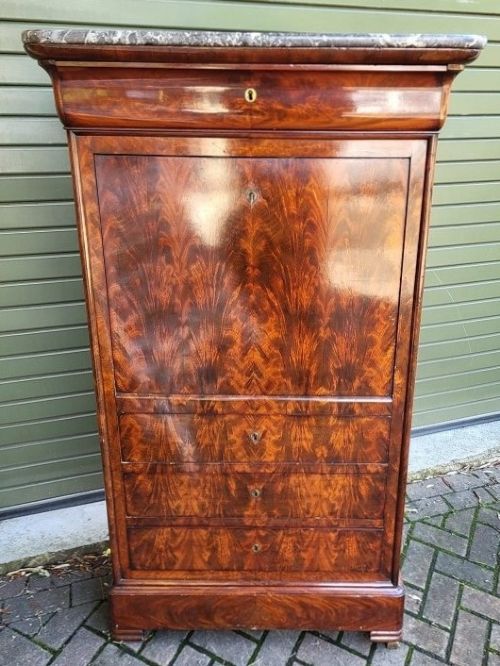
Quality rests upon the selection of timber and the precision of the veneer work across the drawer fronts. Finely figured flame mahogany indicates superior material choice by the maker.
Internal construction dictates the longevity of the piece, visible in the dovetail joints of the drawers and the condition of the secondary oak linings. Elaborate inlay, original brass fittings, and intact locking mechanisms elevate the standing of a piece.
Antique Mahogany Tallboy Desk Retail Price Guide 2026
Typical asking prices for mahogany tallboy desk among the pieces listed under this phrase on Sellingantiques today, from the lower quarter to the upper quarter. They describe what is for sale here now, not the wider market.
Listings feature mahogany, oak, walnut, brass, leather, and baize across Georgian, Regency, and Victorian periods.
Gillows·Druce & Co.
The Antique Mahogany Tallboy Desk Glossary
- Tallboy
- A tall chest of drawers, often constructed as one chest sitting atop a larger base chest.
- Secretaire
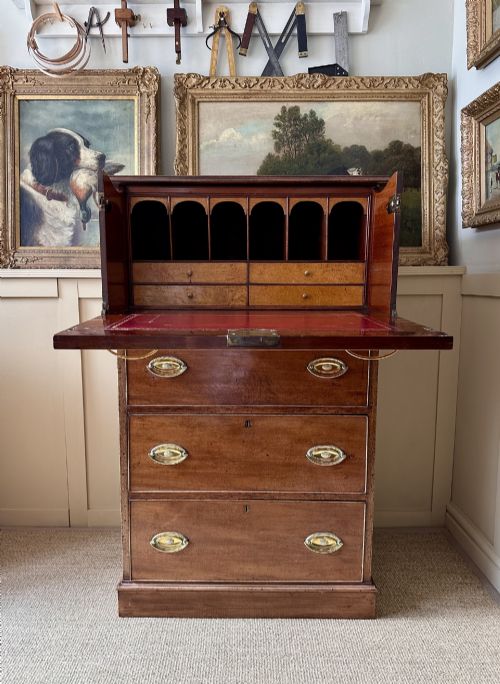
- A desk or chest of drawers featuring a pull-out drawer or drop-front panel that conceals a writing surface and pigeonholes.
- Flame mahogany
- Timber sliced to reveal a distinctive, flamy wave pattern in the grain, highly prized for drawer fronts.
- Baize
- A coarse woolen material traditionally used to line writing surfaces within desks and secretaire drawers.
- Dovetail
- A type of joint used in drawer construction, interlocking wedge-shaped fingers that provide strong tensile strength.
Antique Mahogany Tallboy Desk: Frequently Asked Questions
What is a tallboy desk?
A tallboy desk is a tall vertical chest of drawers that incorporates a dedicated writing drawer or fold-down writing flap. This dual-purpose design provides extensive storage while offering a compact surface for correspondence.
These pieces typically combine the height of a chest on chest or tall cabinet with internal pigeonholes and small compartments suitable for writing materials.
How do I use one today?
You can utilise the drop-front flap or pull-out drawer as a laptop station or a traditional writing desk. The vertical drawers provide ample storage for household paperwork, linens, or clothing.
Position the piece against a sturdy wall in a study or bedroom where its height and proportions complement the room without dominating the floor space.
How do I identify Georgian pieces?
Georgian pieces display proportions and cabinet-making techniques characteristic of the 18th century, often utilising solid mahogany and oak drawer linings. Look for hand-cut dovetails and period brass drop handles that show age and authentic wear.
Stylistic cues include clean classical lines, bracket feet, and restrained use of inlay or carving typical of George II and George III designs.
What is the difference between a tallboy and a Wellington chest?
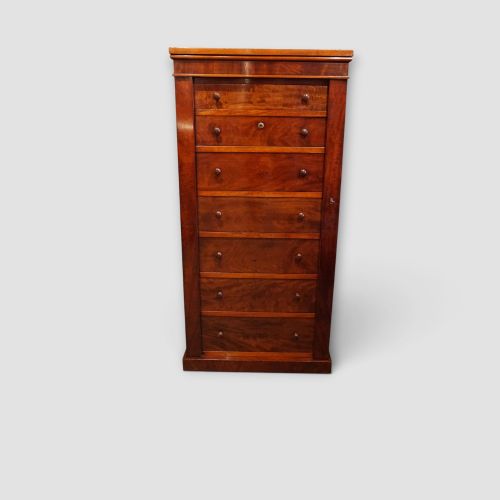
A tallboy generally refers to a larger chest on chest or a tall single carcase with numerous drawers. A Wellington chest is typically a narrow, vertical chest secured by a hinged vertical locking flap on one side.
While both offer vertical storage, Wellington chests are noticeably narrower and often trace their origins to the Victorian period.