




Antique Cherub Clock
An antique cherub clock brings sculptural putti and classical mythology into domestic timekeeping, combining gilt bronze and marble in ornamental mantel pieces.
Antique Cherub Clock
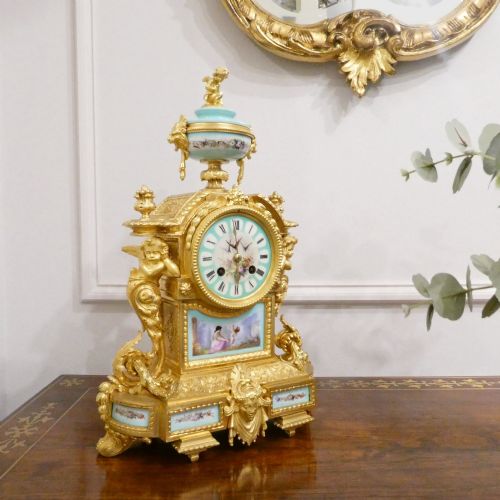
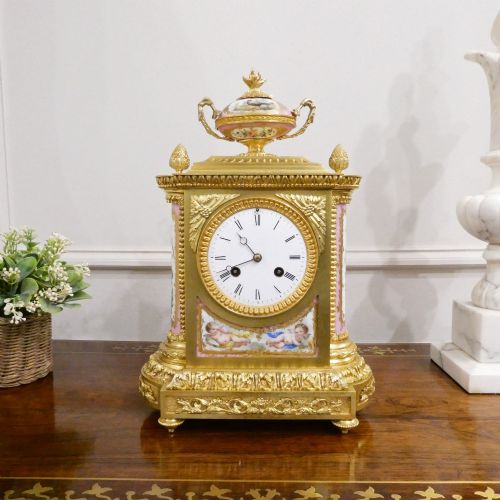
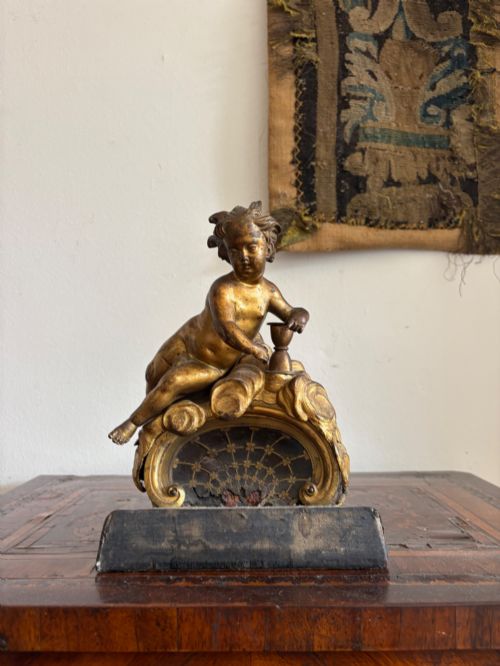
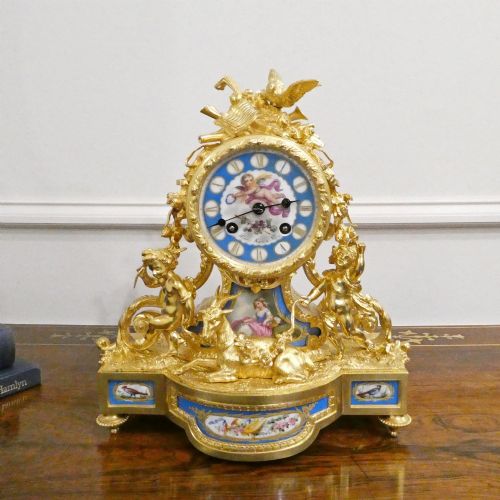
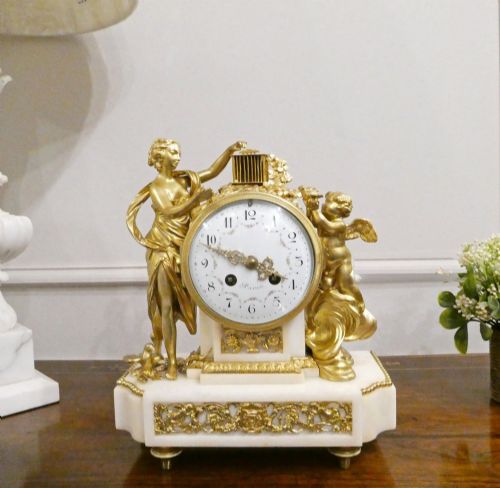
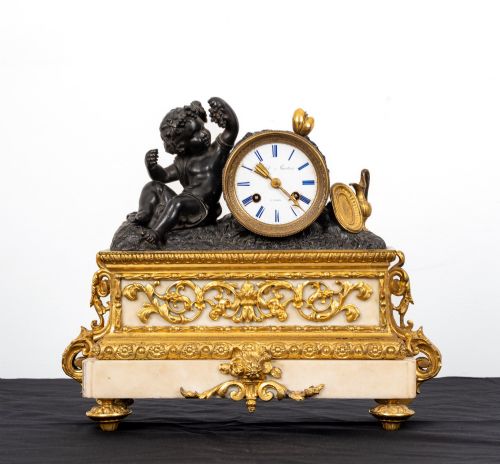
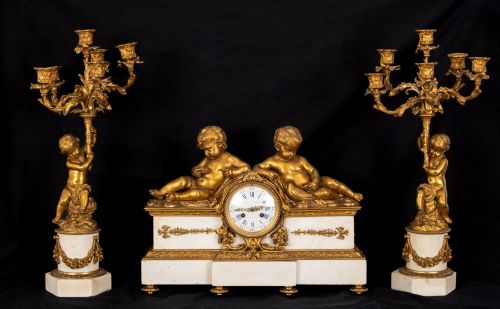
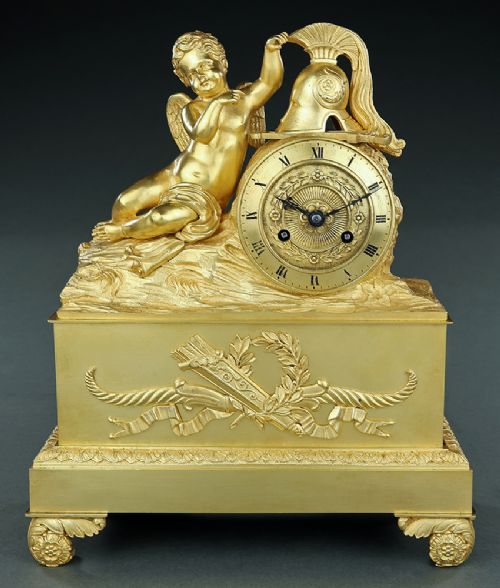
An antique cherub clock typically takes the form of a mantel clock or garniture set featuring cast bronze figures of putti, cherubs or winged infants associated with love, time or allegorical themes. The evidence shows these pieces belong predominantly to the nineteenth century, emerging from French workshops during the Victorian period alongside broader revivals of Louis XIV, Louis XV, Louis XVI and Empire styles.
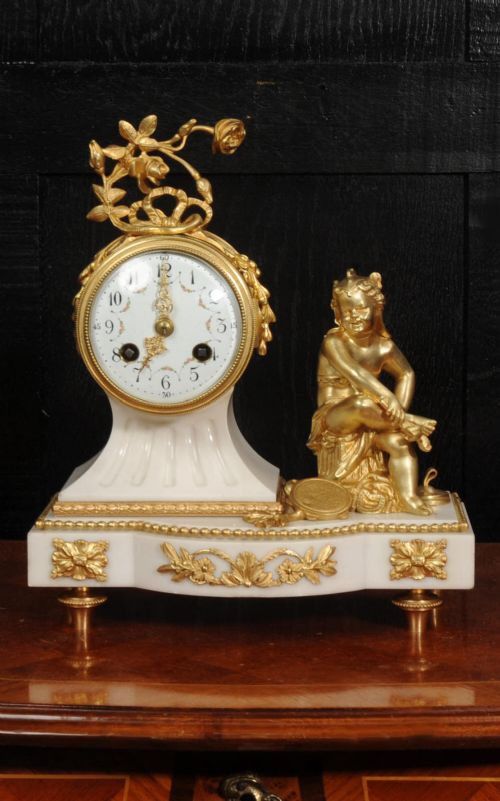
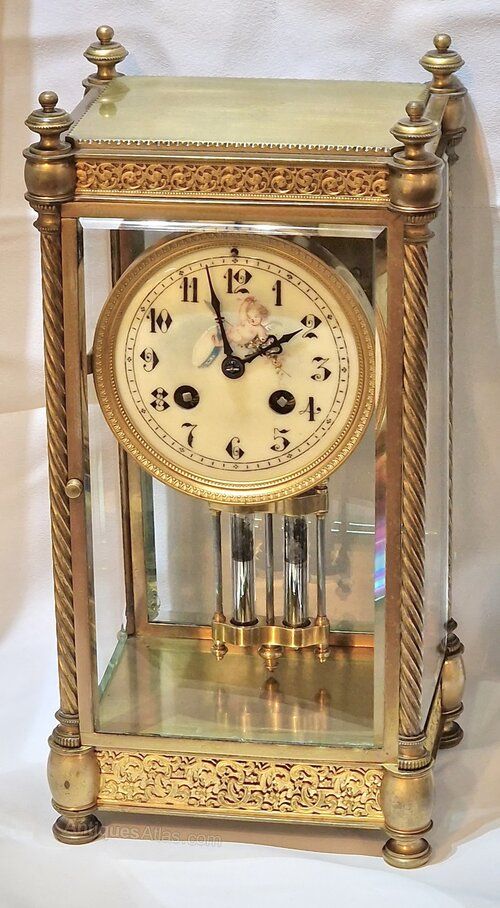
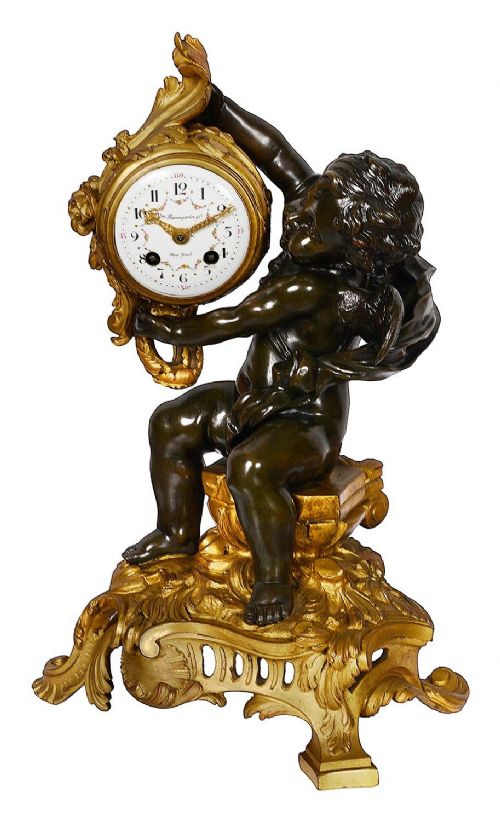
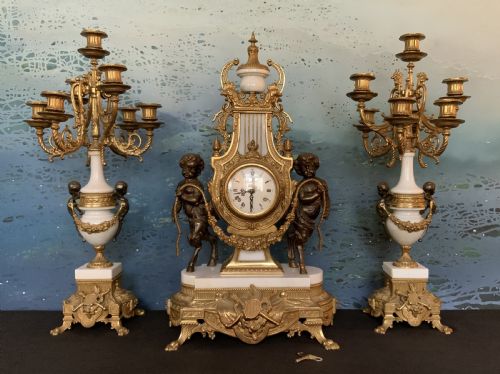
Buyers encounter single mantel pieces, drum head clocks, four glass designs, and three-piece garniture sets complete with matching candelabra. The sculptural figures appear perched upon marble bases, holding globes or framing enamel dials decorated with painted numerals and delicate hands.
Materials and construction
The primary structural materials recorded in the evidence are gilt bronze, ormolu, white and red marble, porcelain panels, and occasionally onyx or glass. Foundries cast the bronze and brass components before applying mercury gilding or modern electroplating to create the characteristic golden ormolu surface finish.
Clock movements are housed within heavy metal cases, driven by eight-day mechanisms and sometimes featuring visible pendulums, escapements or striking trains. Dial faces integrate painted enamel on copper plates or porcelain segments, often signed by the maker or retailer.
Some nineteenth-century boudoir clocks feature cherubs swinging on a suspended pendulum or riding dolphins through imagined seas.
Assessing craftsmanship
Quality in an antique cherub clock rests upon the crispness of the bronze chasing and the depth of the gilding. Superior examples display finely hand-finished feathers on the cherub wings, sharply articulated facial expressions, and substantial cast mounts rather than lightweight stamped metal.
The integration of the sculptural elements with the marble or porcelain body defines the tier of the piece. Well-balanced garniture sets featuring matching candelabras and signed movements by known makers sit at the upper end of the historical production scale.
Jean-Baptiste Delettrez·Henry Marc·Siffel and Cartier·Japy Freres·Henry Dasson·Leon Message·Jollet et Cie·Samuel Marti·Achille Brocot·Albert Ernest Carrier-Belleuse·Vincenti·Charles Hour
The Antique Cherub Clock Glossary
- Ormolu
- Gilt bronze produced by applying a mercury and gold amalgam to a bronze base and firing it. This hazardous historical technique yielded a deep, warm golden lustre distinct from modern electroplating.
- Putto
- A plump, naked male child figure frequently depicted in classical art and sculpture. In nineteenth-century clockmaking, these figures represent cherubs, cupids or allegorical seasons.
- Garniture
- A set of matching ornamental objects designed for display together on a mantelpiece. These typically comprise a central clock flanked by a pair of matching candelabras or urns.
- Escapement
- The mechanical linkage that controls the release of power in a clock movement. Boudoir and swinging clocks often display this mechanism visibly on the dial or pendulum.
Antique Cherub Clock: Frequently Asked Questions
What is a cherub clock?
A cherub clock is a nineteenth-century timepiece featuring sculptural figures of putti or winged infants cast in bronze or ormolu as part of the decorative case.
These pieces were designed as decorative centrepieces for mantelpieces, often accompanied by matching candelabras in French garniture sets.
Who made these clocks?
Many surviving examples were produced by prominent French clockmaking firms and foundries during the Victorian era, including Japy Freres and Samuel Marti.
Retailers and bronze founders collaborated to create the elaborate cases, while specialised movement makers supplied the mechanical interiors.
How do garniture sets work?
A garniture set consists of a central mantel clock accompanied by two matching side pieces, such as candelabras or decorative urns.
Designed to be arranged symmetrically on a fireplace mantel, these matched sets share identical ormolu mounts, marble bases and stylistic motifs.
How should I care for an antique clock?
Antique mechanical clocks require a stable environment away from direct heat sources and dampness to preserve the gilding and marble.
Professional servicing of the eight-day movement every few years ensures the brass gears and springs operate without excessive wear.