




Bronze Cherub Clock
A bronze cherub clock brings sculptural warmth and precise timekeeping together, combining cast bronze and polished ormolu with playful figures.
Bronze Cherub Clock
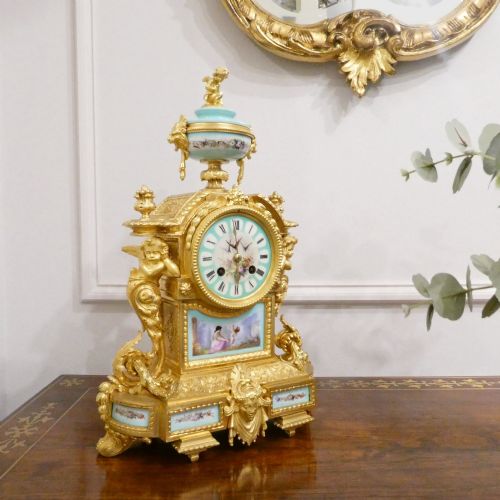
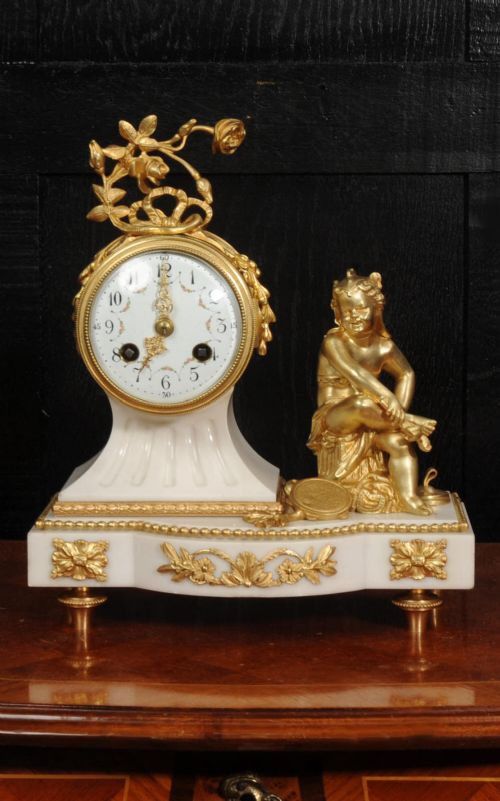
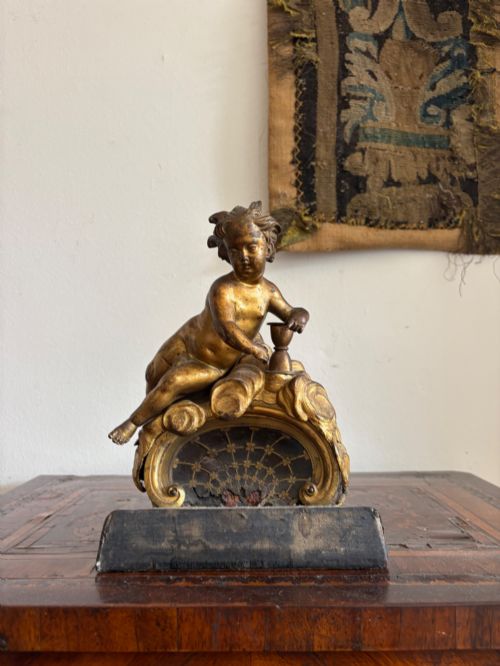
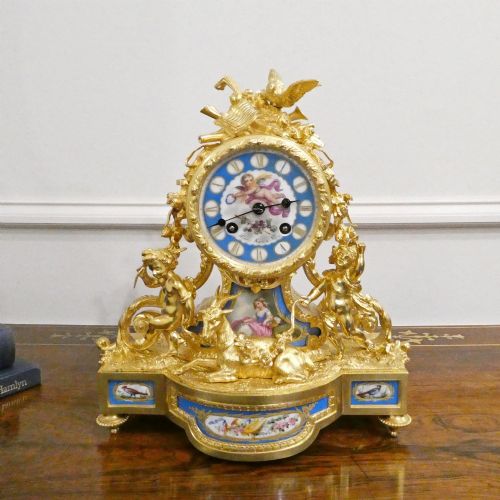
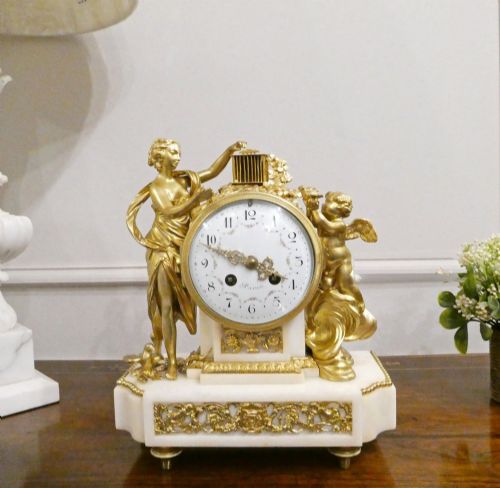
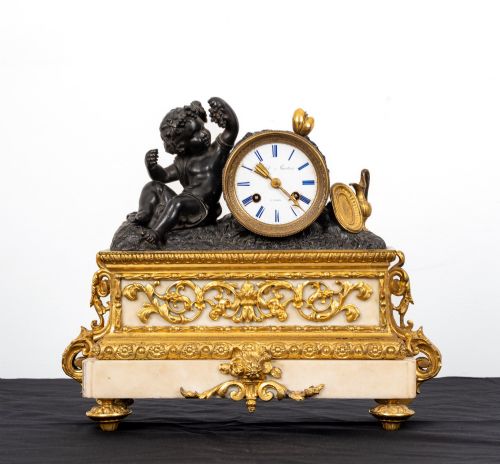
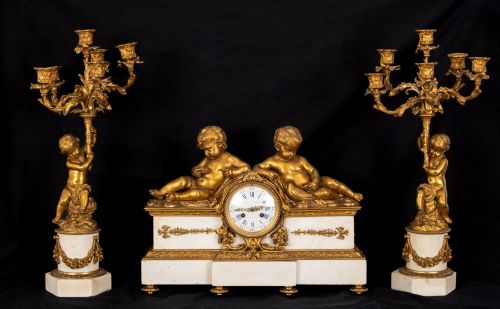
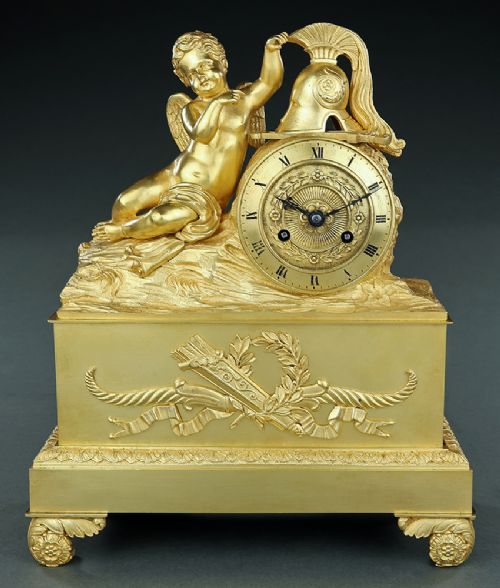
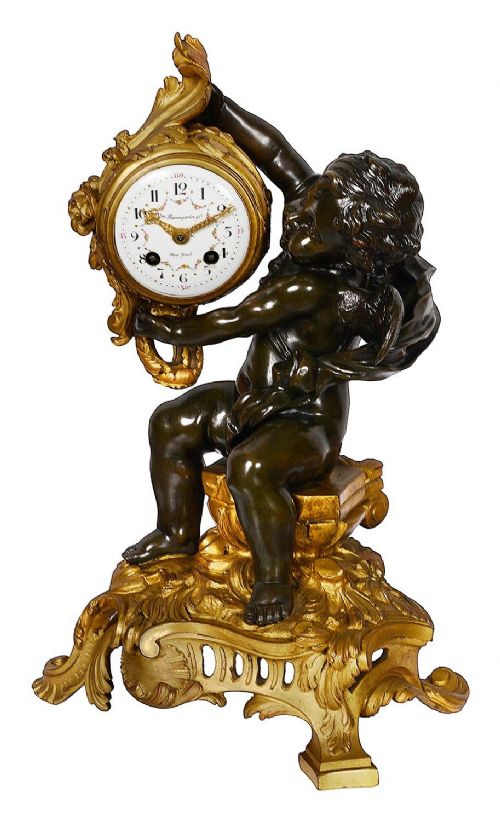
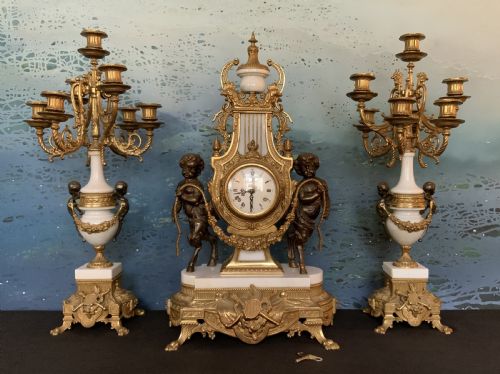
A bronze cherub clock is a decorative timepiece featuring cast metal figures of winged putti, most commonly encountered as part of nineteenth-century French mantel clocks and larger garniture sets.
These pieces range from compact boudoir timepieces to grand multi-piece arrangements flanked by matching candelabras, drawing heavily on classical French design revivals such as Louis XVI and Rococo.
The bronze cherub clock surfaces primarily in nineteenth-century workshops, capturing the ornate decorative tastes of the Victorian era alongside earlier continental movements.
Materials and construction
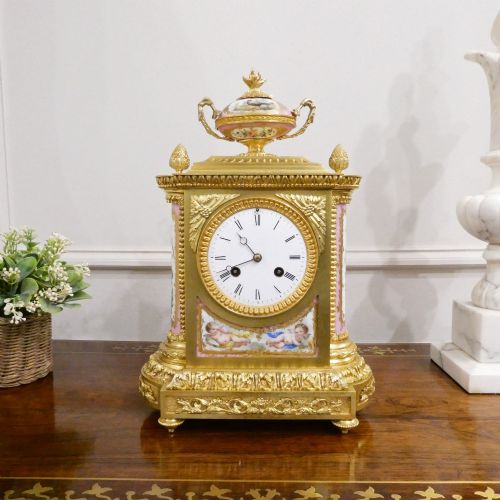
The physical build of these pieces relies on bronze and brass castings finished with ormolu mercury gilding, mounted onto contrasting white marble or dark slate plinths.
Enamel dials with delicate hand-painted numerals sit within the metal cases, often paired with visible porcelain plaques or decorative mounts that display intricate floral and figural motifs.
Several cherubs are caught mid-mischief, holding starred celestial globes or clinging desperately to the rims of towering mantel clocks.
Assessing quality and craftsmanship
The mechanical movement inside dictates the engineering standard, with signed French backplates from established makers marking the boundary between standard commercial production and superior horological work.
Jean-Baptiste Delettrez·Henry Marc·Siffel and Cartier·Henry Dasson·Japy Freres·Leon Message·Jollet et Cie·Samuel Marti·Achille Brocot·H Luppens Paris·Gay Vicarino and Co Paris
The Bronze Cherub Clock Glossary
- Ormolu
- Gilded bronze, where finely ground gold is amalgamated with mercury and applied to a bronze base through heat. This technique creates a distinctive warm lustre characteristic of antique French decorative arts.
- Garniture
- A set of matching decorative objects, typically comprising a central mantel clock accompanied by flanking candelabras or urns. These matched sets were designed to sit harmoniously across a fireplace mantel.
- Putto
- A plump, often winged child figure derived from classical art and frequently depicted in renaissance and revival pieces. In these horological works, putti interact with the clock face, globes, or floral garlands.
- Movement
- The internal mechanical workings of a clock, driven by springs or weights and regulated by a pendulum or balance wheel. French nineteenth-century movements frequently feature eight-day striking capabilities.
- Dial
- The face of the clock where time is indicated, commonly constructed from white enamel with Roman or Arabic numerals. Hand-painted details and delicate brass hands complete the assembly.
Bronze Cherub Clock: Frequently Asked Questions
How do I wind a vintage clock?
Most mechanical clocks require a specialised key inserted into winding holes on the dial to tension the internal springs.
Care should be taken not to over-wind the mechanism, and consulting a professional horologist for initial setup ensures the pendulum and beat remain properly adjusted.
How do I care for ormolu bronze?
Ormolu surfaces require gentle dusting with a soft, dry brush to prevent the accumulation of dirt within the intricate chased details of the bronze casting.
Harsh chemical cleaners and abrasive cloths must be avoided entirely, as they strip the delicate gold gilding from the metal substrate.
How do I identify French clock periods?
Dating relies on examining the movement backplates for maker stamps, serial numbers, and exhibition medals alongside stylistic clues from the case design.
Victorian and nineteenth-century examples often blend neoclassical or rococo revival motifs with visible casting signatures characteristic of Parisian workshops.