
Antique Chaise Sofa
These nineteenth-century seats combine reclining comfort with formal elegance, offering a grand place to lounge in any drawing room.
Antique Chaise Sofa
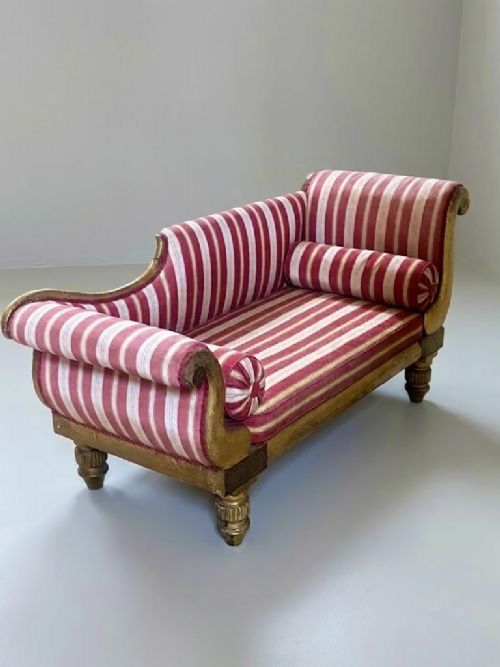
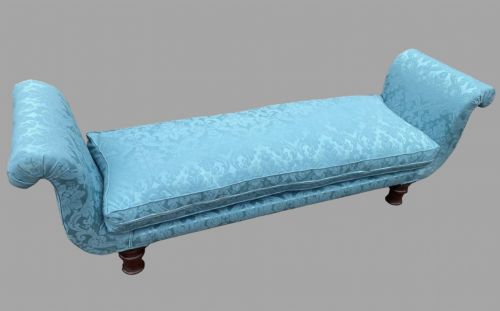
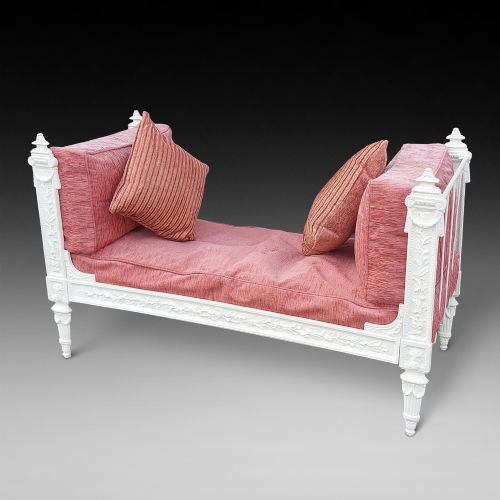
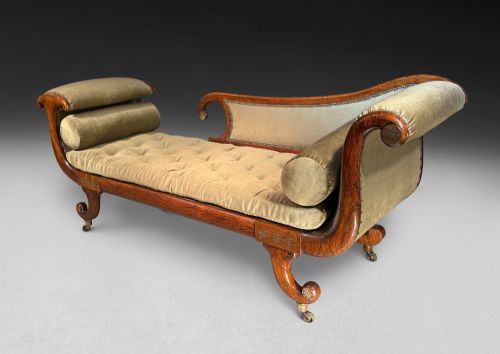
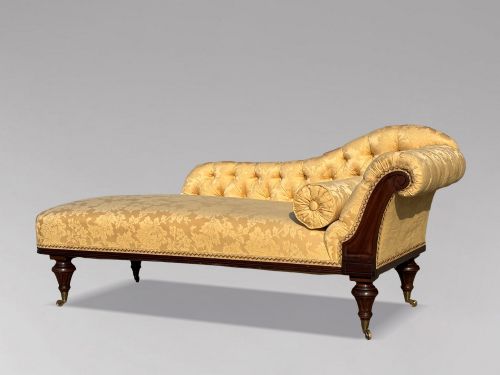
An antique chaise sofa bridges the gap between a conventional settee and a bed, designed primarily for reclining in a semi-recumbent posture during the day. The examples gathered here span the Regency, William IV, and Victorian eras, alongside French Provincial and Edwardian interpretations.
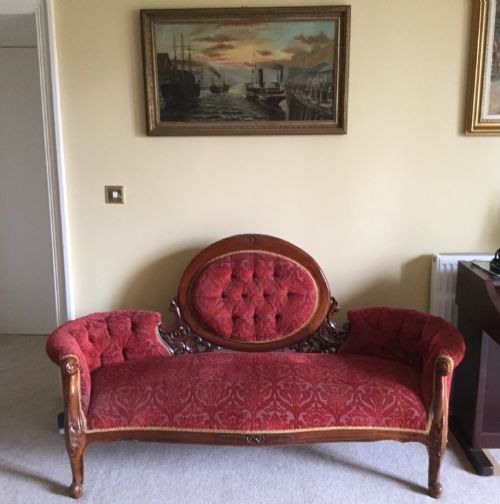
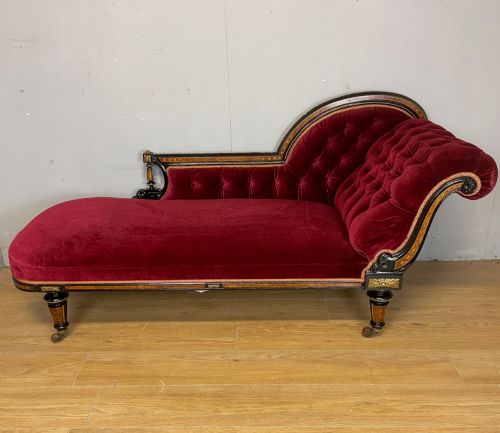
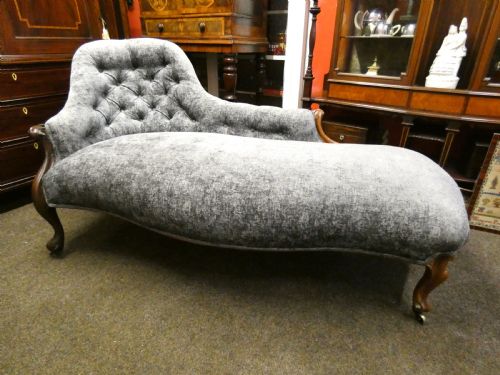
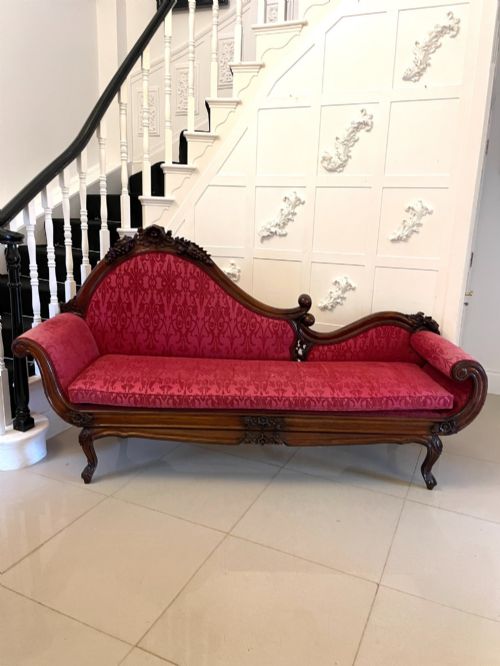
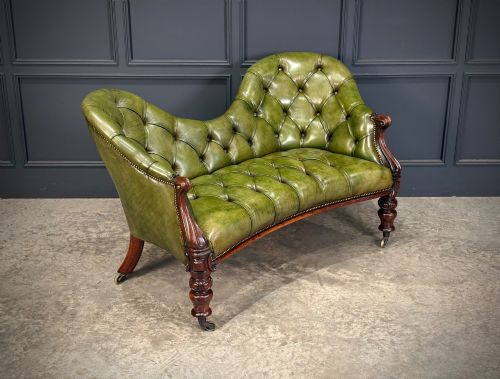
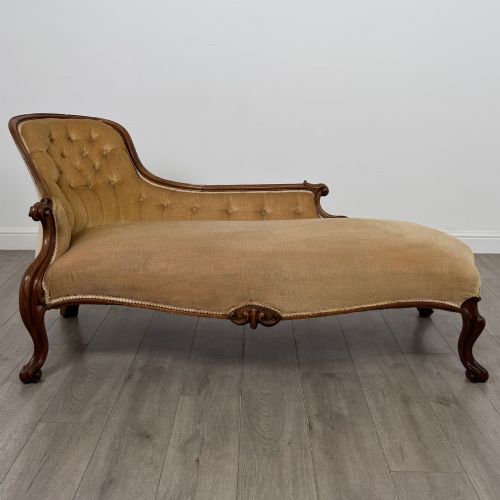
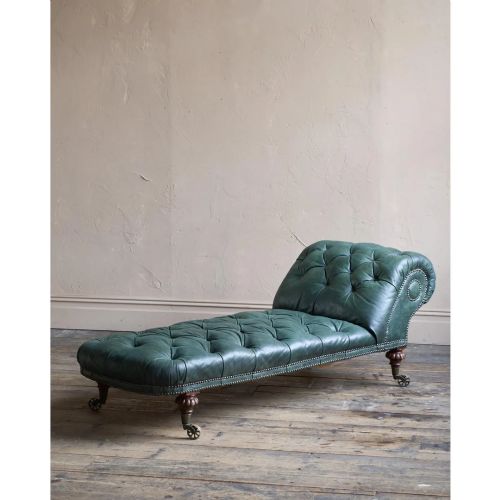
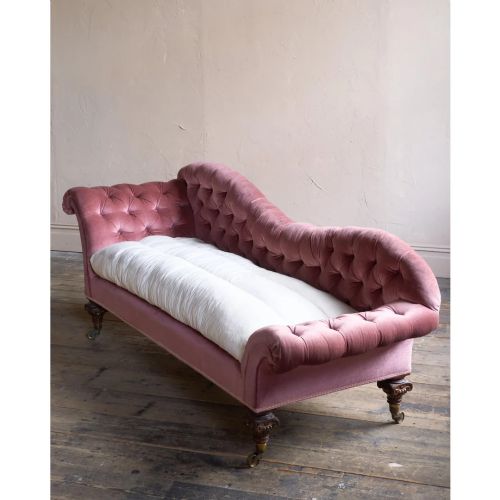
Most pieces encountered on this page belong to the Victorian period, appearing in walnut or mahogany with carved scroll ends, single raised backs, and deep buttoned upholstery. Earlier Regency and William IV iterations often display classical influences like brass inlay, simulated rosewood, or bold scroll arms.
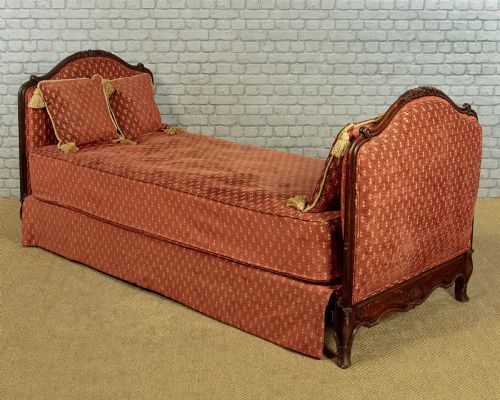
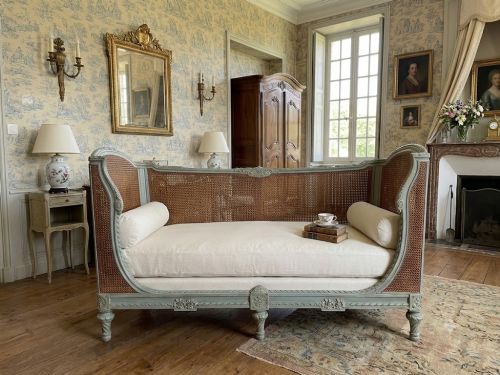
Makers and workshops such as Holland & Sons and Howard & Sons produced robust daybeds and chaise longues that survive today, while French influences appear through day beds and canapé corbeille frames.
Materials and Construction
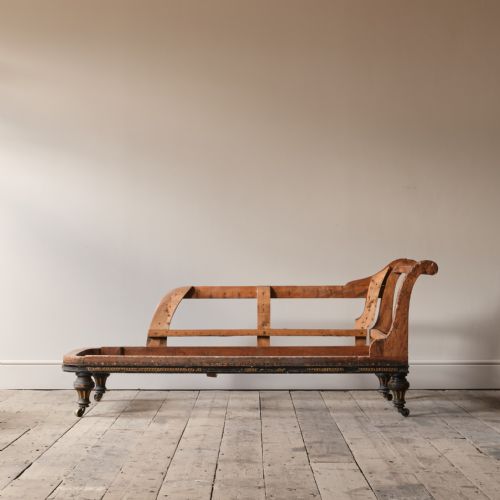
Timbers such as mahogany, walnut, and rosewood form the structural framework, often polished to a deep finish or enhanced with ebonised details, inlaid walnut panels, and ormolu mounts. Solid brass components frequently appear on castors or inlaid decoration.
Upholstery relies on traditional sprung bases layered with horsehair or modern equivalents, then finished in fabrics ranging from plain leather and velvet to patterned brocade, damask, or antique striped silk.
Several nineteenth-century frames carry faded workshop signatures hidden beneath modern webbing like secret notes left behind by Victorian upholsterers.
Markers of Excellence
The distinction between standard commercial seating and exceptional cabinetwork lies in the crispness of the timber carving and the architectural integrity of the frame. Higher tier pieces display fluid scrollwork, dense hardwoods, and maker stamps that confirm workshop origin.
Upholstery choices and internal webbing condition dictate the longevity of the piece, where traditional hand-tied sprung foundations maintain proper posture and support over decades of daily use.
Holland and Sons·Howard and Sons·H Goodall and Sons
The Antique Chaise Sofa Glossary
- Chaise Longue
- A long seated upholstered chair allowing the occupant to recline with legs extended.
- Daybed
- A couch suitable for sitting during the day and lying upon for rest.
- Settee
- A medium-sized upholstered bench with a back and arms designed for multiple occupants.
- Ormolu
- Gilded bronze ornamentation applied to furniture frames for decorative contrast.
- Scroll Arm
- A rolled timber armrest shaped into a spiral curve typical of nineteenth-century seating.
Antique Chaise Sofa: Frequently Asked Questions
What is an antique chaise sofa?
An antique chaise sofa is a hybrid seating form that pairs the backrest of a settee with an elongated seat for reclining.
Originating in various nineteenth-century styles, these pieces provide a comfortable place to stretch out while maintaining formal drawing room elegance.
How do I date an antique chaise?
Dating relies on examining timber choices, structural silhouettes, and decorative motifs like brass inlay or carved scroll ends.
Early nineteenth-century examples often feature Regency rosewood or mahogany, whereas later Victorian versions frequently utilise walnut and deep buttoned leather.
Where should I place a chaise in my home?
These seats suit living rooms, large hallways, or bedrooms where their asymmetrical profile can be appreciated from multiple angles.
Placing them away from direct sunlight protects delicate silk or velvet upholstery fabrics from fading over time.
Were these sofas used for sleeping?
Historical daybeds and chaise longues served primarily for daytime lounging, reading, and resting rather than overnight sleeping.
Their shorter length and raised single end rails encourage a semi-reclined posture instead of a flat sleeping position.