

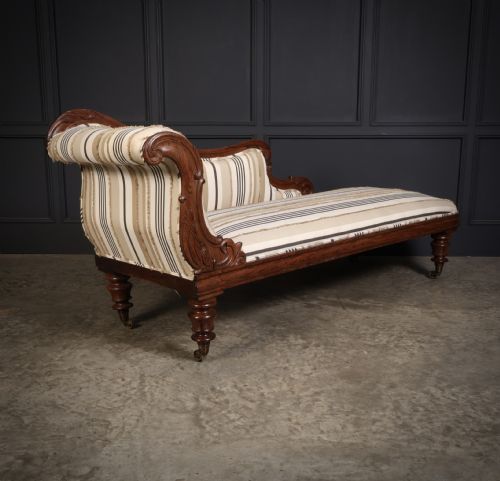


Nineteenth Century Chaise
A nineteenth century chaise brings undeniable architectural presence to a room, offering a reclining form designed for idle afternoon repose.
Nineteenth Century Chaise
A nineteenth century chaise combines the seat of a chair with the length of a bed, designed for reclining in a semi-recumbent posture rather than sitting upright. These pieces emerge in various regional and stylistic guises across the period, from French Empire designs to robust British interpretations.
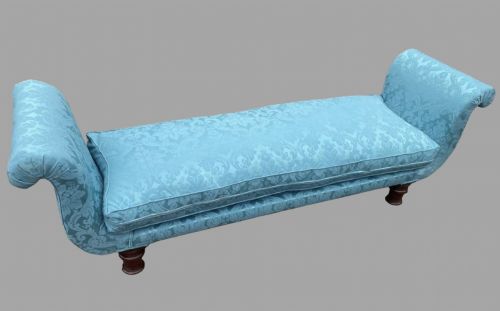
The versions most commonly met on this page span the Victorian era, William IV period, and Regency styles. They frequently appear in forms such as the Récamier, the lit bateau, or the standard asymmetric scroll-ended daybed.
How they were made
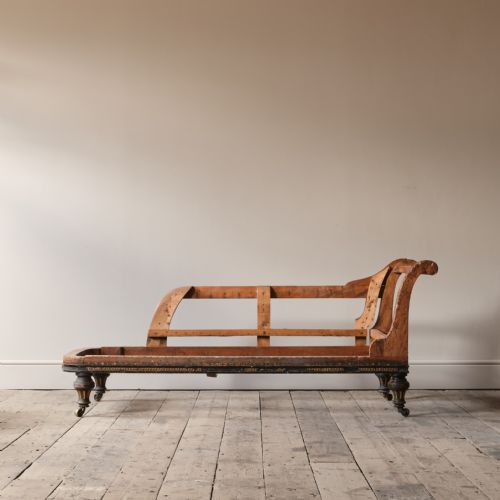
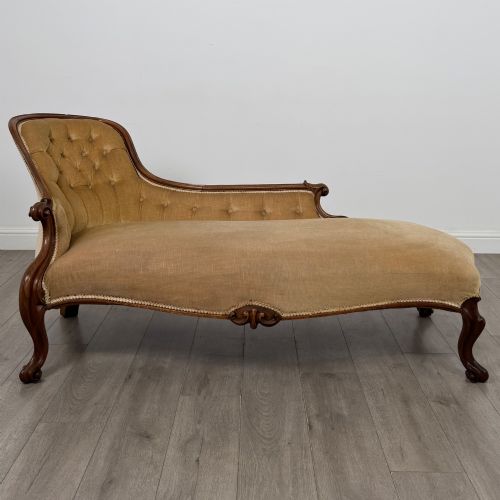
Timbers form the structural carcass, with dense hardwoods like mahogany and rosewood utilised extensively alongside ebonised wood. These woods are often shaped with curved show-frames, carved scroll ends, and intricate piecrust mouldings.
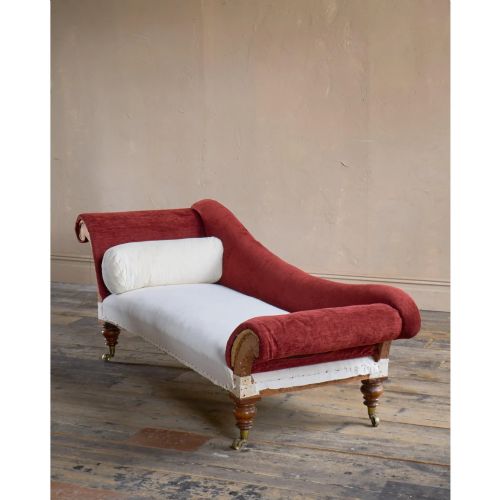
Upholstery defines the character of the piece, employing traditional textile coverings such as velvet, damask, calico, and cream fabric. This soft furnishing is supported internally by traditional stuffing methods adapted to the sweeping contours of the frame.
Brass accents appear on castors and decorative mounts, adding functional mobility and metallic contrast to the dark timber surfaces.
Nineteenth Century Chaise Retail Price Guide 2026
Typical asking prices for nineteenth century chaise among the pieces listed under this phrase on Sellingantiques today, from the lower quarter to the upper quarter. They describe what is for sale here now, not the wider market.
Listings feature nineteen-century pieces incorporating brass, mahogany, velvet, ebonised wood, timber, calico, damask upholstery, and rosewood.
What varies in quality
The calibre of timber selection and cabinet work dictates the baseline standard of the frame. Denser grain figures in rosewood and finely figured mahogany denote superior material choices by the maker.
Carving execution and the sharpness of moulded details reveal the hand of skilled artisans versus standard workshop production. Fluid lines on scroll ends and well-defined show-frames separate standard items from exceptional examples.
Attribution to documented makers introduces a distinct layer of distinction. Pieces carrying a connection to prominent cabinet-makers command greater interest through their established workshop provenance.
Holland & Sons·Howard & Sons·Willian Trotter
The Nineteenth Century Chaise Glossary
- Récamier
- A type of chaise longue featuring two raised ends of equal or near-equal height with an open side, named after the French society figure painted by Jacques-Louis David.
- Lit bateau
- A French bed style resembling a boat, characterised by curving head and foot boards that roll outward from the mattress platform.
- Show-frame
- The exposed timber framework of an upholstered seat or daybed, designed to display the carved wood rather than concealing it entirely beneath fabric.
- Ebonised wood
- Timber treated with a chemical stain or finish to imitate genuine ebony, popular during the nineteenth century for achieving a deep black surface.
- Piecrust moulding
- A decorative, raised edge carved with small scalloped undulations resembling the crust of a pie, often seen on Victorian tabletop or frame edges.
Nineteenth Century Chaise: Frequently Asked Questions
Where should a nineteenth century chaise be placed?
These pieces suit large reception rooms, bedrooms, or studies where adequate floor space allows them to float or sit against a prominent wall. Their asymmetric profiles look best when the main scroll end is positioned to draw the eye down the length of the room.
Because of their historical role in grand interiors, they function well as standalone seating rather than being squeezed into conversational groupings of standard armchairs.
How do I identify a Regency chaise?
Regency examples typically exhibit classical restraint, drawing inspiration from ancient Greek and Roman furniture forms. Look for simulated rosewood finishes, saber legs, and clean architectural lines without heavy Victorian ornamentation.
Earlier nineteenth century pieces from this bracket often feature bold brass mounts and austere profiles that reflect the Regency neoclassical aesthetic.
How do I care for nineteenth century upholstery?
Protect delicate textiles like velvet and damask from direct sunlight to prevent fading and degradation of the historical fibres. Regular gentle brushing removes surface dust without stressing the underlying structure.
Keep wooden show-frames nourished with appropriate furniture wax while avoiding abrasive liquid cleaners on the polished timber surfaces.