

Victorian Upholstery Project
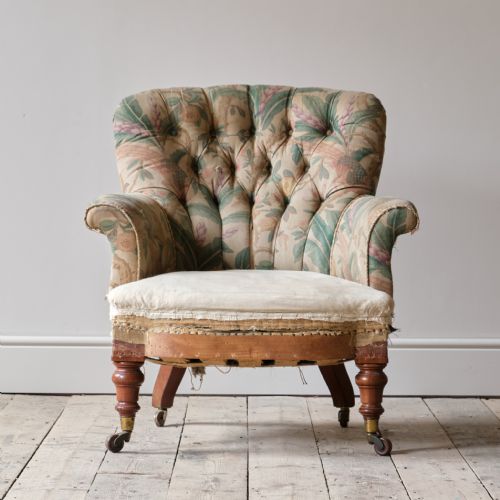
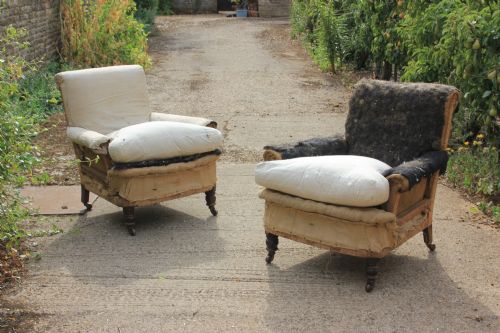
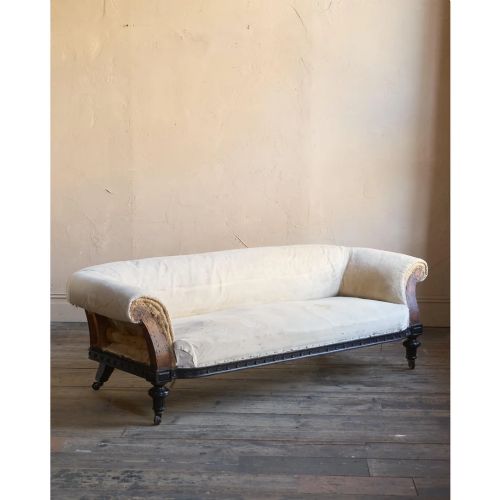
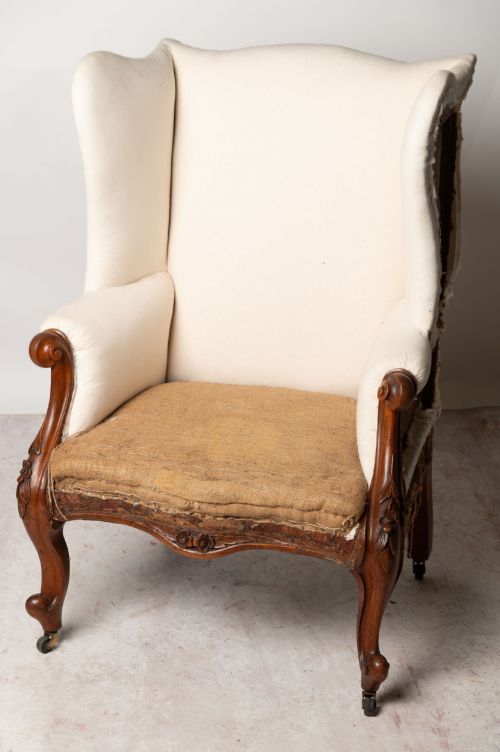
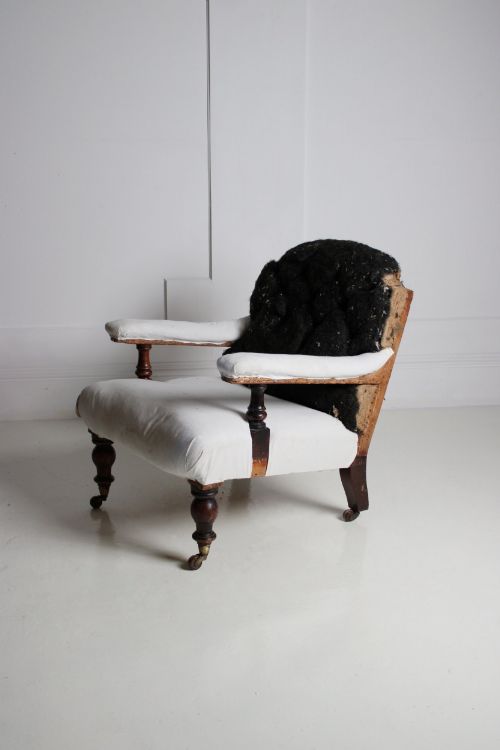
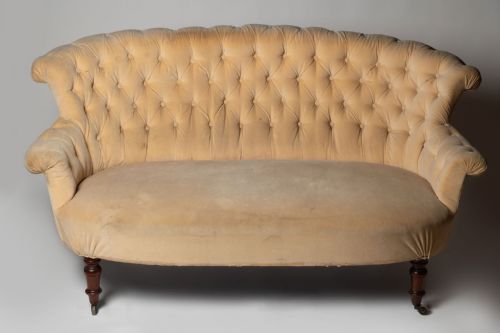
These Victorian upholstery project pieces are naked wooden frames and worn seats waiting for a proper rebuild to reclaim their former glory.
Victorian Upholstery Project
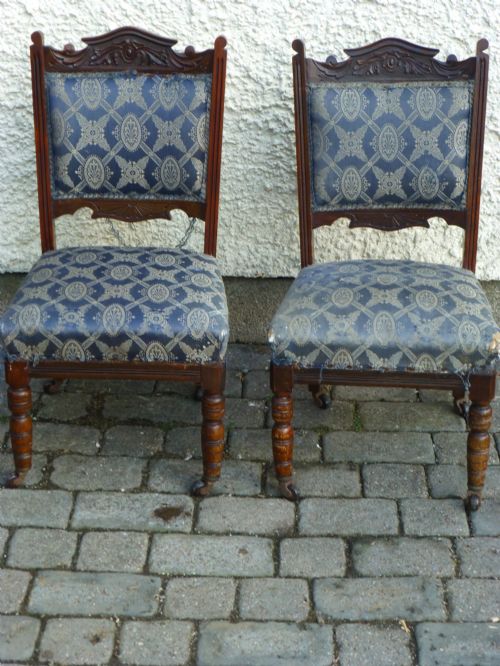
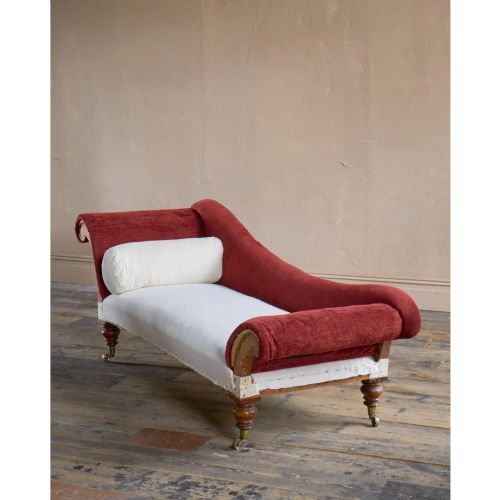
A victorian upholstery project brings together sturdy seating frames from the nineteenth century that require complete restoration, stripping, and re-covering. Buyers looking at this page encounter armchairs, sofas, chaise longues, and nursing chairs originating from the Victorian and Edwardian periods.
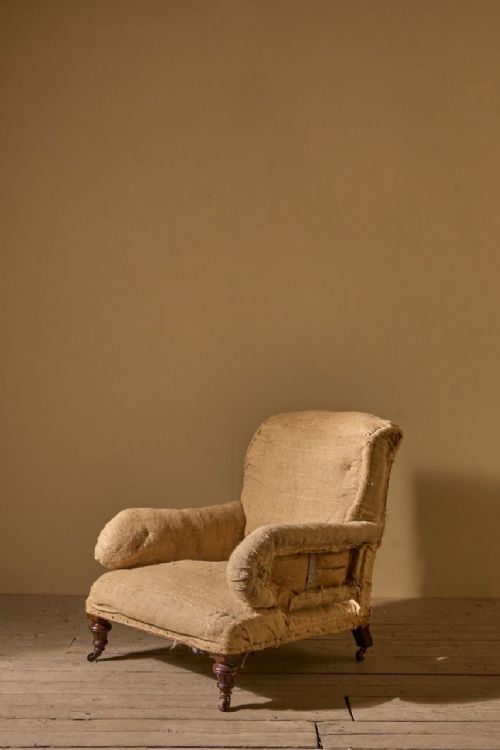
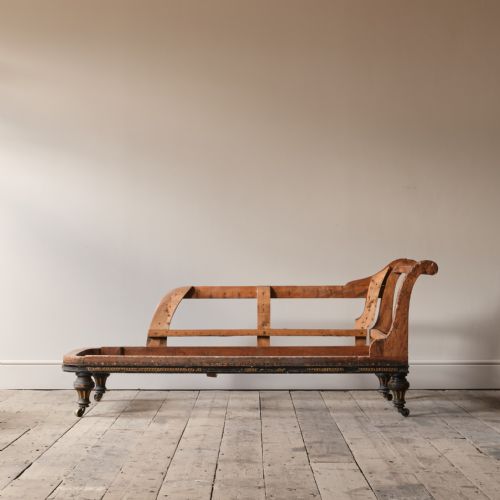
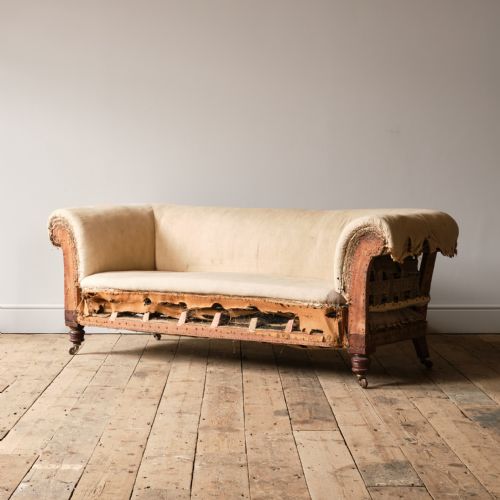
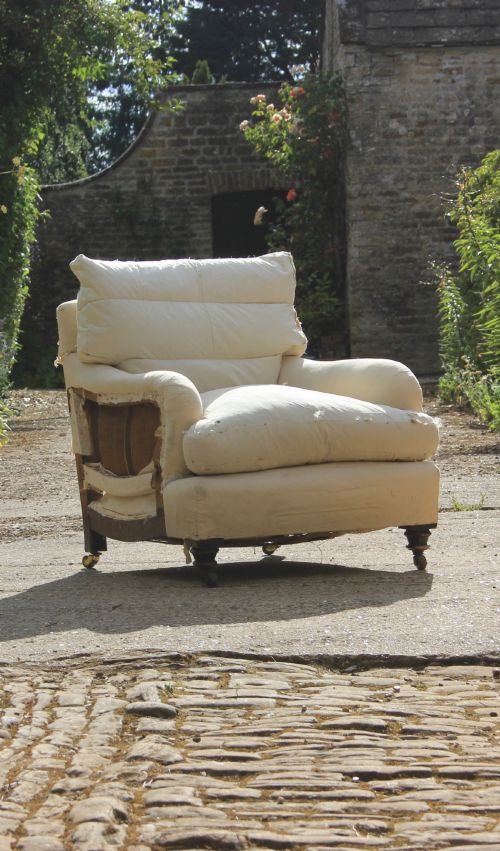
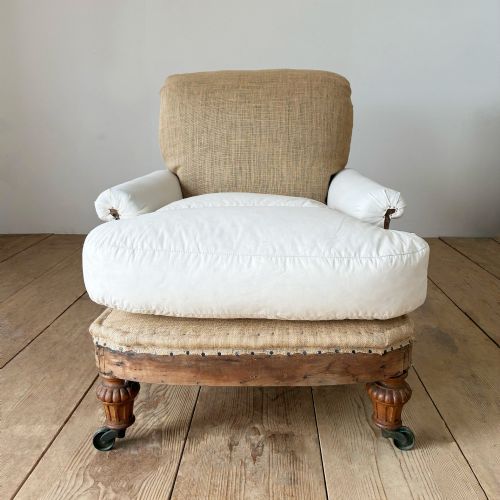
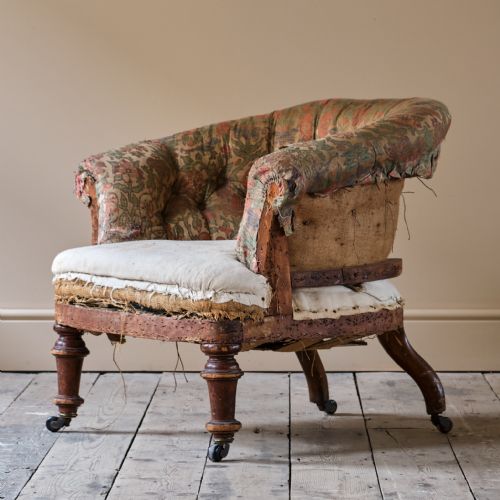
The selection ranges from deep-seated country house armchairs and Chesterfield sofas to smaller occasional, slipper, and tub back chairs. Many examples arrive stripped to their original hessian and calico stages, exposing the underlying timber frames for complete customisation.
Originating predominantly from British and French workshops, these pieces showcase diverse historical revivals including Aesthetic Movement, Napoleon III, and Chippendale styles. Each frame presents a specific structural foundation ready for traditional stuffing, webbing, and fabric selection.
Judging the raw frames
Quality in an un-upholstered frame rests entirely on the integrity of the bare timber skeleton and the soundness of its joinery. A superior piece shows tight, immovable joints, substantial proportions, and crisp, hand-carved wooden details that survive years of stripping.
The presence of maker stamps or attributed workshop designs elevates a frame from standard vernacular furniture to a notable collector piece. Heavier gauge timbers and well-balanced spring-ready compartments distinguish the finest workshop output from simpler domestic seating.
The available project frames span the Victorian and Edwardian periods, including specific design movements such as the Aesthetic Movement and Napoleon III.
Holland and Sons·Gillows·Howard And Sons·Hampton & Sons·Hindley & Sons
The Victorian Upholstery Project Glossary
- Calico
- A plain-woven cotton fabric used as an inner lining over the stuffing to hold it in place before the final top fabric is fitted. This intermediate stage allows a chair to be used temporarily or inspected for shape.
- Hessian
- A coarse woven fabric, typically made from jute fibres, stretched across the frame springs and webbing to provide a strong foundation for internal stuffing. It forms the essential base layer of traditional upholstery.
- Chaise longue
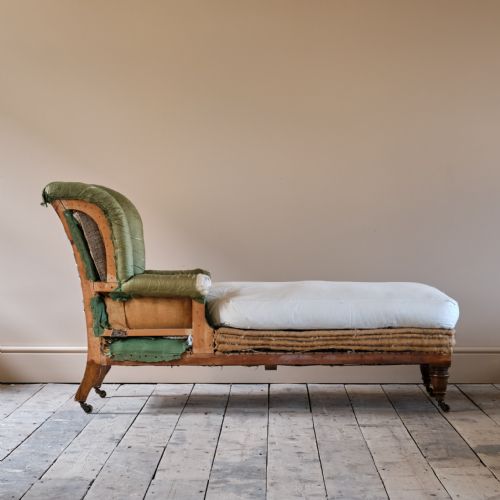
- An upholstered sofa in the form of a chair with a long seat large enough to support the legs. These elongated daybeds appear frequently in mid-nineteenth-century drawing rooms.
- Nursing chair
- A low-seated armchair designed historically for feeding infants or sitting comfortably near a bedroom hearth. Their compact proportions make them popular for modern bedroom and dressing room schemes.
- Slipper chair
- An armchair featuring short legs that sit close to the floor, originally designed for ladies' bedrooms for dressing. They often have high, supportive backs and curvaceous upholstered profiles.
Victorian Upholstery Project: Frequently Asked Questions
What does a calico stage mean?
A piece sold to the calico stage has had all its internal webbing, springs, stuffing, and calico lining fully restored by a professional. Only the final decorative top cover remains to be chosen and applied.
This saves the buyer the messy, time-consuming structural work while leaving complete freedom over the choice of exterior fabric.
Can I use modern fabrics?
Modern textiles work exceptionally well on these nineteenth-century frames, provided the fabric weight suits the scale of the chair. Heavier velvets, wools, and patterned linens often complement the substantial proportions of a country house armchair.
Fire safety regulations for domestic upholstery must be considered when selecting top covers and interior fillings for contemporary home use.
How do I identify a Howard style chair?
Howard style chairs typically feature low rolled arms, deep sprung seats, and low wooden legs fitted with brass castors stamped with the maker's name. They are celebrated for exceptional comfort and understated nineteenth-century proportions.
Copies and inspired pieces from the Edwardian era frequently replicate these characteristic comfort-driven design cues.
Are French Napoleon III chairs different?
Napoleon III frames display distinct continental influences from the mid-nineteenth century, often featuring ebonised wood, intricate gilt highlights, and more curvaceous, fluted silhouettes than their British counterparts. They lend an ornate, eclectic aesthetic to modern interiors.
These pieces frequently arrive requiring complete re-webbing and re-covering to revive their elaborate decorative frames.