




Antique Ceramic Wash Basin
These pieces of antique ceramic wash basin provide the heavy earthenware and porcelain vessels made for nineteenth and early twentieth century domestic hygiene.
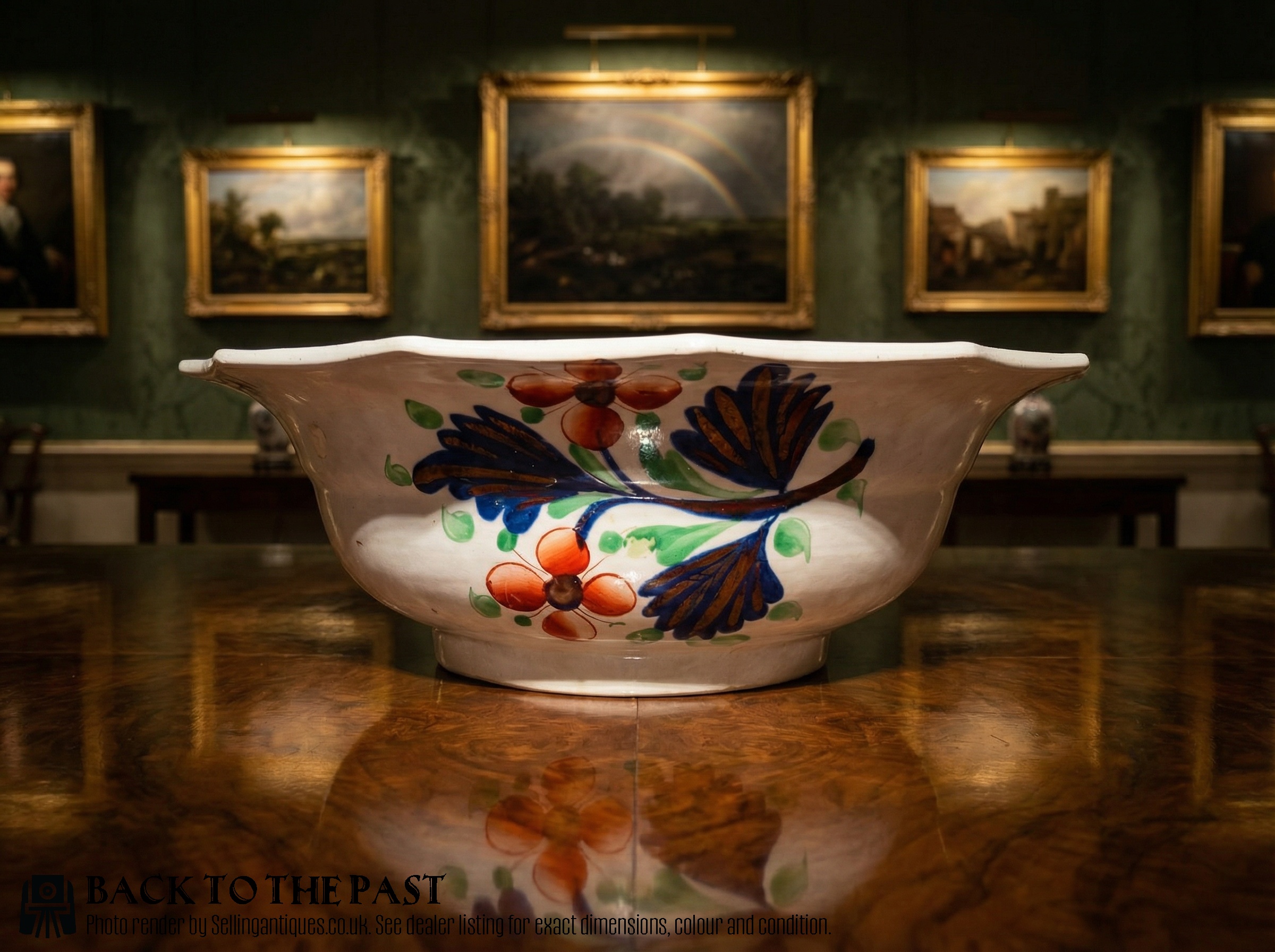
Antique Ceramic Wash Basin
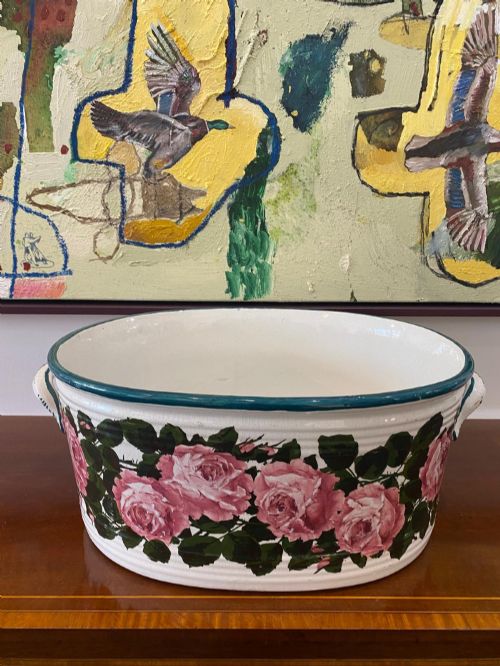
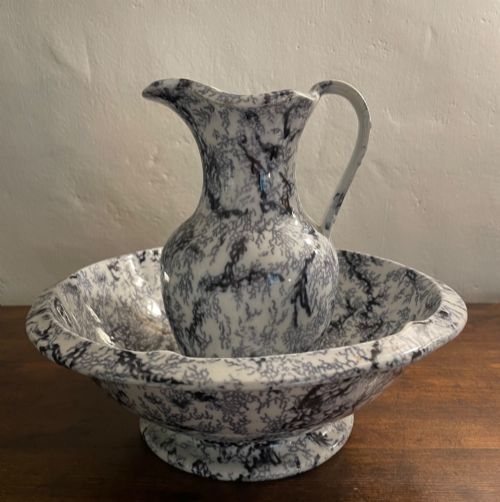
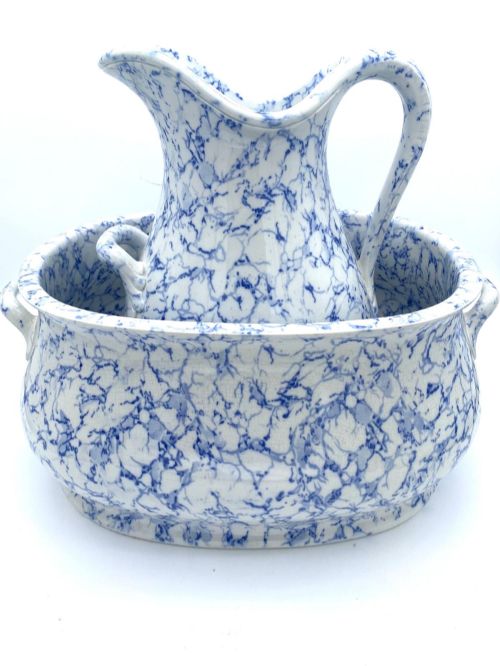
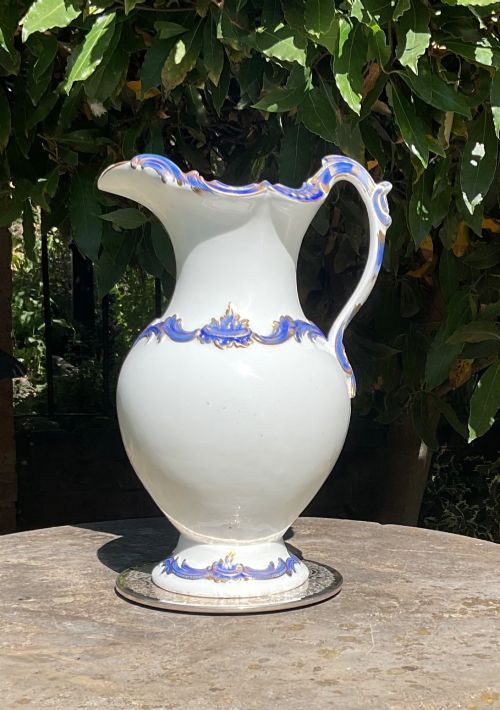
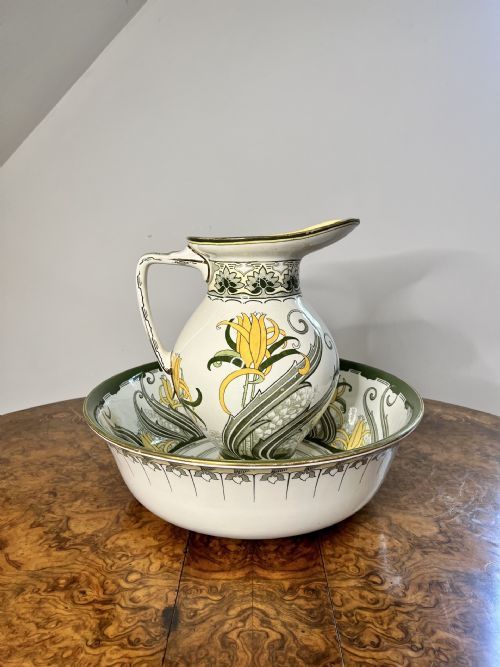
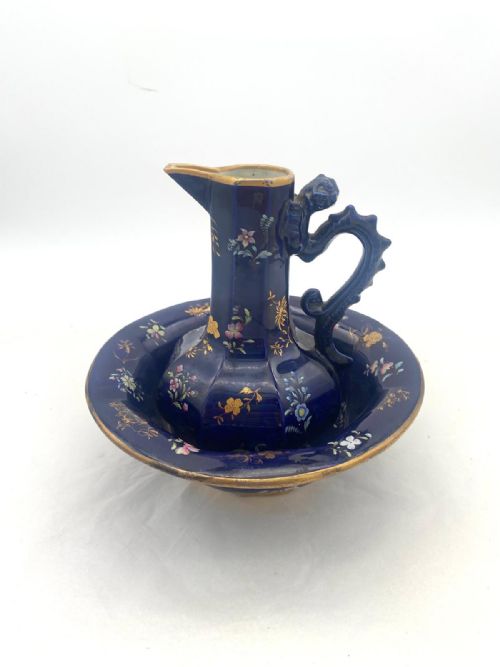
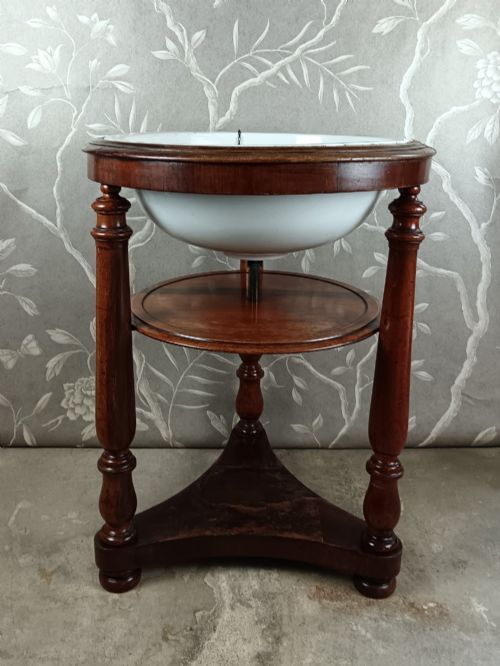
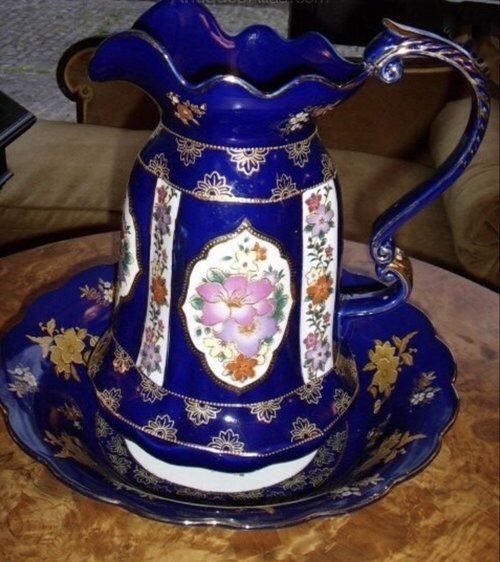
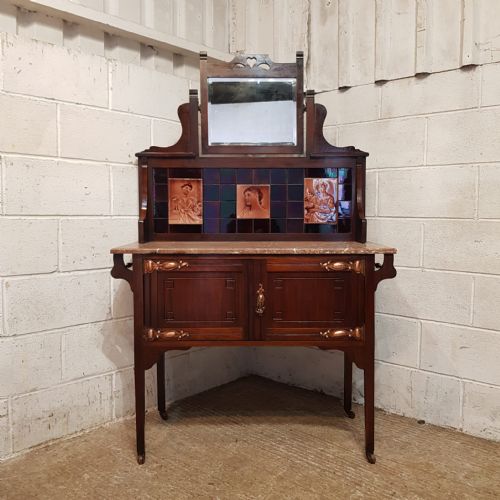
When you search for an antique ceramic wash basin, you encounter substantial utilitarian vessels produced across the nineteenth and early twentieth centuries. The domestic washing arrangements of these eras relied upon heavy earthenware, ironstone and porcelain bowls, frequently accompanied by matching water jugs or housed within mahogany and bentwood stands. Pieces range from large footbaths and tian bowls to basin and jug sets bearing transfer-printed designs.
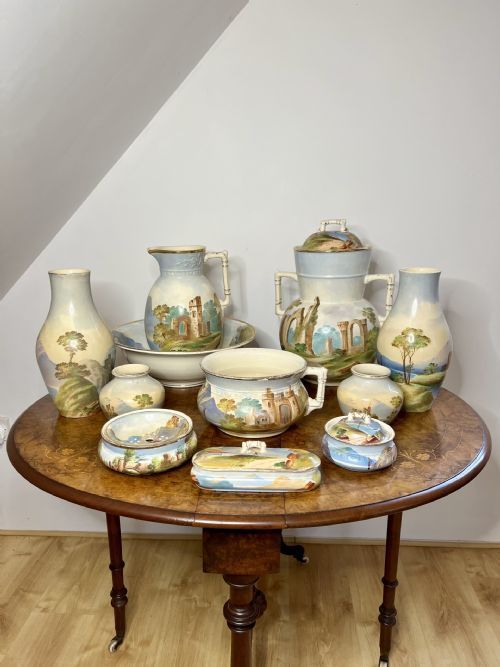
The specimens most commonly met on this page date from the Victorian and Edwardian periods, stretching from the eighteen-eighties to nineteen-hundred. These encompass everyday toilet basins alongside decorative bathroom sets produced by major potteries. Forms vary from simple round bowls to octagonal basins and complete sets including soap dishes and water jugs.
What Varies in Quality
Quality rests upon the crispness of the transfer print, the depth of the glaze and the refinement of the ceramic body itself. Early ironstone and porcelain pieces display greater weight and durability than standard earthenware, while intricate patterns such as flow blue or Chinoiserie require precise kiln temperature control during firing.
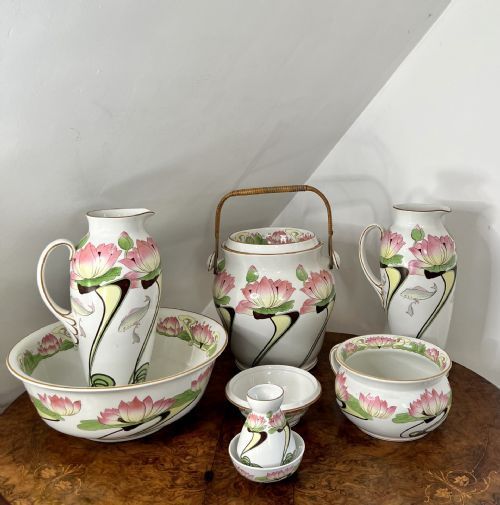
The presence of a complete matching set elevates a piece above isolated basins, particularly when combined with maker marks from notable potteries. Superior potting shows in the symmetry of large bowls and footbaths, alongside clean application of enamel and gilt highlights.
Tiny miniature jug and bowl sets survive to prove that Victorian children practised their morning ablutions on a very small scale.
Wemyss·Minton·Doulton Burslem·Masons Ironstone·Shelley
The Antique Ceramic Wash Basin Glossary
- Flow blue
- A transfer-printing technique where cobalt blue bleeds slightly into the white glaze during firing, creating a soft, misty outline. This effect was particularly popular on nineteenth-century earthenware.
- Ironstone
- A dense, durable type of heavy pottery patented in the early nineteenth century. It bridges the gap between earthenware and porcelain.
- Footbath
- A large, deep ceramic vessel designed for soaking feet before the widespread adoption of fitted porcelain bathtubs. They often feature carrying handles at the sides.
- Creamware
- A refined earthenware with a warm, pale yellow or cream-coloured glaze, developed in the eighteenth century and continued into the nineteenth.
- Spongeware
- Pottery decorated by applying pigment with a sponge or crumpled cloth to create a mottled or dotted pattern. This technique produced robust, rustic surfaces on domestic basins.
Antique Ceramic Wash Basin: Frequently Asked Questions
How were antique wash basins used?
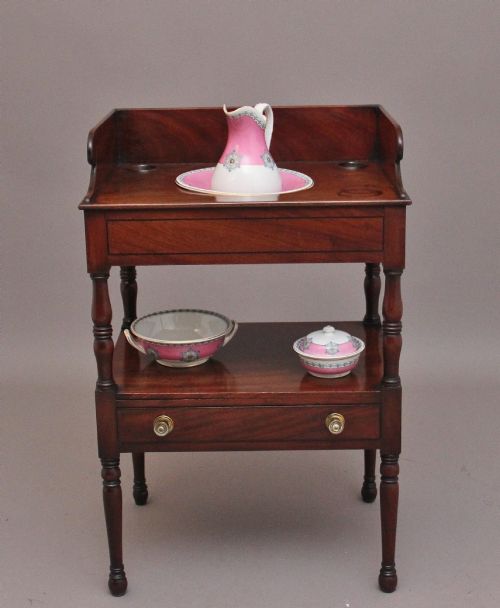
These basins sat upon wooden washstands or dressing tables to hold water for morning washing before plumbed bathrooms became standard. They served as the central bowl in sets that included matching water jugs, soap dishes and chamber pots.
Larger versions functioned as footbaths or tian bowls for domestic chores and personal care. Servants filled the jugs from hot water cans to supply bedrooms in substantial houses.
How do I display a wash basin today?
Large basins and footbaths work well placed on low tables, sideboards or floor stands where their patterns remain visible. They accommodate dried floral arrangements, folded linens or collections of smaller objects.
Complete jug and bowl sets suit placement on sturdy antique washstands or chest tops. Keeping the pieces paired maintains the historical context of the setup.
How do I tell Victorian from Edwardian pieces?
Victorian basins often display heavier earthenware bodies, deep transfer-printed patterns in rich cobalt blue, and robust floral or Gaudy Welsh designs. Forms tend toward traditional round or octagonal shapes associated with mid-nineteenth-century wash sets.
Edwardian examples frequently show lighter porcelain bodies, softer pastel palettes, and Art Nouveau influences with stylised floral motifs. The accompanying bathroom sets from this later period often include a wider variety of matching accessories.
What is ironstone pottery?
Ironstone is a heavy, durable ceramic material patented in the early nineteenth century to provide a strong alternative to true porcelain. It resists chipping and cracking better than standard earthenware while accepting rich glazes.
Many nineteenth-century jugs and basins utilised this ceramic body because daily use demanded robust construction. Pieces made from ironstone maintain crisp moulded details and bright surface decoration.