
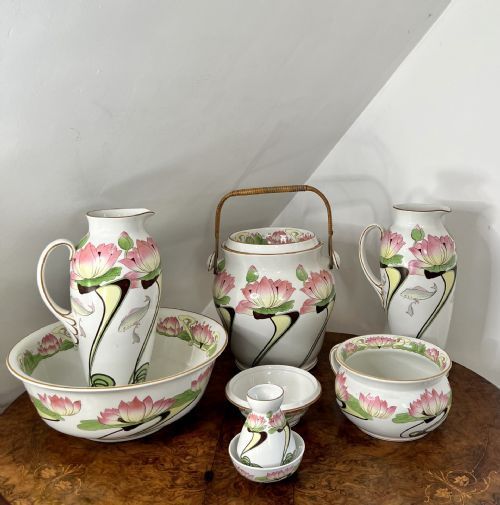
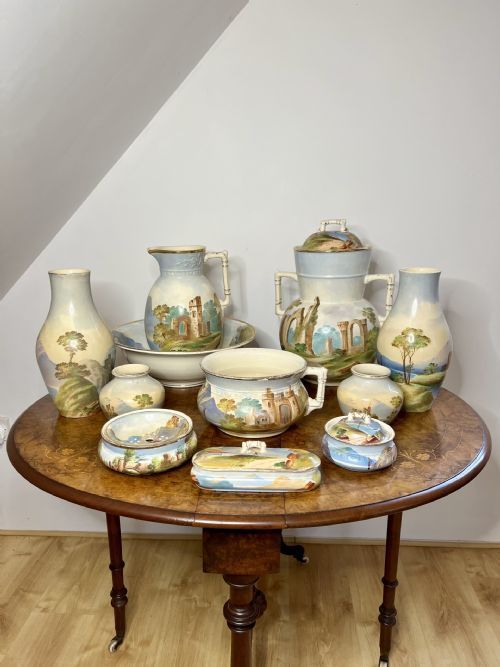


Antique Ceramic Toilet Basin
These antique ceramic toilet basin pieces are solid earthenware washing vessels from the Victorian and Edwardian eras, offering genuine period character for a traditional interior.
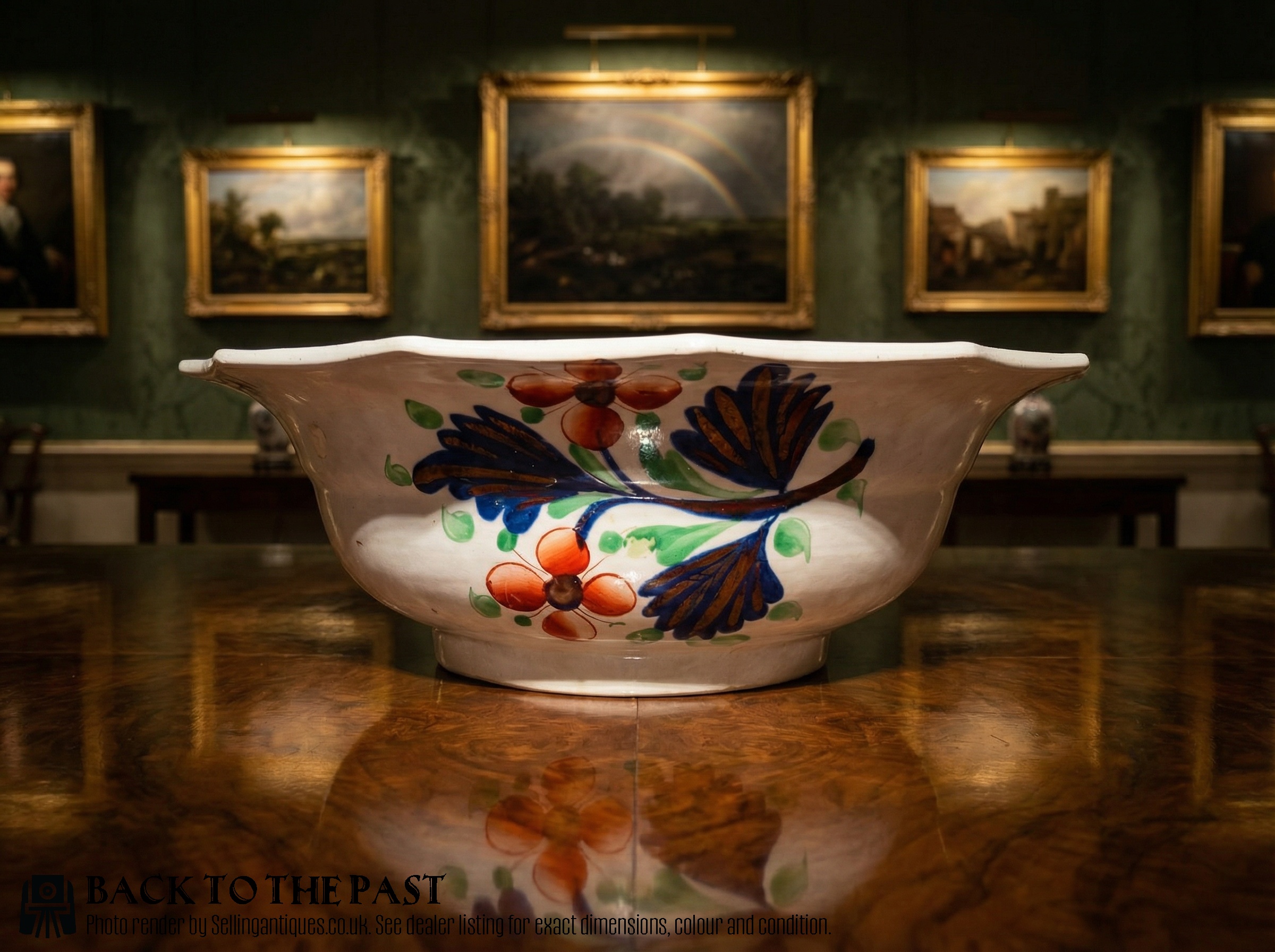
Antique Ceramic Toilet Basin
An antique ceramic toilet basin is a domestic washing vessel designed for personal hygiene before plumbed bathrooms became common in every home. These pieces form part of larger sets, frequently described as wash sets, washstand sets, or jug and bowl sets.
The versions most commonly met on this page date from the late nineteenth century through to nineteen hundred, encompassing Victorian and Edwardian periods. They often appear alongside matching jugs, forming coordinated toilet sets used in bedrooms and dressing rooms.
Makers such as Doulton Burslem and Masons Ironstone produced these items in earthenware, employing styles ranging from standard Victorian patterns to Art Nouveau and Victorian Gaudy Welsh designs.
How they were made
Potteries shaped these vessels from earthenware clay, firing the bodies before applying a protective glaze to create a smooth, non-porous surface suitable for water retention. Many examples incorporate intricate enamel decoration or details finished in gold leaf.
Decoration often involved transfer printing or hand-painted patterns applied beneath or over the glaze, reflecting the prevailing styles of the nineteenth century and the Edwardian era.
Some basin sets include unexpected companions like wicker stands and gold leaf accents for the bedroom.
What varies in quality
Quality in these ceramic basins rests on the crispness of the transfer print, the evenness of the glaze, and the sophistication of the decorative scheme. Finer pieces display carefully applied gold leaf and well-balanced forms.
Works from established potteries such as Doulton Burslem or Masons Ironstone typically exhibit superior ceramic bodies and more refined artistic execution compared to unmarked commercial wares.
Doulton Burslem·Mark Jones And Sons·Masons Ironstone
The Antique Ceramic Toilet Basin Glossary
- Earthenware
- A type of pottery fired at lower temperatures, resulting in a porous body that requires a vitreous glaze to hold water.
- Gaudy Welsh
- A style of colourful pottery decoration featuring cobalt blue, copper lustre, and iron-red highlights, popular during the nineteenth century.
- Transfer printing
- A method of applying detailed designs to ceramic surfaces by transferring a printed paper pattern from an engraved copper plate.
- Ironstone
- A durable type of heavy earthenware patented in the nineteenth century, known for its strength and resemblance to porcelain.
Antique Ceramic Toilet Basin: Frequently Asked Questions
What were antique ceramic toilet basins used for?
These basins served for morning and evening washing routines in bedrooms and dressing rooms, placed upon washstands before the widespread installation of indoor plumbing.
They functioned alongside matching jugs to hold water for washing hands and faces, forming an essential component of domestic hygiene.
How do I date a Victorian wash basin?
Dating relies on stylistic clues, pottery marks stamped to the base, and the specific decorative motifs characteristic of the Victorian or Edwardian periods.
Ironstone bodies and specific maker stamps often provide a narrower window of manufacture during the nineteenth century.
Are these basins part of larger sets?
Many of these pieces were originally manufactured as part of multi-piece toilet sets that included matching water jugs, soap dishes, and chamber pots.
Surviving examples frequently appear as jug and basin combinations designed to sit together on a washstand.
How should I display an antique toilet basin?
These ceramic vessels suit placement on sturdy wooden tables, sideboards, or dedicated bathroom surfaces where their historical patterns remain visible.
They work well as standalone decorative bowls or paired with complementary jugs from the same era.