


Antique Ceramic Meat Tray
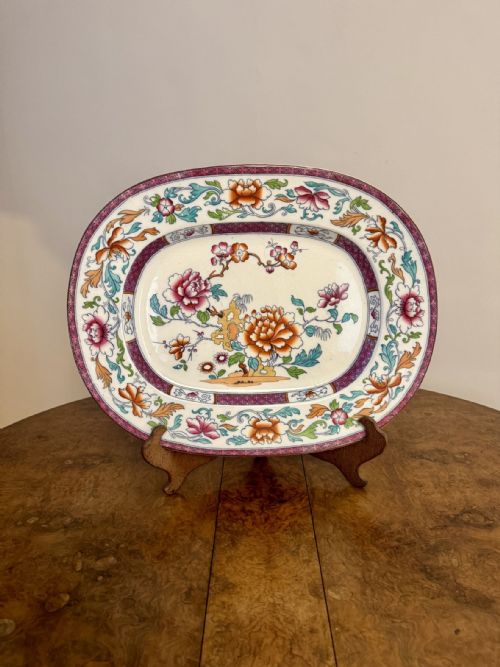
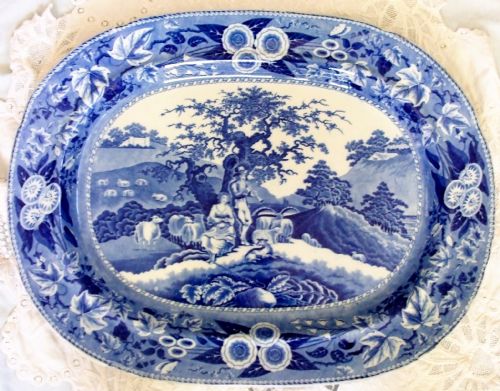
An antique ceramic meat tray provides a sturdy, decorative centrepiece for heavy joints, rendered in blue and white transfer print or rich earthenware.
Antique Ceramic Meat Tray
An antique ceramic meat tray serves as a large domestic platter designed for presenting roasted meats at the table. You will frequently encounter heavy blue and white transfer-printed earthenware dishes dating through the Georgian and Victorian periods.
The selection ranges from large rectangular serving platters with integrated drainage wells to deep porcelain serving dishes and ironstone ashets. These pieces bear specific named patterns such as Piping Shepherd, Chinese Villa, and Bridge of Lucano.
Origins span English Staffordshire potteries, Chinese export kilns, and European factories like Meissen. Most examples date from the nineteenth century, reflecting the scale of formal family dining in that era.
Materials and production methods
Potters shaped these large platters from earthenware, pearlware, ironstone, and porcelain, applying lead glazes to seal the porous clay body. Cobalt pigment provided the deep blue colour for transfer-printed topographical and figurative scenes.
Transfer printing allowed intricate designs like classical ruins and Chinoiserie landscapes to be applied mechanically to the ceramic surface before firing. Certain vessels also incorporate enamel highlights, gold leaf, and specialised reservoirs to collect carving juices.
The listings span the nineteenth century, featuring earthenware, pearlware, ironstone, and porcelain with blue and white transfer-printed patterns.
Assessing quality in ceramic meat trays
Quality rests upon the crispness of the transfer print and the stability of the heavy ceramic body during high-temperature kiln firing. Superior platters maintain a flat, balanced plane despite their substantial dimensions and weight.
The sophistication of the named pattern and the reputation of the maker distinguish standard domestic wares from exceptional factory output. Well-defined mouldings, clear maker marks, and even glaze coverage separate the finer specimens.
Spode·Copeland and Garrett·Thomas Lakin·Don Pottery·Minton·Mason·Meissen·Elkin Knight and Bridgwood
The Antique Ceramic Meat Tray Glossary
- Ashet
- A regional term for a large serving plate or platter used for joints of meat at the dining table. It derives from the French assiette.
- Transfer print
- A decorative technique where an engraved copper plate transfers a design onto tissue paper, which is then pressed onto the unglazed ceramic body. This method enabled mass production of detailed pictorial scenes.
- Pearlware
- A refined earthenware developed in the late eighteenth century featuring a subtle bluish glaze that pooled in recesses to mask the natural cream tint of the clay. It served as a transitional material before ironstone became dominant.
- Well and tree
- A platter design featuring an engraved channel system running towards a central well at one end. This ingenious feature collected meat juices away from the carved joint during service.
- Ironstone
- A dense, durable type of feldspathic stoneware patented in the early nineteenth century to rival true porcelain. It withstands heavy kitchen and dining use without chipping easily.
Antique Ceramic Meat Tray: Frequently Asked Questions
What is the difference between a meat platter and an ashet?
An ashet is simply an alternative regional term for a large serving platter designed for meat, often used interchangeably in British households.
Both terms refer to the same substantial ceramic dishes intended to hold roast joints at the centre of the table.
How do I use an antique meat tray today?
These large ceramic platters function admirably for serving whole roasted birds, large joints of meat, or cascading displays of fruit.
Their generous proportions and decorative transfer-printed scenes also lend themselves to wall display or sideboard decoration when not in active service.
Why do some platters have a well and tree?
The integrated channels and central well were carved into the ceramic surface to catch and pool meat juices during carving.
This practical innovation kept the meat elevated and dry while making it easy to spoon juices over individual helpings.
How can I tell a Georgian platter from a Victorian one?
Georgian examples often exhibit softer pearlware bodies and hand-painted or early transfer-printed patterns depicting classical ruins or romantic pastoral scenes.
Victorian pieces tend to use heavier ironstone or dense earthenware with crisper transfer printing, often displaying factory marks and registry numbers from the 1850s onward.