


Antique Ceramic Jug Set
An antique ceramic jug set brings functional pottery and porcelain into domestic spaces, offering coordinated washstand pieces and tea services from the nineteenth and early twentieth centuries.
Antique Ceramic Jug Set
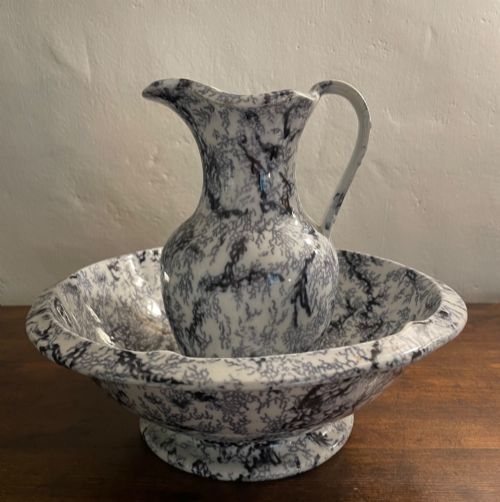
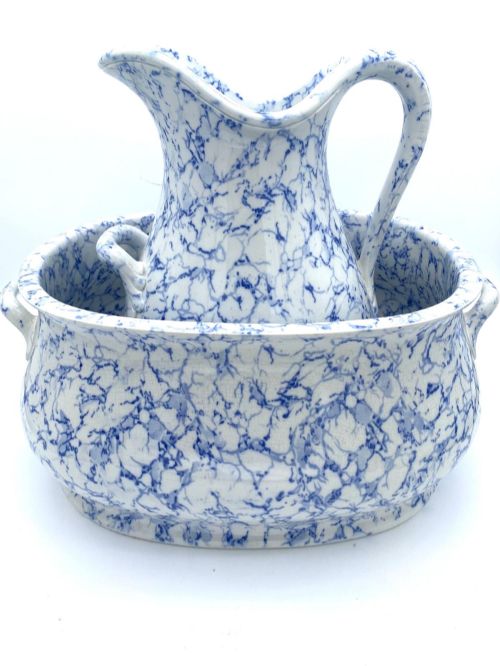
An antique ceramic jug set comprises matching or coordinated vessels intended for the washstand, bathroom, or tea table. These collections frequently pair a large water jug with a matching basin, or group smaller jugs with bowls, cups, and saucers.
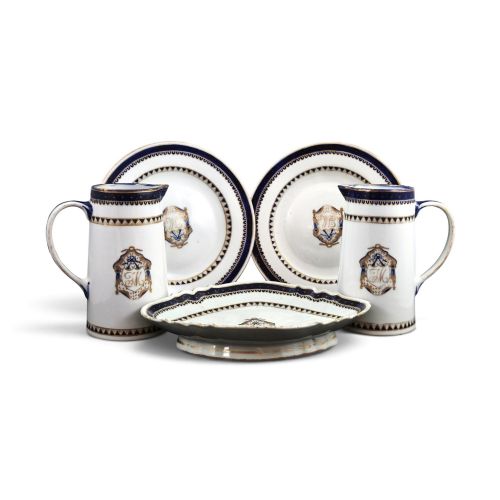
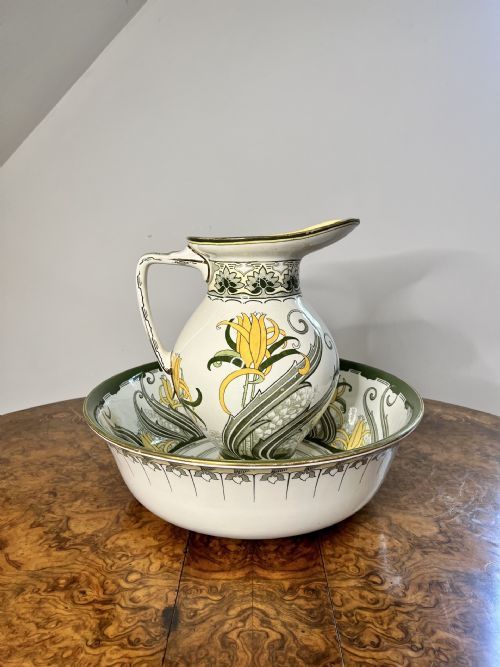
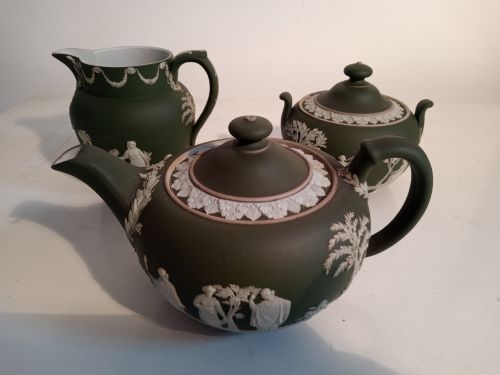
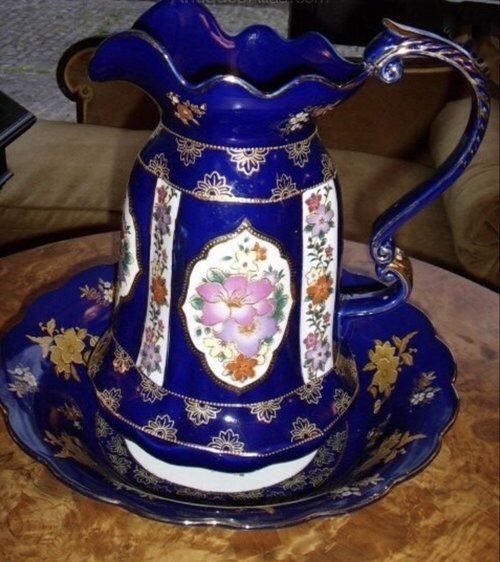
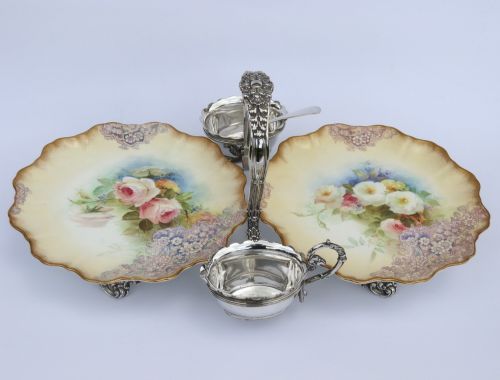
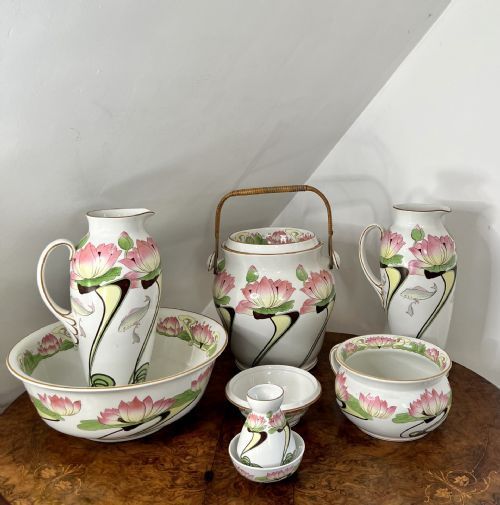
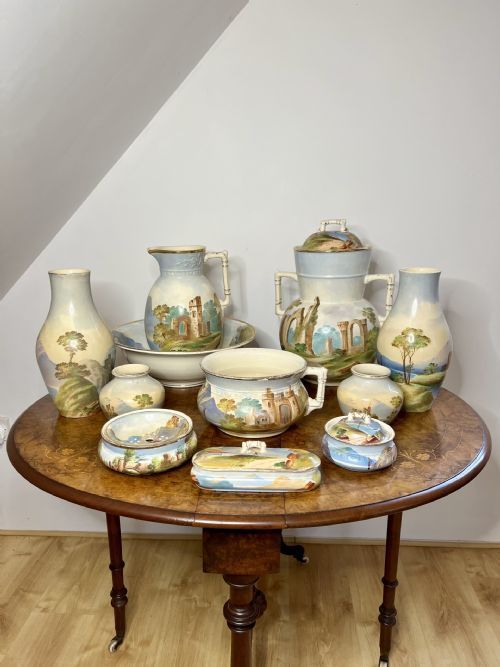
The pieces on this page span the eighteenth, nineteenth, and early twentieth centuries, encompassing Victorian wash sets, Edwardian bathroom suites, and Regency tea services. Forms range from utilitarian ironstone footbaths and hydra jugs to delicate porcelain tea sets decorated with cobalt glaze and gold leaf.
Makers and potteries such as Mason's, Doulton Burslem, and Minton dominate the production. Buyers encounter substantial ironstone bodies alongside refined earthenware and porcelain instances.
Materials and production methods
Potters utilised earthenware, heavy ironstone, and porcelain as the foundational bodies for these sets, shaping them on wheels or casting them in moulds. Ironstone provided a durable, dense alternative to traditional earthenware, well suited for daily use on washstands.
Decoration relied on hand painting, transfer printing in flow blue or blue and white, and applied enamel colours. Gilding with gold leaf and rich cobalt blue glazes completed the surface before high-temperature firing.
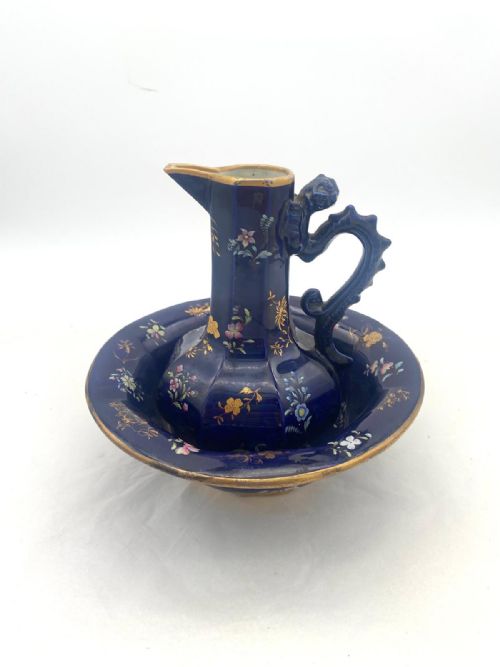
Some nineteenth-century pitchers arrive with hound handles and stag hunt scenes, proving that even a water jug enjoyed a dramatic chase.
Judging quality in ceramic sets
Quality rests upon the crispness of the moulded form and the precision of the transfer print or hand-painted enamel details. Superior sets display clean glaze coverage without pooling, and robust handles securely attached to heavy bodies.
The distinction between standard utility wares and finer examples lies in the artistic ambition of the decoration, such as intricate Kakiemon patterns or elaborate gilding. Completeness across a multi-piece wash or tea set also elevates the standing of the group.
Minton·Mason's Ironstone·Doulton Burslem·Wedgwood·Davenport·Shelley·Copeland Spode
The Antique Ceramic Jug Set Glossary
- Ironstone
- A patented ceramic body developed in the nineteenth century for its toughness and resemblance to Chinese porcelain. It frequently forms the heavy wash jugs and basins seen in Victorian sets.
- Flow Blue
- A cobalt blue transfer-printing technique that intentionally allowed the colour to blur slightly into the white glaze during firing. It appears frequently on nineteenth-century pieces.
- Hydra Jug
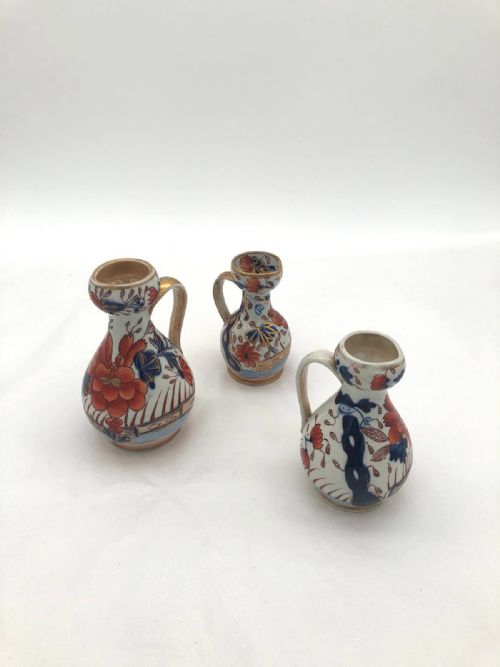
- A specific pitcher shape featuring a serpent handle and distinctive moulded body lines. Mason's notably produced these forms in ironstone.
- Wash Set
- A collection comprising a large jug and matching basin designed for morning ablutions before indoor plumbing became universal. They often included soap dishes and chamber pots.
- Kakiemon
- A style of Japanese enamelled porcelain decoration featuring asymmetrical floral and animal motifs. European factories such as Minton adopted these colourful palettes.
Antique Ceramic Jug Set: Frequently Asked Questions
What was an antique ceramic jug set used for?
These sets served practical domestic purposes, primarily for washing and grooming in bedrooms before running water was common. Tea sets within this category provided coordinated vessels for pouring hot water and serving tea.
Larger basins held water brought up from kitchens, while the matching jugs kept it accessible on washstands and dressing tables.
How do I date a ceramic jug set?
Dating relies on stylistic clues, ceramic bodies, and manufacturer marks stamped or printed on the base. Regency and early nineteenth-century pieces often feature hand-painted details on earthenware or early ironstone.
Later Victorian and Edwardian sets transition towards heavier transfer-printed ironstone wash suites and refined porcelain bathroom groupings.
Are wash sets still practical to use today?
Many buyers utilise these basins and jugs as decorative planters, umbrella stands, or striking centrepieces in modern bathrooms. While daily washing use is less common, the sturdy ironstone construction remains durable.
Care must be taken with antique glazes and gold leaf decorations, which can wear down with abrasive cleaning or dishwasher use.
What is the difference between ironstone and porcelain?
Ironstone is a dense, opaque earthenware patented for strength and durability, making it ideal for heavy wash jugs and basins. Porcelain is finer, vitrified, and sometimes translucent, often reserved for tea sets and decorative wares.
Both materials appear across these listings, each offering a distinct weight and aesthetic.