
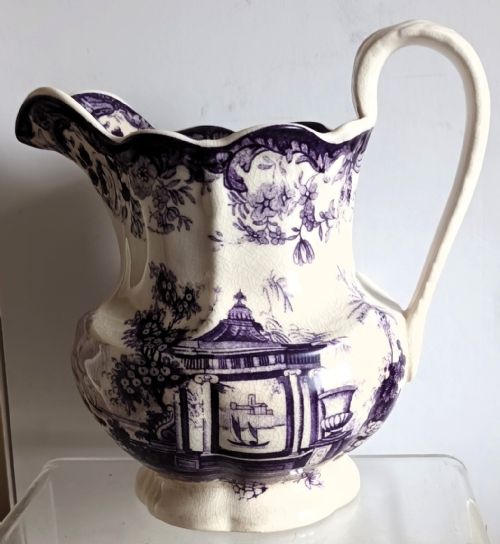


English Transferware Pitchers
English transferware pitchers bring the graphical history of the Georgian and Victorian eras straight to the table.
English Transferware Pitchers
When you search for english transferware pitchers, you encounter earthenware and ceramic vessels decorated with printed imagery rather than hand-painted brushwork. These pieces range from modest creamware jugs to large, one-gallon vessels designed for formal service.
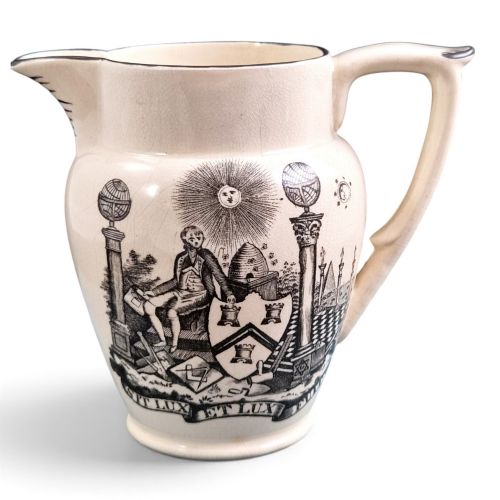
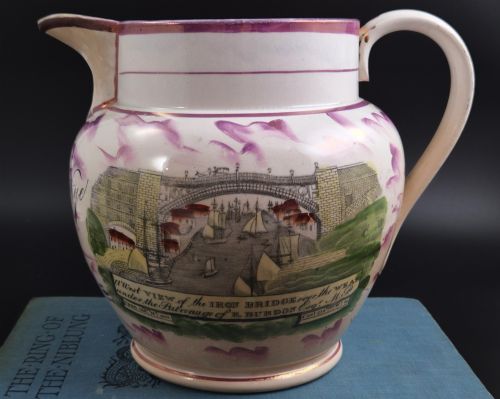
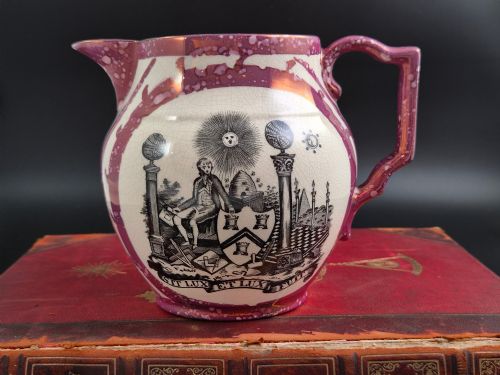
The designs span distinct thematic traditions, including Masonic emblems, notable architecture such as the Boston State House and City Hall New York, and specific scenes like the Iron Bridge over the Wear. Many examples also carry names and dates alongside topographical or narrative subjects.
Most entries on this page date from the Georgian and Victorian periods, with significant representation from the 1830s. The forms vary from standard ceramic jugs to taller footbath jugs and mask head jugs.
Materials and Technique
Potters formed these pitchers using earthenware, creamware, and pearlware bodies, shaping them into functional vessels before applying the printed design. The transfer printing technique allowed intricate patterns like the Pine Cone decoration to be applied consistently from engraved copper plates onto the ceramic surface.
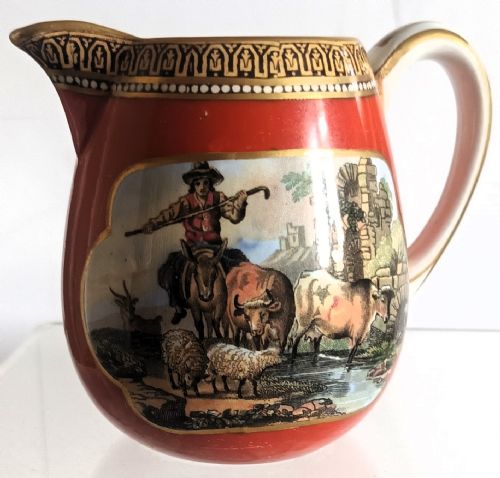
Following the transfer print, craftsmen frequently enhanced the wares with glazes, enamels, and metallic applications. Pink splash lustre, purple transfer decoration, and gilt detailing provide the characteristic shimmer seen across Sunderland and Staffordshire pieces.
Listings feature earthenware, creamware, and pearlware bodies enhanced with lustre glaze, enamel, and gilt.
Distinctions in Quality
The refinement of the earthenware body and the clarity of the transfer print set superior examples apart from simpler utilitarian wares. Crisp lines in complex subjects like tall ships or detailed architectural prints indicate higher skill during the engraving and printing stages.
The application of secondary embellishments also marks the tier of a pitcher. Hand-applied pink splash lustre, enamel colouring, and gilt accents require precise control during firing, elevating standard transfer-printed pottery into decorative works of art.
Caughley Coalport·Staffordshire
The English Transferware Pitchers Glossary
- Transferware
- Earthenware or pottery decorated by transferring a printed design from an engraved copper plate onto the ceramic surface via tissue paper.
- Creamware
- A refined, light-coloured earthenware developed in the eighteenth century, known for its warm, pale yellow hue under a clear glaze.
- Pearlware
- An improved earthenware body featuring a subtle bluish tint in the glaze, designed to mimic the appearance of Chinese porcelain.
- Lustre Glaze
- A metallic film applied over the fired glaze to produce a reflective, iridescent sheen, often utilised in pink splash effects.
- Mask Head Jug
- A vessel featuring a moulded human or mythical face incorporated into the spout or rim design.
English Transferware Pitchers: Frequently Asked Questions
What are english transferware pitchers?
These are ceramic and earthenware jugs decorated using a copper-plate printing technique developed in the eighteenth century. They display monochrome or multicoloured scenes, historical buildings, and symbolic imagery.
Potters across England produced them in various sizes, from small cream jugs to large one-gallon storage and serving vessels.
How were transfer prints applied?
Engravers etched designs onto copper plates, inked them, and transferred the image onto thin tissue paper. Workers then pressed this paper onto the unglazed or bisque ceramic body to leave the ink impression before firing.
After printing, decorators often added washes of enamel colour, metallic lustre, or gilt highlights by hand before the final glaze firing.
How do I date an antique pitcher?
Dating relies on stylistic clues, ceramic bodies such as creamware or pearlware, and specific historical events or buildings depicted in the transfer print. Commemorative pieces often feature explicit dates or names that anchor their production period.
Garments, architectural styles, and pottery shapes typical of the Georgian or Victorian eras help narrow the manufacturing window.
How do I care for my pitcher?
Display these ceramic vessels away from direct sunlight and sudden temperature fluctuations to protect the fragile glaze and metallic lustre. Dust them gently with a soft, dry cloth rather than using liquid cleaners.
Because antique earthenware is porous and subject to crazing, these pitchers remain best suited for decorative display rather than daily food and beverage service.