


Blue Ceramic Milk Jug
These blue ceramic milk jug examples range from Georgian porcelain to Victorian pottery, bringing practical charm and traditional decoration to the table.
Blue Ceramic Milk Jug
When you search for a blue ceramic milk jug, you encounter a variety of forms spanning the eighteenth and nineteenth centuries, including porcelain creamers, ironstone pitchers, and earthenware vessels.
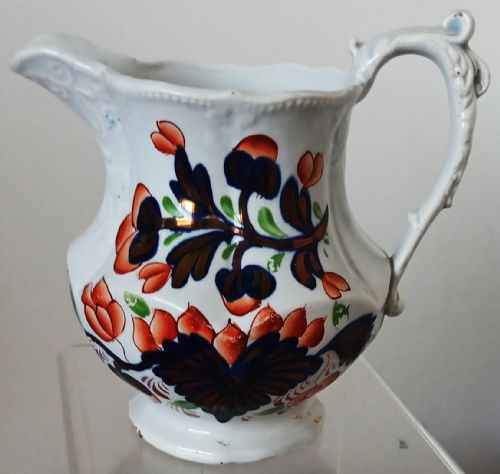
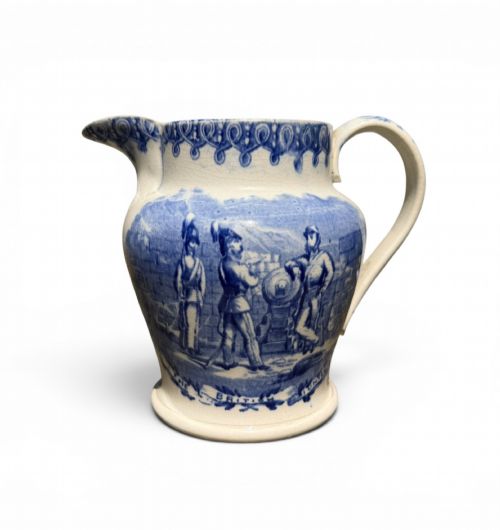
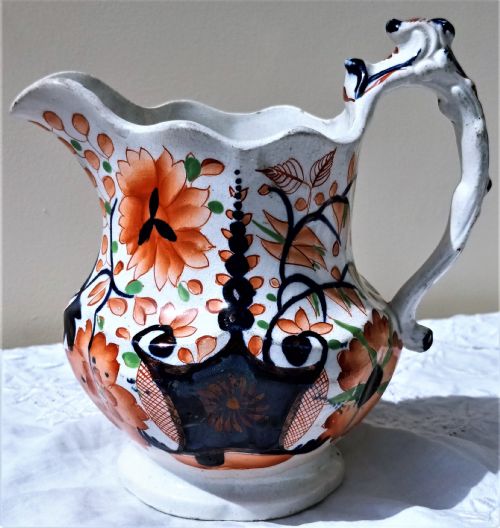
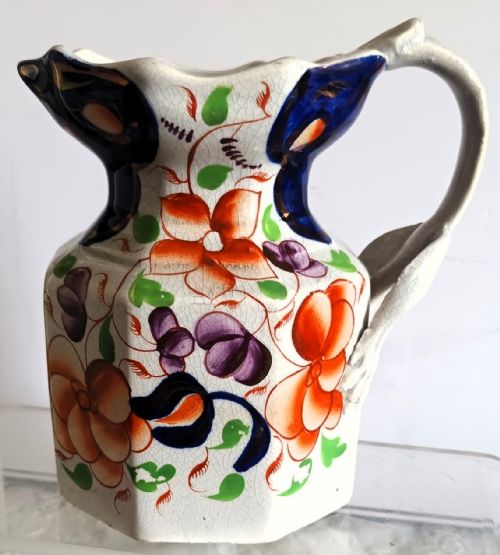
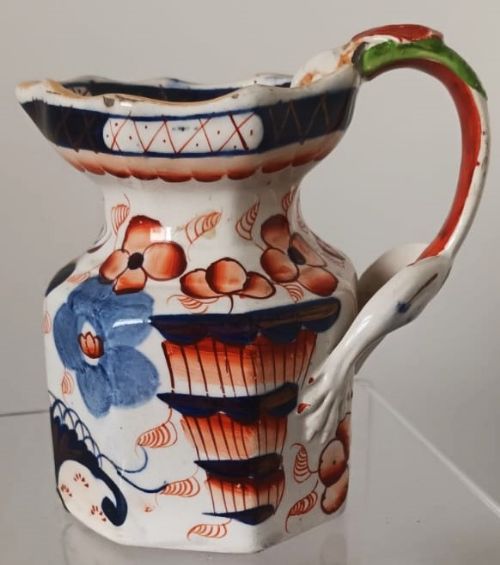
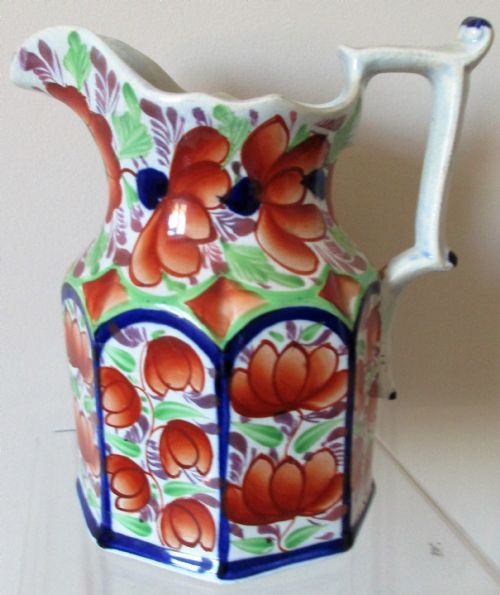
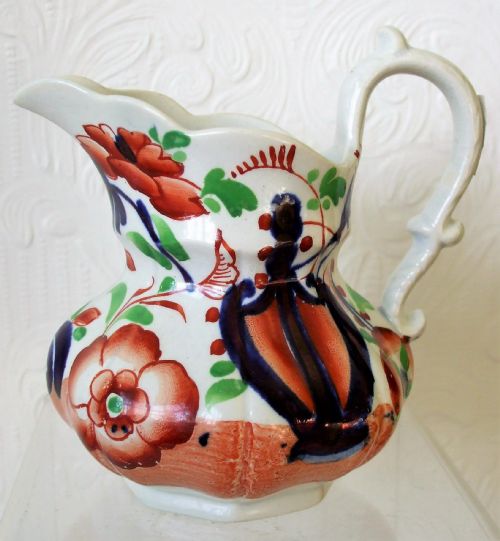
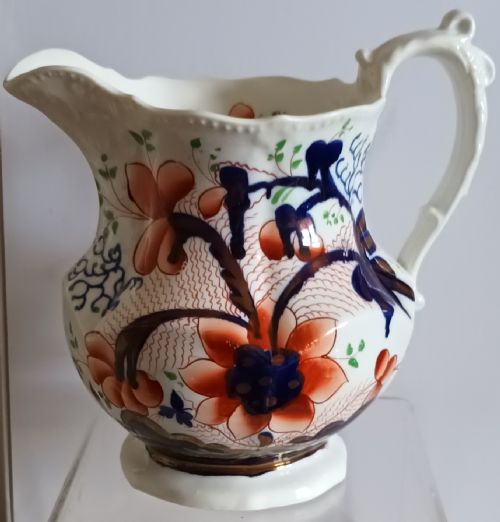
The most common examples on this page are nineteenth-century pieces, particularly Gaudy Welsh pottery jugs featuring named regional patterns alongside Staffordshire blue and white wares.
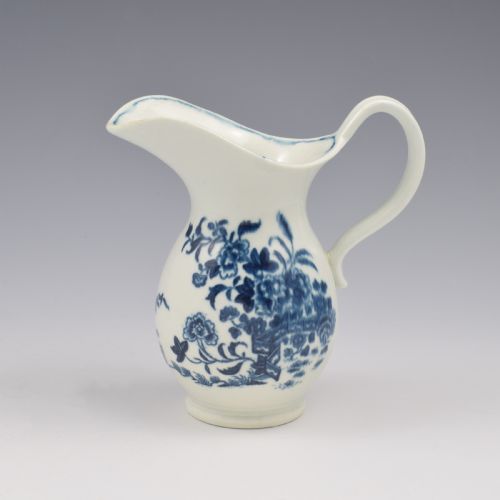
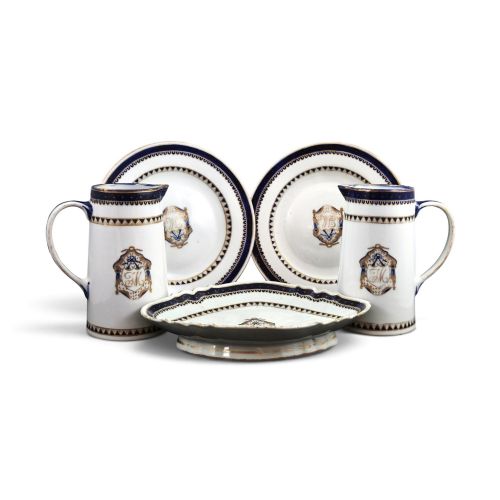
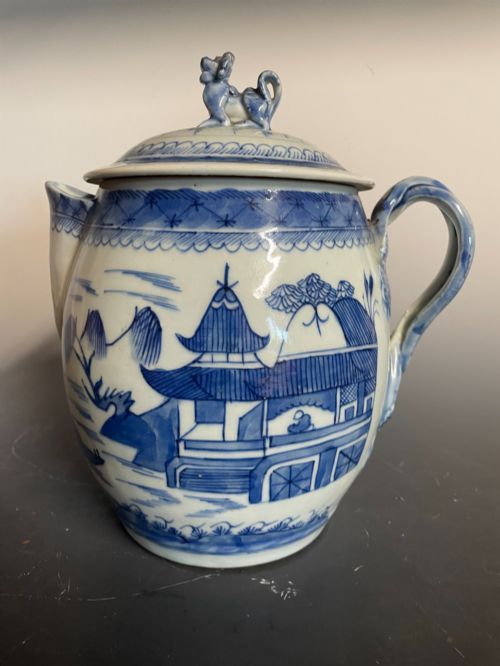
Earlier pieces from the eighteenth century appear in porcelain, including Chinese export services and Worcester porcelain water ewers decorated with blue tones.
Materials and production
Makers utilised earthenware, ironstone, and porcelain as the primary ceramic bodies, shaping them into jugs, pitchers, and creamers.
Glaze treatments and enamel colours were applied to the surfaces, sometimes complemented by copper lustre and gold leaf details.
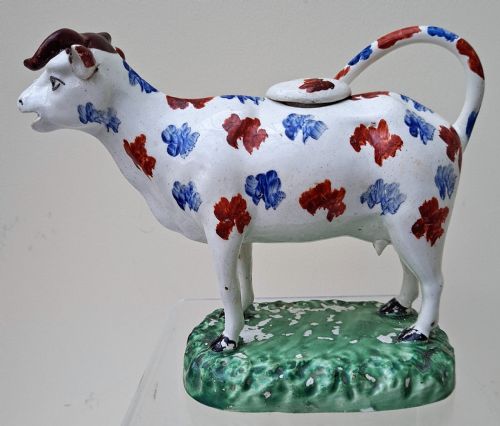
One cow creamer stands ready to pour.
Judging quality in these vessels
Quality rests on the crispness of the moulding and the clarity of the blue glaze decoration, whether applied through hand-painting or transfer printing.
Finishing touches such as copper lustre highlights or intricate handle forms distinguish standard utility vessels from finer cabinet pieces.
Mason's·Keeling & Co.·Doulton Lambeth·Royal Davenport
The Blue Ceramic Milk Jug Glossary
- Ironstone
- A patented ceramic body invented in the nineteenth century that offers high durability and a dense finish similar to porcelain.
- Gaudy Welsh
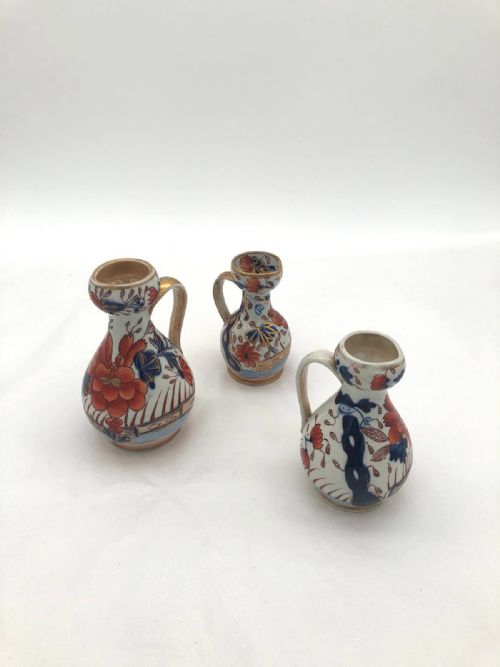
- A style of colourful pottery made in the nineteenth century, typically featuring cobalt blue, iron red, and lustre details on a white earthenware body.
- Hydra jug
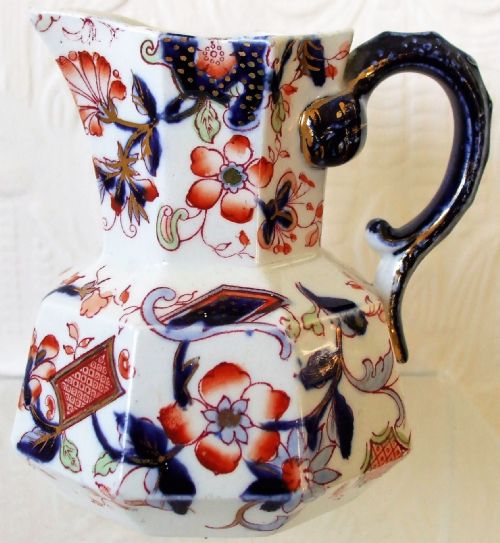
- A specific pitcher shape characterised by a flared rim, moulded serpent handle, and bulbous body found in nineteenth-century ironstone and porcelain.
- Copper lustre
- A metallic glaze technique producing a reflective, coppery sheen often used as an accent on nineteenth-century pottery.
- Chinese export
- Porcelain manufactured in China specifically for Western markets, often decorated with monograms or custom patterns requested by European buyers.
Blue Ceramic Milk Jug: Frequently Asked Questions
How do I date a blue ceramic milk jug?
Dating relies on identifying the ceramic body, whether soft-paste porcelain, heavy ironstone, or porous earthenware. Stylistic clues such as shape, handle form, and the nature of the blue decoration provide further context.
Examining the base for maker marks or pattern names helps narrow down the period of manufacture, distinguishing eighteenth-century porcelain from Victorian pottery.
What is Gaudy Welsh pottery?
Gaudy Welsh pottery refers to nineteenth-century wares made primarily for the Welsh market, known for vibrant palettes incorporating cobalt blue alongside copper lustre and enamel highlights.
Common patterns include named regional designs like Pagoda, Gwent, and Conwy applied to earthenware jugs and tableware.
Are these jugs safe for daily use?
While many nineteenth-century ironstone and earthenware jugs were made for daily kitchen service, antique pieces often develop hairline cracks or lose their lustre over time.
Collector pieces from the eighteenth century, particularly soft-paste porcelain, are typically kept for display rather than everyday dining.
How are ironstone jugs different from porcelain?
Ironstone is a heavy, opaque ceramic type developed in the nineteenth century to imitate porcelain while offering greater durability for everyday service.
Porcelain is finer, lighter, and often translucent, frequently associated with eighteenth-century manufacturers and formal tea sets.