
Antique Ceramic Fruit Dish
An antique ceramic fruit dish serves as a vibrant centrepiece on a dining table, holding autumnal fruit or standing alone as a display of fine ceramic art.
Antique Ceramic Fruit Dish
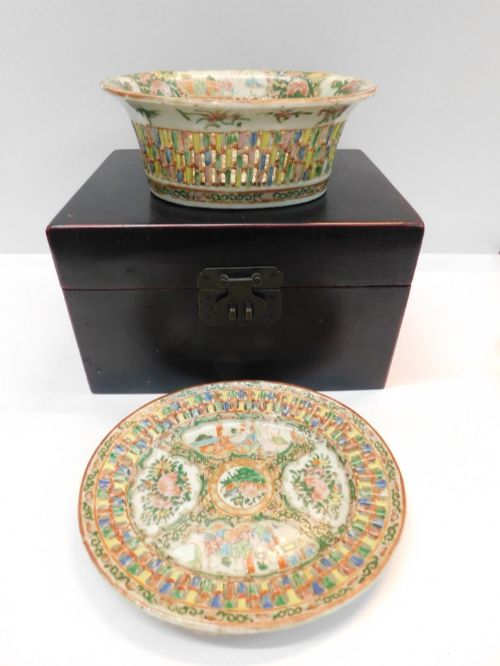
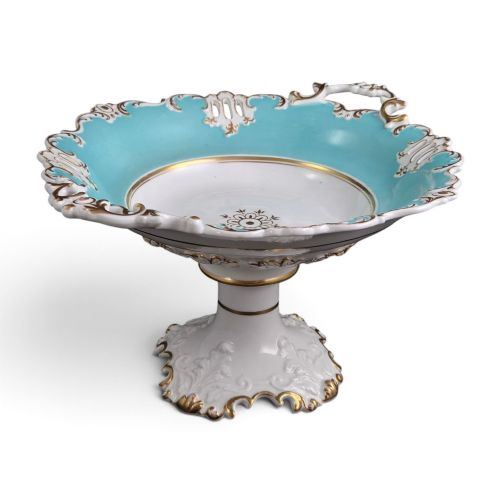
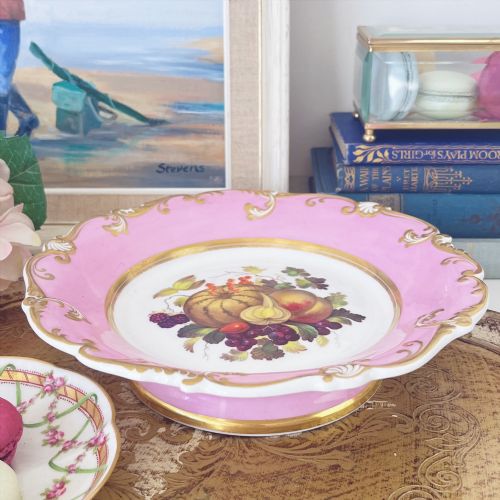
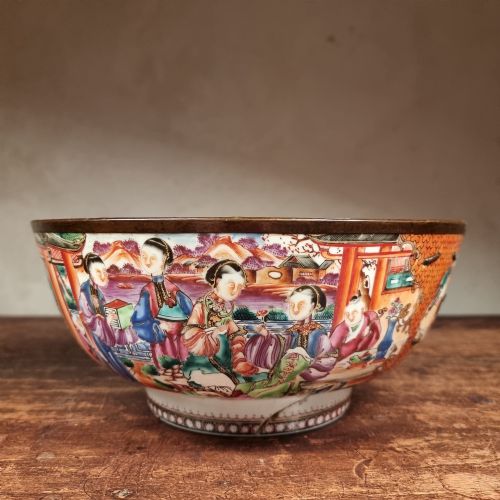
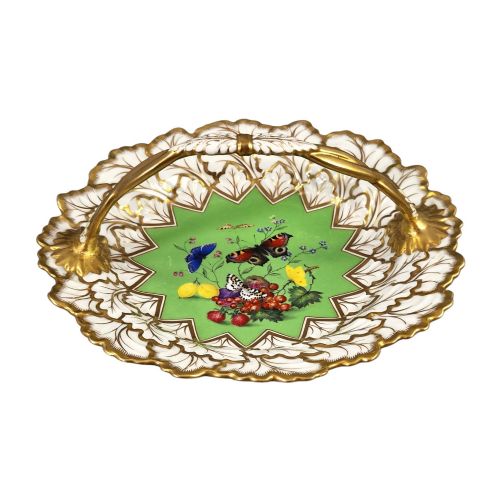
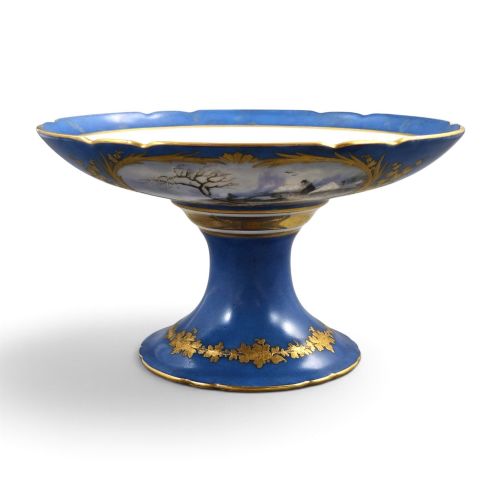
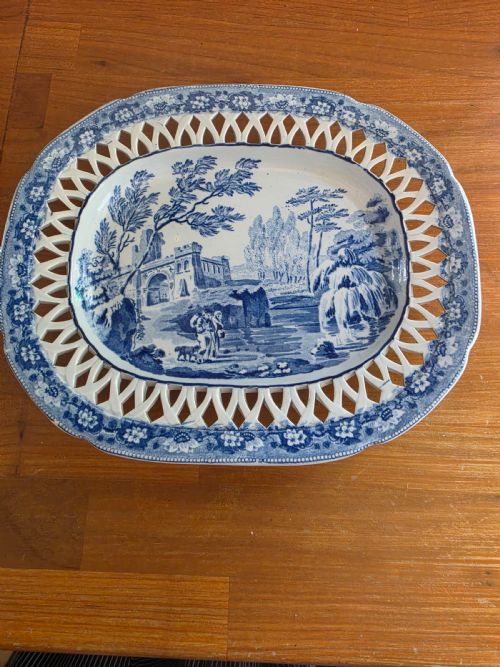
When searching for an antique ceramic fruit dish, buyers encounter a variety of forms designed for dining and display, including comports, tazzas, footed bowls, and pierced chestnut baskets. These items emerge from eighteenth-century manufactories and nineteenth-century kilns across Europe and Asia, reflecting shifting dining customs.
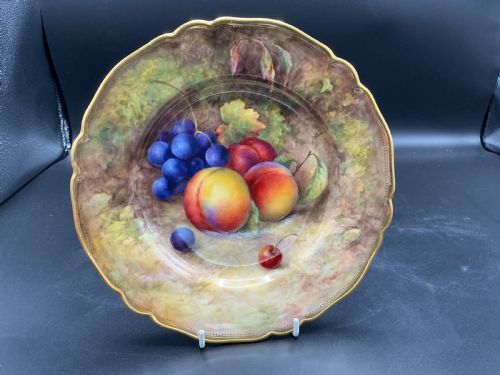
The pieces on this page span the Georgian, Victorian, and Edwardian eras, alongside Japanese Meiji and Chinese Qing Dynasty wares. Standard forms include cabinet plates, handled baskets, and pedestal dishes intended to present fresh fruit or sweetmeats after a meal.
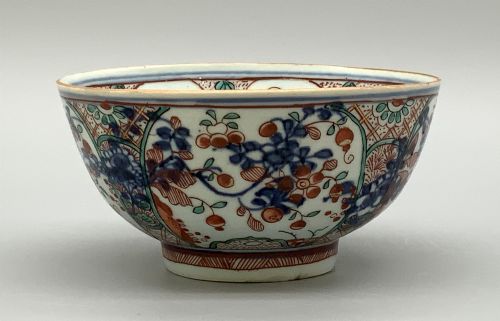
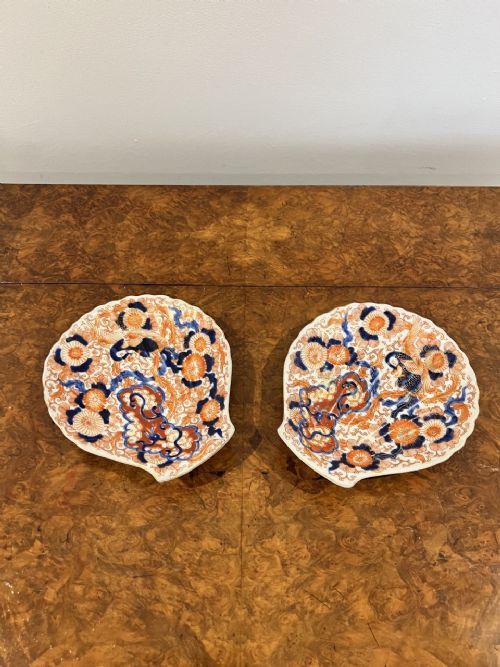
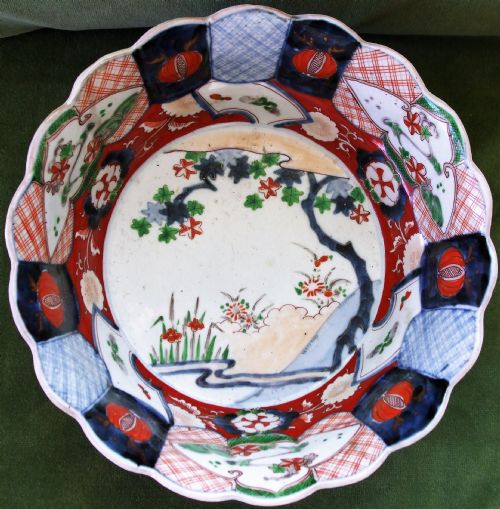
English earthenware and bone china sit alongside imported porcelain from continental European factories like Meissen and Sèvres, as well as Japanese Imari and Chinese famille rose ceramics. Each regional tradition brings specific glazing techniques and decorative motifs to the table setting.
Materials and production methods
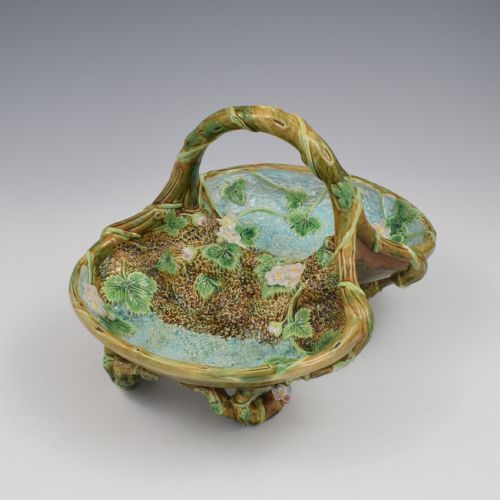
Potters shaped these vessels using earthenware, ironstone, creamware, and hard-paste or soft-paste porcelain, often applying a translucent glaze before kiln-firing. Majolica glazes provided rich colour for naturalistic leaf and basket designs, while bone china offered a brighter white body for hand-painted botanical scenes.
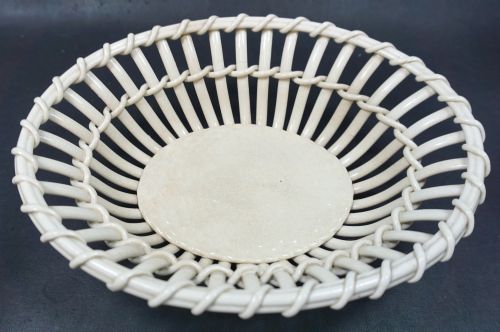
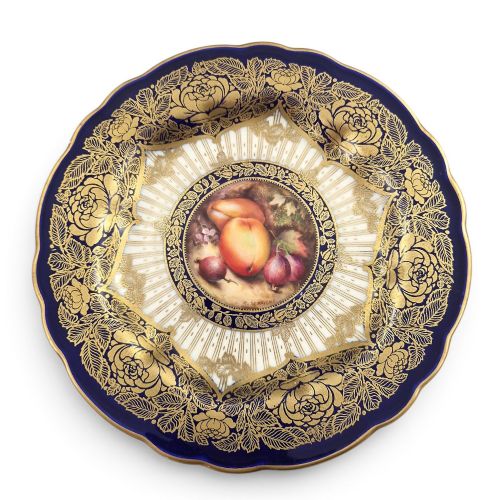
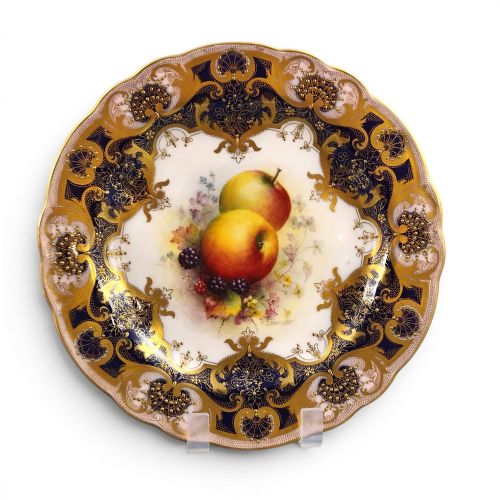
Decoration relied on hand-painting with polychrome enamels, underglaze blue transfer printing, and gilding with gold leaf. Pierced work, known as reticulation, required skilled cutting of the damp clay body before firing to create openwork baskets and chestnut stands.
Antique Ceramic Fruit Dish Retail Price Guide 2026
Typical asking prices for ceramic fruit dish among the pieces listed under this phrase on Sellingantiques today, from the lower quarter to the upper quarter. They describe what is for sale here now, not the wider market.
Listings feature porcelain, earthenware, ironstone, and creamware bodies decorated with transfer printing, hand-painted fruits, and cobalt blue.
Distinctions in standard and execution
Quality rests upon the crispness of the moulding, the precision of hand-painted details, and the depth of the glaze. Pieces bearing the hand of named artists or distinguished factory marks show superior control in the enamel painting and gilding.
The complexity of the form dictates standard, seen in reticulated basketry that demands high technical skill to prevent distortion in the kiln. Smooth application of coloured grounds and well-defined transfer printing separate standard production wares from masterworks.
Coalport·H & R Daniel·Flight Barr And Barr·Royal Worcester·Wedgwood·George Jones·J And R Clews·J And R Riley·Doulton Burslem·Meissen
The Antique Ceramic Fruit Dish Glossary
- Comport
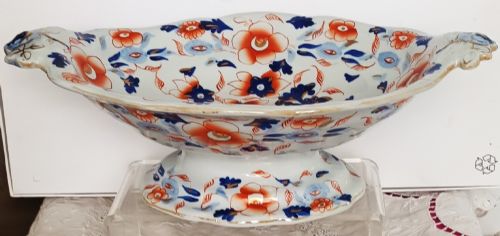
- A footed dish or bowl elevated on a pedestal, used traditionally for serving fruit or sweetmeats at dessert.
- Tazza
- A shallow saucer-like dish mounted on a stem and foot, originating in the Renaissance and produced widely in nineteenth-century ceramic services.
- Reticulation
- An openwork pattern of crossed or pierced lines cut into wet clay before firing, frequently seen on chestnut baskets and dessert stands.
- Imari
- A style of Japanese export porcelain decorated in underglaze blue, iron red, and gilt, which heavily influenced European ceramic design.
- Majolica
- A type of earthenware coated with an opaque tin glaze and painted with metallic oxide colours, popular during the Victorian era for natural forms.
Antique Ceramic Fruit Dish: Frequently Asked Questions
What is a comport used for?
A comport served on the Victorian and Georgian table for presenting fresh fruit, nuts, or sweetmeats during the dessert course. Their elevated pedestals added tiered levels to formal dining arrangements.
Today, these footed dishes function effectively as decorative centrepieces on sideboards or dining tables, retaining their original decorative purpose.
How do I date a ceramic fruit dish?
Dating relies upon identifying factory backstamps, paste compositions, and stylistic markers such as Rococo Revival curves or Japanese Imari palettes. Registry marks and painter signatures provide precise chronological clues.
Comparing the potting technique and glaze characteristics against documented examples from periods like the Georgian or Victorian eras confirms the likely decade of production.
Are these dishes safe for holding fruit?
Most antique ceramic and porcelain dishes accommodate dry fruit or decorative displays without issue. Porous earthenwares or majolica with historical hairline cracks benefit from gentle handling and dry use rather than holding wet or staining produce.
Hand washing in warm water preserves the historic glazes, enamels, and gilt edges found on these serving pieces.