



Antique Ceramic Flower Seller
These antique ceramic flower seller figures capture street vendors in porcelain and earthenware, offering a charming slice of social history for your cabinet.
Antique Ceramic Flower Seller
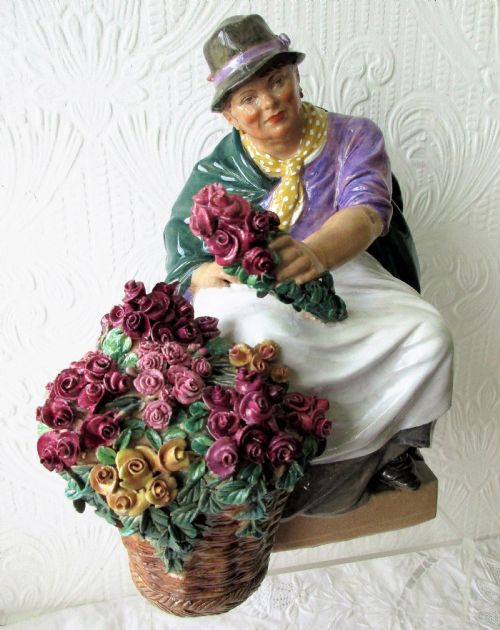
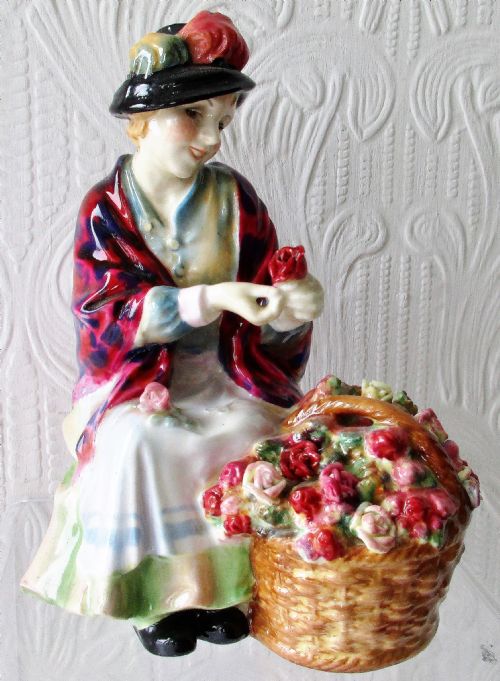
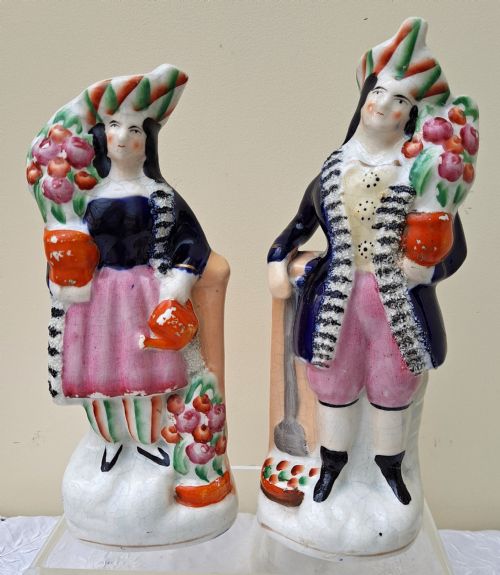
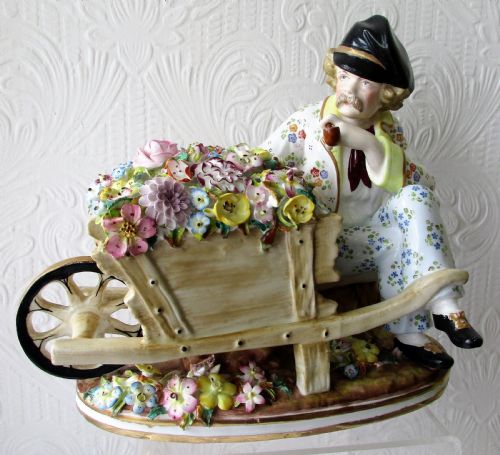
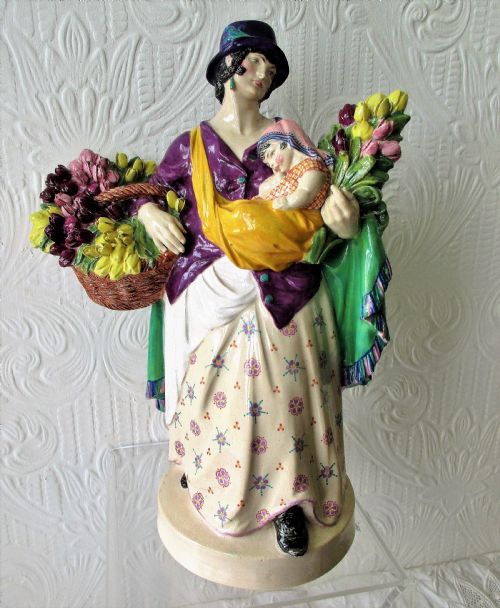
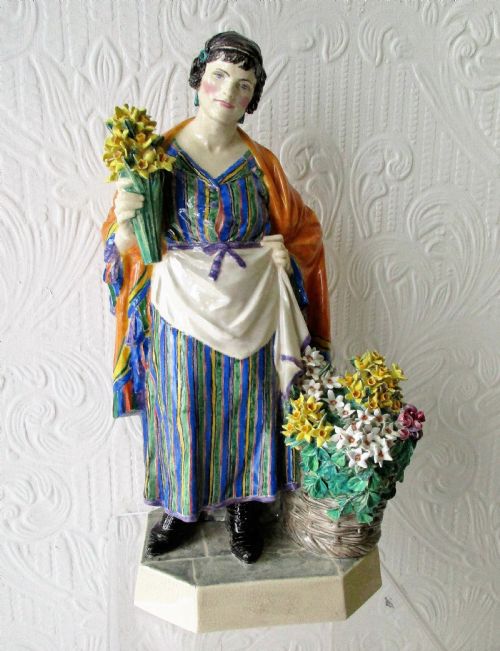
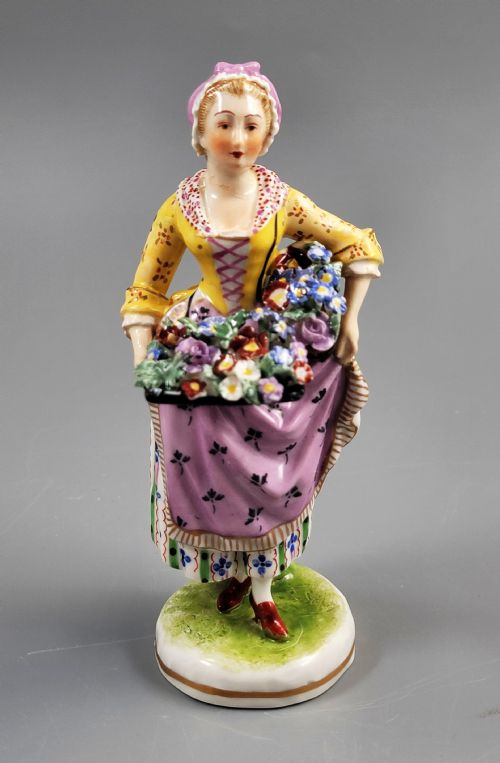
When you search for an antique ceramic flower seller, you encounter figurines that depict street vendors holding baskets or bunches of blooms. These pieces range from Georgian porcelain models to Victorian Staffordshire figures and later studio pottery interpretations.
The versions you are most likely to meet on this page span the Georgian, 19th Century, and 20th Century periods, encompassing Derby figures, Staffordshire earthenware, and Charles Vyse studio pottery.
Makers immortalised these vendors in porcelain and earthenware, capturing the traders of Piccadilly and local markets with modelled blossoms and baskets.
How they were made
Potters shaped these figures using porcelain and earthenware, applying ceramic glaze to seal the bodies and provide a smooth surface for subsequent decoration.
Makers embellished the pieces using overglaze enamel, gilding, and gold leaf to highlight the details of the vendors' garments and their floral wares.
Listings feature porcelain, earthenware, and studio pottery spanning the Georgian period, the 19th Century, and 1920 to 1930.
What varies in quality
The application of glaze and enamel dictates the visual appeal, where finely painted overglaze colours and carefully placed gilding elevate the presence of the figure.
Charles Vyse·Royal Doulton·John Bevington·Derby·Dressel, Kister and Cie
The Antique Ceramic Flower Seller Glossary
- Overglaze enamel
- A method of painting ceramic colours onto a fired and glazed piece before a low-temperature second firing fuses the pigments to the surface. This technique allows for vibrant hues on porcelain figures.
- Staffordshire pottery
- Earthenware produced in the industrial pottery district of North Staffordshire, known for robust domestic figures and ornamental groups. These pieces often feature hand-painted details over a white or tinted glaze.
- Studio pottery
- Ware produced by individual artists working independently from large factories, focusing on unique artistic expression. Charles Vyse pieces represent this studio tradition.
- Gilding
- The application of gold leaf or gold powder to the surface of ceramics to provide metallic highlights. This technique frequently accents the bases and garments of Georgian and Victorian figures.
- Figurine
- A small, three-dimensional sculpted figure representing a human or animal form. In ceramic art, these are typically cast or modelled in clay and subsequently fired and glazed.
Antique Ceramic Flower Seller: Frequently Asked Questions
What periods do these figures cover?
The listings span from the Georgian era through the 19th Century and into early 20th Century dates such as 1920 and 1930.
This range includes 18th-century Derby models, Victorian Staffordshire earthenware, and studio pottery from the interwar period.
How were flower seller figures used?
These ceramic pieces served as decorative ornaments for mantelpieces, drawing rooms, and display cabinets in homes.
Victorian and Georgian households used them to bring colourful depictions of street life and urban trades indoors.
How do I care for antique porcelain?
Keep these figures out of direct sunlight to prevent the overglaze enamels and gilding from fading over time.
Dust them gently with a soft, dry brush and avoid submerging them in water, particularly pieces with delicate modelled flowers.
How do I distinguish studio pottery?
Studio pottery pieces from makers like Charles Vyse often bear distinct artistic stylisation and individual maker signatures or marks.
They differ from mass-produced factory figures through their modelled forms and unique glaze treatments.