

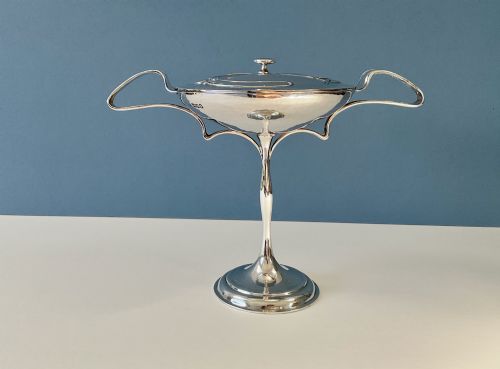
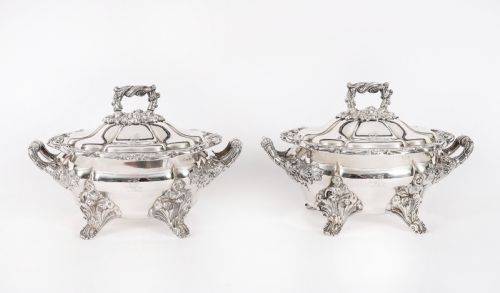

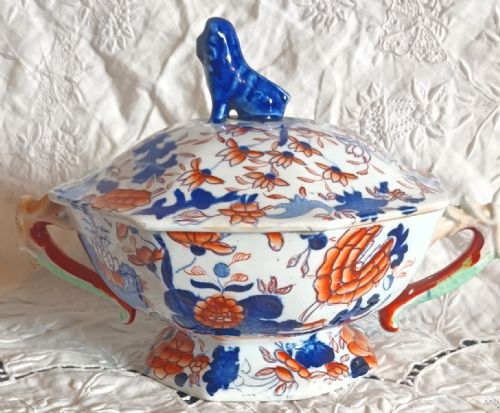


Antique Centerpiece Tureen
An antique centerpiece tureen commands the dining table as a sculptural serving vessel for soups, sauces, and large courses.
Antique Centerpiece Tureen
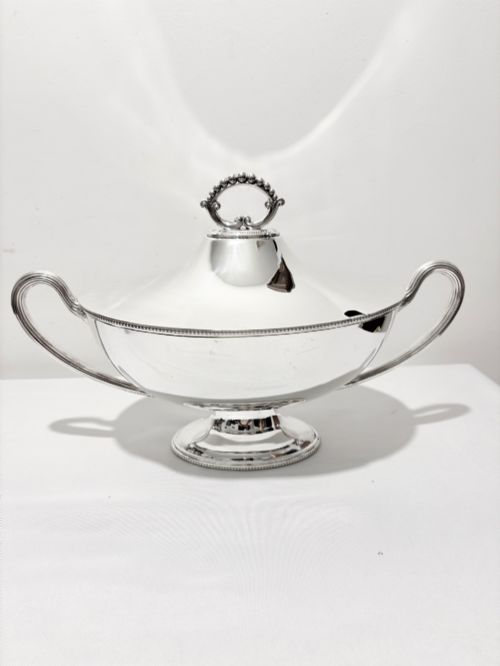
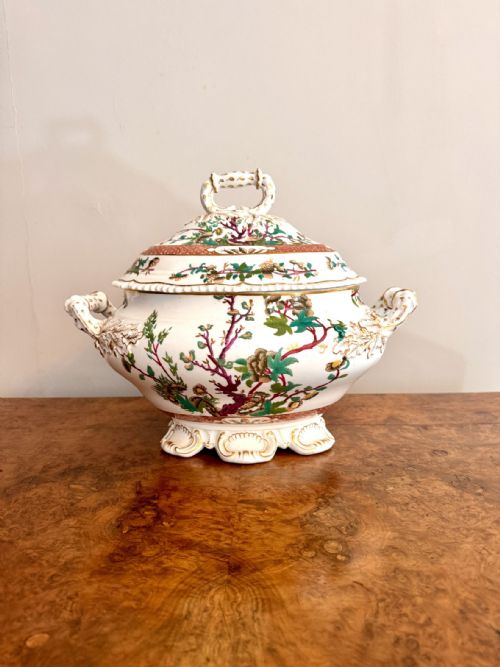
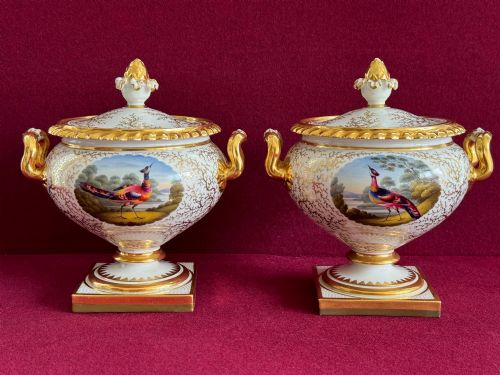
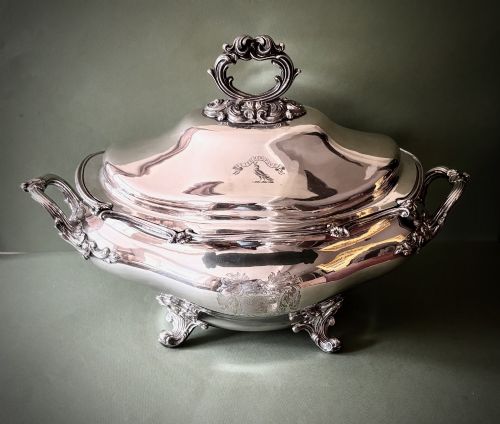
An antique centerpiece tureen is a grand serving vessel designed to hold soups, vegetables, or sauces at the dining table, often accompanied by a matching lid and stand. When you search for this phrase, you encounter large porcelain souptureens, silver plate entree dishes, and ironstone serving vessels created for formal dining.
The pieces on this page span the Georgian, Regency, and Victorian eras, alongside Edwardian and early twentieth-century examples. You will frequently find covered bowls and fruit bowls functioning as table centrepieces alongside traditional soup tureens.
Origins range from English factories like Mason's, Coalport, and Worcester to continental porcelain makers and Indian colonial silver workshops. These vessels were meant to be seen from every angle, anchoring the tablescape with weight and presence.
How they were made
Potters shaped ironstone and porcelain on the wheel or pressed them into moulds before firing at high temperatures, often applying intricate hand-painted Chinoiserie patterns, floral motifs, or rich blue and white glazes. Majolica pieces utilised colourful lead glazes moulded into naturalistic forms such as crabs and pumpkins.
Metal vessels relied on Old Sheffield plate, silver, or silver plate over copper, shaped by hammering, casting, and soldering. Silversmiths cast detailed handles, finials, and feet, attaching them securely to the heavy bodies of soup tureens and food warmers.
Antique Centerpiece Tureen Retail Price Guide 2026
Typical asking prices for centerpiece tureen among the pieces listed under this phrase on Sellingantiques today, from the lower quarter to the upper quarter. They describe what is for sale here now, not the wider market.
Listings feature ceramics from Georgian, Regency, and Victorian periods alongside silver plate and Old Sheffield plate.
What varies in quality
Quality rests in the crispness of the modelling and the precision of the hand-painted decoration, where master artists achieved depth and fine detail on porcelain and ironstone. Crisp cast mounts and substantial weight separate superior silver and Old Sheffield plate vessels from lighter commercial wares.
The presence of matching lids, original stands, or ladles elevates a piece, as does the clarity of factory marks and maker stamps on the base. A well-preserved glaze without extensive restoration maintains the integrity of these serving vessels.
Flight Barr and Barr·Coalport·Minton·Mason·Walker and Hall
The Antique Centerpiece Tureen Glossary
- Tureen
- A deep covered bowl designed for serving soups, stews, or vegetables at the dining table. They frequently sit upon a matched ceramic or metal stand.
- Ironstone
- A heavy, durable ceramic patented in the nineteenth century to rival true porcelain. It takes enamelled decoration and blue-and-white transfer printing exceptionally well.
- Old Sheffield Plate
- A composite material made by fusing a thin sheet of silver to a thicker copper base. It was produced before electroplating was invented.
- Entrée dish
- A shallow covered serving vessel used for individual courses or side dishes. Pairs of these dishes often flanked a larger centerpiece tureen.
- Majolica
- A type of earthenware coated in an opaque tin glaze and painted with brightly coloured metallic oxides. Victorian majolica often featured naturalistic animal and plant forms.
Antique Centerpiece Tureen: Frequently Asked Questions
How were antique tureens used?
These vessels arrived filled with hot soup, vegetables, or meats at the centre of the dining table for formal meals. Servants would lift the heavy lids to serve guests directly.
Today, they serve as striking decorative centrepieces on sideboards or dining tables, holding fruit or floral arrangements.
Can I still use silver plate tureens for food?
Silver plate and ironstone tureens remain entirely functional for serving dry foods, fruits, or wrapped items. Modern acidic foods should be kept out of antique silver for extended periods.
Hand washing with mild soap protects the delicate glazes and old silver plating from damage.
How do I date a ceramic tureen?
Makers marks stamped or painted on the underside provide the most reliable clue to a piece's age and origin. Stylistic shifts, from Regency neo-classicism to Victorian majolica, also narrow down the decades.
Weight, crazing in the glaze, and manufacturing flaws often point toward early nineteenth-century production methods.
What is Old Sheffield plate?
Old Sheffield plate is an early fusion method where a thin layer of sterling silver is thermally bonded to a copper core. This technique predates modern electroplating.
Examining the edges can sometimes reveal a thin sliver of copper showing through where the silver has worn down over generations of polishing.