
Antique Casket Box
When choosing an antique casket box, you select a small vessel intended for treasures, letters, and ornaments crafted across past centuries.
Antique Casket Box
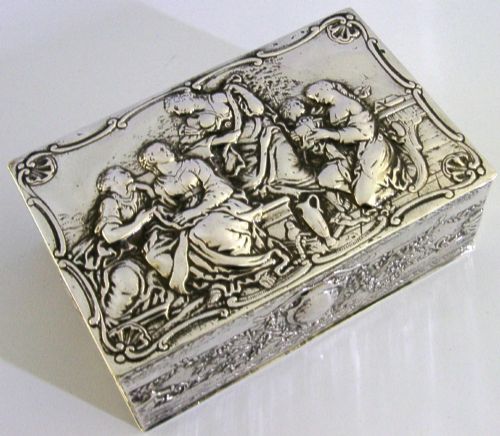
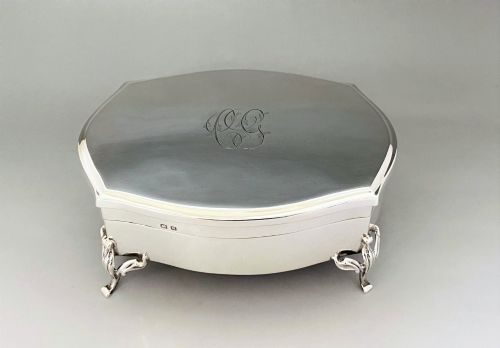
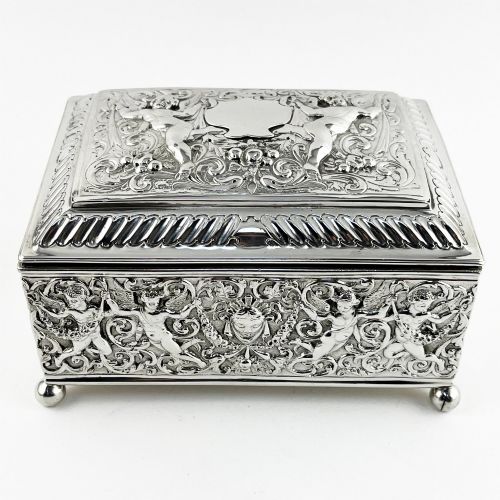
An antique casket box serves as a receptacle for jewellery, documents, and personal valuables, varying significantly in scale from miniature trinket holders to large table caskets. The selection includes domestic and international works spanning the seventeenth century through to the art deco era, reflecting changing interior tastes.
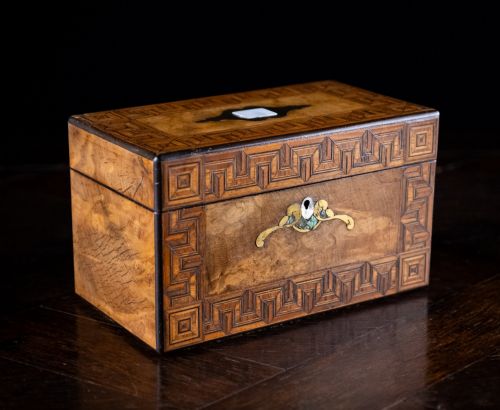
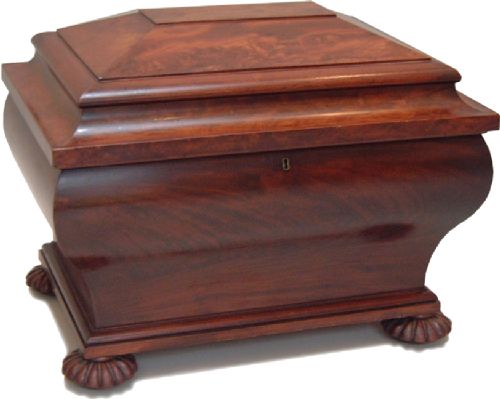
The most common forms encountered on this page originate in the Victorian period and the early twentieth century, taking the shape of tea caddies, correspondence boxes, and dedicated jewellery caskets. Materials range from native British timbers to imported exotic hardwoods and precious metals.
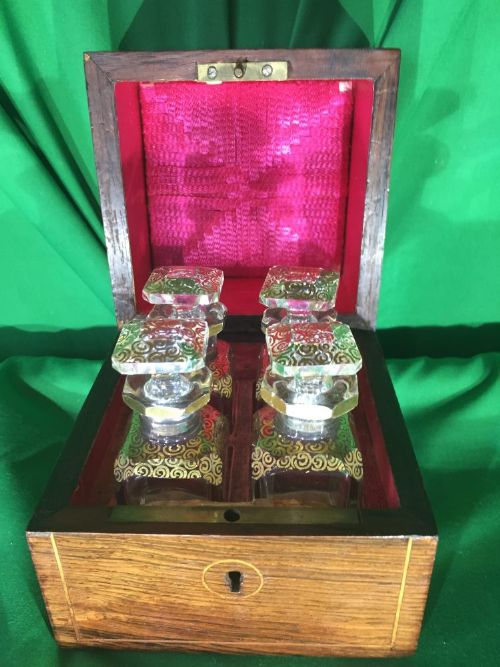
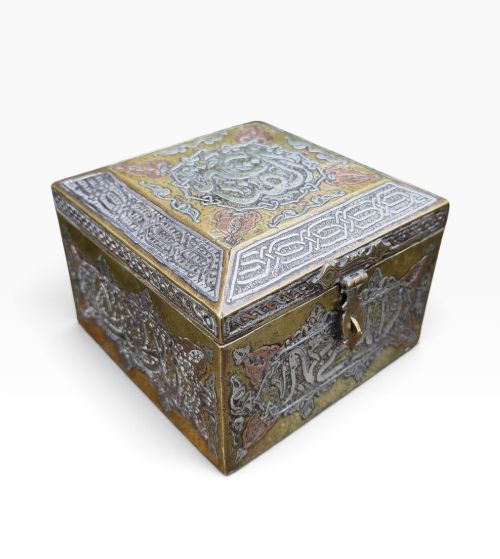
Makers and workshops across Britain, continental Europe, and beyond utilised diverse regional styles such as Rococo Revival, Arts and Crafts, and Mamluk revival. Buyers find functional containers fitted for specific contents like scent bottles, playing cards, and cigarettes.
How They Were Made
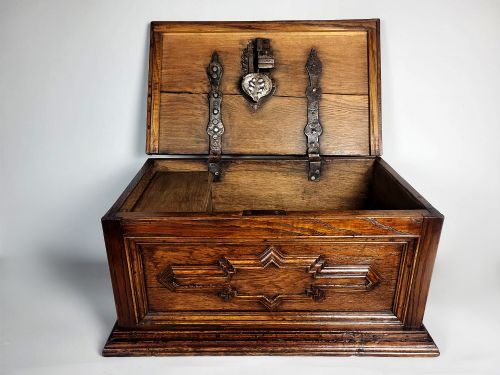
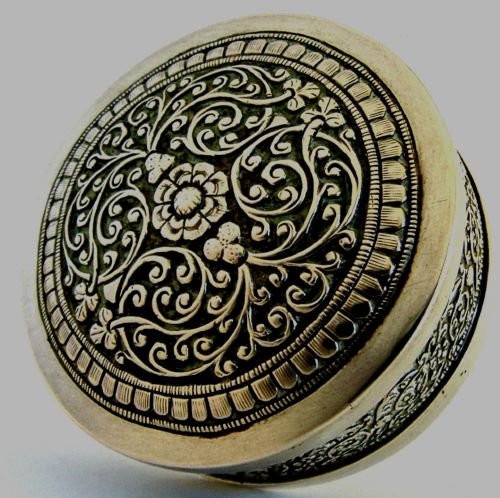
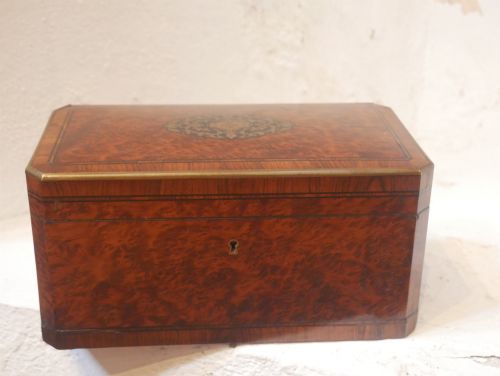
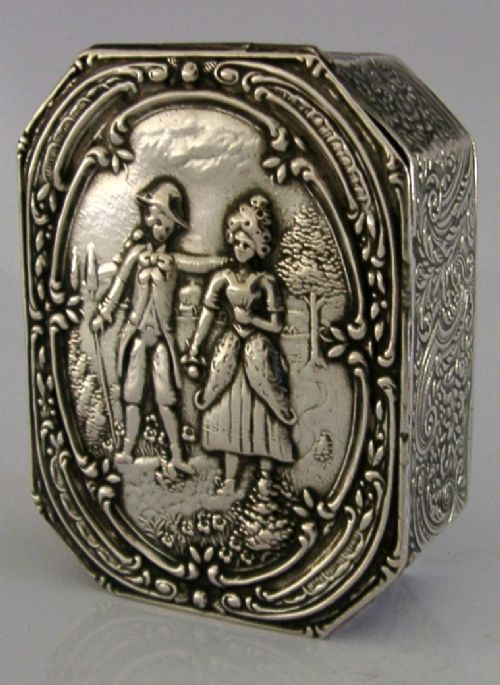
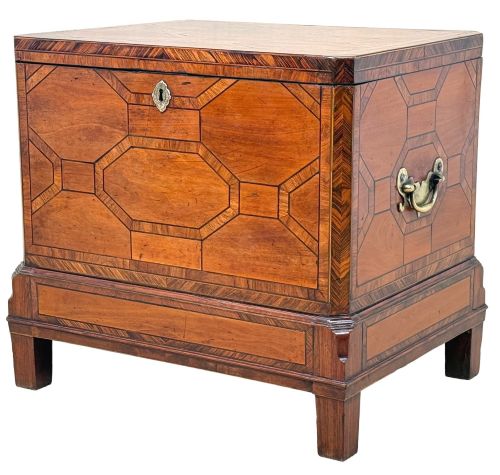
Craftsmen built timber frames using woods such as walnut, rosewood, mahogany, and satinwood, frequently applying parquetry, veneers, and brass or mother-of-pearl inlay. Metal caskets relied on bronze, brass, copper, and sterling silver, often shaped through casting, piercing, and gilt mounts.
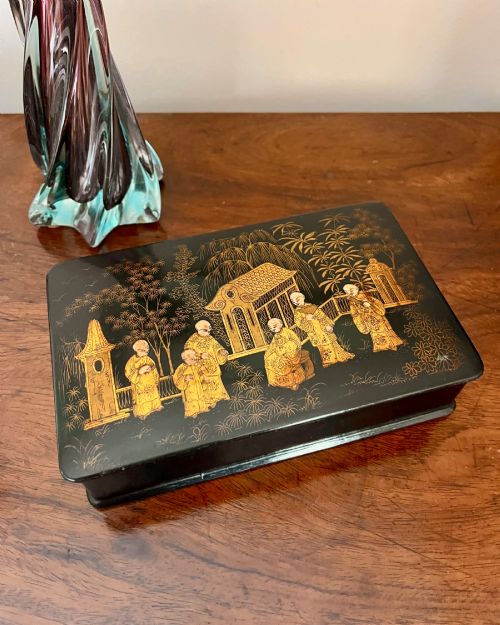
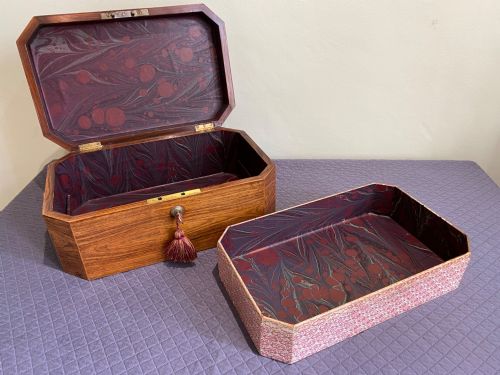
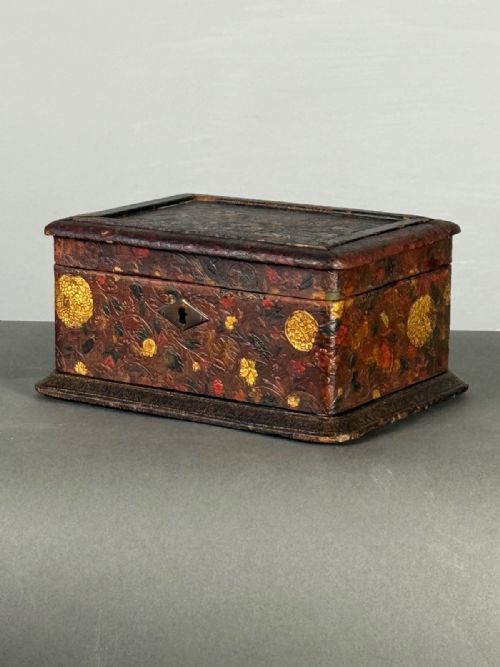
Specialised workshops incorporated leather, glass, porcelain, and textiles like velvet and silk linings to complete the interiors of jewellery and stationery caskets. Surface ornamentation included lacquering, hand-carved details, enamel cabochons, and tooled leather coverings.
Listings feature items spanning the seventeenth to the twentieth century, constructed from brass, silver, walnut, rosewood, glass, and velvet.
What Varies in Quality
The standard of execution depends heavily on the precision of the joinery, the intricacy of the metal mounts, and the preservation of interior fittings. Elaborate parquetry and fine hand-carving distinguish superior examples from plain commercial boxes.
Makers who marked their pieces or operated from renowned Parisian and London workshops achieved higher levels of finish in their hinges, locks, and internal trays.
Tahan Paris·Susse Freres Paris·J C Vickery·H Matthews·Dunhill
The Antique Casket Box Glossary
- Cellarette
- A container originally designed for holding bottles of wine or spirits, often adapted into large floor-standing or table boxes.
- Boulle
- A form of marquetry consisting of tortoise-shell and brass inlaid in scrollwork patterns, popular in French decorative pieces.
- Ormolu
- Gilded bronze used extensively for mounts and feet on nineteenth-century caskets and decorative boxes.
- Parquetry
- Geometric wood mosaic work used for decorative surface patterns on the lids and sides of wooden caskets.
- Cabochon
- A gemstone or enamel piece polished rather than faceted, frequently set centrally into metal boxes.
Antique Casket Box: Frequently Asked Questions
What were antique casket boxes used for?
These receptacles held precious possessions including rings, loose stones, letters, and documents securely away from dust and prying eyes. Many were designed for specific domestic rituals, such as storing tea leaves, playing cards, or tobacco.
Over time, owners repurposed them to suit changing household needs, converting sewing chests and correspondence boxes into general keepsake holders. Their construction reflected the value of the items placed within them.
How do I care for a wooden casket?
Wood surfaces require stable humidity levels to prevent timber shrinkage and veneer lifting. Regular dusting with a soft, dry cloth preserves the original polish without stripping historic finishes.
Leather and fabric linings inside the boxes benefit from gentle airing rather than liquid cleaning agents. Keeping them away from direct sunlight protects vulnerable dyes and inlaid materials.
How can I tell the period of a box?
Stylistic clues such as brass mounts, lock mechanisms, and wood choices help establish the likely date of manufacture. Georgian pieces often display simpler, robust proportions, whereas Victorian and Edwardian examples show greater variety through revivalist motifs.
English silver boxes frequently bear hallmarks containing date letters, which narrow the year of production down to an exact twelve-month span. Continental and unhallmarked items rely on construction techniques and design movements for dating.
What is the difference between a box and a casket?
While the terms often overlap in modern listings, a casket traditionally denotes a more ornate, secure container with a domed or hinged lid intended for valuables. Boxes frequently encompassed simpler utilitarian shapes used for stationery, playing cards, or everyday trinkets.
Caskets tended to feature heavier metal mounts, locks, and decorative feet, elevating their status within a room. Both forms served as display pieces on desks, tables, and dressing chests.