



Gothic Revival Coffer Box
These gothic revival coffer box pieces span centuries of sturdy timber and ironwork, offering solid storage rooted in historic design.
Gothic Revival Coffer Box
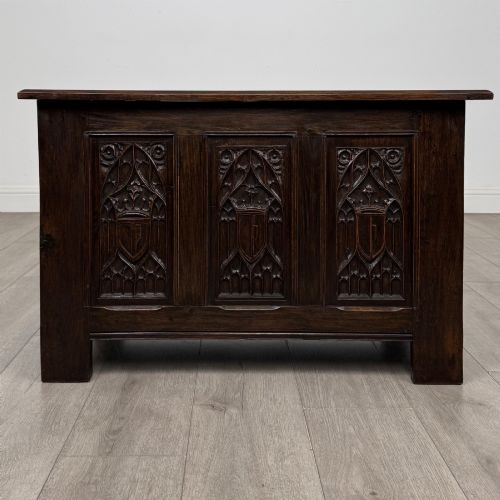
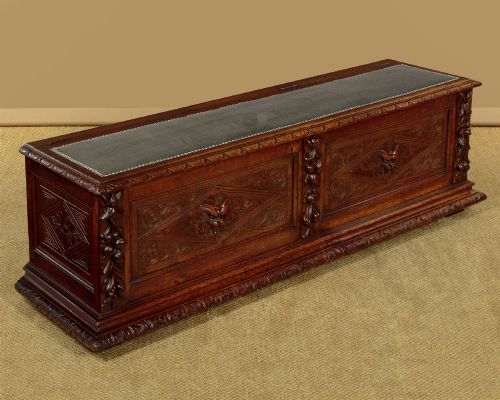
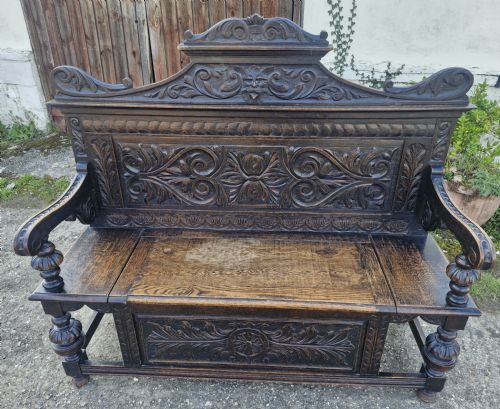
Buyers seeking a gothic revival coffer box encounter robust storage forms including heavy trunks, blanket boxes, and carved oak chests. These pieces draw on medieval architectural motifs, utilising pointed arches and tracery adapted for domestic use.
Materials and construction
Makers utilised dense timbers such as oak, mahogany, and walnut, often selecting burl or pollard variants for decorative grain patterns. Heavy iron and brass fittings provide both structural reinforcement and visual contrast against the dark wood.
Surface decoration relies on deep relief carving, hand-shaped joints, and cast metal work rather than applied veneers. Metal bindings are secured with traditional fixings to ensure durability across heavy domestic use.
A heavy cast metal box sculpted to resemble a thirteenth-century coffer hides its modern mechanical secrets behind ancient-looking hinges.
Judging quality
Quality rests upon the crispness of the timber carving and the integrity of the original hardware. Superior examples display thoughtful grain selection in woods like burr walnut, alongside substantial cast metal mounts that integrate harmoniously with the timber structure.
Jack Grimble
The Gothic Revival Coffer Box Glossary
- Coffer
- A heavy wooden chest traditionally used for storing valuables. These vessels often feature robust hinges and lock plates.
- Gothic Revival
- An architectural and decorative style drawing inspiration from medieval forms. It utilises pointed arches, tracery, and quatrefoils.
- Burr Walnut
- Timber taken from a growth on a walnut tree, yielding highly decorative swirling grain patterns. It is typically employed for fine cabinetwork.
- Pollard Oak
- Oak timber harvested from trees that have been pollarded, producing dense and clustered grain formations. This material appeals particularly to Arts and Crafts makers.
- Trinket Box
- A small receptacle designed for storing jewellery and minor personal effects. These items often incorporate internal velvet linings and brass hardware.
Gothic Revival Coffer Box: Frequently Asked Questions
What is a gothic revival coffer box used for?
These pieces serve primarily as functional storage for household linens, blankets, and personal items. Their decorative exteriors allow them to double as occasional seating or display surfaces in halls and living spaces.
Historically, sturdy wooden chests held valuables and documents securely. Today, they integrate into domestic interiors to conceal clutter while adding historic character.
How do I date a wooden coffer?
Dating relies on examining the timber species, construction joints, and style of any carved ornamentation. Victorian and Edwardian examples often combine period revival motifs with machine-sawn internal components.
Changes in hardware styles, such as hand-forged iron versus mass-produced brass hinges, provide further clues. Comparing the patination of the wood helps determine the age of the surface finish.
Are these boxes made of solid wood?
The pieces listed utilise substantial native and exotic hardwoods such as oak, mahogany, and walnut. Construction prioritises thick timber slabs to withstand heavy use and deep relief carving.
Surfaces often display natural grain variations and patination built up over decades of handling. Secondary woods may appear in internal partitions or backing boards.
How should I care for antique timber boxes?
Maintain the wood by keeping the box away from direct heat sources and strong sunlight, which can dry out the timber. Regular dusting with a soft, dry cloth preserves the natural finish without building up heavy wax residues.
Leather or fabric linings inside jewellery compartments benefit from gentle vacuuming with a low suction attachment. Metal mounts require only dry wiping to prevent moisture accumulation.