
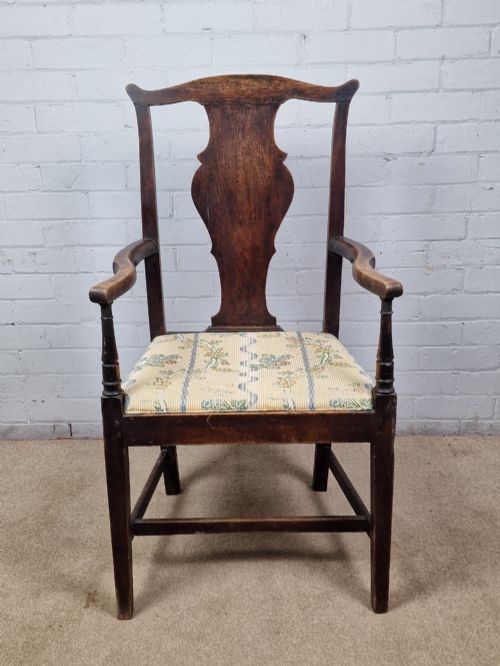
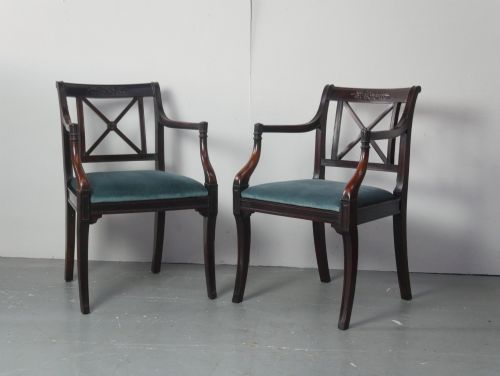
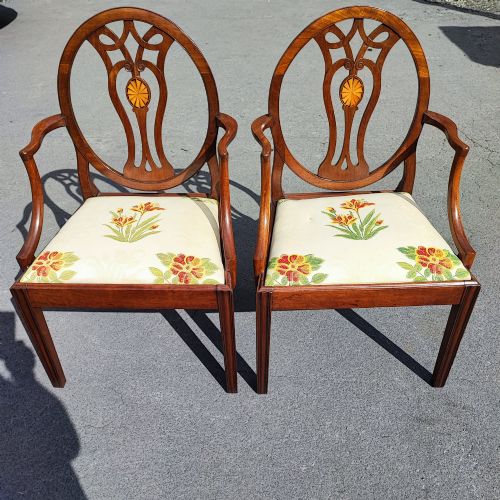
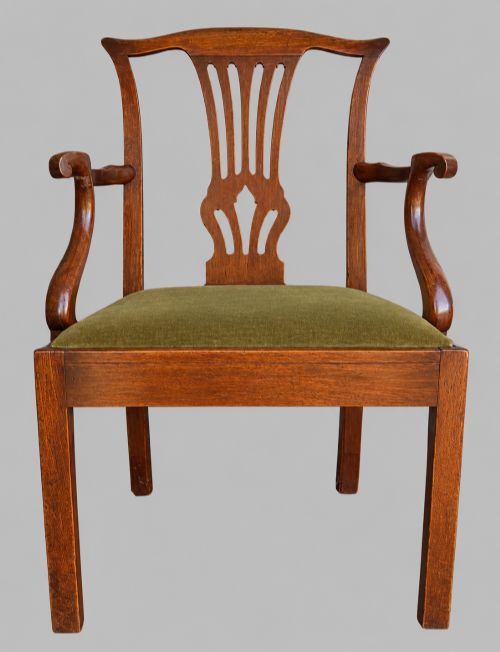




Antique Carver Desk Chair
An antique carver desk chair brings solid timber structure and supportive elbow rests to a study, drawing on Georgian and Victorian forms.
Antique Carver Desk Chair
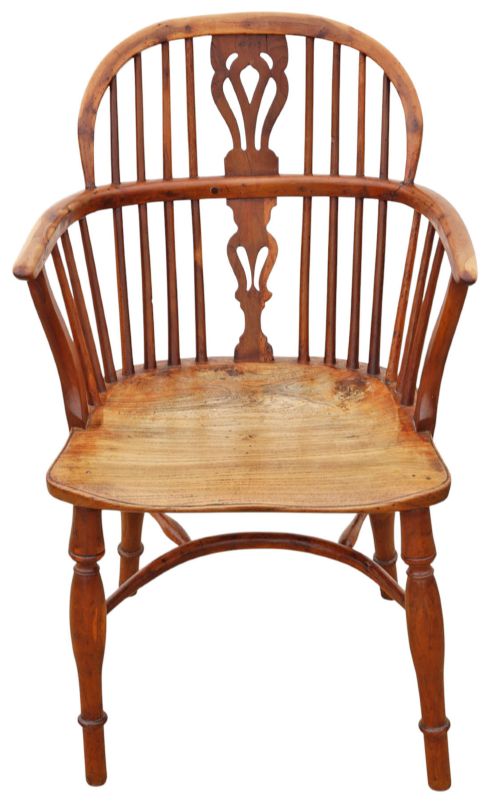
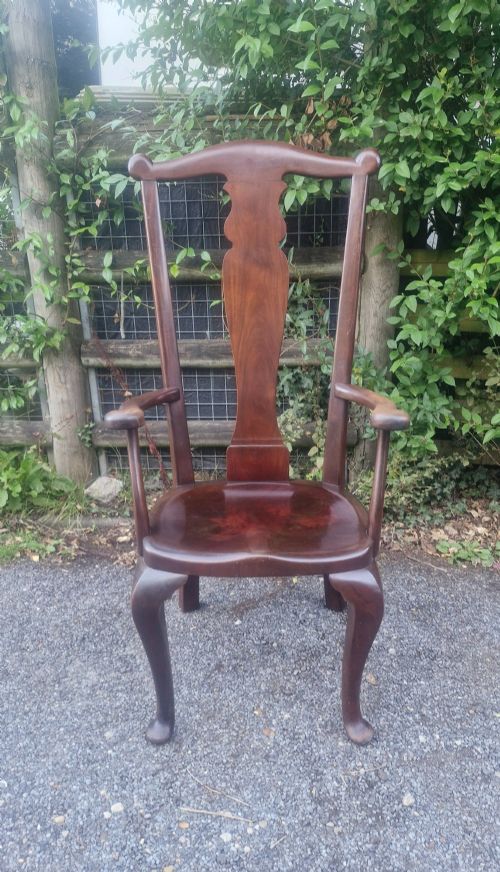
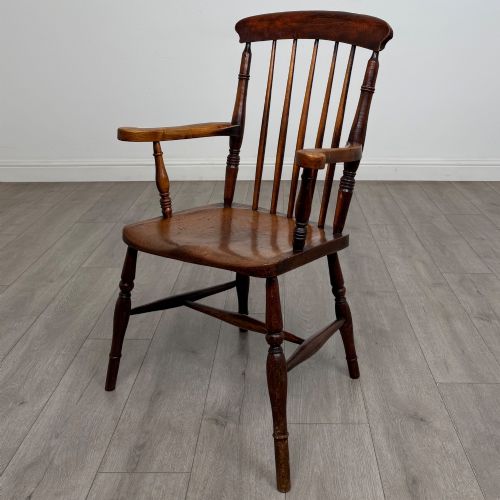
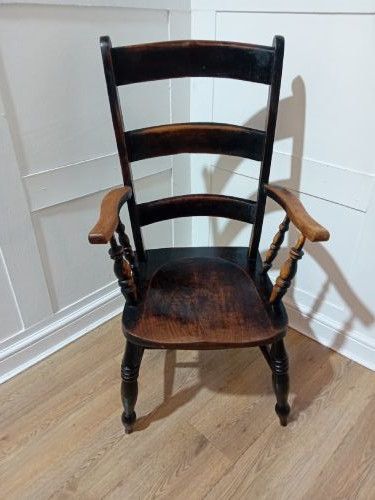
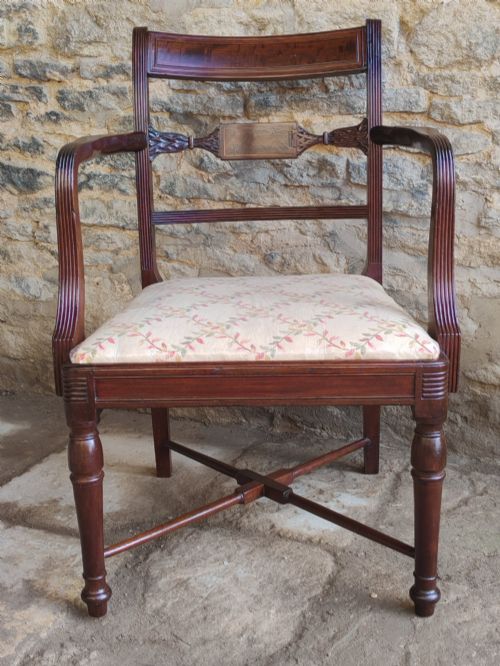
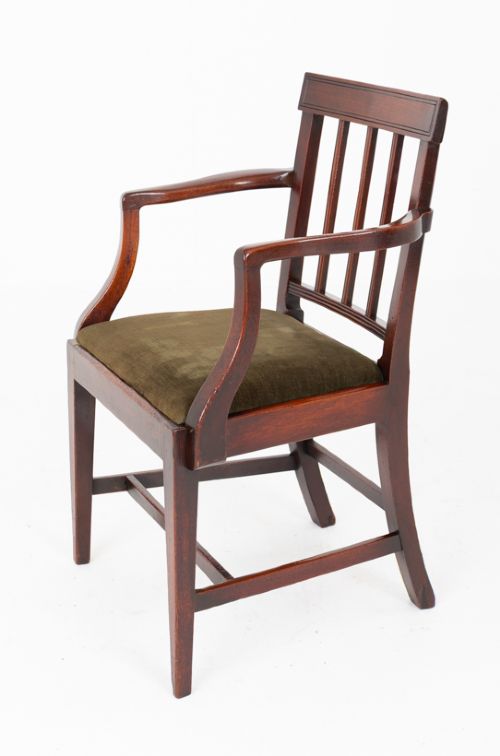
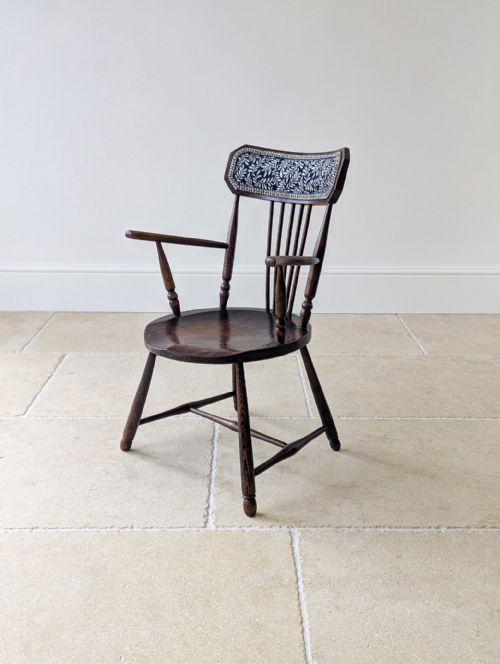
An antique carver desk chair serves as a substantial seating option, bridging the gap between a standard dining carver and a dedicated library chair. These forms emerge primarily from the Georgian, Regency, and Victorian periods, often taking the shape of open armchairs or robust Windsor frames.
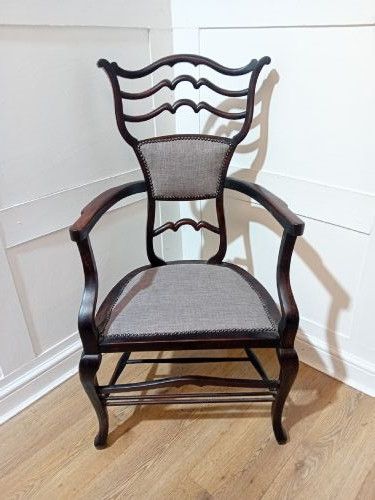
Makers designed these chairs for multiple rooms, meaning buyers encounter sturdy oak and elm country versions alongside formal mahogany library seats. The selection spans straightforward stick-back chairs to carved Chippendale style frames with upholstered seats.
Selecting an antique carver desk chair involves weighing the height of the armrests against the underside of a writing table. Many surviving examples show adaptations from dining carvers into office seating through the addition of revolving mechanisms or sturdy replacement legs.
How They Were Made
Cabinetmakers constructed formal desk chairs using dense timbers like mahogany and walnut, employing mortise and tenon joints to secure the legs and arm supports. Country versions rely on native woods such as elm, ash, and beech, frequently utilising steam-bending for curved hoop backs and arm bows.
Upholstery techniques varied from drop-in seats covered in leather, velvet, or tapestry fabric to fully padded backs secured with traditional horsehair stuffing and iron tacks. Decorative detailing often included hand-carved interlaced splats, rope-back rails, or fine line inlay in satinwood.
Surface finishing typically involved hand-applied beeswax or French polish, which built up a deep patina over decades of handling. Joiners reinforced stress points around the arm joints with internal blocks or pegged dowels to withstand daily use at a desk.
Listings feature solid timbers including mahogany, oak, elm, ash, and walnut across the Georgian, Victorian, and Regency periods.
What Varies in Quality
Quality rests heavily on the choice of timber and the crispness of the hand-carved details on the splats and arms. Superior examples feature figured mahogany with rich grain patterns or well-matched timbers in country Windsor constructions.
Structural integrity dictates the longevity of the piece, distinguishing tightly fitted joinery from chairs that have loosened through centuries of movement. Original finish and minimal timber replacement preserve the historical integrity that collectors value above later restorations.
Proportion and comfort elevate certain chairs, particularly where makers shaped the armrests and backrails to support long hours of writing or reading. The presence of maker stamps or documented workshop origins adds a distinct layer of distinction to the craftsmanship.
Alfred Allen of Birmingham·Gillows
The Antique Carver Desk Chair Glossary
- Carver
- An armchair, usually designed with open sides to accommodate wider clothing styles, frequently utilised at the head of a dining table or alongside a desk.
- Windsor
- A traditional wooden chair featuring a solid saddle-shaped seat into which the legs, back spindles, and bow are separately bored and wedged.
- Splat
- The vertical, central slat of wood connecting the seat to the top rail of a chair back, often carved or pierced in distinct stylistic patterns.
- Elbow chair
- An alternative term for an armchair, referring specifically to the supportive rests positioned at the side for the arms.
- Bar back
- A chair design featuring a horizontal wooden slat across the upper back, frequently curved to fit the spine during long periods of seating.
Antique Carver Desk Chair: Frequently Asked Questions
What is a carver desk chair?
A carver desk chair is a sturdy armchair featuring supportive elbow rests, designed to provide comfort while working at a desk or writing table. These chairs combine the open proportions of a dining carver with the functional stability required for a study.
Surviving examples range from formal mahogany frames of the Georgian period to rustic elm and ash country Windsor designs. Their versatile construction allowed them to function equally well in libraries, morning rooms, and home offices.
How do I date an antique chair?
Dating an antique chair requires examining the timber species, construction techniques, and stylistic motifs present in the woodwork. Georgian and Regency pieces often display dense mahogany and carved splats, while Victorian versions incorporate heavier frames and distinct machine-sawn elements.
Secondary woods used in the undercarriage and seat blocks provide further clues to the period and regional origin. Tool marks left by hand saws and adzes offer physical evidence of the era in which the joiner built the piece.
Are these chairs comfortable for daily work?
Many antique carver desk chairs provide adequate back support and comfortable armrests for daily seating, provided the height matches your desk. Models with upholstered leather or fabric pads offer a softer seat for extended writing sessions.
Buyers should check the internal padding and seat height, as older chairs were often built lower than modern office standards. Adding a subtle, non-permanent cushion can adjust the height without altering the historic frame.
Can I use a dining carver at a desk?
A dining carver functions well at a desk if the clearance beneath the drawer line accommodates the height of the chair arms. Many historical chairs served multiple purposes, moving between dining rooms, libraries, and offices as needed.
When selecting a dining carver for desk use, verify that the open width between the arm supports allows you to sit close to the writing surface. The sturdy frames of 18th-century and 19th-century carvers provide the necessary durability for regular daily use.