
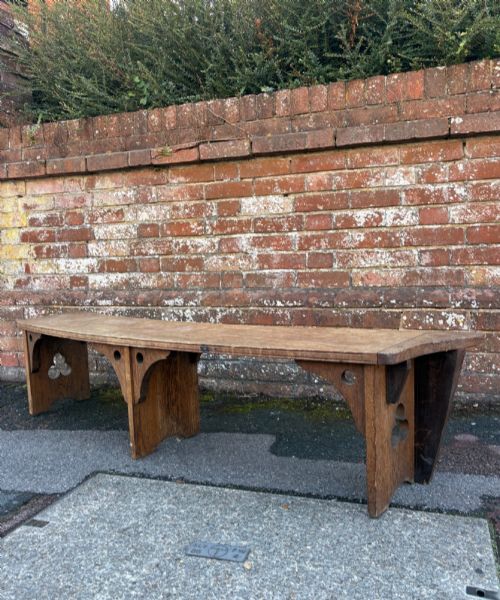
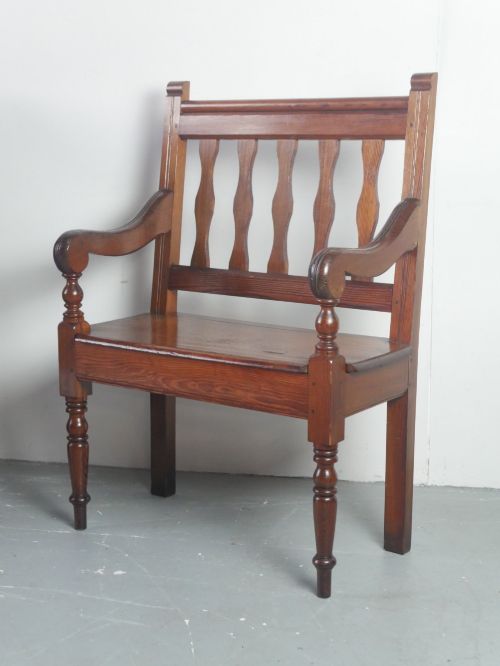
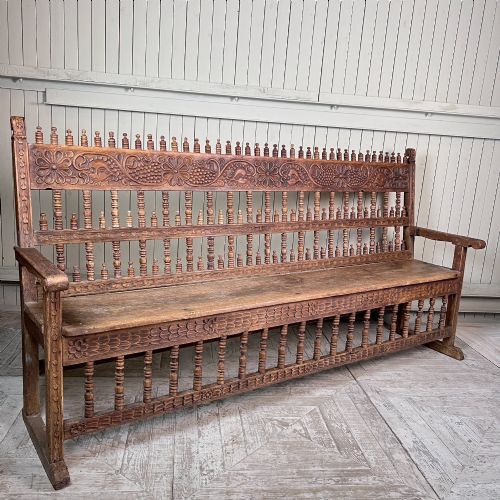
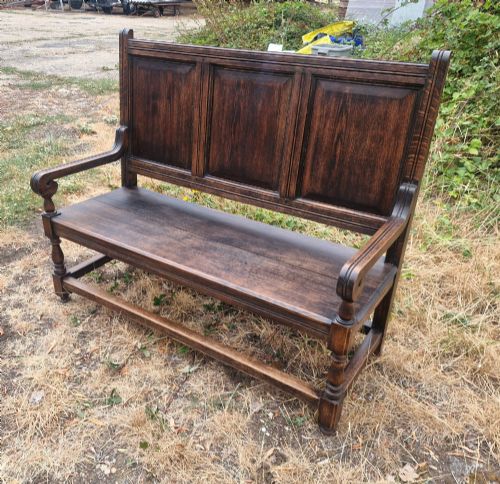

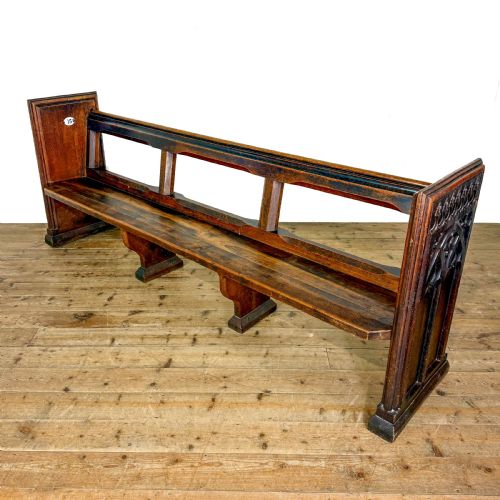


Antique Carved Pew
An antique carved pew brings heavy church timber and domestic hall seating together in oak, pine, and walnut.
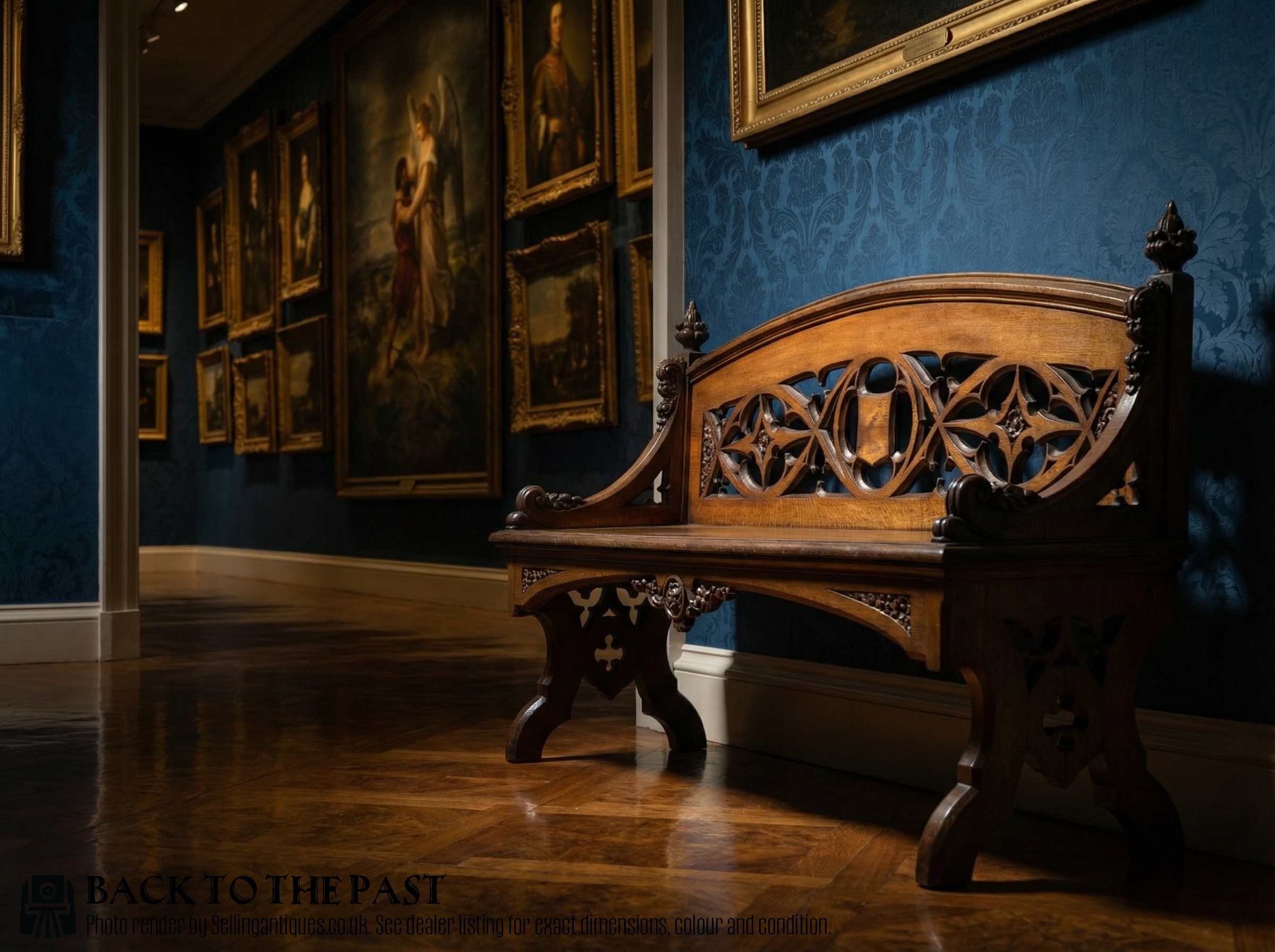
Antique Carved Pew
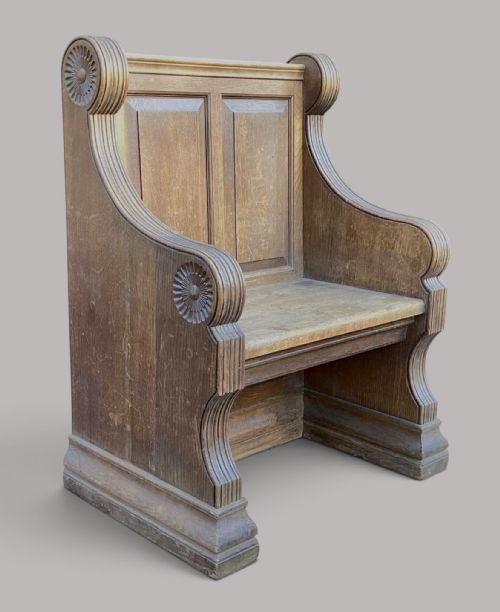
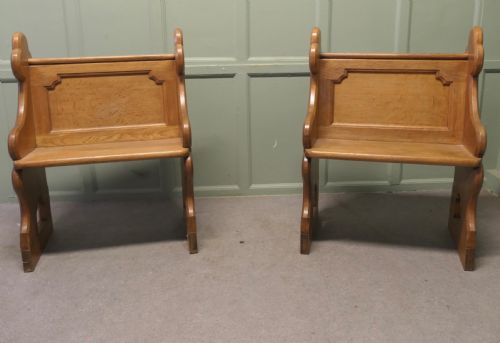
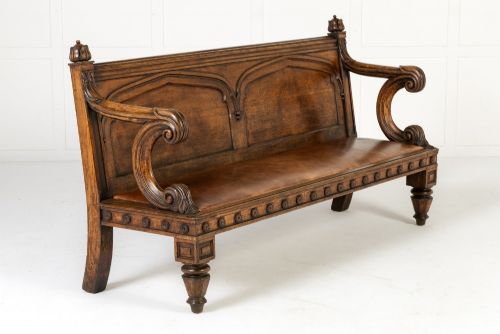
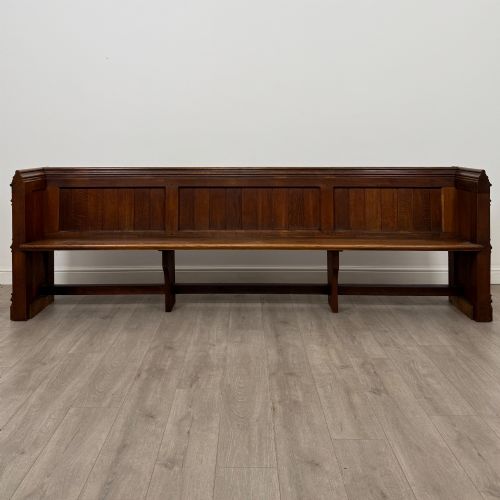
When you search for an antique carved pew, you are looking at substantial benches built for churches, large halls, and country houses. These pieces range from simple ecclesiastical seating to grand domestic settles and hall benches with carved panels.
The pieces on this page appear in forms such as high-back settles, church benches, and architectural hall seats. They date across the eighteenth, nineteenth, and early twentieth centuries, drawing on styles from Gothic Revival to Jacobean Revival.
You will most frequently encounter nineteenth-century oak and pine examples designed for communal worship or domestic entrance halls. Their robust construction and carved details make them enduring focal points for large rooms and corridors.
How they were made
Carpenters built these benches using solid timbers, primarily oak, pine, and walnut, joined with traditional framing techniques. Panel construction accommodated the natural movement of large boards over centuries.
Carvers applied decoration directly to the solid wood, utilising motifs like trefoils, poppy heads, and Gothic tracery. Surfaces were often left as bare timber, though some pieces received original paint finishes or dark polish.
Several pews retain stories within their timber, having spent centuries listening to parish sermons before finding a second life in domestic hallways.
What varies in quality
The distinction between standard utility seating and exceptional work lies in the depth and execution of the carved ornamentation. Crisp, hand-carved details on poppy heads and panel work elevate a simple bench into a notable piece of craftsmanship.
Timber selection and structural integrity also determine the standing of each piece. Heavy, figured oak and walnut retain their presence better than softer woods like pine, while original proportions and untouched surfaces command greater attention.
The Antique Carved Pew Glossary
- Settle
- A wooden bench with a high back, solid arms, and often a storage box beneath the seat. This form kept draughts away in large, cold rooms.
- Poppy head
- An ornamental carved capping on the upright end of a pew or bench, typically leaf-shaped or floral in design.
- Gothic Revival
- An architectural and decorative style popular in the nineteenth century that revived medieval pointed arches and tracery. It heavily influenced church and hall seating design.
- Pitch pine
- A durable, resinous pine variety frequently used in nineteenth-century joinery and church pews. It provides a distinct grain pattern and considerable weight.
Antique Carved Pew: Frequently Asked Questions
Where did these pews originate?
Many of these pieces come from parish churches, country houses, and monastic buildings across Britain and Europe.
Their origins dictate whether they were built for communal worship or private domestic halls.
How do I style a church pew at home?
A large antique carved pew functions well in a generous hallway, against a dining table, or along a living room wall.
Their substantial backing and carved panels make them natural anchors for open interior spaces.
What woods were commonly used?
Oak remains the dominant material across these listings, alongside pine, pitch pine, walnut, elm, and hardwood.
Each timber offers a different weight, grain, and response to historical carving.
How can I tell the period?
Dating relies on the joinery methods, the style of the carved motifs, and the type of timber used.
Eighteenth-century examples show different panel construction compared to Victorian Gothic Revival pieces.