




Antique Canton Bowl
An antique canton bowl brings vibrant palette panels of figures and flora into a room, made for export during the Qing dynasty and Victorian eras.
Antique Canton Bowl
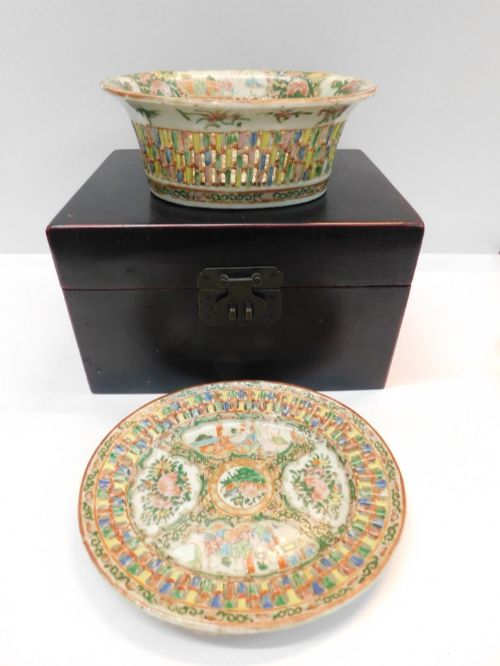
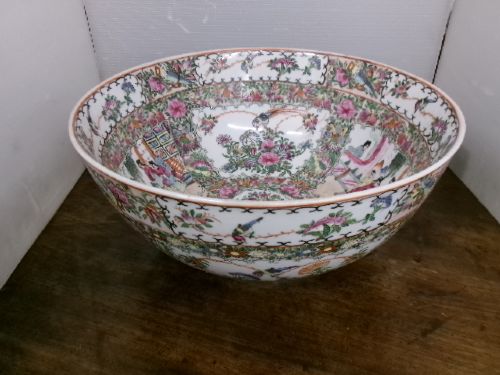
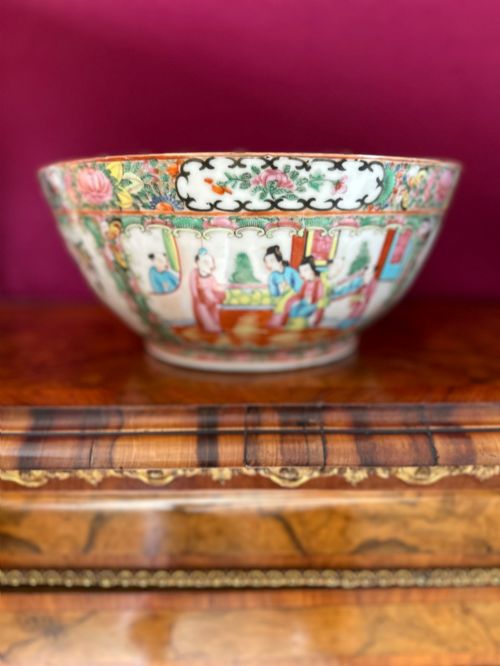
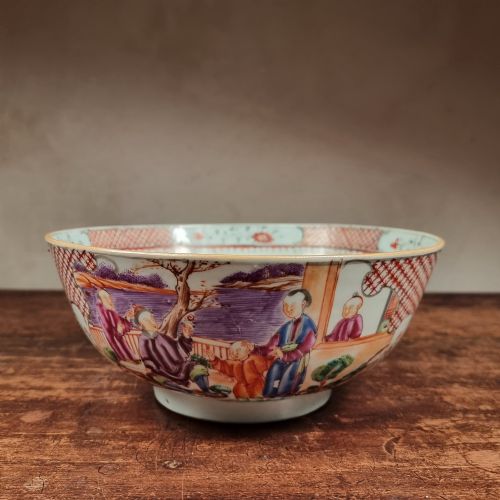
When you search for an antique canton bowl, you are looking at large porcelain vessels painted in vibrant overglaze enamel palettes designed for Western export markets. These pieces date principally from the nineteenth century, including Victorian periods, and span forms from punch bowls and jardinières to pedestal dishes and chestnut baskets.
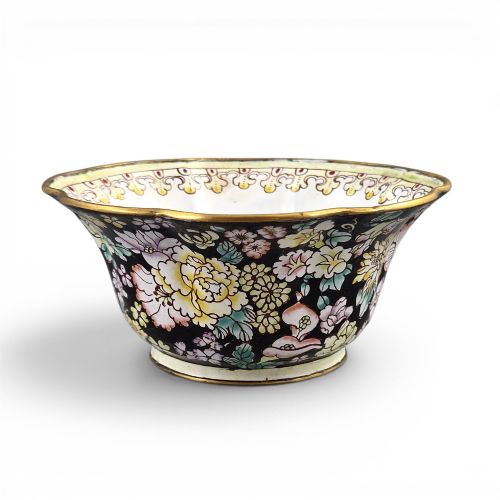
The objects originate from Guangdong province, historically known as Canton, where workshops produced dense decorative schemes featuring birds, butterflies, and court figures. The examples met on this page range from twenty-inch punch bowls to lobbed rectangular dishes and enamelled copper vessels.
Buyers seek these bowls for their scale and colour, which anchor a room with nineteenth-century Chinese export craftsmanship. They appear frequently in forms mounted in ormolu or paired with carved stands.
How they were made
The foundation of an antique canton bowl is white porcelain, shaped and fired before receiving detailed hand-painted overglaze enamel decoration. Artisans applied bright pinks, greens, and golds by hand, frequently incorporating gold leaf and gilding to highlight borders and figural panels.
Certain pieces depart from standard ceramics by utilising enamel-on-copper construction, fusing vitreous colours directly to a metal body during the nineteenth century. Gilt bronze and ormolu mounts were later added to bowls in European workshops to elevate their status as centrepieces.
Materials recorded across current items include porcelain, enamel, copper, gold leaf, and ormolu mounts.
What varies in quality
Quality in an antique canton bowl rests upon the crispness of the hand-painted brushwork and the complexity of the figural panels. Superior examples exhibit finely rendered faces and intricate borders without blurring or crowding in the enamel work.
The weight and presence of the porcelain body, along with the generous application of gold leaf, separate standard utility wares from exceptional decorative centrepieces. Intact ormolu mounts and original stands further distinguish the top tier of pieces.
The Antique Canton Bowl Glossary
- Famille Rose
- A palette of opaque overglaze enamels dominated by pink or rose colours, introduced in Chinese porcelain production during the Qing dynasty. This palette defines the visual character of most nineteenth-century export bowls.
- Rose Medallion
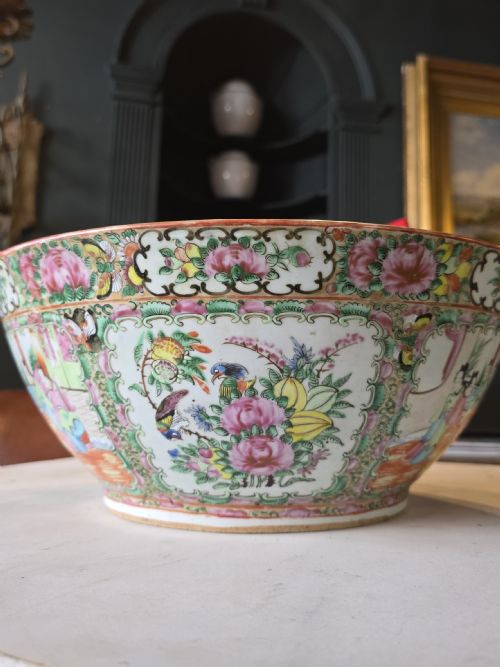
- A distinct style of Canton porcelain decoration divided into alternating geometric and figural panels filled with birds, flowers, and court scenes. It appears frequently on large punch bowls and decorative dishes.
- Gaiwan
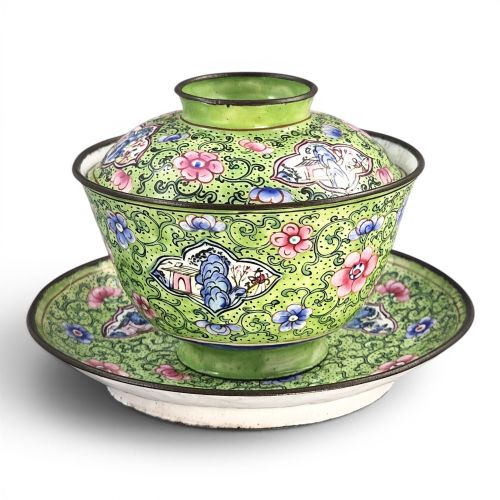
- A traditional Chinese tea set comprising a bowl, saucer, and lid, used for steeping and drinking tea. Canton examples feature matching hand-painted enamel decoration across all components.
- Reticulated
- Describes openwork ceramic or basket structures featuring pierced lattice designs. These techniques appear on nineteenth-century chestnut baskets and stands.
- Ormolu
- Gilded bronze mounts applied to porcelain vessels, particularly popular in European settings during the nineteenth century. These metal fittings elevate bowls into structural centrepieces.
Antique Canton Bowl: Frequently Asked Questions
How were canton bowls used?
These large vessels served practical functions as punch bowls at dining tables and as decorative centrepieces in nineteenth-century drawing rooms. They held food or water or simply displayed intricate enamel artistry.
Smaller forms and gaiwan sets were utilised for serving tea, while jardinières accommodated indoor plants. Their robust porcelain bodies suited both active hospitality and static interior display.
What is the difference between canton and rose medallion?
Canton is a broad term for export porcelain produced in Guangdong province, encompassing various painting styles. Rose medallion is a specific subset of Canton ware defined by its compartmentalised panels of figures, birds, and flowers.
While all rose medallion is Canton porcelain, not all Canton pieces feature the strict panelled layout of the medallion style. Many Canton bowls rely instead on overall bird-and-flower motifs or continuous figural scenes.
How do I date an antique canton bowl?
Dating relies on stylistic markers, palette characteristics, and manufacturing traits associated with nineteenth-century Qing dynasty production. Pieces from the mid-nineteenth century often display robust porcelain bodies and specific tones of pink enamel.
Later Victorian-era examples from the 1880s to 1900s sometimes show variations in brushwork density and gilding quality. Reference to specific reign periods, such as Guangxu, helps narrow the production window further.
Are these bowls safe for food use?
Historic export bowls feature overglaze enamel decoration applied centuries ago, which can contain heavy metals and wear away with active use. They are primarily treated as decorative objects rather than functional tableware.
Hand-washing is necessary if they are handled, but most owners choose to display them on stands or tables to preserve the delicate gold leaf and enamel surfaces.