


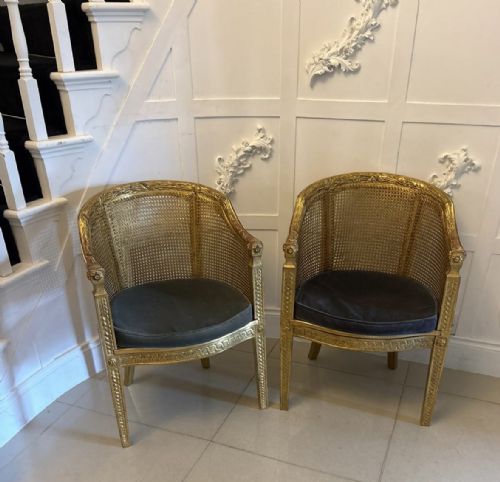
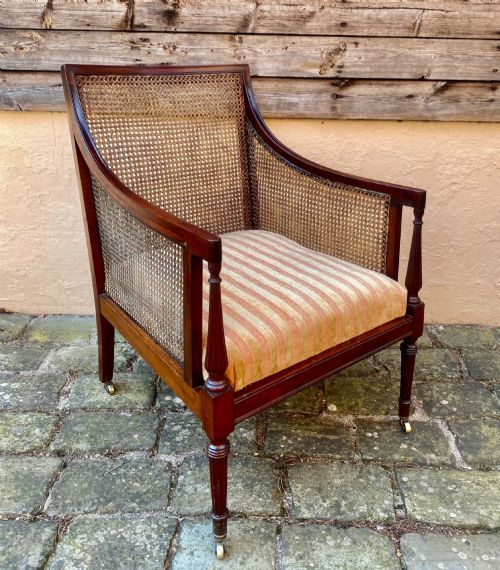
Antique Caned Bergere
When you handle an antique caned bergere, you hold a piece of history defined by woven panels and deep, low-slung comfort.
Antique Caned Bergere
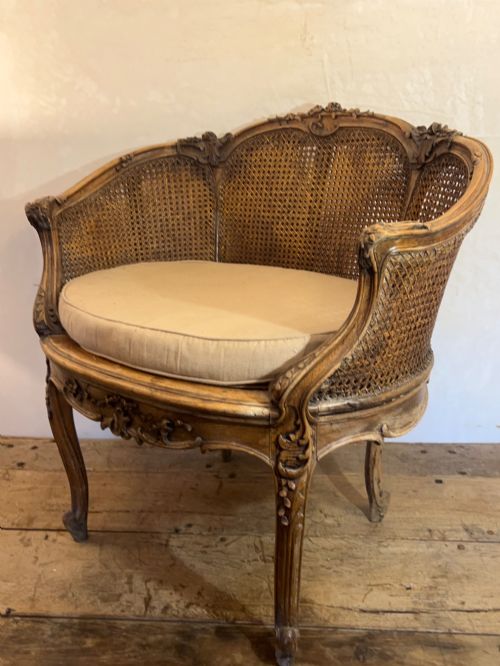
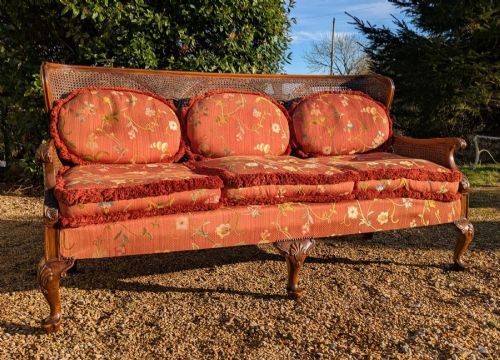
An antique caned bergere is a fully upholstered armchair or sofa distinguished by enclosed sides and tight woven panels. The form originates in France before appearing across British and continental workshops in various stylistic revivals.
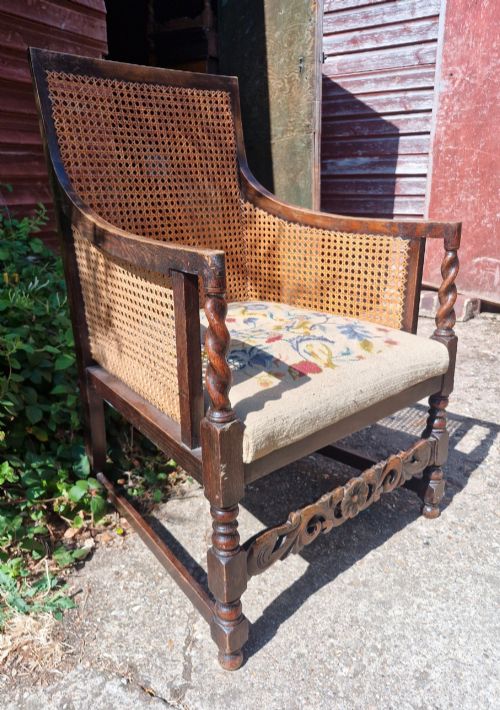
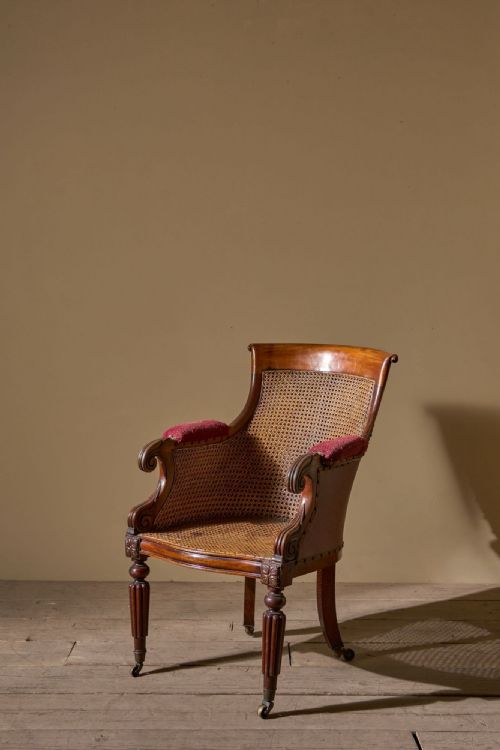
Most examples found here date from the nineteenth and early twentieth centuries. These range from Regency library models in mahogany to Edwardian walnut armchairs and later oak variations.
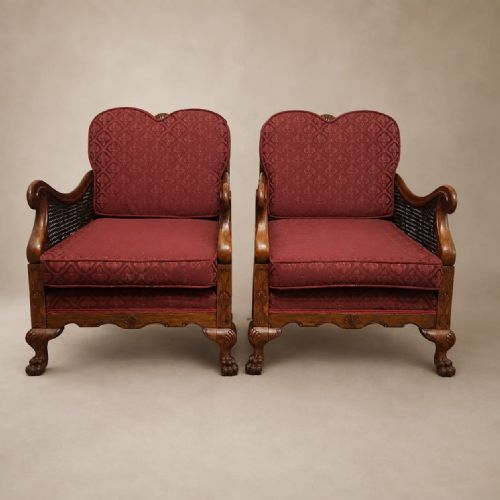
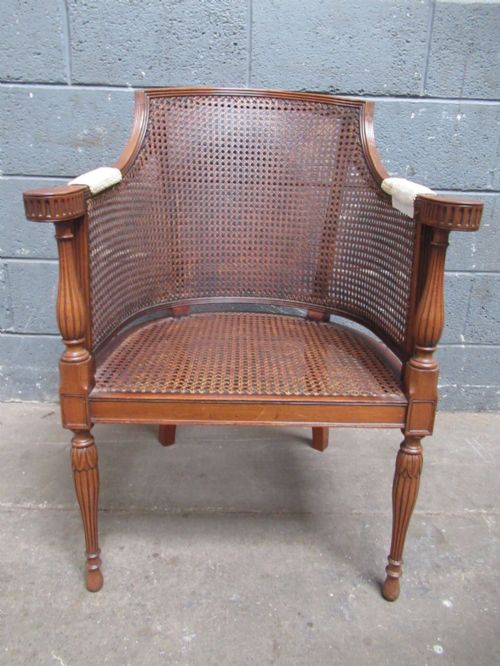
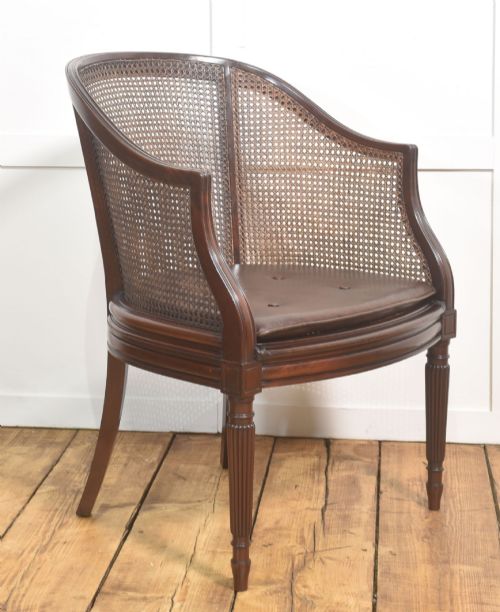
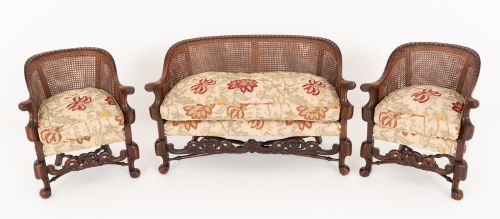
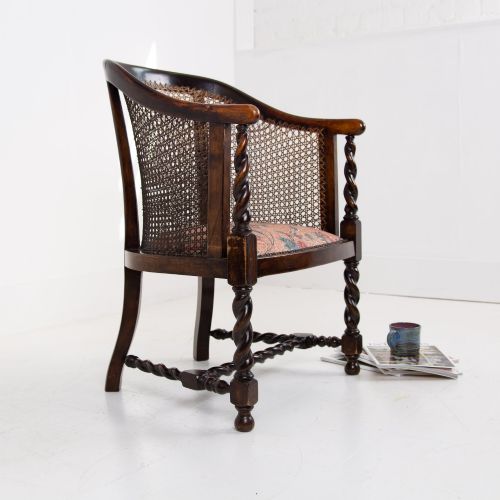
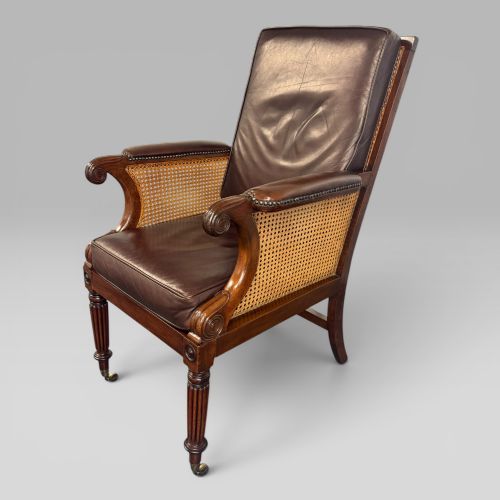
Makers adapted the enclosed frame into numerous seating types. The selection includes tub armchairs, library chairs, sofas, and complete seating suites designed for domestic comfort.
Materials and construction
Cabinetmakers built the structural frames using dense hardwoods such as mahogany, walnut, oak, and rosewood. Some pieces feature giltwood, ebonised finishes, or brass mounts.
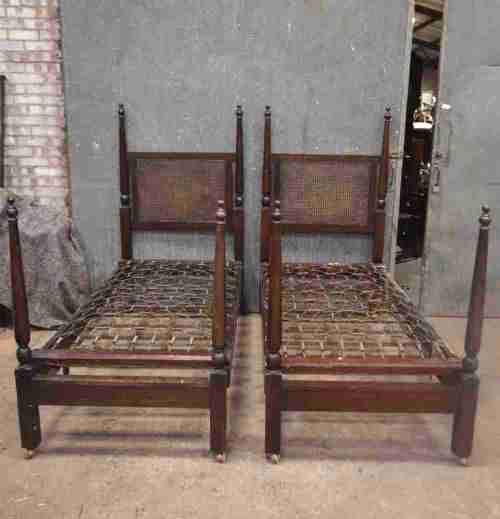
The characteristic sides and backs utilise natural cane and rattan cane woven tightly through drilled frame holes. Loose cushions in leather, velvet, or fabric provide seat support.
Some library chairs feature hidden casters for smooth movement across deep carpets.
Distinctions in quality
The standard of carving and timber selection dictates the hierarchy of these chairs. Finely figured mahogany and intricate hand-carved frames sit above plain commercial equivalents.
The integrity of the woven cane panels dictates the original craftsmanship. Uniform hole spacing and tight, symmetrical hand-weaving separate superior workshop output from simpler production.
James Shoolbred·Gillows
The Antique Caned Bergere Glossary
- Bergere
- An enclosed upholstered armchair featuring solid sides filled with cane or upholstery. It originated in France during the eighteenth century.
- Caning
- A method of weaving rattan strips into patterned mesh panels for chair backs and sides. It provides flexible structural support.
- Tub chair
- An armchair with a continuous curved back and arms forming a rounded enclosure. The design wraps around the sitter.
- Library chair
- A heavy, substantial armchair designed for reading rooms and studies, often fitted with casters and leather arm pads.
Antique Caned Bergere: Frequently Asked Questions
What is an antique caned bergere?
An antique caned bergere is a deep, enclosed armchair or sofa with woven rattan panels forming the sides and back. These pieces provide a sheltered seating experience distinct from open-frame armchairs.
Craftsmen produced them in various stylistic revivals throughout the nineteenth and early twentieth centuries. They served primarily as comfortable library and drawing room seating.
How were these chairs used?
Original owners placed these armchairs in libraries, drawing rooms, and country house reception spaces. The enclosed sides protected sitters from drafts in large rooms.
They function today as statement reading chairs or living room seating. Their deep proportions suit relaxed lounging rather than upright dining.
How do I identify the period?
Period identification relies on timber choices, carving styles, and structural proportions. Regency and William IV pieces often display heavy mahogany and classical lines, while Edwardian examples show lighter mahogany or walnut frames.
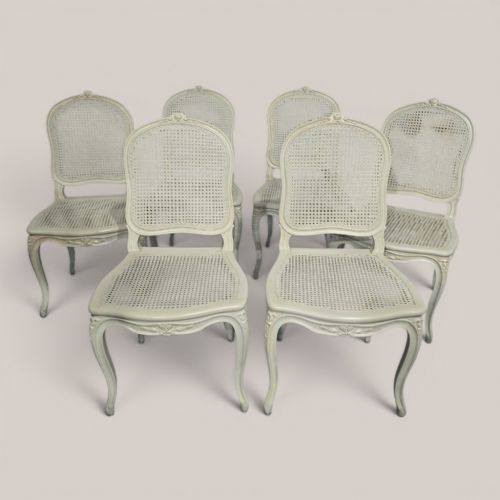
Stylistic markers such as Louis XV curves or Jacobean revival turnings also indicate the manufacturing era. Construction details inside the frame help confirm the date.
Are the cane panels original?
Many surviving chairs retain their period cane panels, while others have received replacement weaving over time. Skilled craftsmen routinely restore damaged panels using traditional hand-weaving techniques.
Freshly woven cane appears lighter in tone than aged material. Both original and renewed panels support daily domestic use.