





Antique Cane Settee
An antique cane settee offers woven panel seating rooted in centuries of classical European and colonial design.
Antique Cane Settee
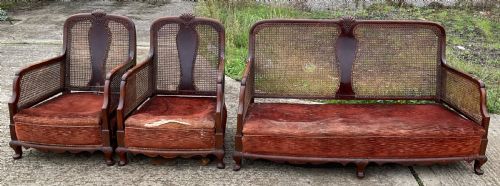
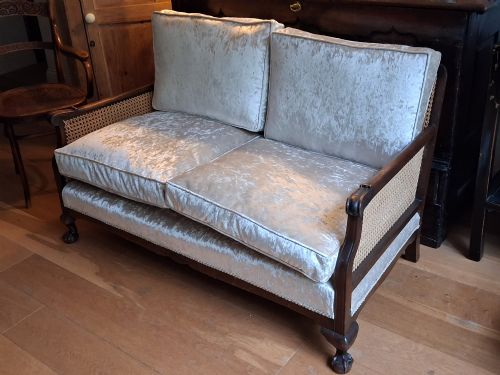
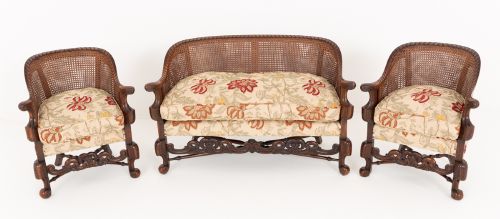
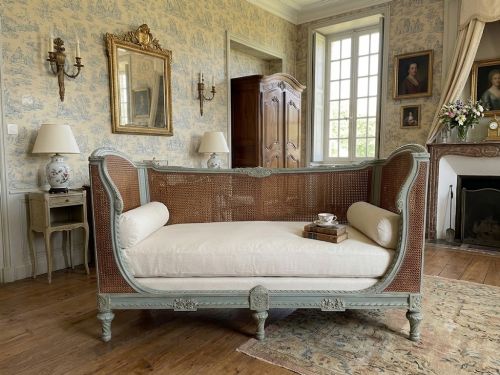
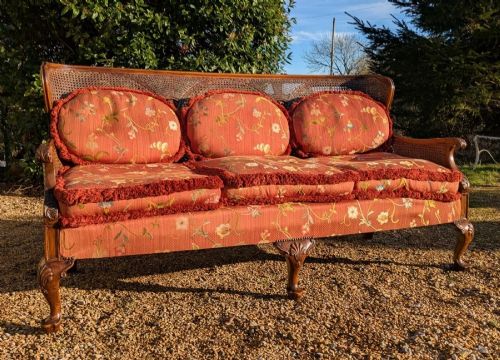
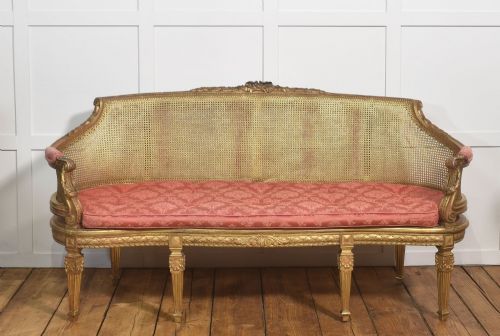
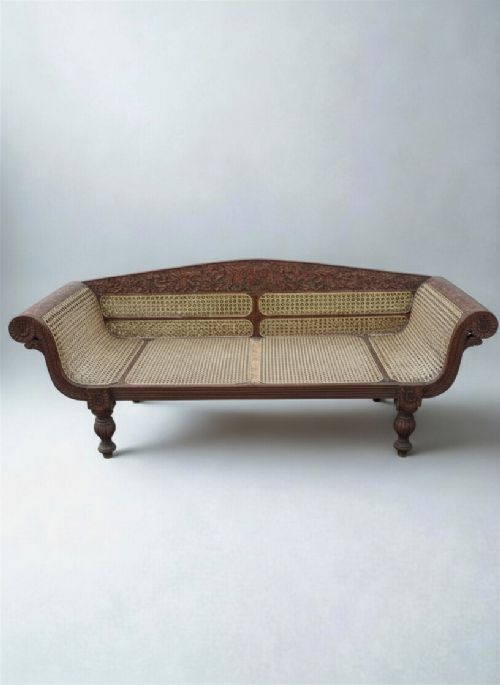
An antique cane settee combines wooden framework with woven plant fibre panels across the back and sometimes the sides. The pieces found here span from the eighteenth century through to the early decades of the twentieth century, reflecting varied revivals of earlier periods. You will encounter French Louis styles, English Georgian and Edwardian interpretations, and Anglo-Indian regional variants.
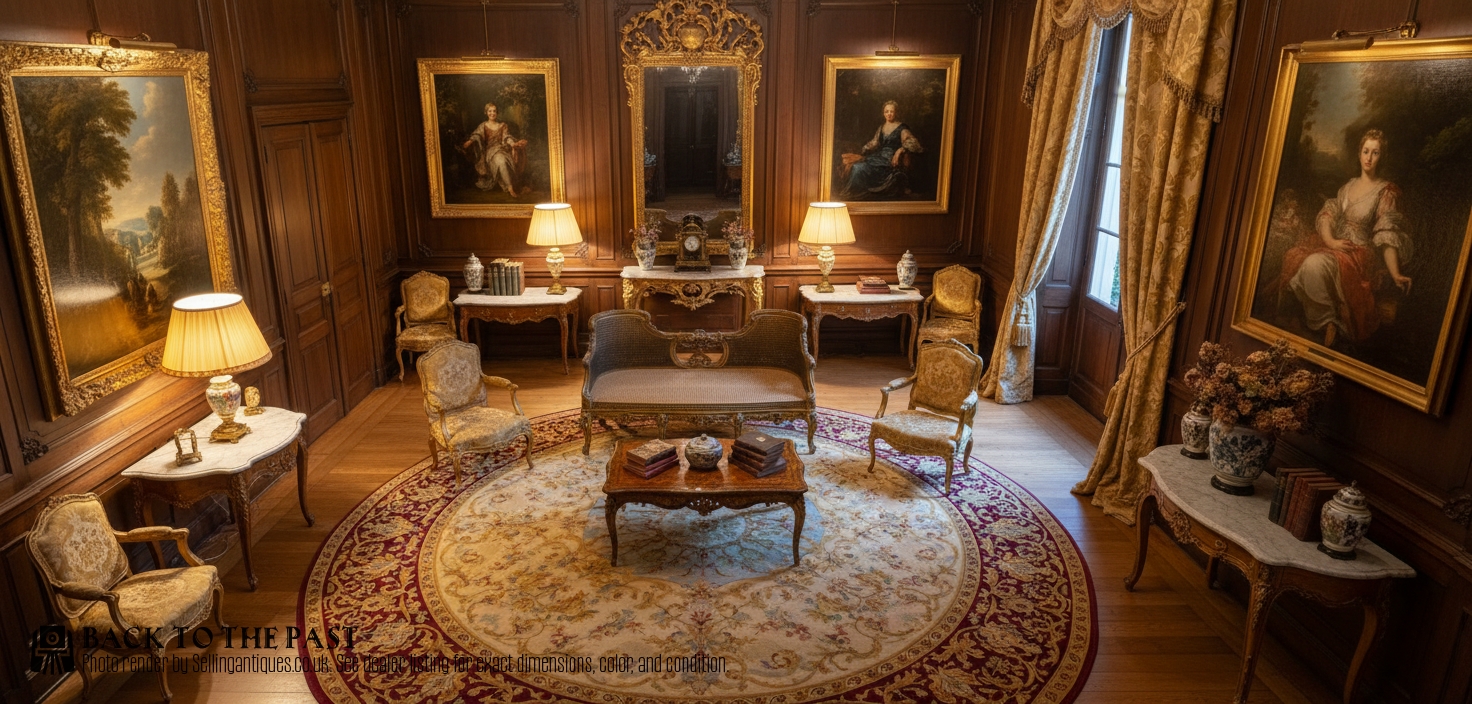
The format ranges from two-seater love seats and window benches to larger three-seater sofas and daybeds. Frames are constructed to hold tensioned cane work, frequently accompanied by loose cushions in fabric, linen, or feather fill. These items served formal salons, drawing rooms, and enclosed verandahs.
Materials and construction
Makers utilised solid hardwoods and softwoods such as walnut, beech, mahogany, satinwood, and giltwood for the structural skeleton. Frames were carved, painted, gilded, or polished depending on the prevailing style of the workshop. Joinery relied on traditional methods to withstand the outward pull of the woven panels.
Cane panels consist of split rattan woven directly through drilled holes in the wooden frame or set into channels using a spline. This method yields a resilient yet flexible surface that supports body weight while permitting air circulation through the seat and back.
Antique Cane Settee Retail Price Guide 2026
Typical asking prices for cane settee among the pieces listed under this phrase on Sellingantiques today, from the lower quarter to the upper quarter. They describe what is for sale here now, not the wider market.
The listings on this page span from eighteenth-century Swedish pieces to twentieth-century ocean liner furniture.
Judging the standard
The integrity of the woven cane work dictates much of the physical standard, distinguishing tight, uniform hand-weaving from brittle or poorly executed repairs. Original surface treatments, whether aged giltwood, old paint, or polished walnut, hold greater weight than later stripping or repainting.
Carving depth and sharpness on the wooden frame separate standard production from finer cabinet work. Proportion and stylistic coherence to periods like Louis XVI or Carolean set top-tier examples apart from generic revival pieces.
J. S. Kinsey
The Antique Cane Settee Glossary
- Canapé
- A French term for a decorative sofa or settee, often seen in eighteenth and nineteenth-century forms. These pieces typically feature exposed carved wooden frames.
- Bergère
- An enclosed upholstered armchair or sofa style featuring solid sides filled with cane or upholstery. Originating in France, the design gained popularity in English Edwardian suites.
- Carolean
- A seventeenth-century English style marked by rich carving, scrollwork, and crown motifs. Later revivals replicated these elements on nineteenth-century seating.
- Giltwood
- Timber treated with a thin layer of gold leaf or gilt finish. It appears frequently on formal French salon furniture from the eighteenth and nineteenth centuries.
- Spline
- A narrow wooden bead used to secure woven cane into a groove around the frame. This technique fastens the mesh without visible fastenings.
Antique Cane Settee: Frequently Asked Questions
How do I care for cane seating?
Keep cane panels supple by wiping them occasionally with a damp cloth to prevent the natural fibres from drying out and snapping. Avoid placing these settees in direct sunlight or beside intense heat sources.
Weight distribution matters greatly with woven furniture. Use matching cushions to support sitters and prevent undue stretching of the cane mesh over time.
Were these settees used outdoors?
Despite the tropical origins of rattan cane, antique European settees served indoor domestic spaces such as drawing rooms, halls, and parlours. Anglo-Indian variants were built for shaded verandahs and colonial sitting rooms.
Moisture and frost damage historic wood glue and brittle plant fibres. Protect your piece by keeping it strictly within temperature-controlled interior environments.
How do I distinguish French styles from English ones?
French pieces often display painted, gilded, or finely carved beech frames with flowing cabriole legs and floral motifs. English equivalents from the Edwardian or George V eras frequently employ mahogany or walnut with Chippendale influences.
Look at the overall silhouette and foot design. French regional pieces lean towards graceful curves, while English revival settees favour structured lines and dark hardwoods.
Can damaged cane be repaired?
Skilled craftspeople can re-weave damaged sections of cane by hand using traditional octagonal or hexagonal patterns. Partial repairs match the tension and colour of the surrounding historic mesh.
Replacing an entire panel requires routing out old splines and working new rattan through the original frame holes. Professional restoration preserves the structural integrity of the antique frame.