


Rococo Window Bench
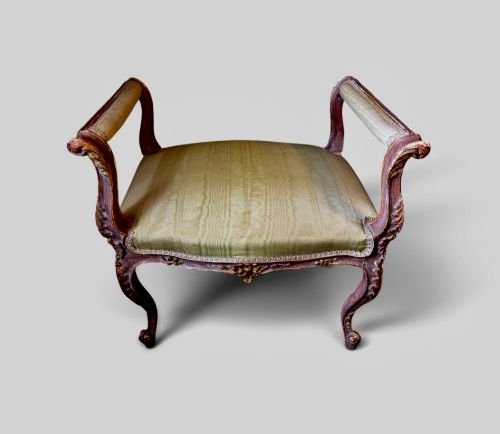
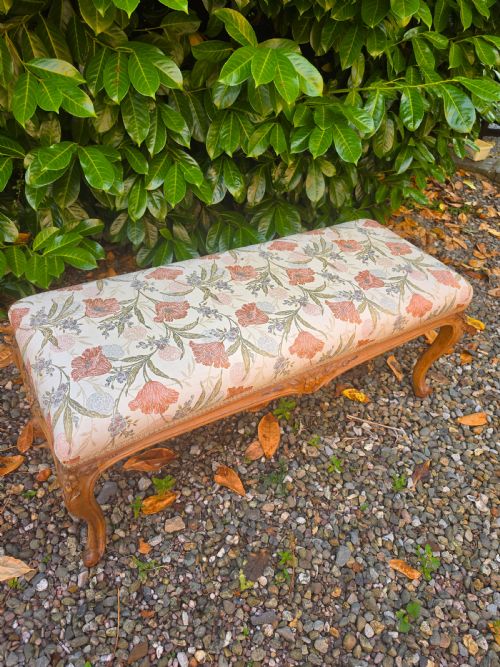
These rococo window bench pieces bring curved lines and carved detail to a room, offering both a seat and a decorative centrepiece.
Rococo Window Bench
A rococo window bench follows the sweeping, ornate lines of the 19th Century revival styles, drawing on French Regence and Louis XV designs. You will encounter painted wood or giltwood frames paired with upholstered seats in fabric, linen, or textile.
The forms vary from long stools and footstools to two-seater window sofas and benches with cabriole legs. Most pieces date from the 19th Century through to the early 20th century, originating from English, French, Italian, and Swedish makers.
How they were made
Makers shaped these frames from walnut, mahogany, and other woods, applying carved detail by hand. Surfaces received finishes of gilt, gold leaf, or paint over gesso.
Seats utilised cane work or webbed foundations covered in textiles, linen, and fabric upholstery to provide support.
Listings show these pieces span the 19th Century to 1930, using giltwood, painted wood, and cane.
What varies in quality
The depth and crispness of the hand carving separate standard pieces from finer examples, particularly around the cabriole legs and scrolled frames. Crisp floral motifs and deep relief work indicate skilled workmanship.
The original gilding or painted finish dictates the visual impact of the piece, alongside the integrity of the frame construction and the quality of the textile or cane upholstery.
The Rococo Window Bench Glossary
- Giltwood
- Wood that has been coated with thin gold leaf or gold paint. This finish creates a reflective, decorative surface seen on many revival frames.
- Cabriole leg
- A furniture leg that curves outward and then tapers inward, finishing in a small foot. This shape is characteristic of Louis XV and rococo design.
- Rococo Revival
- A design movement that revived the ornate, asymmetrical ornamentation of the 18th-century French court. It dominated much of the 19th century.
- Cane
- Woven rattan or plant material used for seating panels. It offers a light, patterned texture to the frame.
Rococo Window Bench: Frequently Asked Questions
Where should I place a window bench?
These benches fit naturally beneath large windows, in hallways, or at the foot of a bed. Their low profile ensures they do not block natural light.
They also function as extra seating in a living room or serve as low tables when topped with a tray.
How do I identify a rococo revival piece?
Look for characteristic C-scrolls, asymmetrical floral motifs, and cabriole legs on the wooden frame. These elements mimic the 18th-century French style.
Most listings from this group date from the 19th Century up to 1930, showing the revival tastes of those eras.
Are these benches comfortable for sitting?
Most pieces feature upholstered seats covered in fabric, linen, or textile, while others utilise woven cane. They are designed for short periods of sitting rather than deep lounging.
Adding a small cushion can alter the height and comfort level to suit your room.