
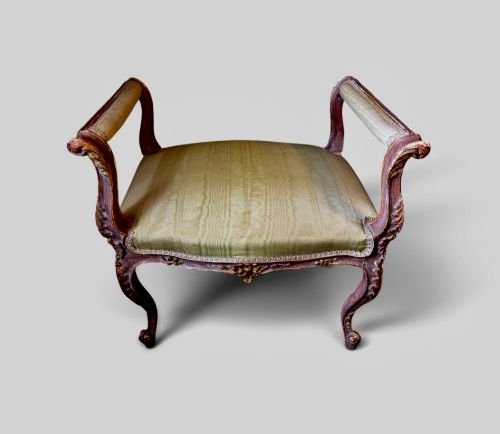
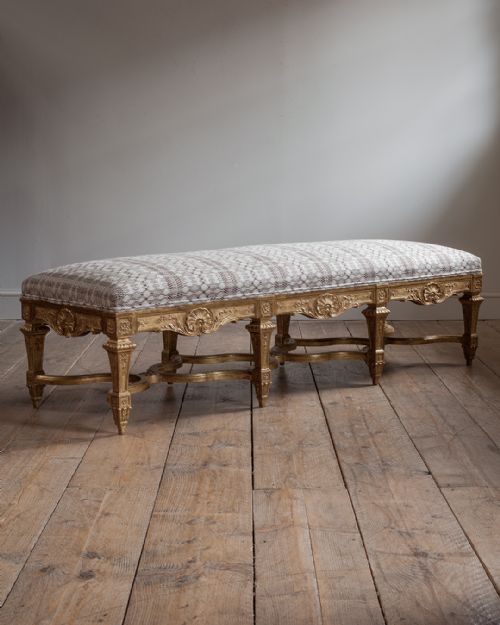
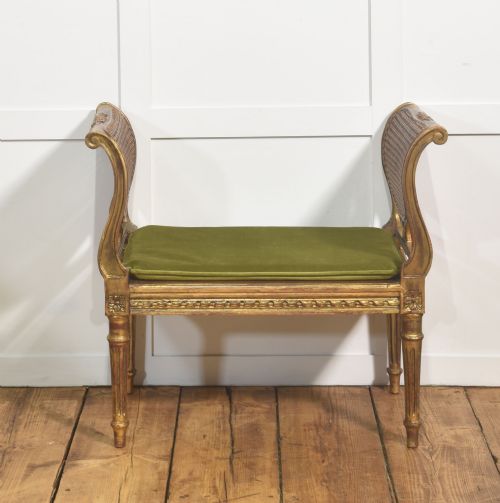


French Giltwood Window Seat
A french giltwood window seat brings classical elegance to a room, offering refined seating shaped by centuries of French design traditions.
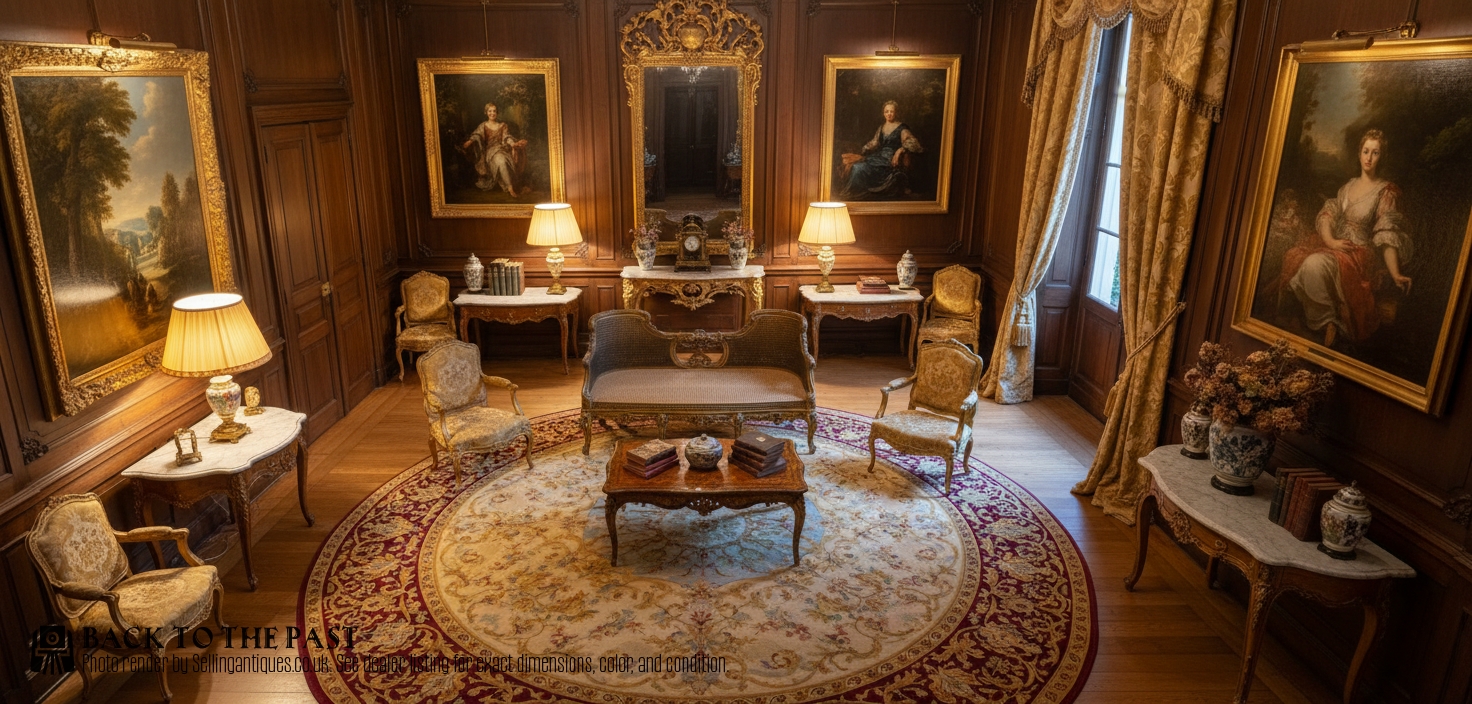
French Giltwood Window Seat
A french giltwood window seat combines decorative timber frames with gilded surfaces, taking the form of benches, stools, and duet seats designed for placement beneath windows or along hallways. These pieces emerge from periods ranging from the early nineteenth century through the early twentieth century, reflecting enduring historical aesthetics.
The styles seen on this page span Louis XVI, Louis XV, Rococo Revival, Louis XIV Revival, Empire, and Italian Rococo designs. Buyers most frequently encounter variations featuring carved wood structures, gilded finishes, and upholstered or caned seats.
Object variations include long stools, X-frame stools, curule stools, and two-seater window sofas. Each form serves the dual purpose of functional seating and ornamental display within traditional interiors.
What varies in quality
The refinement of the wood carving dictates much of the visual distinction between examples, with deep, crisp relief work separating superior frames from simpler production. Hand-carved details show greater sensitivity to classical proportions than mechanical or heavy-handed execution.
The condition and application of the original gilt surface influence the character of the piece, as does the integrity of structural joinery in the timber frame. Original cane panels or period textile upholstery retain higher authenticity than modern replacements.
Curule stools bring ancient Roman senator seating straight to your bay window.
The French Giltwood Window Seat Glossary
- Giltwood
- Timber coated with gold leaf applied over a prepared base layer. This finish defines the bright, reflective appearance of the frame.
- Cane
- Woven rattan material used to form resilient seat panels. It provides a light, textured surface contrasting with the solid gilded wood.
- Curule stool
- An ancient Roman stool design featuring intersecting curved legs forming an X shape. This classical form appears in nineteenth-century revival seating.
- Louis XVI style
- A neoclassical design aesthetic characterised by straight lines, symmetry, and classical ornamentation. It succeeded the more curving Rococo movement.
French Giltwood Window Seat: Frequently Asked Questions
Where should I place a window seat?
These pieces suit placement beneath tall windows, at the foot of a bed, or along a hallway wall. Their low profile ensures they do not obstruct natural light.
They also function well as occasional seating in drawing rooms or studies, pairing easily with existing antique furniture.
How do I clean giltwood frames?
Dust the gilded wooden surfaces gently with a dry, soft brush or a clean microfibre cloth. Avoid all moisture, liquid cleaners, and polishes, which can damage the delicate gold leaf layer.
Regular, gentle maintenance prevents dust accumulation without disturbing the historic finish of the timber.
What is a duet stool?
A duet stool is an elongated seating form originally designed to accommodate two people side by side, often used at musical keyboards or in grand rooms. They share the same gilded frames and upholstered tops as standard window seats.
These pieces offer a wider proportion while maintaining the decorative carving of smaller stools.
How do I identify Louis XVI style?
Louis XVI style pieces feature straight tapered legs, geometric symmetry, and restrained classical motifs such as fluting and ribbon twists. This aesthetic contrasts with the asymmetric curves of earlier Rococo designs.
Look for architectural clarity and balanced proportions in the carved wooden frame.