

Antique Cane Seated Chairs
Antique cane seated chairs bring together light woven seats and solid timber frames across periods from the seventeenth century to the twentieth.
Antique Cane Seated Chairs
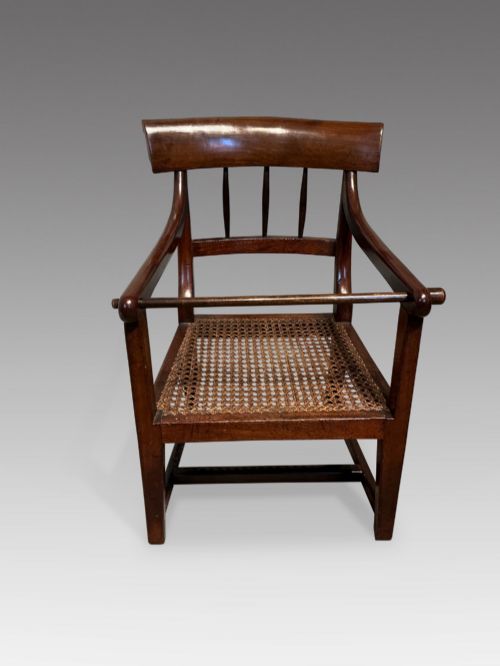
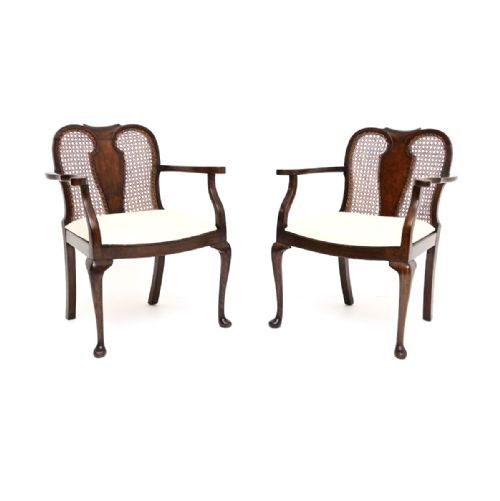
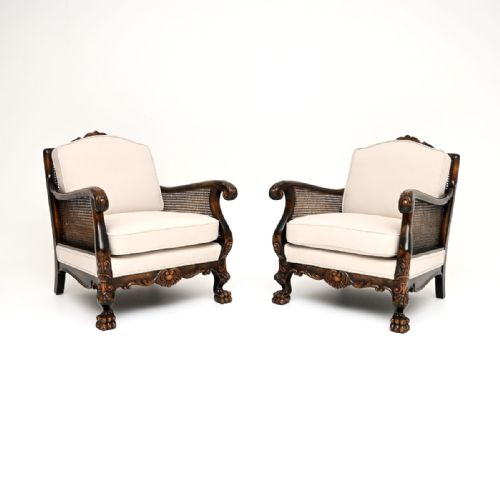
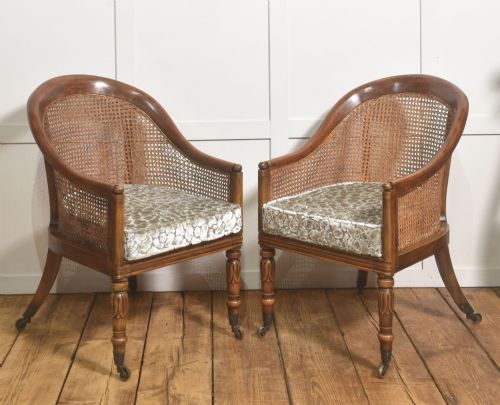
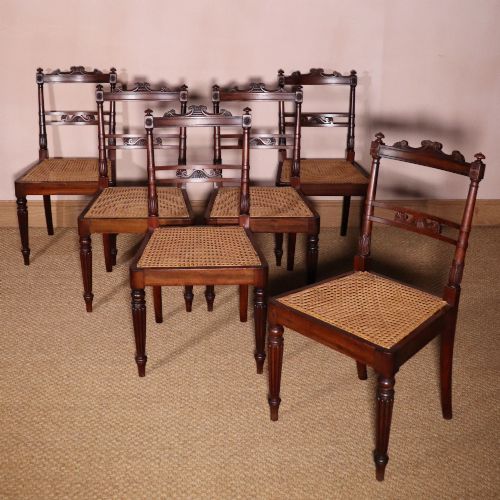
When you search for antique cane seated chairs, you encounter seating forms ranging from robust dining sets to deep-seated library armchairs. The selection here spans the eighteenth, nineteenth, and early twentieth centuries, drawing on Regency, Victorian, and Edwardian design traditions.
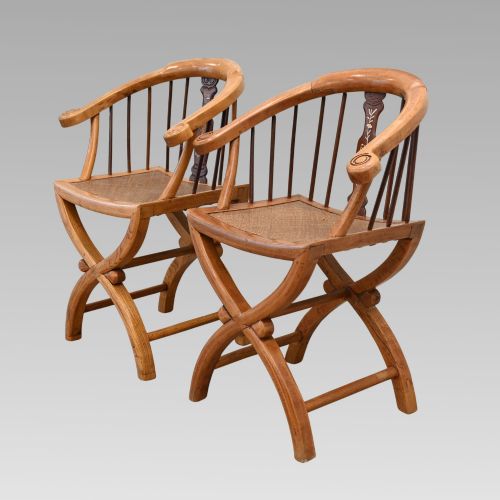
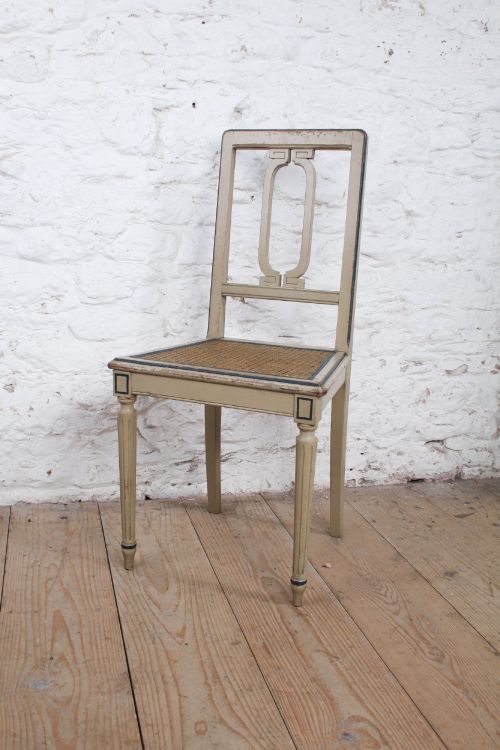
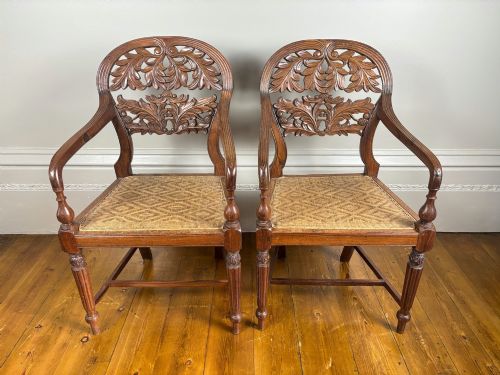
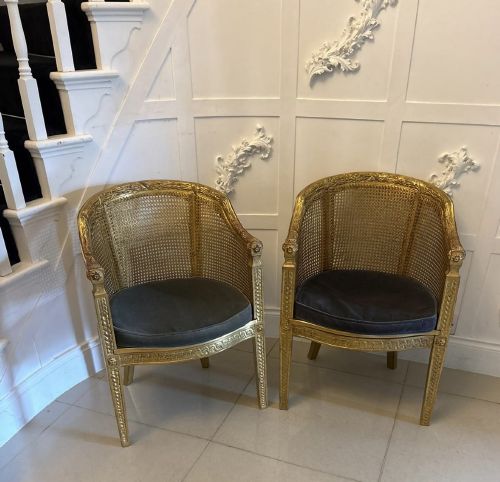
You will meet side chairs, carvers, and rocking chairs built in mahogany, walnut, oak, and painted wood. Many pieces adapt earlier styles, such as Hepplewhite shield-backs, Louis XV curves, and Jacobean turnings, alongside simpler country house and Anglo-Indian forms.
Materials and Construction
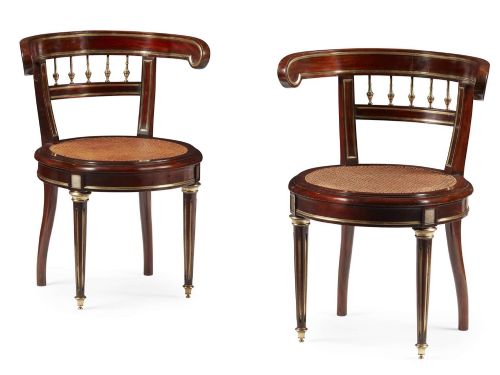
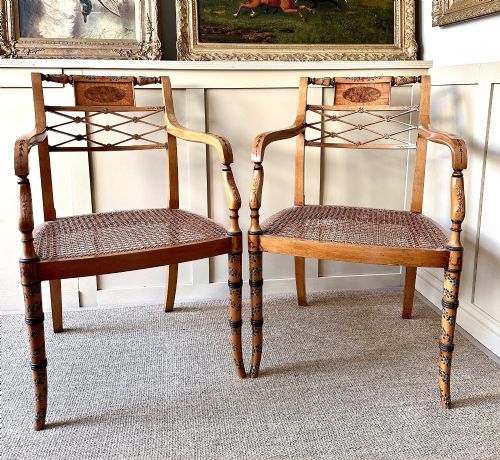
Makers built the structural frames using hardwoods such as mahogany, walnut, oak, satinwood, and padouk, often finished with paint, parcel gilt, or brass inlay. Joinery relied on traditional pegging and mortise-and-tenon methods to support the lighter woven seating areas.
The characteristic seats and panels utilise natural cane and rattan woven directly through drilled holes in the timber frame or pressed into channels. This technique created a resilient, breathable surface that required minimal cushioning, though many examples now accommodate loose pads.
Antique Cane Seated Chairs Retail Price Guide 2026
Typical asking prices for cane seated chairs among the pieces listed under this phrase on Sellingantiques today, from the lower quarter to the upper quarter. They describe what is for sale here now, not the wider market.
Bobbin-turned rocking chairs sit happily alongside formal Regency dining sets, proving our ancestors took their casual swaying very seriously indeed.
Judging Quality and Execution
Quality rests on the crispness of the timber carving, the integrity of the frame joinery, and the tightness of the cane weave. Finer examples retain their original painted decoration, gilt highlights, or distinctive secondary timbers like ebony and satinwood.
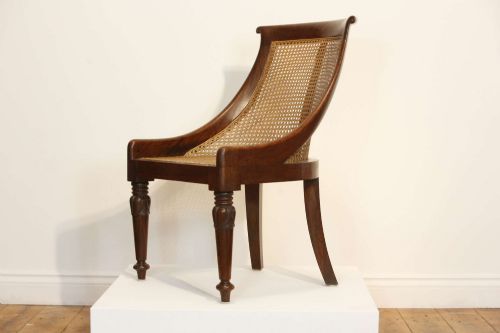
The balance between the weight of the wooden frame and the delicacy of the woven panel dictates the visual success of the piece. Superior specimens show careful proportioning in elements like sabre legs, lyre backs, and scrolled arms.
The Antique Cane Seated Chairs Glossary
- Cane
- A natural material woven from the outer bark of rattan palms, utilised for flexible and decorative chair seats and backs.
- Bergere
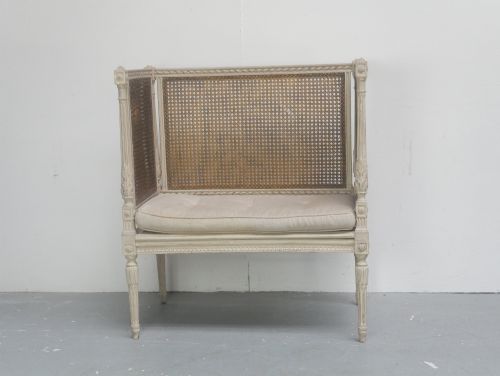
- A closed-arm upholstered or caned armchair originating in France during the eighteenth century, featuring a solid wooden frame.
- Carver
- An armchair designed to match a set of dining side chairs, traditionally placed at the head of the table.
- Sabre leg
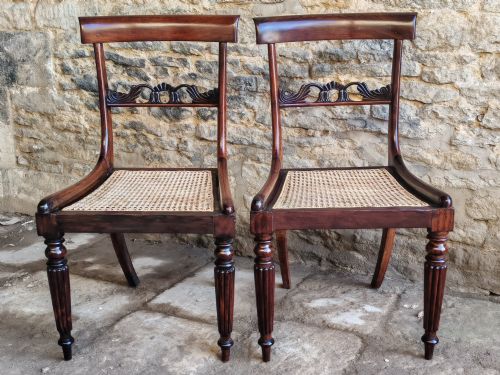
- A concave, outwardly curving furniture leg that tapers toward the foot, commonly seen on Regency designs.
- Corbeille
- A French term for a chair with a rounded, basket-like back that curves continuously into the arms.
Antique Cane Seated Chairs: Frequently Asked Questions
How do I care for antique cane seats?
Keep natural cane away from direct heat sources and excessive dryness to prevent the material from becoming brittle. Applying a damp sponge occasionally helps maintain the moisture and flexibility of the rattan.
Avoid placing heavy concentrated pressure on the centre of woven panels. Using supportive custom cushions on older chairs distributes weight evenly and protects the historic weave.
Are these chairs suitable for daily dining?
Many sturdy mahogany and oak models serve well for regular daily use, provided the frame joints remain solid and secure. Checking the structural stability underneath ensures the timber can handle everyday sitting.
Softer painted or gilded salon chairs are better suited for lighter use or display. Evaluating the underlying frame condition helps determine whether a set fits an active dining room.
What is the difference between side chairs and armchairs?
Side chairs are compact, armless seats designed to tuck neatly around a dining table or line a hallway wall. Their smaller scale makes them versatile for placement in bedrooms and tight corners.
Armchairs provide built-in side supports and wider proportions, offering a more enclosed seat for libraries or parlours. Sets often combined a majority of side chairs with a pair of matching armchairs for the heads of the table.
How can I tell a Regency chair from a Victorian one?
Regency pieces often display classical influences with clean lines, sabre legs, brass inlay, and painted or ebonised surfaces inspired by antiquity. Woods like mahogany and rosewood dominate this streamlined period.
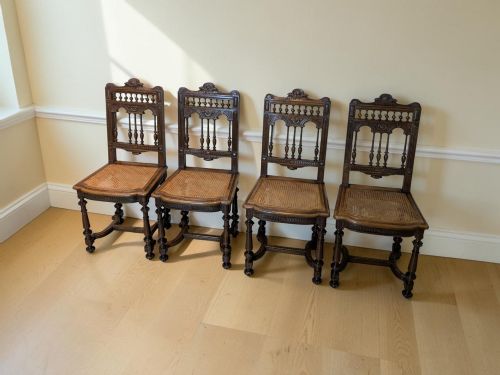
Victorian examples tend to feature heavier carving, darker walnut or oak timbers, and revival styles such as Jacobean turnings or mother-of-pearl inlay. The silhouettes become more robust and elaborate as the nineteenth century progresses.