



Antique Candelabra Garniture
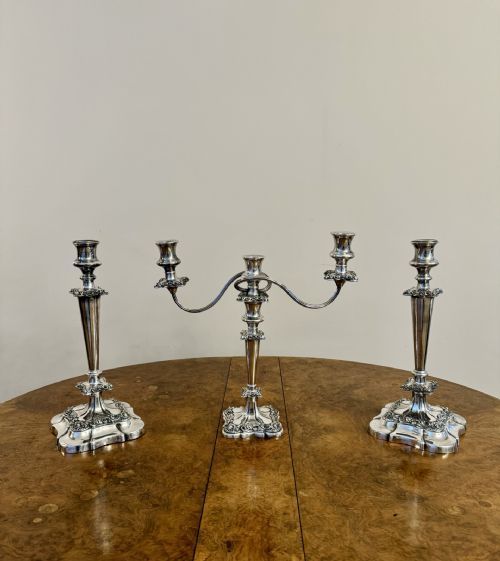
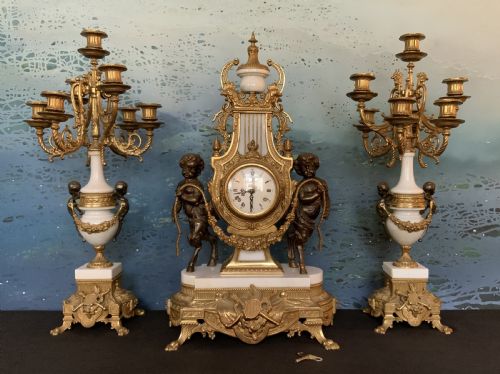
An antique candelabra garniture brings matched symmetry to a mantelpiece, combining a central clock with flanking lights.
Antique Candelabra Garniture
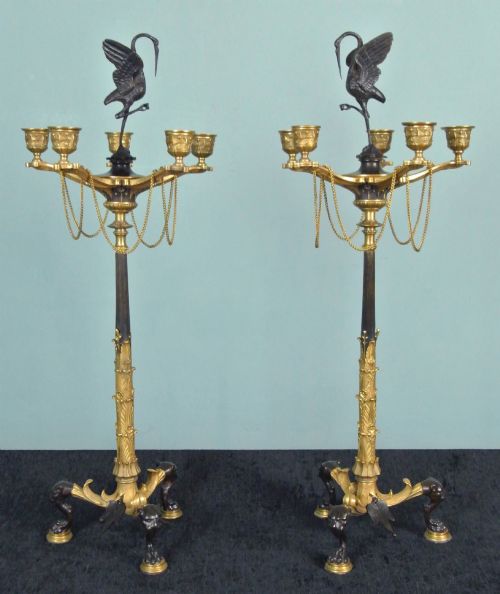
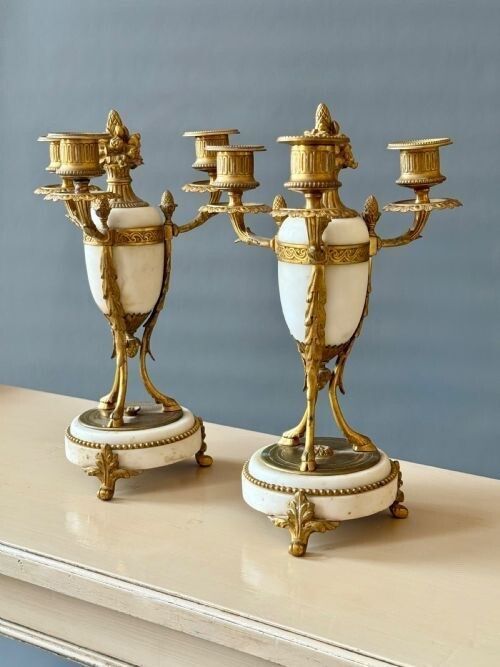
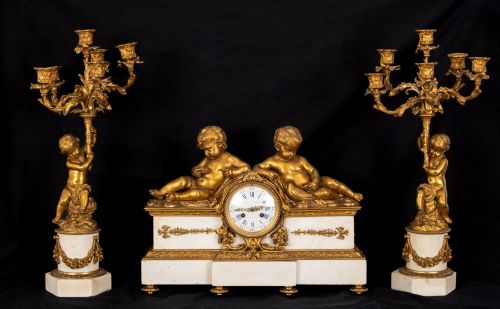
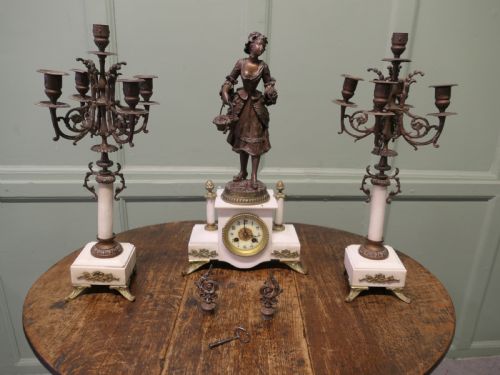
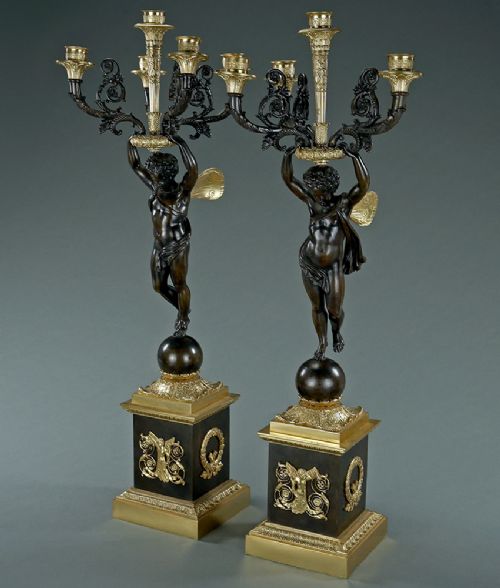
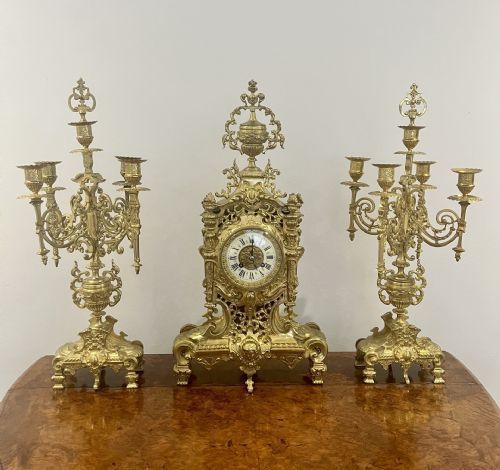
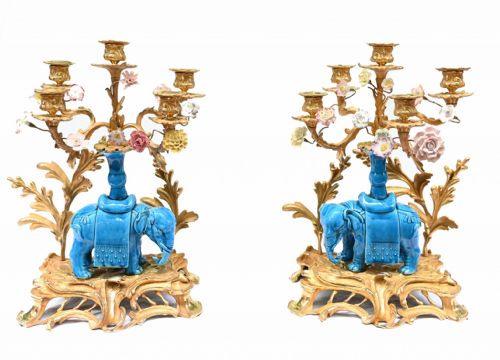
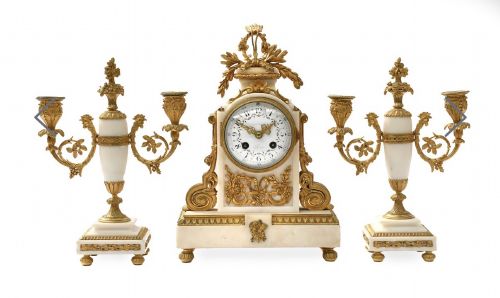
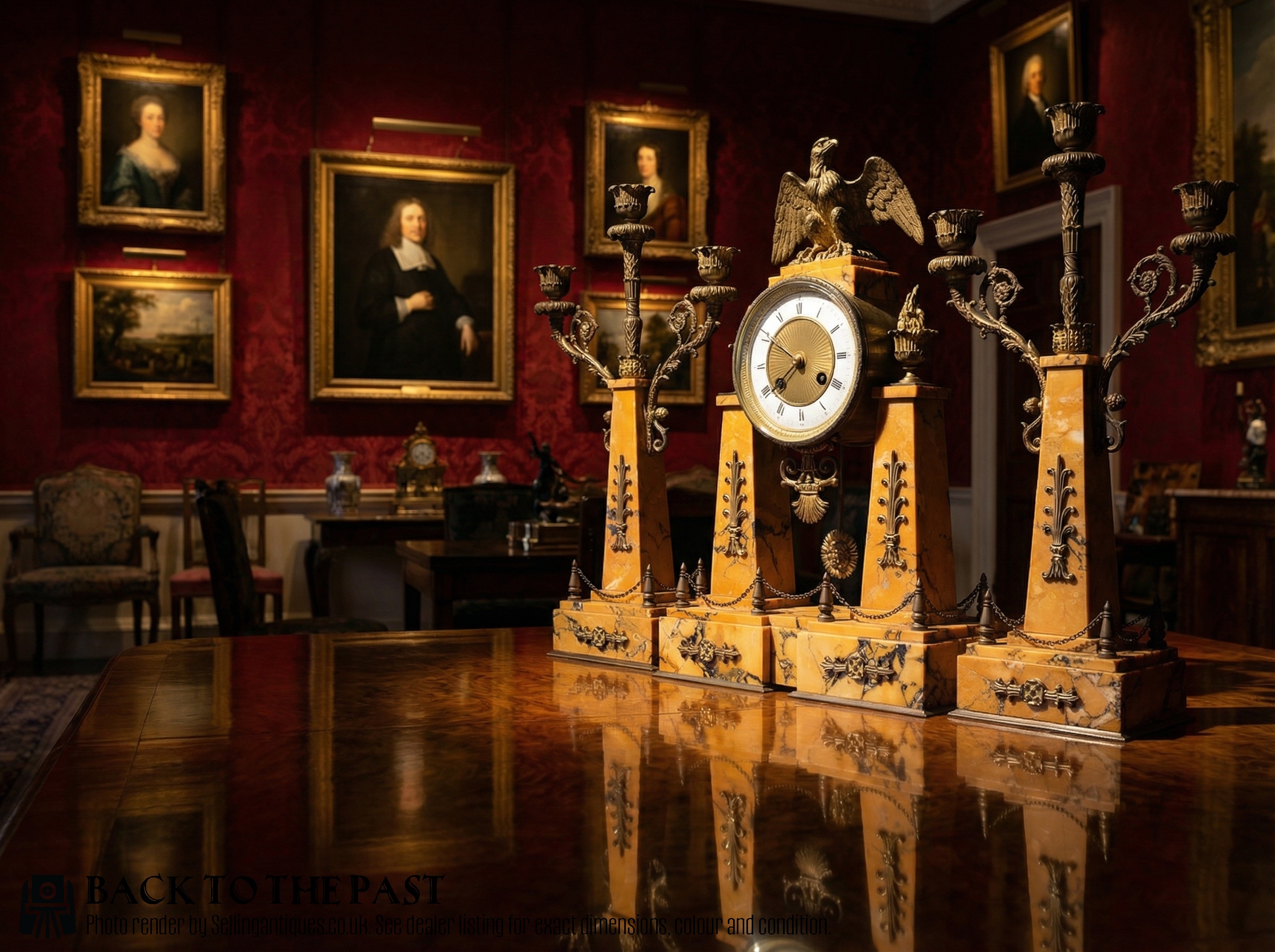
When searching for an antique candelabra garniture, buyers encounter matching mantel sets comprising a central clock flanked by pair candelabras or candlesticks designed to sit harmoniously together. Most pieces on this page originate from the nineteenth century, reflecting Victorian and continental tastes for decorative interior coordination.
The commonest forms combine a striking clock with matching multi-arm candleholders, often styled in French Rococo Revival or Louis XVI motifs. These decorative suites were intended to dominate the principal reception rooms of period homes, providing both timekeeping and symmetrical illumination.
Materials and construction
The fabrication of these garnitures relies heavily on cast gilt bronze, ormolu, and white or black marble, frequently combined with painted porcelain panels and enamel dials. Foundries utilised lost-wax and sand-casting methods to produce elaborate mounts, which were then chased by hand and fire-gilded.
Stonemasons shaped white marble, onyx, and slate into architectural bases and column bodies to support the heavy metalwork. Porcelain elements, including Sevres-style urns and hand-painted plaques, were fired separately before being mounted into the bronze frameworks.
The inventory includes numerous clock garnitures accompanied by matching candelabras featuring two to ten light arms.
What separates the finest pieces
Quality rests upon the crispness of the bronze chasing and the depth of the fire-gilding, where sharp detail in cherub faces and acanthus foliage distinguishes superior casting. The weight and selection of the marble base also indicate tier, with dense, unblemished stone preferred over lesser mottled varieties.
Clock movements signed by prominent makers and paired with matching numbered components demonstrate greater workshop care. The harmony of the ensemble, where the clock and flanking candelabras share identical patination and mount designs, dictates the overall integrity of the set.
Barbedienne·Henry Dasson·H Luppens Paris·Meissen
The Antique Candelabra Garniture Glossary
- Garniture
- A set of ornamental objects designed to match and display together on a mantelpiece, typically comprising a clock and a pair of vases or candelabras.
- Ormolu
- Gilded bronze produced by applying a mercury and gold amalgam to cast metal and heating it to drive off the mercury.
- Bleu de Roi
- A deep rich cobalt blue ceramic glaze used prominently on decorative porcelain panels and clock bodies.
- Chasing
- The artful finishing of cast metal surfaces using small punches and hammers to sharpen details and add texture.
- Louis XVI Revival
- A nineteenth-century decorative style drawing on eighteenth-century French neoclassical symmetry, straight lines, and classical motifs.
Antique Candelabra Garniture: Frequently Asked Questions
Where were these clock sets displayed?
These decorative suites were principally placed in nineteenth-century drawing rooms, salons, and formal dining spaces.
Their substantial presence made them focal points for interior decoration, reflecting the social standing of the household.
How do I identify French revival styles?
French Revival pieces often incorporate specific historical motifs, such as the asymmetrical scrolls of Rococo or the geometric urns and swags of Louis XVI design.
Examining the casting style and mount details helps determine whether the set follows an Empire, Rococo, or neoclassical pattern.
How do I care for marble and ormolu?
Gilt metal surfaces require gentle dusting with a soft dry cloth to protect the delicate gold finish from abrasion or chemical damage.
Marble bases should be kept away from excessive moisture and acidic cleaners to preserve the natural polish of the stone.