

Antique Button Back Frame
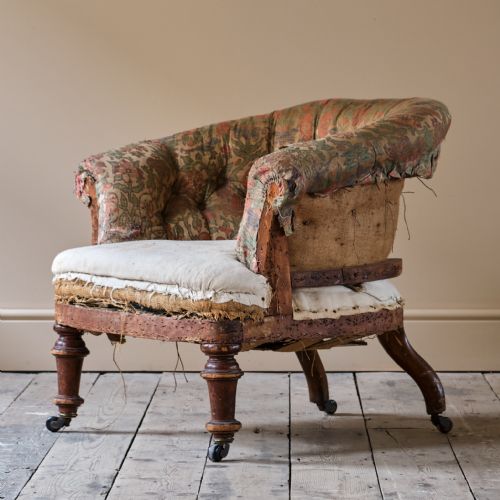
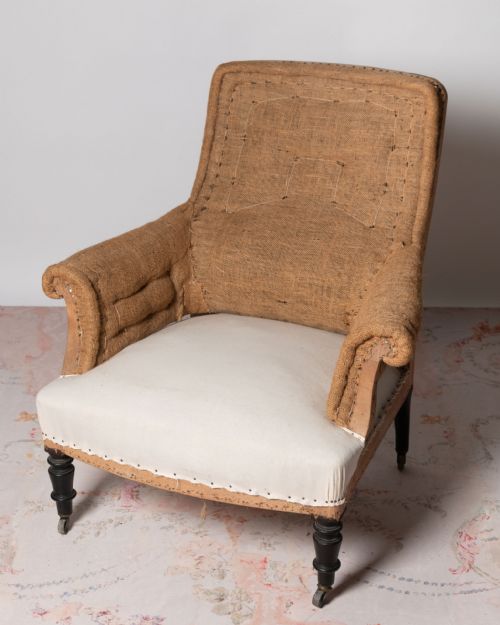
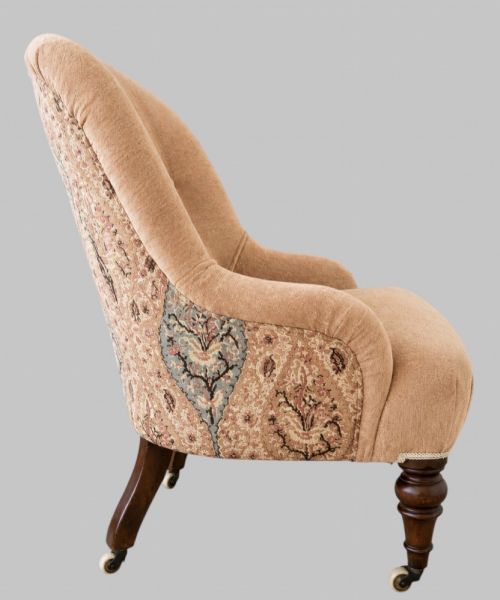
An antique button back frame provides the structural foundation for deeply tufted seating that defines nineteenth-century domestic comfort.
Antique Button Back Frame
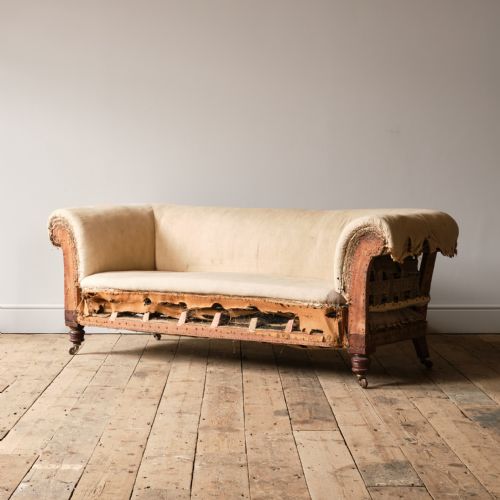
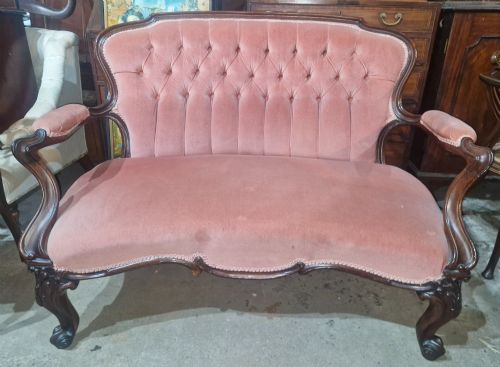
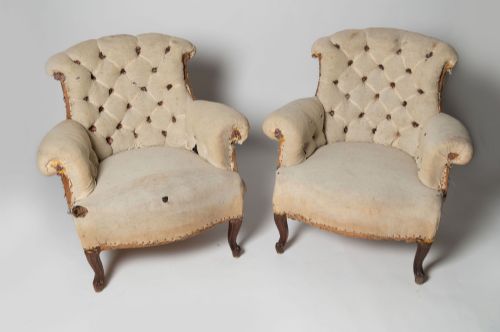
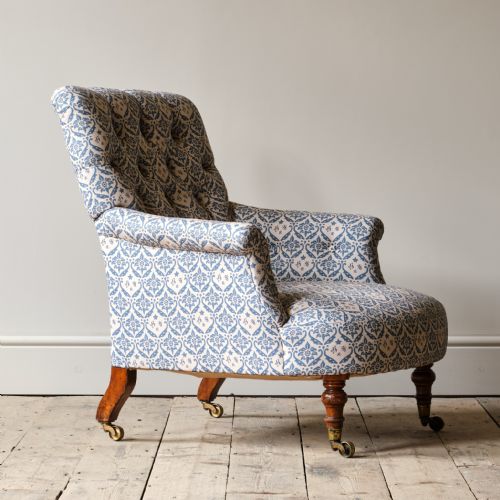
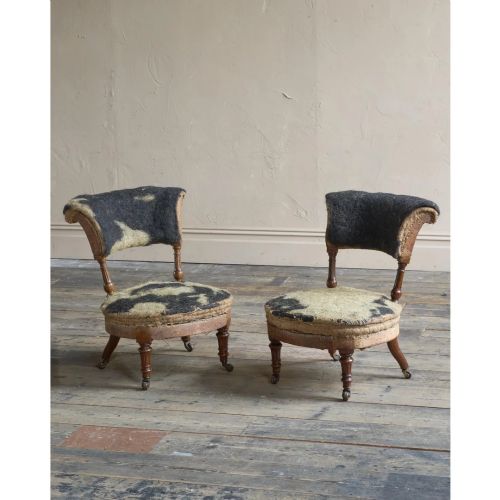
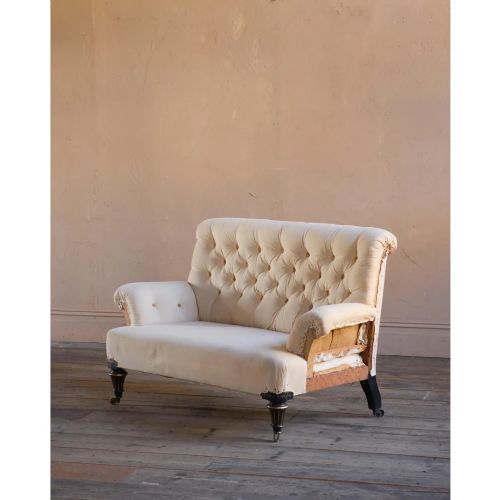
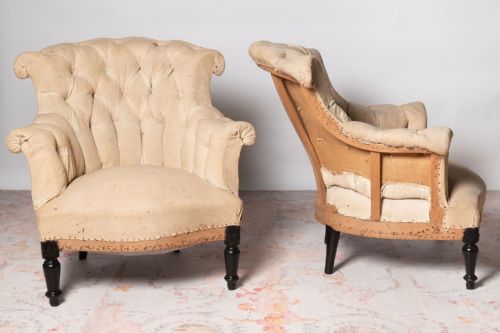
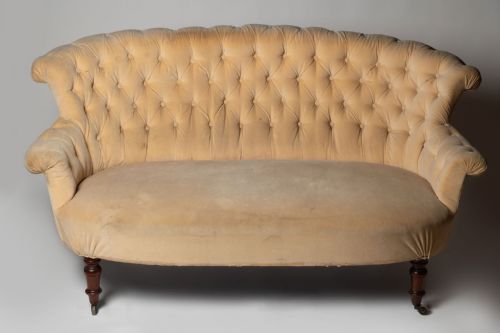
An antique button back frame encompasses a diverse range of nineteenth-century seating, including armchairs, nursing chairs, club elbow chairs, and large Chesterfields. Victorian examples dominate the selection, frequently joined by French Napoleon III pieces and occasional Regency revival forms.
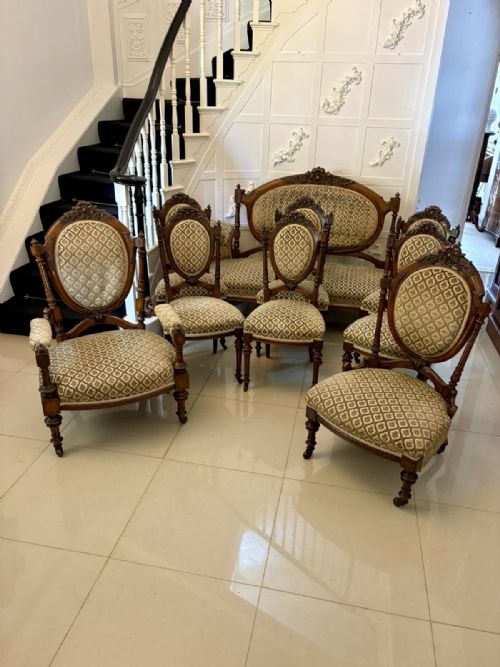
The underlying timber structure often supports deep upholstery designed for formal drawing rooms, libraries, and bedroom suites. Buyers most commonly encounter walnut, mahogany, oak, and rosewood frames shaped to receive intricate buttoned springing.
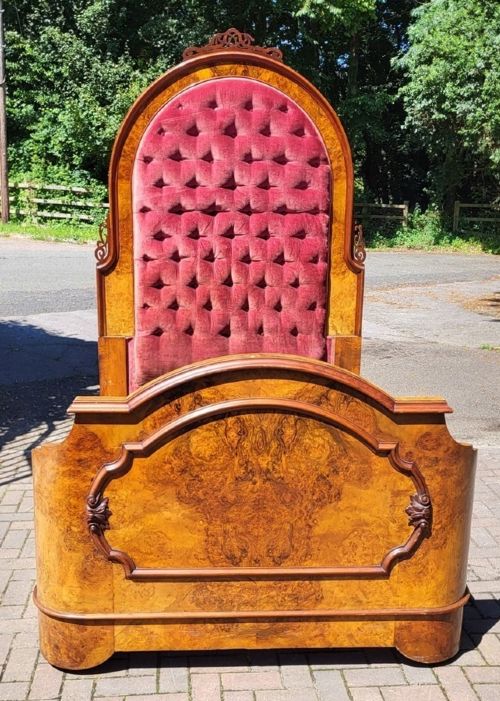
Beyond standard armchairs, the inventory includes chaise longues, day beds, window seats, and double-sized bedstead frames. These variations highlight how nineteenth-century makers applied deep buttoning across both seating and sleeping furniture.
Construction and timber techniques
Makers relied on durable hardwoods such as walnut, mahogany, and oak to construct the foundational carcass, often incorporating carved rosewood or giltwood for decorative display. Iron frames also appear in nineteenth-century designs, providing robust internal support for heavy spring-loaded upholstery.
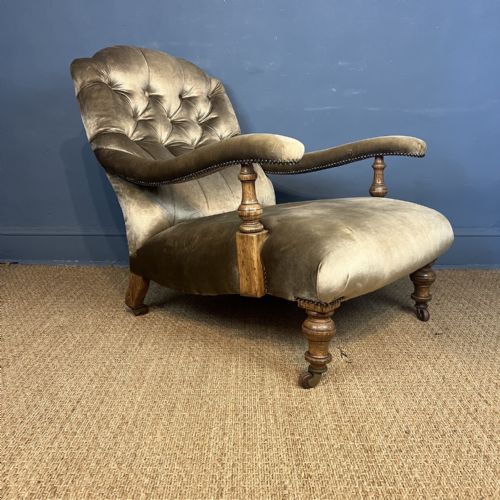
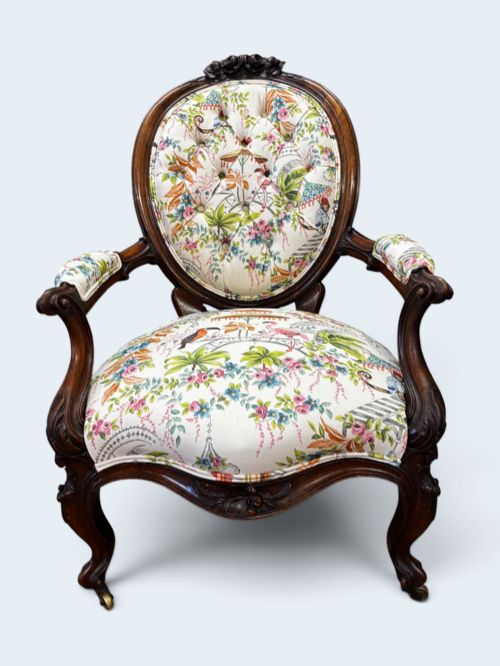
The characteristic tufted finish depends on securing fabric over a webbed and sprung interior with deep ties, pulling the material into regular geometric folds. Frames frequently feature exposed woodwork with barley twist turnings or elaborate carved rococo details framing the upholstered core.
Listings feature nineteenth-century periods including Victorian and Napoleon III eras, constructed from walnut, mahogany, oak, and iron.
Craftsmanship and structural integrity
Quality rests primarily in the rigidity of the timber chassis and the depth of the carving executed by the maker. Finer pieces display crisp botanical or scroll carvings on walnut and rosewood, whereas simpler versions utilise plain oak or mahogany.
The sophistication of the joinery and the resilience of the iron or wooden internal bracing dictate the longevity of the piece. Superior examples maintain tight joints and balanced proportions that support the dense tension required for buttoned upholstery.
Howard and Sons·Jackson and Graham·Gillows of Lancaster
The Antique Button Back Frame Glossary
- Button back
- A method of upholstery where twine pulls the fabric deep into the padding, secured by covered buttons in a diamond pattern. This technique creates a structured, textured surface across the backrest.
- Chaise longue
- An upholstered long chair designed for reclining, featuring a headrest at one end and a partial back. Nineteenth-century examples often incorporate carved rosewood or walnut frames.
- Barley twist
- A cylindrical furniture leg or stretcher carved in a spiral resembling a twisted rope. This decorative turning appears frequently on nineteenth-century chair frames.
- Iron-back
- A seating construction utilising an internal iron frame to provide structural rigidity behind the upholstered padding. This method ensured durability in heavy commercial or domestic armchairs.
- Rococo Revival
- A nineteenth-century design style emulating eighteenth-century French curves, featuring asymmetrical floral carvings and scrolls. This aesthetic is common on Victorian walnut and rosewood chair frames.
Antique Button Back Frame: Frequently Asked Questions
What is an antique button back frame?
An antique button back frame is the wooden or iron structural skeleton of a nineteenth-century chair or sofa built to hold deep tufted upholstery. These pieces form the solid core beneath the springs and fabric.
Most examples date from the Victorian era or the French Napoleon III period. They range from small nursing chairs to large Chesterfield sofas and double bed frames.
How do I identify a Victorian button back chair?
Victorian button back chairs typically feature dense hardwoods like walnut, mahogany, or rosewood, often paired with elaborate hand-carved details. Look for turned barley twist legs and exposed wooden frames surrounding the padded sections.
Many of these chairs utilise iron internal framing to support the heavy tension of the buttoned upholstery. Their proportions and joinery reflect nineteenth-century cabinet-making standards.
Can I reupholster an antique button back frame?
Reupholstering an antique button back frame is standard practice for pieces requiring restoration. Many frames are sold specifically to be recovered in new velvet, leather, or fabric.
Because the internal webbing and springs often wear out over time, stripping the frame back allows a restorer to rebuild the support structure. Selecting appropriate fabrics like traditional wool or heavy cotton ensures the finished piece suits the period.
Where were button back chairs used historically?
Button back seating was a staple of nineteenth-century domestic interiors, primarily placed in formal drawing rooms, libraries, and private bedrooms. Library armchairs and club elbow chairs provided comfortable seating for reading and relaxation.
Larger items like chaise longues and conversation seats furnished grand reception rooms. Smaller nursing chairs were specifically designed for low seating by the fireside or nursery.