
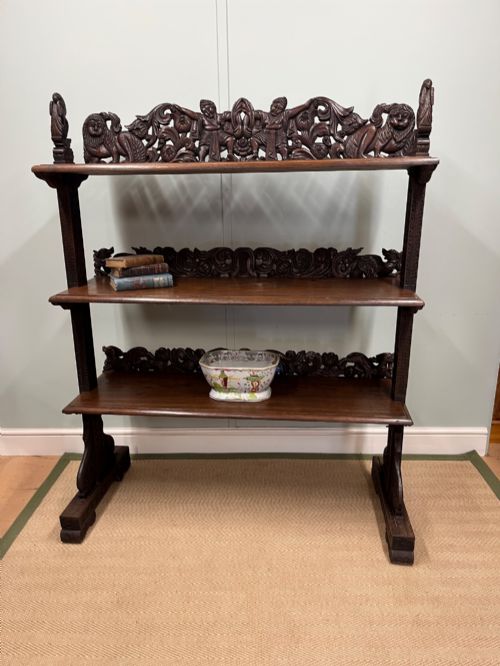
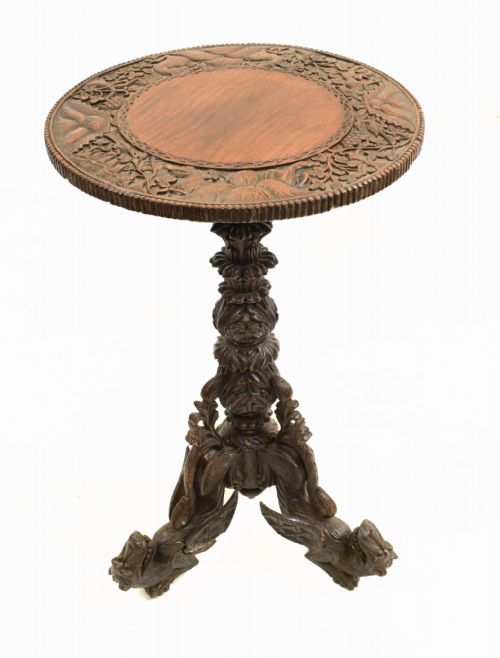


Antique Burmese Teak Table
These heavy, carved items of furniture are what you meet when you search for antique burmese teak table, bringing dense tropical timber and intricate regional carving into a room.
Antique Burmese Teak Table
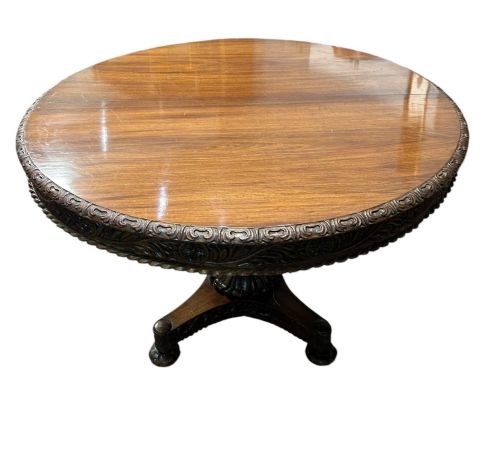
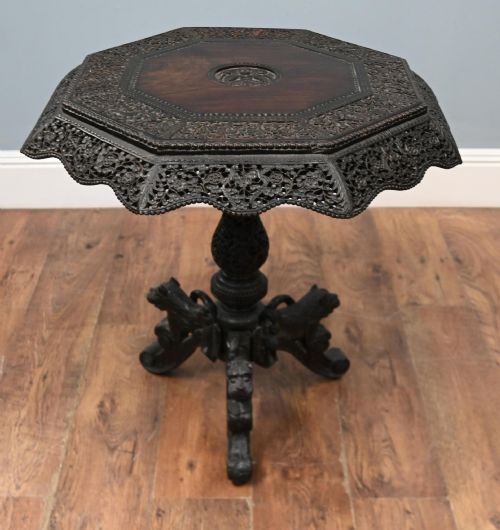
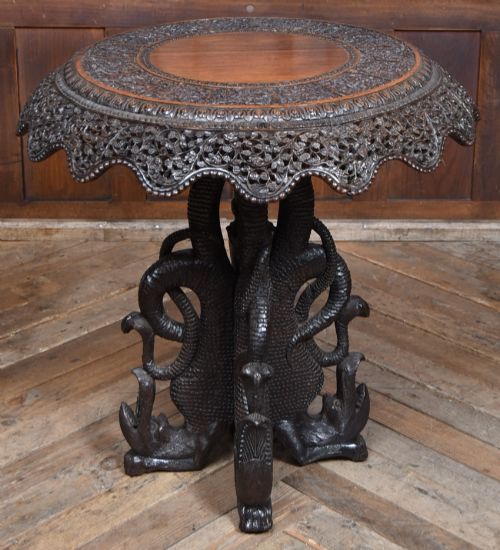
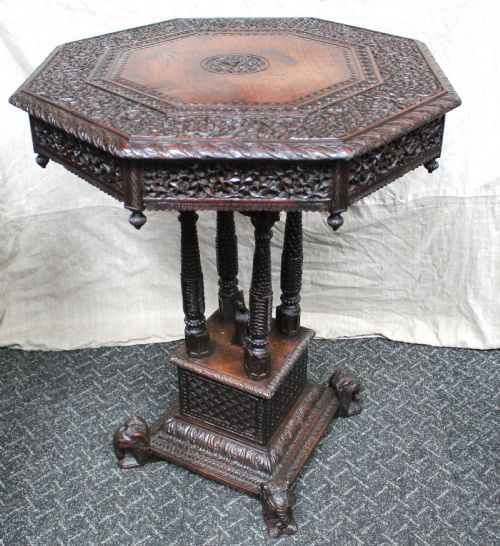
When you search for antique burmese teak table, you look at solid timber furniture originating from Myanmar during the nineteenth century, including Victorian periods. The selection on this page centres on occasional tables, side tables, and tilt-top tables, alongside related forms such as buffets, console tables, and book stands.
The regional styles span Anglo-Burmese, Burmese vernacular, and colonial designs. Many examples show dense hand carving, while others present painted village surfaces or functional folding frames.
How they were made
Maker workshops utilised dense teak and related hardwoods, shaping the heavy timber with hand tools. Certain pieces incorporate carved bone, bronze elements, or cord fastenings to complete the construction.
Surface treatments vary from polished natural teak to applied paint on village pieces. Carving ranges from shallow incisions to deep, sculptural relief work across tops and legs.
The listings span the nineteenth century, featuring teak, hardwood, paint, bone, bronze, and cord across side, occasional, tilt-top, and console forms.
What varies in quality
The depth and clarity of the hand carving separate simpler items from more ambitious work. Crisp undercutting in the foliage and figures shows greater skill than soft, hurried incision.
Proportion and structural integrity matter significantly in these heavy pieces. Tables with well-balanced tiers, solid joinery, and intact figurative supports hold their form better over decades of use.
The Antique Burmese Teak Table Glossary
- Teak
- A dense tropical hardwood known for its oily resilience and deep grain. It resists moisture and provides a heavy, durable foundation for intricate carving.
- Tilt top table
- A table with a hinged surface that tips vertically when not in use. This mechanism allowed tables to be stored against walls in smaller spaces.
- Tiered table
- Furniture built with multiple stacked surfaces, such as two or three levels connected by turned or carved supports. These provide extra display space without expanding the floor footprint.
- Anglo-Burmese
- A style combining traditional Southeast Asian carving motifs with British furniture forms popular during the colonial era. These pieces met the tastes of expatriates and home markets alike.
- Console table
- A wall-mounted or freestanding table designed to stand against a flat surface. They often feature decorative legs and carved aprons.
Antique Burmese Teak Table: Frequently Asked Questions
How do I use a Burmese table at home?
These tables function well as occasional surfaces beside seating or as display stands for lamps and objects. Their rich wood tones pair effectively with both traditional and modern interiors.
Smaller side tables and tilt-top versions move easily between rooms as needed. Console tables and tiered buffets anchor hallways or living spaces while offering practical surface area.
What periods do these pieces come from?
The listings consist primarily of nineteenth-century items, spanning decades from the eighteen-forties through the Victorian era. Many pieces date from the eighteen-seventies, eighties, and nineties.
Dates rely on recorded stylistic markers and period attribution. Colonial expansion during the nineteenth century drove the creation and export of these carved teak objects.
How do I tell different styles apart?
Burmese vernacular and village pieces often show simpler painted finishes and rustic construction. Anglo-Burmese and colonial items tend to blend local motifs with familiar British table forms.
Look at the leg design and edge profiling for clues. Elephant leg supports and deep figural carving indicate specific regional workshops rather than standard British production.
Are these tables solid teak?
Most pieces utilise heavy teak and allied hardwoods for their main structural components. Some items incorporate auxiliary materials like bone or bronze for decorative effect.
The weight of the timber is a reliable indicator of solid construction. Dense grain patterns run throughout the primary surfaces and carved elements.