
Antique Buffet with Mirror
An antique buffet with mirror combines substantial timber storage with polished glass, offering a focal point for dining rooms and hallways alike.

Antique Buffet with Mirror
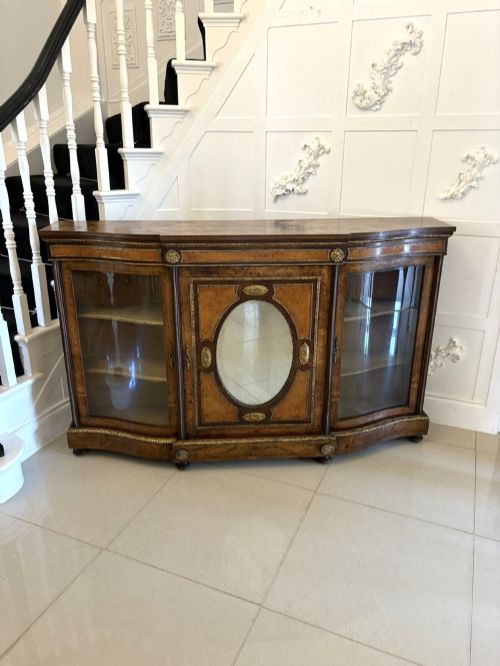
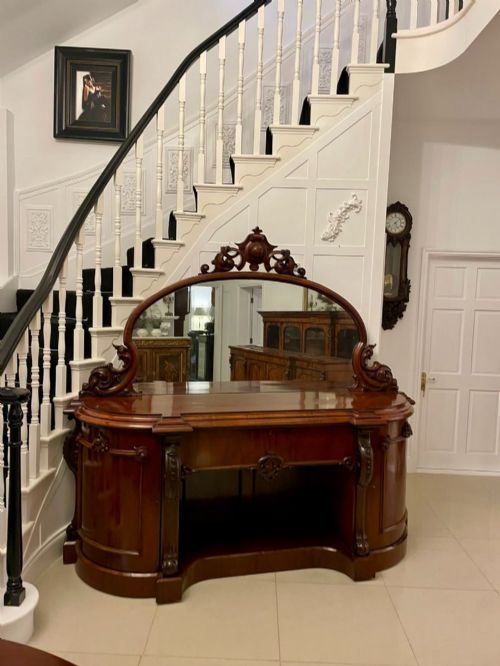
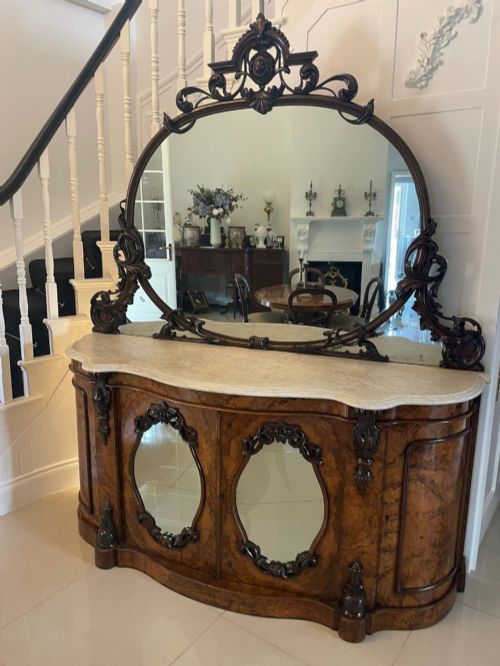
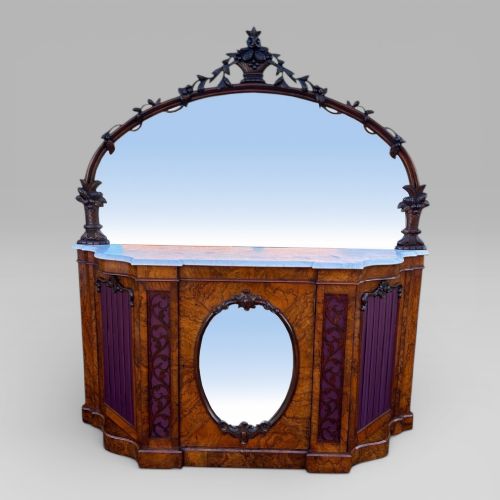
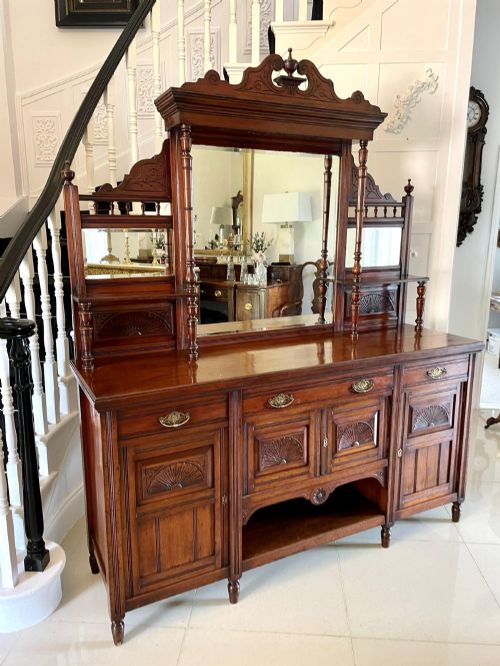
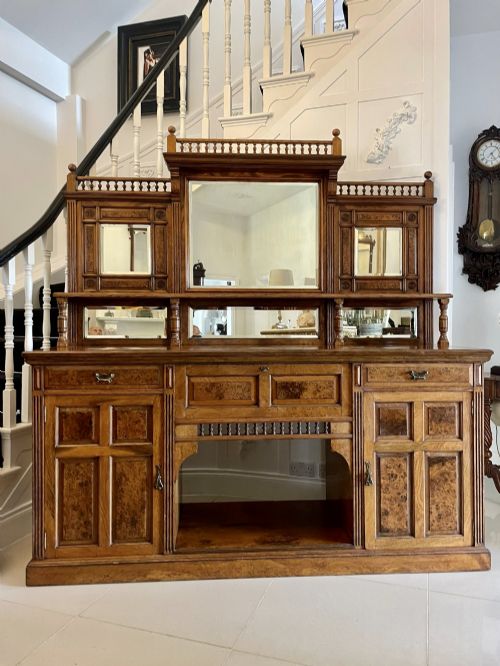
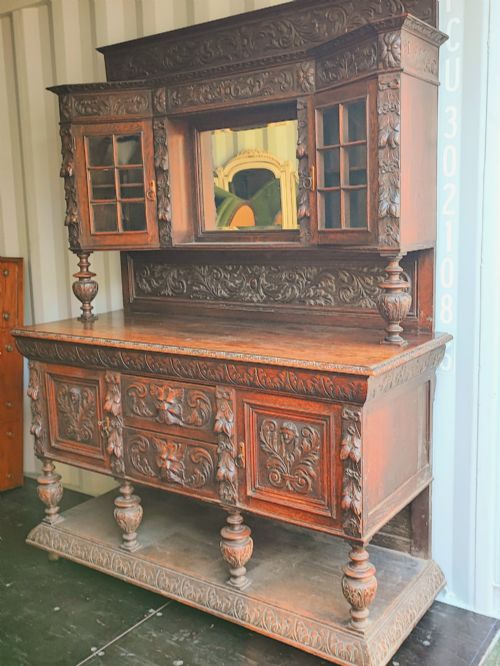
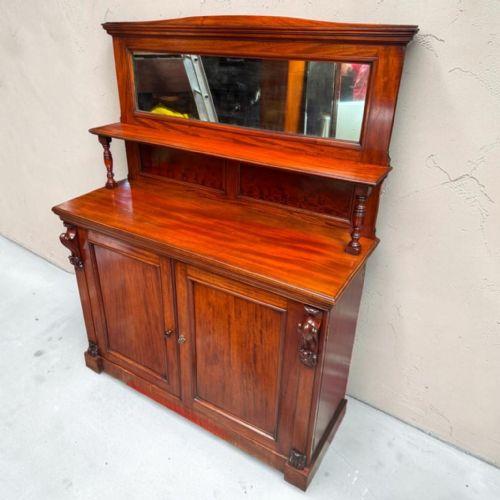
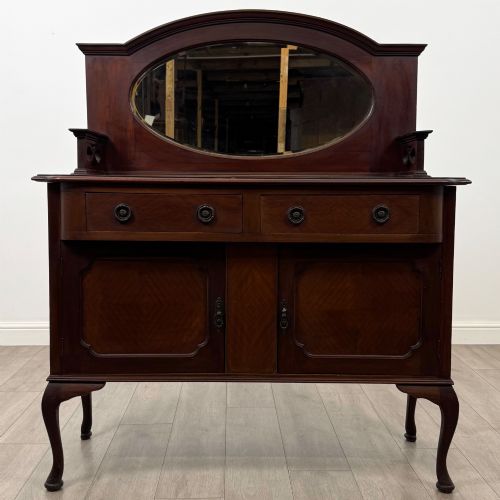
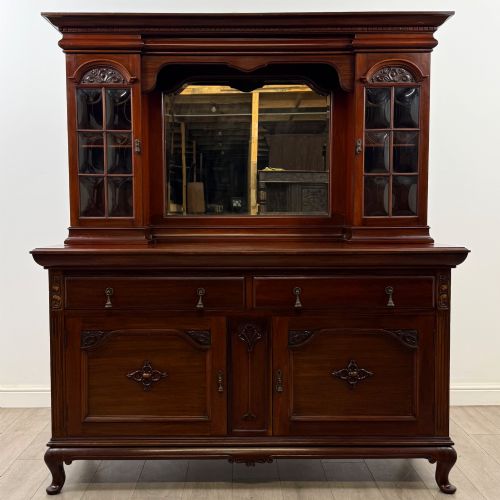
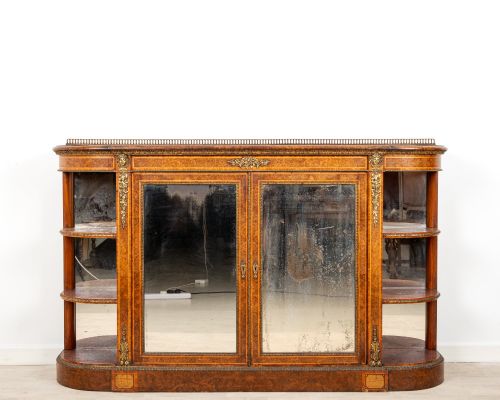
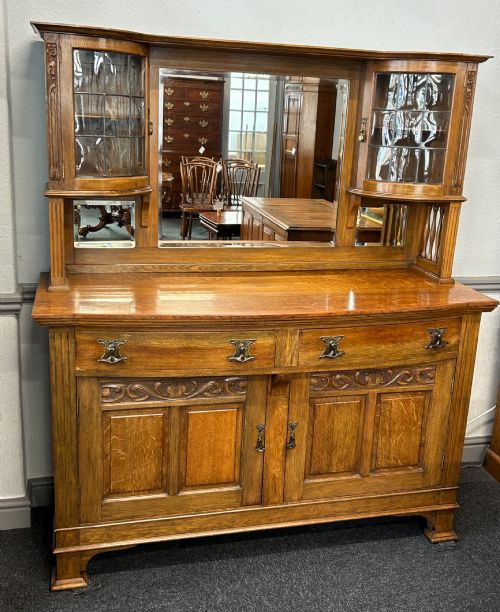
The antique buffet with mirror category encompasses large dining room pieces designed primarily for service and display, frequently catalogued as sideboards, credenzas, and chiffoniers. These furnishings bridge utilitarian storage with decorative architectural presence, often featuring an upright mirror section attached above a heavy timber base. Buyers seeking this form will find examples originating predominantly from the Victorian and Edwardian eras, spanning the mid-nineteenth century through to the early twentieth century.
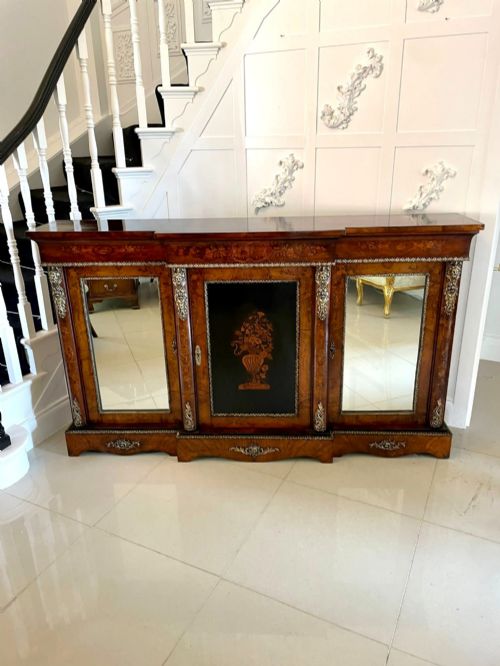
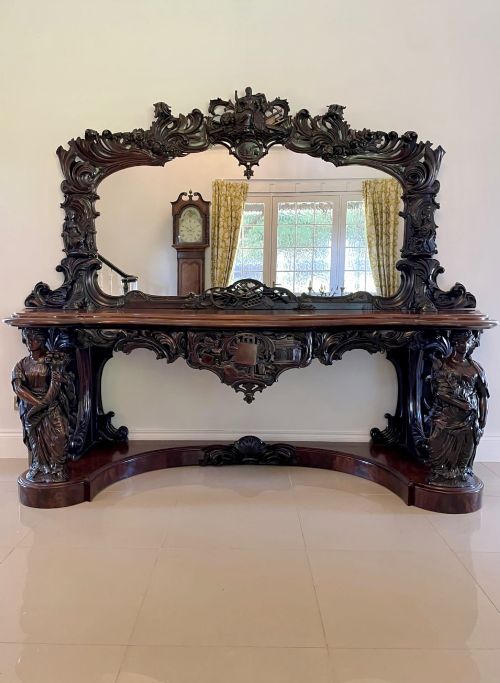
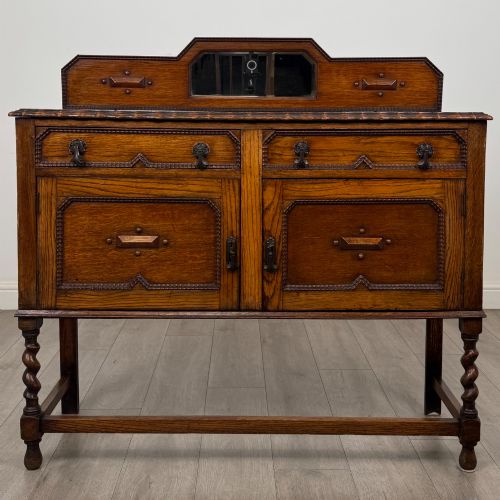
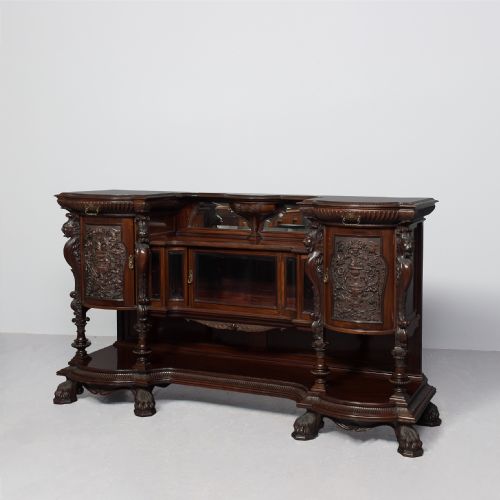
Victorian variations tend towards burr walnut and carved mahogany, incorporating ornate mirror-backed superstructures and marble tops designed to reflect light and display silver. Edwardian and later pieces shift towards lighter oak constructions, often embracing the simpler linear forms associated with the Arts and Crafts movement. Across these periods, the combination of timber cabinetry and integrated mirror glass provides both practical utility and a sense of expanded interior space.
Materials and construction methods
Cabinetmakers utilised dense hardwoods such as oak, mahogany, and burr walnut for the primary structure, applying detailed hand-carved ornamentation to panels, cornices, and mirror frames. Burr walnut veneer was frequently selected for its intricate figuring, contrasted against darker mouldings or highlights.
Integrated mirror glass was secured into upright wooden superstructures, sometimes flanked by small display cupboards, shelves, or brass hardware. Secondary timbers such as pine appear internally for drawer linings and carcases, whilst specific pieces incorporate inset marble tops and ormolu mounts.
Certain Victorian cabinets secreted small side cupboards behind their mirror frames for storing private cellar keys.
Markers of distinction and build
Superior examples separate themselves through the quality of the timber selection, particularly the choice and matching of burr walnut or figured oak veneers across large surface areas. Carved details executed with crisp depth and proportion rather than shallow mechanical shaping distinguish finer workshops from standard production.
The integration of the mirror superstructure into the lower cabinet, along with the retention of original brass or ormolu mounts and leaded glass elements, dictates the overall integrity of the piece. Heavier architectural mouldings and sound structural joinery ensure these substantial items maintain their stability over generations of use.
The Antique Buffet with Mirror Glossary
- Credenza
- A dining room cabinet or sideboard, often standing lower to the ground and featuring mirrored doors or decorative mounts. This form developed significantly during the Victorian period.
- Chiffonier
- A compact sideboard or cabinet equipped with a raised shelf or mirror back. These pieces were traditionally utilised for holding plates and glassware.
- Burr walnut
- A highly figured timber veneer harvested from the wart-like growths on walnut trees. It creates intricate, swirling patterns across cabinet doors and drawer fronts.
- Ormolu
- Gilt bronze mounts applied for decorative effect on nineteenth-century furniture. It provides metallic contrast against dark timbers.
- Breakfront
- A piece of furniture where the central section projects forward from the flanking outer sections. This architectural arrangement adds depth to large sideboards.
Antique Buffet with Mirror: Frequently Asked Questions
What is an antique buffet with mirror?
An antique buffet with mirror is a large timber storage piece designed for dining rooms, featuring an integrated glass mirror above a sideboard base.
These furnishings served as practical serveries for food and drink whilst simultaneously displaying decorative ceramics and silver.
How do I date an antique mirror back sideboard?
Dating relies on identifying the prevailing style, timber choices, and construction methods characteristic of periods such as Victorian or Edwardian.
Heavily carved burr walnut and mahogany pieces typically point to the mid-to-late nineteenth century, whereas lighter oak Arts and Crafts designs generally indicate the early twentieth century.
Where should I place a mirror back sideboard?
These pieces function best against a substantial dining room or hallway wall where their height and weight can be properly accommodated.
Positioning them opposite a window allows the integrated mirror to reflect natural light and brighten the surrounding interior space.
How do I clean burr walnut furniture?
Burr walnut surfaces require gentle dusting with a soft, dry cloth to prevent the accumulation of grit within the figured grain.
Avoid abrasive chemical polishes and excess moisture, applying a traditional beeswax sparingly to maintain the natural lustre of the timber.