


Antique Bronze Urn Bowl
These antique bronze urn bowl pieces combine classical form with heavy cast metal, giving any room a grounded, historical focal point.
Antique Bronze Urn Bowl
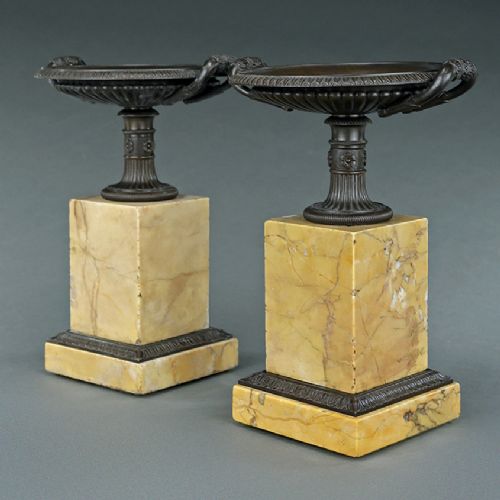
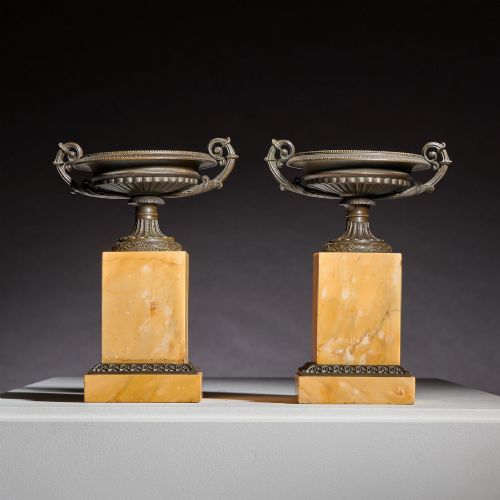
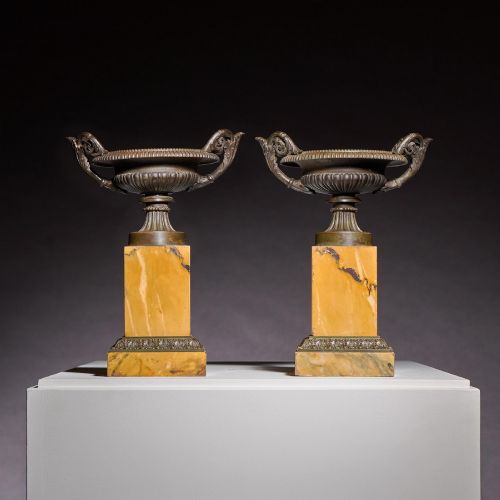
When you search for an antique bronze urn bowl, you are looking at heavy metal vessels designed for display, often taking the form of classical tazzas, jardinieres, and centrepiece bowls. These objects draw heavily on European Grand Tour traditions and Asian ritual forms, reflecting a deep Victorian and nineteenth-century interest in antiquity.
You will most frequently meet French and Italian Grand Tour pieces alongside large Chinese and Japanese bronze vessels. The European pieces commonly combine cast bronze with contrasting materials like Siena marble and ormolu, while the Asian pieces lean towards ritualistic designs, cloisonné enamel, and archaic forms.
The utility of these pieces has shifted entirely from their original decorative or ritual purposes to pure display. They sit on tables, sideboards, and pedestals as ornamental centerpieces, holding little more than their own weight and the intricate detail of their casting.
Materials and methods of construction
The foundational material in these pieces is cast bronze, frequently paired with contrasting natural stones such as Siena marble, rouge griotte marble, and green onyx. Founders used traditional sand-casting or lost-wax methods to achieve crisp detail, then chased the surfaces by hand to sharpen foliage, figures, and geometric borders.
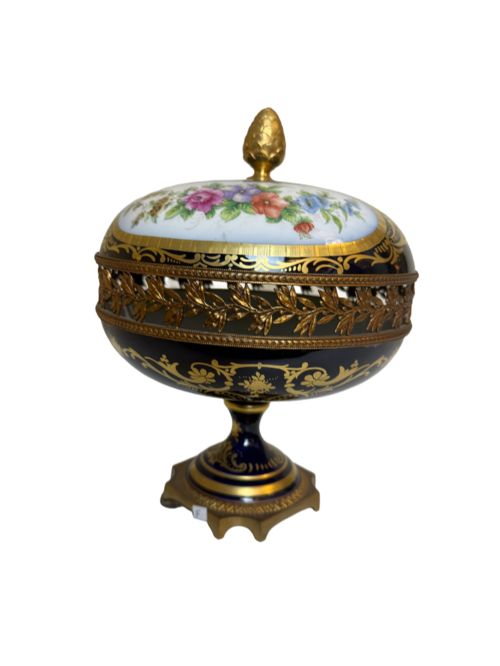
Surface treatments define the visual weight of these objects, ranging from fire-gilt ormolu and silvered finishes to intricate champlevé and cloisonné enamel work. Where porcelain enters the construction, as in Limoges or Sèvres-style sections, it is mounted securely within metal frameworks or fitted with cast bronze mounts.
Some nineteenth-century French artisans cast bronze roses so delicately that observers instinctively lean in to check for a floral scent.
Separating standard production from masterwork
The distinction between ordinary and exceptional pieces lies in the crispness of the chasing and the weight of the metal. Superior examples display deep, deliberate hand-chiselling on the bronze rather than soft, mass-produced contours that lose definition in repetitive patterns.
Material selection and assembly also dictate the tier of a piece. Finer vessels use dense, unblemished marble bases that fit the bronze mounts tightly without visible gaps or poor alignment, whereas lesser items rely on simpler patination and straightforward, unadorned metal casting.
The Antique Bronze Urn Bowl Glossary
- Tazza
- A shallow bowl or cup mounted on a stem and foot, frequently utilised as a decorative centrepiece on nineteenth-century tables. They often take inspiration from classical Greek and Roman pottery shapes.
- Grand Tour
- The cultural journey undertaken by wealthy young Europeans through France and Italy to study classical antiquities, prompting the production of souvenir bronzes and marble mounts. These items were brought home to furnish domestic libraries and drawing rooms.
- Ormolu
- Gilt bronze produced by applying a finely ground high-carat gold-mercury amalgam to a bronze object, then heating it to drive off the mercury. This technique creates a durable, golden surface finish typical of French decorative arts.
- Cloisonné
- An ancient metalworking technique where enamel paste is applied within compartments created by soldering flat metal wires to a metal base. The piece is then fired and polished to a smooth finish.
- Jardiniere
- A large ornamental pot or bowl designed to hold plants or floral arrangements, often executed in heavy bronze or porcelain with metal mounts. They anchor large sideboards or architectural mantels.
Antique Bronze Urn Bowl: Frequently Asked Questions
How were antique bronze urn bowls used?
These vessels served primarily as ornamental centrepieces for dining tables, drawing rooms, and libraries during the nineteenth century. They demonstrated the owner's classical education and taste for antiquities.
Some variations functioned as jardinieres for plants, while others commemorated travels across Europe through souvenir production. Their role remained strictly decorative rather than utilitarian.
Where do most of these bronze pieces originate?
The majority originate from nineteenth-century European workshops, particularly in France and Italy, where artisans catered to the Grand Tour market. These items imitate classical Greek and Roman forms.
A significant portion also originates from East Asia, specifically Meiji period Japan and Qing dynasty China, bringing distinct ritualistic and archaic bronze traditions into the mix.
How do I distinguish French and Italian pieces?
French pieces from the nineteenth century often lean towards Empire, Rococo Revival, or Napoleon III styles, frequently combining ormolu, porcelain, and champlevé enamel. They display a refined, highly finished decorative polish.
Italian Grand Tour souvenirs tend to focus strictly on classical architectural elements, pairing patinated bronze with specific regional stones like Siena or rouge griotte marble to evoke ancient ruins.
What maintenance do bronze vessels require?
Bronze requires minimal intervention, needing only gentle dusting with a soft, dry cloth to prevent particulate buildup. Avoid commercial metal polishes, which can strip away the historic patination accumulated over centuries.
If the piece incorporates marble or enamel sections, keep them away from direct moisture and sudden temperature changes to protect the structural integrity of the mounts.