


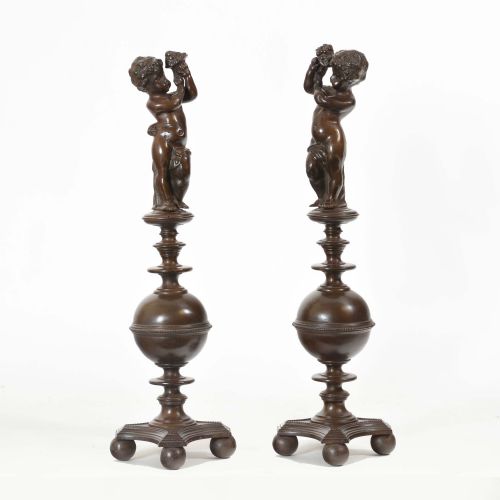


Antique Bronze Chenets
Antique bronze chenets are heavy hearth furnishings that support logs and lift the eye, bringing French and Italian period flair to an open fireplace.
Antique Bronze Chenets
When you search for antique bronze chenets, you encounter pairs of decorative fire dogs designed to sit on the hearth and hold firewood. The examples seen here span from the eighteenth century through the nineteenth century, including Regency and Victorian periods.
Most pieces follow French Rococo, Louis XV, Louis XIV, and Italian Baroque styles. Alongside standard bronze, listings include ormolu, gilt bronze, patinated bronze, cast iron, and cast brass formations.
Materials and construction
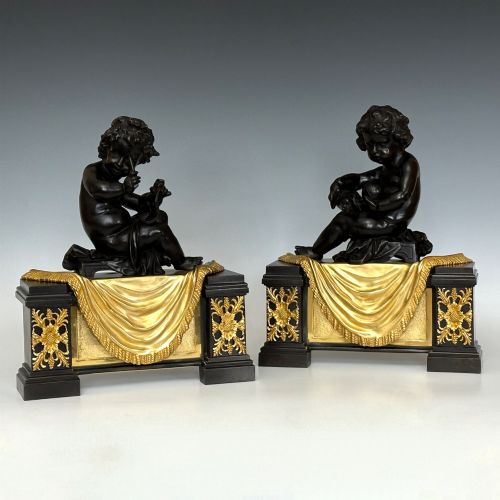
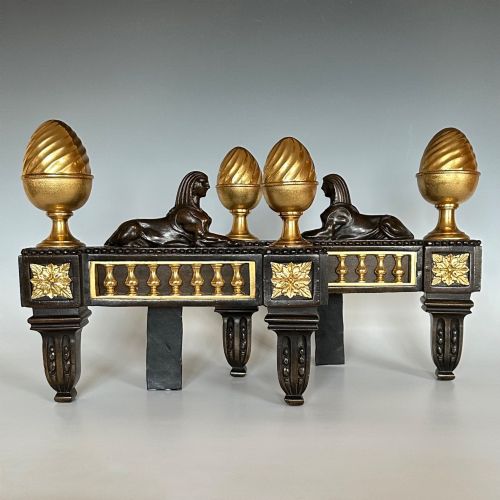
These items rely on heavy metals such as bronze, cast iron, and cast brass, often finished with ormolu or gilding. Foundries cast the main bodies and figures, then combined patinated dark bronze with bright gilded highlights.
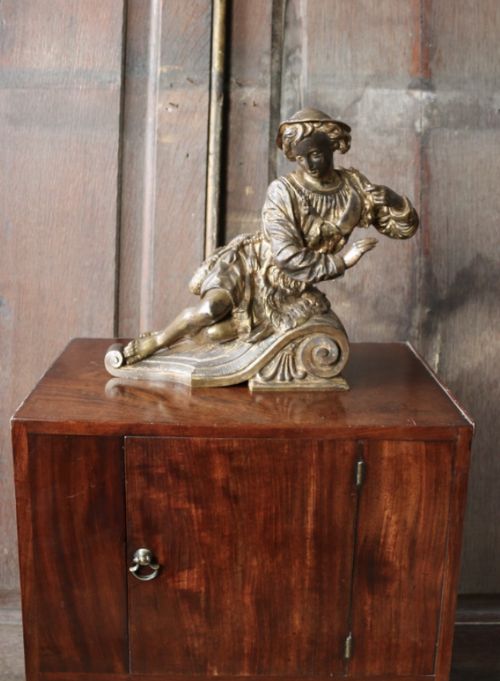
Many pairs incorporate figural statuettes, cherubs, or intricate scrollwork typical of Rococo and Renaissance revivals. Iron components provide the structural strength needed to support burning logs within the hearth.
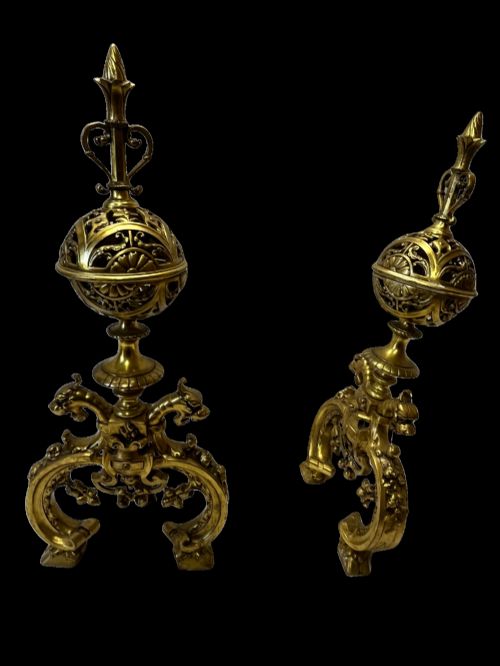
Listings feature materials spanning gilt bronze, patinated bronze, cast iron, and cast brass across nineteenth-century periods.
Distinguishing quality on the hearth
Quality rests in the crispness of the casting and the depth of the gilding or ormolu. Finer pairs show meticulous hand-chasing on the bronze surface, defining facial expressions and foliate scrolls with clarity.
Weight and stability also separate standard items from superior ones. Well-made chenets maintain a solid stance and incorporate substantial bronze thickness rather than hollow, light casting.
The Antique Bronze Chenets Glossary
- Chenet
- A horizontal fire dog or firedog placed in a fireplace to support logs above the hearth floor. They often feature ornamental fronts.
- Ormolu
- Gilded bronze, where a layer of gold amalgam is applied to a bronze base through heat processing. This technique creates a rich golden lustre.
- Patinated bronze
- Bronze treated chemically to achieve a darkened, aged surface contrast against bright gilt details. This finish enhances sculptural depth.
- Andiron
- An alternative term for fire dogs used interchangeably with chenets in many fireplace contexts. They protect the hearth masonry and aid airflow.
Antique Bronze Chenets: Frequently Asked Questions
What is the difference between chenets and andirons?
The terms describe the same fundamental fireplace furniture. Chenets often leans toward the decorative French style, while andirons can suggest a more utilitarian build.
Both types serve the primary function of keeping logs elevated on the hearth.
How do I clean antique bronze chenets?
Dusting with a soft dry cloth maintains the surface without harming the patination or ormolu. Avoid harsh metal polishes that strip historical finishes.
Professional care is recommended if deeper restoration becomes necessary for gilt surfaces.
Can these chenets be used in a working fireplace?
Many pairs are robust enough for active fires, particularly those constructed with heavy iron bars. Checking the metal thickness ensures they withstand heat.
Lighter ormolu pairs are often placed in decorative hearth settings to prevent smoke and ash damage.
How do I identify Louis XV style chenets?
Louis XV style pieces typically display asymmetrical Rococo scrollwork, naturalistic foliage, and sometimes figural elements like cherubs. The curves mirror mid-eighteenth-century design aesthetics.
Nineteenth-century revivals adopted these exact motifs with heavy bronze casting techniques.