


Rococo French Andirons
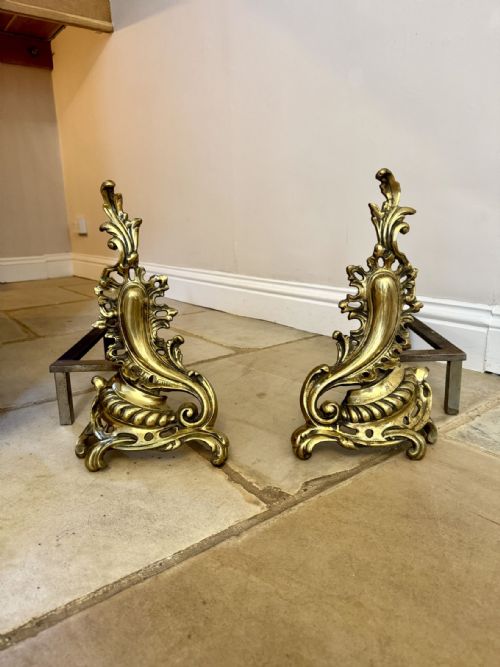
Rococo French andirons bring flamboyant hearth ornamentation into the room, combining asymmetrical scrolls with robust metalwork.
Rococo French Andirons
Rococo French andirons are ornamental hearth furnishings designed to support logs within a fireplace while adding decorative flair to the chimney breast. These pieces frequently appear in pairs, serving both a functional role in the hearth and a sculptural purpose in the room.
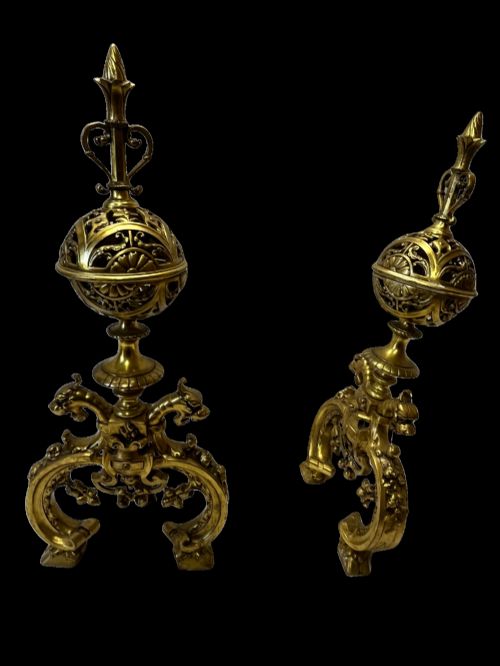
The selection on this page centres primarily on nineteenth-century revivals alongside eighteenth-century originals. Buyers encounter heavy brass, bronze, and ormolu examples shaped in elaborate French Rococo styles.
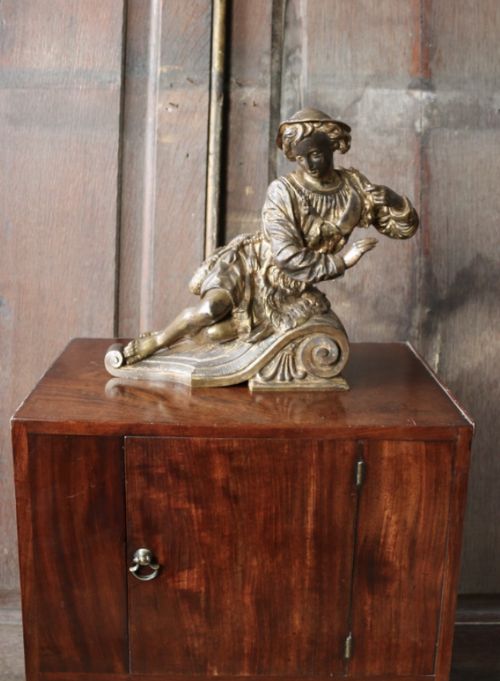
Forms include traditional chenets, fire dogs, and occasional statuette elements. Many incorporate parcel gilt finishes and cherub figures, reflecting classic chateau aesthetics.
How they were made
Casting forms the foundation of these pieces, utilising bronze, brass, and cast iron to achieve intricate scrollwork and figural details. Molten metal poured into moulds allowed artisans to capture the asymmetrical curves characteristic of the style.
Gilding techniques such as ormolu application and parcel gilding provided a lavish surface finish over bronze and brass. Wrought iron elements often reinforced the structural parts designed to withstand direct heat within the grate.
Several pairs feature steadfast little cherubs keeping watch over the hearth fire through the centuries.
What varies in quality
The refinement of the casting and chasing distinguishes superior examples from simpler production. Crisp definition in foliage, cherubs, and asymmetrical scrolls indicates skilled hand-finishing after the metal left the mould.
The application and preservation of the ormolu or gilding heavily influence the visual impact. Deeper, more durable layers of gold leaf or mercury gilding retain their warmth and lustre far better than thin, worn surface treatments.
The Rococo French Andirons Glossary
- Chenet
- An alternative French term for an andiron or fire dog. These decorative metal supports hold firewood above the hearth floor.
- Ormolu
- Finely ground high-carat gold applied to a bronze base using a mercury amalgam. This technique creates a rich golden finish seen on many fine hearth accessories.
- Parcel Gilt
- A decoration method where only specific areas of an object receive a coating of gold leaf or gilding. This highlights particular motifs like cherubs or scrolls against a darker metal background.
- Firedog
- A heavy metal support used in pairs inside an open fireplace to hold logs. They often feature decorative front pieces visible when the hearth is not in use.
Rococo French Andirons: Frequently Asked Questions
What is the difference between andirons and chenets?
Andirons and chenets refer to the same fundamental hearth object. Chenet is simply the French term frequently applied to decorative pieces originating from France.
Both terms describe the upright metal supports placed inside a fireplace to hold logs off the hearth floor.
How do I know if they are eighteenth century?
Eighteenth-century pieces typically display hand-chased details and heavy bronze construction reflecting the period's primary manufacturing methods. Examining the underside and metal composition helps determine age.
Revival pieces from the nineteenth century often mimic these forms but can show different casting textures and assembly techniques.
Can these be used in a working fireplace?
Many of these items are robust enough to hold firewood in an active hearth. The iron components handle heat while the decorative bronze or brass fronts remain outside the direct flames.
Careful placement prevents soot buildup from damaging delicate ormolu or parcel gilt surfaces.
What materials are most common?
Bronze, brass, and iron form the primary materials across these listings. Ormolu mounts and parcel gilt finishes frequently add decorative contrast.
Cast iron and wrought iron provide the structural strength needed for holding logs.