


19th Century Firedogs
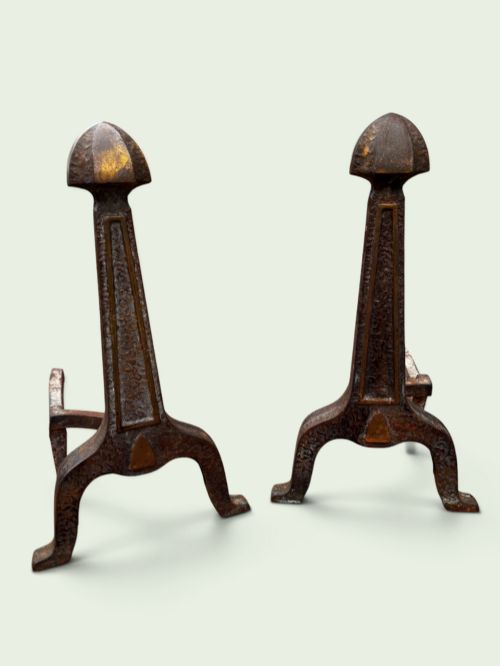
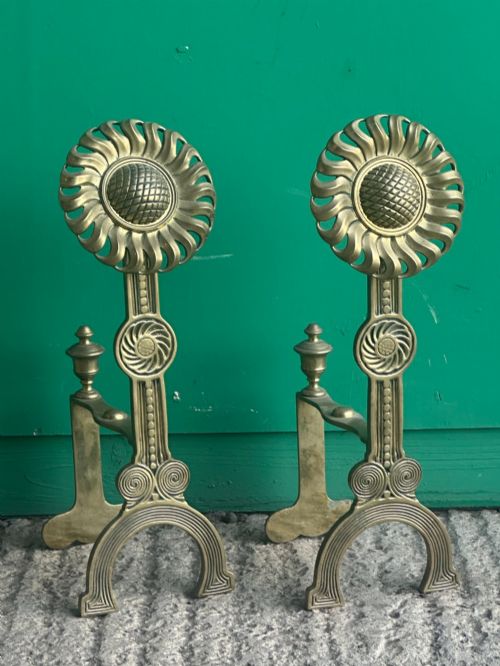
These 19th century firedogs anchor an open hearth with the solid metalwork and period character that heavy fireplaces demand.
19th Century Firedogs
When you search for 19th century firedogs, you encounter sturdy pairs of metal supports designed to hold logs within an open hearth. The selection relies heavily on Victorian examples, alongside French and Italian imports that bring heavier ornamentation to the fireplace.
The forms divide broadly between simple utilitarian iron supports and elaborate decorative pairs cast in brass, bronze, and ormolu. You find pieces styled after earlier periods like the seventeenth century, alongside Gothic Revival, Aesthetic Movement, and Louis XV designs.
Materials and construction
Foundry work defines these pieces, utilising cast iron for heavy-duty grates and utilitarian supports, while brass and bronze take the finer decorative roles. Gilt bronze and ormolu introduce surface gilding that catches the firelight.
Wrought iron appears alongside cast elements, particularly in structural components intended to bear the weight of burning wood. Detail work relies on sand casting and chased finishing, especially on French chenets.
Listings feature 19th-century periods alongside Victorian, Gothic Revival, Aesthetic Movement, and Louis XIV Revival styles.
Assessing quality
The weight and thickness of the metal dictate the structural integrity, separating substantial inglenook pieces from lighter decorative pairs. Heavier castings hold up better to sustained heat and daily hearth use.
The crispness of the chasing and the depth of the casting define the finer examples, particularly on figural ormolu and bronze chenets. Better workshop output shows clean relief work and tightly fitted joints between the vertical standards and horizontal billets.
Thomas Jeckyll·William Tonks
The 19th Century Firedogs Glossary
- Firedog
- A metal support for holding logs in a fireplace. They usually feature an upright decorative front and a horizontal bar behind.
- Chenet
- The French term for a firedog or fire dog. These often carry elaborate figural or rococo ornamentation.
- Ormolu
- Finely ground high-carat gold applied to a bronze base. It provides a bright, durable metallic finish on decorative nineteenth-century pairs.
- Inglenook
- A large recessed fireplace space designed to accommodate seating alongside the fire. Grates placed here require heavier supporting firedogs.
19th Century Firedogs: Frequently Asked Questions
What is the difference between firedogs and andirons?
The terms are generally interchangeable for the same hearth accessory supporting logs.
Historically, regional preferences and stylistic descriptions varied the name across English and French workshops.
Can these firedogs support burning wood?
Most cast iron and heavy bronze pairs are built for practical hearth use.
Lighter decorative ormolu sets are sometimes better suited for display rather than heavy fuel loads.
How do I tell French chenets from English firedogs?
French chenets frequently display gilt bronze finishes with rococo or figural motifs like putti and scrolls.
English variants often lean toward brass, iron, and geometric or Gothic Revival styles.
What maintenance do antique metal firedogs need?
Routine dusting and occasional light cleaning preserve the original patina of the iron or brass.
Harsh chemical polishes should be avoided to protect nineteenth-century surfaces.