
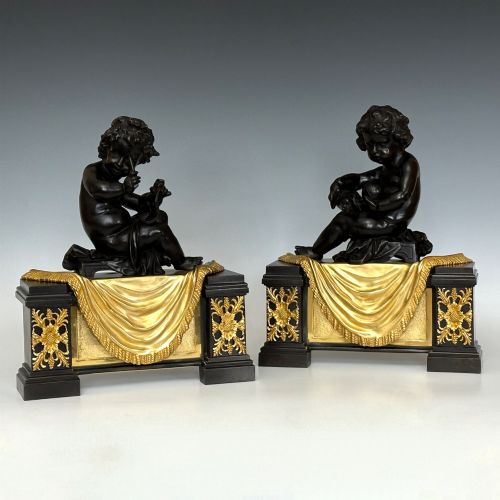
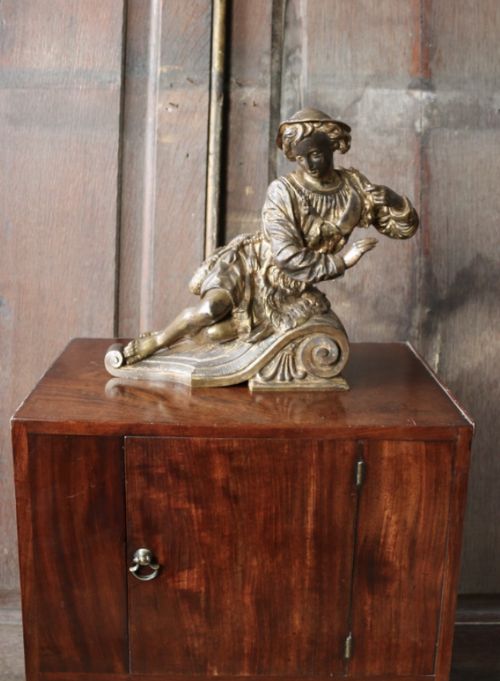


French Bronze Firedogs
These French bronze firedogs are functional hearth furniture that bring classical French styling directly to the fireplace, combining heavy metalwork with ornate decorative casting.
French Bronze Firedogs
When you search for french bronze firedogs, you encounter sturdy hearth furniture designed to support logs within an open fireplace. Most examples on this page date from the nineteenth century, reflecting revival tastes that span Rococo, Louis XIV, and Empire styles.
These pieces typically appear as pairs of chenets or fire dogs, combining functional iron bars with decorative bronze or ormolu mounts. The forms range from simple figural statuettes to elaborate scrolling foliage and architectural mounts designed to face the room.
Originating largely from French workshops and country houses, these accessories serve both to elevate wood for better airflow and to frame the hearth with polished metalwork. Buyers find them in various states of patination, from bright gilded brass to dark patinated bronze.
How they were made
The construction of these pieces relies on metal casting techniques, using bronze, brass, and iron to form the structural body and decorative elements. Artisans employed casting methods to shape intricate figures, scrolling foliage, and architectural feet.
Surface finishes involve contrasting techniques, particularly fire gilding or ormolu application alongside dark patination. Ormolu highlights the raised decorative details, while patinated bronze provides depth to figures and classical motifs.
Materials appearing across these fireplace accessories include cast iron, solid bronze, gilt brass, and mercury-gilded ormolu.
What varies in quality
The choice of materials also dictates standard, with heavy bronze foundations and genuine ormolu gilding marking out superior production compared to simpler brass or cast iron assemblies.
The French Bronze Firedogs Glossary
- Chenet
- An alternative term for a firedog or fire dog, used widely in French interior decoration. These metal supports sit at the front of the hearth to hold logs in place.
- Ormolu
- Finely ground high-carat gold applied to a bronze object using a mercury amalgamation process. This technique creates a durable, luminous golden finish characteristic of luxury French metalwork.
- Patinated Bronze
- Bronze that has been treated chemically or allowed to age naturally to produce a dark, protective surface layer. This finish contrasts effectively with bright ormolu mounts.
- Louis XIV Style
- A classical French design aesthetic characterised by symmetry, grandeur, and heavy scrolling ornamentation. Pieces in this style draw upon seventeenth-century royal court furnishings.
- Rococo
- An asymmetrical, highly decorative style featuring C-scrolls, shell motifs, and naturalistic plant forms. This eighteenth-century aesthetic frequently recurs in nineteenth-century revival hearth accessories.
French Bronze Firedogs: Frequently Asked Questions
What is the difference between chenets and andirons?
Chenets and andirons are essentially the same objects, though chenet is the French term typically applied to decorative hearth furniture.
Both terms refer to the metal supports placed in pairs at the front of a fireplace to keep logs elevated.
How were french bronze firedogs used?
These pieces sat at the front of open hearths to hold burning logs off the floor and improve air circulation for the fire.
At the same time, their decorative fronts transformed a utilitarian fireplace into a formal decorative focal point within the room.
How do I identify nineteenth-century revival styles?
Nineteenth-century makers frequently copied earlier French aesthetics, including Louis XIV symmetry and Rococo asymmetry.
Examining the casting quality, the weight of the bronze, and the method of assembly helps distinguish these revival pieces from genuine eighteenth-century originals.
Can these firedogs be used in a working fireplace?
Many of these pieces remain structurally robust enough to support logs in an active fireplace, provided the iron bars are sound.
However, collectors often place them in decorative or non-working hearths to preserve the delicate ormolu and patinated bronze surfaces.