




Bronze Hearth Dogs
Bronze hearth dogs bring functional warmth and classical French or Italian styling to a fireplace.
Bronze Hearth Dogs
Bronze hearth dogs, also known as chenets or fire dogs, support logs within an open fireplace while adding decorative metalwork to the hearth. Buyers searching for bronze hearth dogs encounter pairs dating predominantly from the nineteenth century, including Regency and Victorian examples.
The selection on this page leans heavily towards French and Italian designs, spanning styles from French Rococo and Louis XIV revival to Renaissance Revival and Empire. These fireplace accessories typically appear in matched pairs, functioning as decorative upright guards positioned at the front of the hearth.
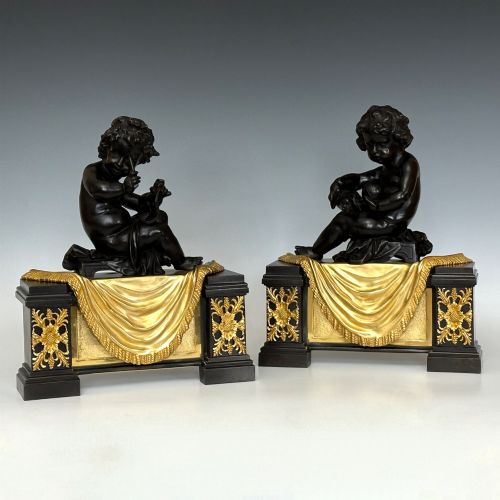
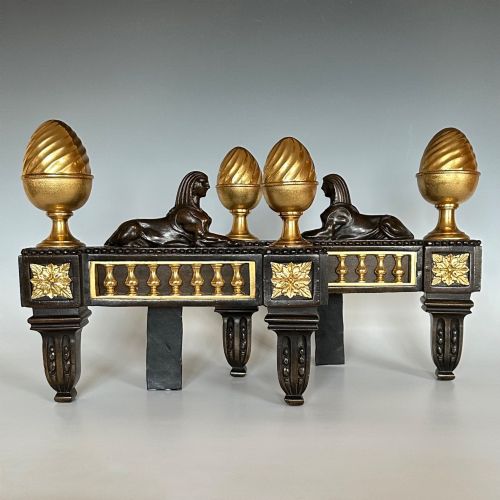
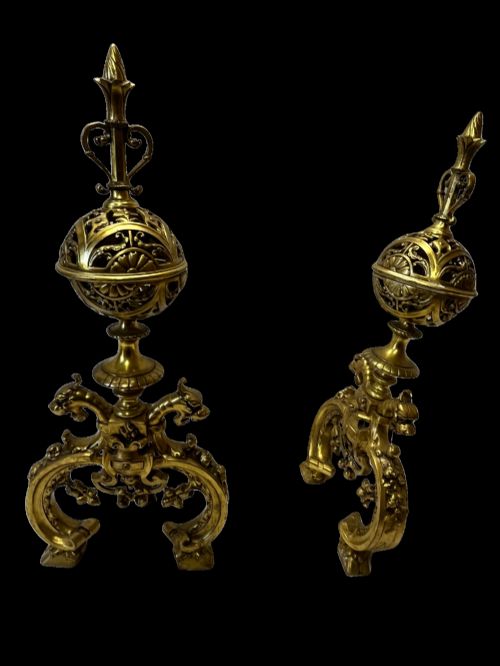
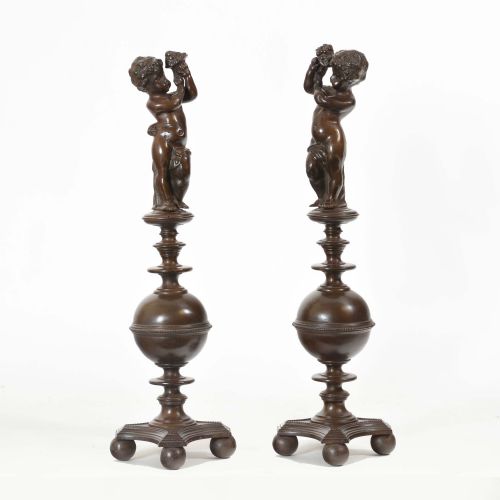
Most pieces combine cast bronze with ormolu or gilt highlights, though iron and brass variants also appear. Forms range from simple geometric andirons to elaborate figural chenets featuring cherubs or classical motifs.
Materials and Techniques
Foundry workers utilised traditional sand-casting methods to shape the heavy bronze and iron bodies of these fireplace accessories. Molten metal poured into moulds created the robust structural frames required to withstand intense hearth temperatures.
Gilding and ormolu techniques added decorative surface finishes to the cast bronze components. Artisans applied fine gold leaf or mercury gilding to selected details, contrasting the polished bright gold areas against dark patinated bronze or wrought iron.
Cherubs peer out from nineteenth-century hearth guards, keeping a watchful eye on the fireplace embers.
Assessing Quality
The weight of the metal and the integrity of the joints dictate durability. Heavier bronze compositions and secure mechanical assembly distinguish substantial country house pieces from lighter decorative alternatives.
The Bronze Hearth Dogs Glossary
- Chenet
- An alternative French term for a fire dog or andiron, placed on the hearth to support logs. These ornamental metal supports sit at the front of the fireplace opening.
- Ormolu
- Finely ground high-carat gold applied to a bronze base using a mercury amalgamation technique. This decorative coating provides a rich, durable golden surface.
- Patinated bronze
- Bronze that has been treated chemically or naturally to alter its surface colour. This process deepens the brown or dark tones of the metal.
- Andiron
- A horizontal metal support raised on legs, designed to hold firewood inside a hearth. Pairs of these items work in tandem to keep logs elevated for better air circulation.
Bronze Hearth Dogs: Frequently Asked Questions
How do I use bronze hearth dogs?
Bronze hearth dogs position at the front of an open fireplace to frame the hearth and hold rolling logs in place. They serve both a practical role in wood-burning fires and a decorative function when the fireplace is unlit.
Heavier pairs can support iron fire baskets or integrate with adjustable fenders. Their primary task is keeping fuel elevated while anchoring the aesthetic of the chimney breast.
How do I clean patinated bronze and ormolu?
Dust bronze and ormolu surfaces gently with a soft, dry cloth to remove soot and surface debris. Avoid harsh chemical cleaners, abrasive pads, or metal polishes that strip historical patina and damage delicate gilt layers.
Preserving the original surface finish maintains the character and historical integrity of nineteenth-century fireplace metalwork. Professional conservation remains advisable for heavily soiled or damaged pieces.
How do I date a pair of hearth dogs?
Dating relies on stylistic clues, casting techniques, and the combination of materials like bronze, ormolu, and wrought iron. Nineteenth-century pieces frequently adopt revival styles such as French Rococo, Louis XIV, and Renaissance Revival.
Examining the underside and fixing bolts reveals the manufacturing methods of the period. Hand-finished chasing marks and fastener types help distinguish Victorian and Regency production from later reproductions.
Are hearth dogs compatible with modern fireplaces?
Hearth dogs fit easily into traditional open masonry fireplaces and large hearth openings. Measuring the depth and width of the firebox ensures the iron bars and front ornaments sit correctly without obstructing the flue.
Some pairs feature adjustable widths to accommodate varying hearth sizes. Gas-insert or electric hearths require careful placement of the decorative front dogs around modern heating units.